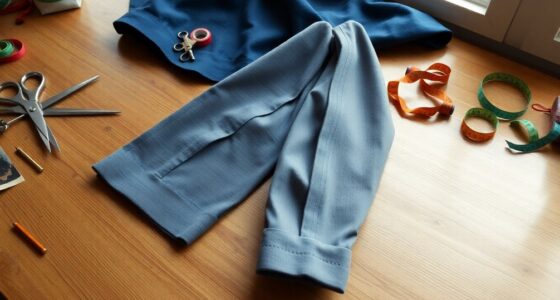
To fix baggy knees without rebuilding the leg, turn your trousers inside out and add discreet darts inside the knee area to tighten the fabric. You can also reinforce the stretched parts with small patches sewn in or take in the seams near the knee for a better fit. Using fabric tape can offer a temporary fix before sewing. For more effective tips, discover how strategic tailoring can help your trousers look tailored and neat.

Get business pricing on tools and workshop supplies
- Business-only prices and quantity discounts
- Tax-exempt purchasing
- Multiple users, one account, clear invoices
Key Takeaways
- Add discreet darts inside the knee area to tighten excess fabric without altering the overall leg shape.
- Sew small, hidden tucks along the knee to pull in loose fabric and improve fit.
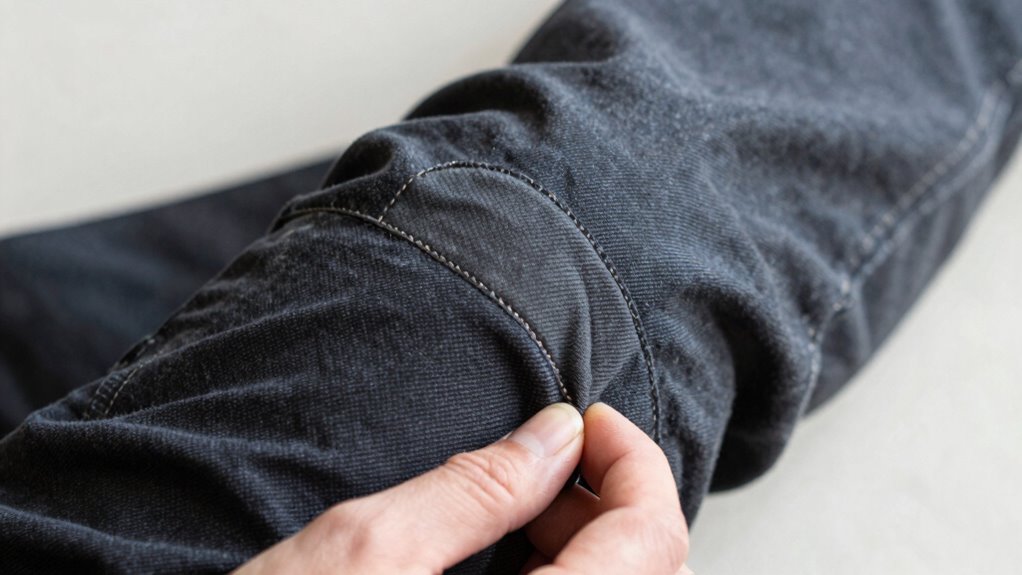
- Reinforce the knee with matching fabric patches sewn inside to prevent further sagging.
- Take in side seams or inseams near the knee for a tailored, snug fit without rebuilding the leg.
- Use fabric tape or temporary stitches for quick, non-permanent adjustments to reduce bagginess.
If your trousers are developing baggy knees, don’t worry—this is a common issue that can be fixed with some simple techniques. You don’t need to rebuild the entire leg; instead, you can improve the fit by focusing on fabric reinforcement and tailoring techniques. The goal is to tighten the fabric around the knee area, restoring a sleek silhouette without compromising comfort or style.
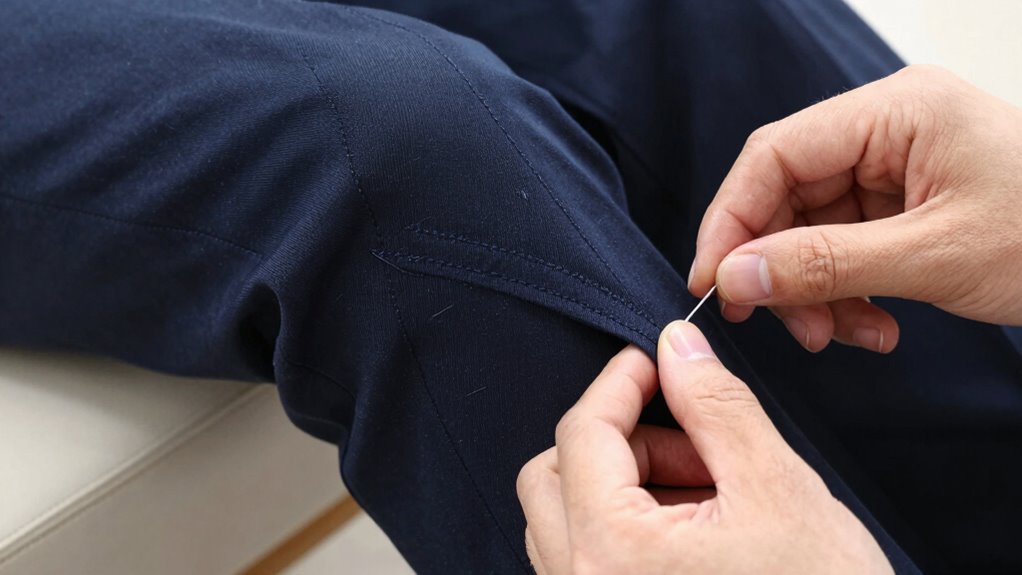
Start by turning the trousers inside out. Examine the knee area carefully to determine how much fabric has loosened or stretched. You’ll want to reinforce the fabric to prevent further bagging and to tighten the fit. One effective method is to add discreet darts or tucks on the inside of the knee. These small stitches can pull the excess fabric inward, creating a smoother, more tailored appearance. Use a matching thread for a seamless finish, and sew carefully to avoid puckering. This approach leverages tailoring techniques to reshape the fabric without altering the overall cut of your trousers.
Add discreet darts inside the knee to tighten fabric and create a smoother, more tailored fit.
Another option involves fabric reinforcement using iron-on or sew-in patches. Choose a sturdy, matching fabric and cut it into a small rectangle or shape that covers the stretched area. Apply an iron-on adhesive if using a patch that’s designed for quick application, or sew it in place for a more durable fix. Reinforcing the fabric this way helps prevent further stretching and provides added support where the fabric tends to sag. This is especially useful if your trousers are made from lightweight or stretch-prone material.
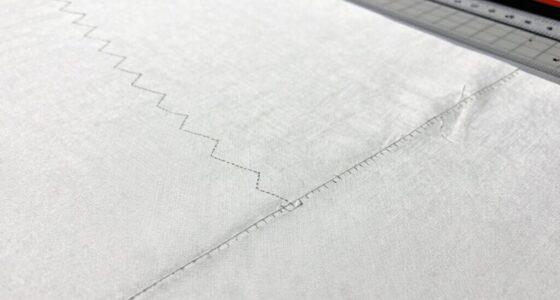
If you’re comfortable with more precise tailoring, consider taking in the side seams or the inseam near the knee. This technique involves sewing a narrow seam to tighten the fabric, effectively removing the baggy appearance. Use a zigzag stitch or a stretch stitch if the fabric is stretchy, and sew gradually to maintain a natural look. Press the seams flat afterward to ensure a clean finish. This method allows you to subtly reshape your trousers without drastic changes.
Finally, consider using fabric tape or temporary fixes as a quick solution. These can help hold the fabric in place temporarily or assist during the sewing process. Additionally, understanding fabric properties can help you choose the right reinforcement method for your trousers. Over time, reinforcing the fabric and employing tailored stitches will give your trousers a more fitted, polished look. Remember, fixing baggy knees doesn’t require a full rebuild—just some strategic fabric reinforcement and tailoring techniques, and you’ll have your trousers fitting like new in no time.
fabric repair patches for trousers
As an affiliate, we earn on qualifying purchases.
As an affiliate, we earn on qualifying purchases.
Frequently Asked Questions
Can I Fix Baggy Knees on Any Fabric Type?
Yes, you can fix baggy knees on most fabric types, but it depends on fabric elasticity and repair techniques. Sturdy, less elastic fabrics like denim respond well to sewing or patching, while delicate or highly elastic materials need gentle handling to avoid damage. Use appropriate repair techniques like taking in seams or adding elastic panels, ensuring you match the fabric type for a smooth, comfortable fit without rebuilding the leg.
How Long Does a DIY Knee Repair Last?
A DIY knee repair can last from several months to a few years, depending on how well you reinforce the fabric. Think of it as a sturdy bridge—if you use proper knee reinforcement and fabric strengthening techniques, your fix holds strong against daily wear. However, frequent movement and washing can wear down the repair over time, so expect some maintenance. Proper care extends the life of your patchwork.
Do I Need Special Tools to Fix Baggy Knees?
You don’t need special tools to fix baggy knees in trousers. Just use basic sewing techniques like sewing darts or fabric reinforcement to tighten the area. A needle and thread are enough, but a sewing machine can make the job easier and quicker. Focus on fabric reinforcement to add structure, and use simple stitches to secure the fabric. This approach effectively reduces bagginess and extends the life of your trousers.
Is Professional Alteration Cheaper Than DIY?
Choosing between professional alteration and DIY depends on your skill level and cost comparison. A professional might be more expensive upfront but offers precise tailoring, ensuring a perfect fit with minimal effort on your part. Conversely, DIY fixes are cheaper but require patience and some sewing skills. If you lack confidence or want a flawless result, investing in a professional is often worth the extra cost, especially for quality and durability.
Can I Fix Multiple Pairs at Once?
Yes, you can fix multiple pairs at once by using efficient alteration techniques. Lay out all the trousers, and work through each with the same method to save time. Focus on fabric durability, choosing sturdy stitches that hold through multiple repairs. By organizing your work and selecting strong materials, you guarantee consistent results and extend the lifespan of each pair, making the process more effective and economical.
Conclusion
Think of your trousers as a loyal companion whose spirit has dimmed with the sagging knees. With a few simple stitches, you breathe new life into this old friend, restoring their strength and confidence. Just as a gentle touch can rekindle a fading flame, your careful repairs renew the trousers’ purpose and charm. In mending the knees, you’re not just fixing fabric—you’re reviving a piece of your daily journey, ready to carry you forward once more.
Halloween Picks
halloween
As an affiliate, we earn on qualifying purchases.