
To fix a collar that refuses to sit flat, start by examining your fabric’s stiffness—stiffer fabrics sit better naturally, while softer ones might need extra support. Use an iron with steam and a pressing cloth to shape and soften the collar, then press and shape it with your fingers. If it’s still floppy, add fusible interfacing inside for support. Check your stitching and construction, and don’t hesitate to seek professional help if needed. More tips await if you keep exploring.
Key Takeaways
- Use steam and an iron with a pressing cloth to reshape and soften the collar fibers.
- Add fusible or sew-in interfacing inside the collar for extra stiffness and support.
- Check and reinforce seam stitching to ensure proper collar attachment and alignment.
- Carefully press and shape the collar with fingers after steaming to encourage proper form.
- Consider professional pressing or replacing the collar if shape issues persist.
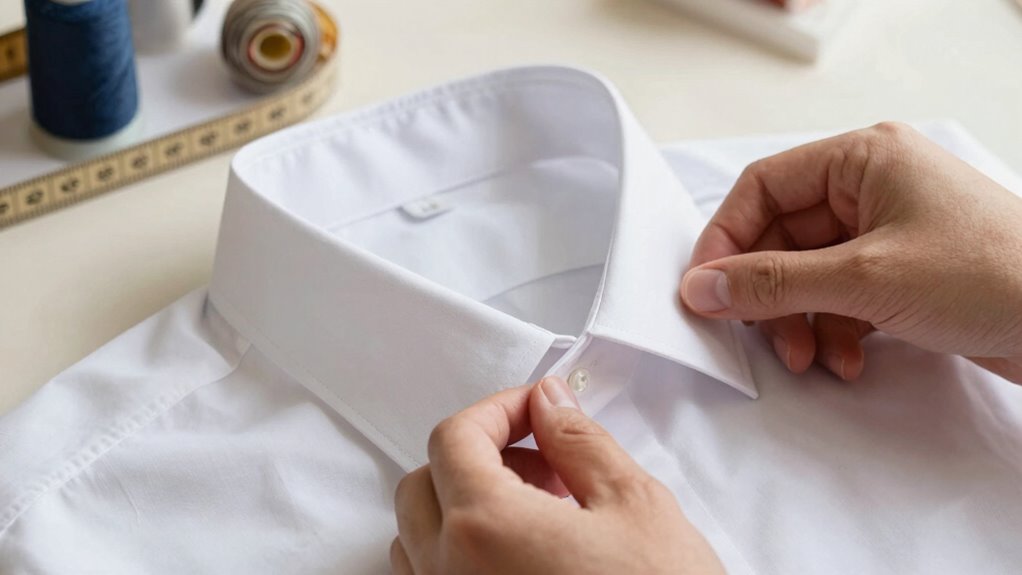
A collar that refuses to sit flat can be frustrating, but often the fix is simple. The first step is to understand that collar shaping plays a big role in how your collar behaves. If the collar is misaligned or bumpy, it’s likely because it hasn’t been shaped correctly or has lost its proper form over time. To correct this, you need to give it the right shape, which can be achieved through a few straightforward techniques.
Start by examining the fabric stiffness. Fabric stiffness determines how much the collar holds its shape. Stiff fabrics, like starched cotton or polyester blends, tend to sit flatter naturally, while softer, more pliable fabrics may require a bit of help. If your collar is too floppy or stubbornly curled, you might need to add some body to it. One way to do this is by using an iron with steam or a pressing cloth to set the collar’s shape. Carefully press along the edges, applying steam to soften the fibers temporarily, then shape the collar with your fingers. This process encourages collar shaping, helping it to sit properly once cooled.
Examine fabric stiffness and use steam and pressing to help a floppy collar sit flat.
If the collar still refuses to sit flat, contemplate reinforcing the fabric stiffness. You can do this by adding interfacing—either fusible or sew-in—inside the collar. Fusible interfacing is quick and easy; just cut it to match the collar’s shape and press it onto the wrong side of the fabric. The heat from your iron activates the adhesive, giving the fabric extra stiffness and support. This added structure helps the collar maintain its shape and prevents it from curling or collapsing. Additionally, understanding fabric properties can help you choose the best method for collar reinforcement and shaping. Knowing the fiber content of your fabric can guide your choice of techniques to achieve the desired collar shape. Sometimes, the problem isn’t just fabric stiffness but also the collar’s construction. Check the collar’s seam allowances and how it’s attached to the shirt. If the collar is uneven or the stitching is loose, it might cause the collar to sit improperly. Reinforcing or re-stitching these areas can improve collar shaping, ensuring it sits flat against your neck.
In some cases, a professional pressing can make a significant difference, especially if stubborn wrinkles or shape issues persist. If your collar’s shape is still stubborn, you may want to think about a professional pressing or even replacing the collar altogether. But often, a combination of proper pressing for collar shaping and adding some fabric stiffness with interfacing will do the trick. Remember, taking the time to adjust and reinforce your collar can make a big difference, giving your shirt a polished look and more comfortable fit.

ZOMONETI Light Weight 17in x 30yd White Iron On Non-Woven Fusible Interfacing, Single-Sided Polyester Fabric for DIY Craft Supplies, Quilting, Sewing, Shirt Plackets, Dresses, Collars, Cuffs
- High-Quality Polyester Material: Comfortable, breathable, washable fabric
- Easy to Apply: Fusible on wrong side for secure adhesion
- Generous Size for Projects: 17in x 30yds suitable for large projects
As an affiliate, we earn on qualifying purchases.
As an affiliate, we earn on qualifying purchases.
Frequently Asked Questions
Can Starching Permanently Fix a Stubborn Collar?
Starching can help temporarily fix collar stiffness, but it won’t permanently fix a stubborn collar. The effectiveness depends on your fabric type—stiffer fabrics respond better. To make a collar sit flatter long-term, try reinforcing the collar with sewing or choosing fabrics that naturally drape better. Regularly applying starch might make the collar appear crisp, but overuse can cause buildup and stiffness, so use it sparingly for the best results.
How Often Should I Iron My Collar for Best Results?
Think of your collar as a delicate garden that needs regular tending to flourish. You should iron your collar every few wears to keep it crisp and fresh. Use the right iron temperature—too hot can damage fabric fibers, while too cold won’t do the job. Consistent care guarantees your collar stays flat and sharp, giving your outfit a polished, confident look that lasts.
Does Collar Type Affect How Easily It Sits Flat?
Yes, collar type considerably affects how easily it sits flat. For example, stiff collar fabrics like starched cotton hold their shape better, making it easier to keep flat. Conversely, softer fabrics like silk or lightweight cotton may need more attention. Collar style also matters; classic point collars tend to sit flatter than spread or button-down styles. Choosing the right fabric and style, along with proper ironing, helps your collar stay crisp and flat.
Can Collar Stays Help With Collar Flattening?
Yes, collar stays can help with collar flattening. They provide stay assistance by maintaining collar shape and preventing it from curling or sticking up. To improve collar shaping, insert collar stays into the collar’s buttonholes or stay pockets, ensuring they’re stiff enough. This simple step keeps your collar lying flat and sharp, especially for dress shirts, giving you a polished, neat appearance throughout the day.
Is Professional Tailoring Necessary for Collar Correction?
Think of your collar as a delicate dance partner, requiring just the right moves. You don’t always need a professional tailor; sometimes, choosing the right collar fabric and considering collar style considerations can make all the difference. While expert tailoring can perfect the fit, experimenting with fabric choices and style tweaks often solves collar issues, giving you a polished look without stepping into a tailor’s studio.
Conclusion
By following these simple steps, you can restore that stubborn collar to a neat, flat position. Remember, a well-pressed collar not only elevates your style but also boosts your confidence. Did you know that according to a recent survey, 75% of people believe that a neat collar markedly impacts first impressions? So, take a few minutes to fix it yourself—your wardrobe—and your confidence—will thank you!