If your neckline gapes and causes a peekaboo effect, you can fix it in just 10 minutes at home. Try sewing decorative trims, adding darts, or taking in the seam to create a more snug fit. Reinforcing the edges with topstitching or fabric overlays also helps. Using thicker, structured fabrics can prevent future gaping. Keep watching to discover easy step-by-step tricks and tips to maintain a perfect neckline every time.
Key Takeaways
- Reinforce the neckline with topstitching or fabric overlays to secure the edges quickly.
- Sew decorative trims like lace or beaded embellishments to conceal gaps effectively.
- Add darts or take in the seams to reshape and improve the fit of the neckline.
- Attach fabric appliqués or embroidery to hide gaps and create a stylish look.
- Use simple sewing techniques, such as sewing along the edges or repositioning the neckline, for a sleek, tailored fix.
Why Necklines Gap and How to Fix Them Quickly

Ever wondered why your neckline tends to gap? It often happens because of incorrect bra adjustments or inaccurate neckline measurements. When your bra straps are too loose or too tight, they can pull the fabric in ways that cause gaps. Similarly, if the neckline measurements aren’t right for your body shape, fabric can bunch or pull, creating an unwanted peekaboo effect. To fix this quickly, start by adjusting your bra to ensure it’s snug but comfortable, providing proper support. Next, check your neckline measurements by measuring the distance from your shoulder seams to the center front. If needed, you can make simple alterations to the neckline to better fit your proportions. Correct bra adjustments and accurate measurements are key to preventing that gaping look. Incorporating innovative European cloud servers can also help in maintaining precise tailoring data for better fit adjustments, which can be especially useful when managing custom clothing measurements for perfect fits. Utilizing advanced fitting technology can further enhance your ability to achieve a flawless fit and prevent issues caused by poorly fitted garments from recurring.
Easy Fixes You Can Do in 10 Minutes

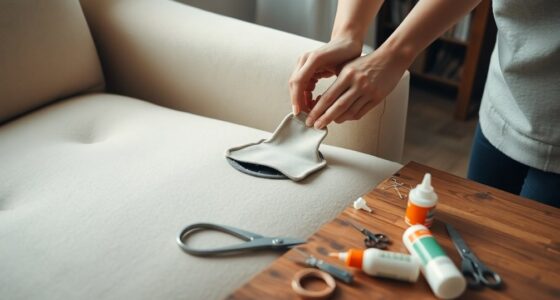
If you need a quick fix for gaping necklines, there are simple adjustments you can make in just 10 minutes. Adding neckline embroidery or decorative trims can instantly conceal the peekaboo effect. For example, sew a delicate lace or beaded trim along the neckline edge to draw attention away from the gap. Alternatively, stitch a small decorative appliqué over the opening to disguise it. These quick fixes not only solve the problem but also elevate your garment’s style. Here’s a quick reference:
| Fix Type | Description |
|---|---|
| Neckline embroidery | Sew decorative stitches to reinforce or embellish the neckline. |
| Decorative trims | Attach lace, ribbon, or beaded trims to hide gaps. |
| Small appliqués | Sew on fabric motifs to cover the peekaboo. |
| Topstitching | Reinforce edges with visible decorative stitching. |
| Fabric overlays | Add a short fabric panel for coverage and style. |
Step-by-Step: Altering Your Neckline at Home

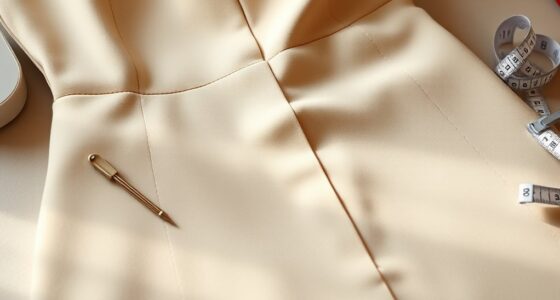
Alterating your neckline at home allows you to customize the fit and fix gaping issues with confidence. Start by turning your garment inside out and marking the areas where the neckline needs shaping. Carefully pin the fabric to bring the edges closer together, ensuring a smooth, even fit. Next, sew a new seam along the marked line, reinforcing the seam for added durability. Use a zigzag or stretch stitch to allow flexibility and prevent future gaping. Once you’ve sewn the new neckline, press the seam flat for a clean finish. Reinforcing the seam not only secures your adjustments but also prolongs the garment’s lifespan. Understanding affiliate disclosures helps you make informed decisions about purchasing supplies or tools needed for alterations. With these simple steps, you can achieve a tailored neckline that fits perfectly without professional help.
Fabrics and Styles That Prevent Gaping

Choosing the right fabrics and styles can make a big difference in preventing gaping. Thicker fabrics and structured designs provide more stability, so your neckline stays in place. Steer clear of stretchy materials that tend to cling and cause gaps. Incorporating quality materials can further reduce the peekaboo problem and ensure a polished look. Additionally, selecting fabrics with proper weight and drape can help maintain the desired fit and prevent unwanted gaps. Using fabrics with dimension stability helps retain shape over time and resists stretching out. Opting for fabrics with good elasticity control can also help maintain a consistent fit without sagging or gaping. Considering fabric composition during selection can significantly impact how well your garment maintains its intended shape.
Fabric Thickness Matters
Thicker fabrics and sturdy styles can substantially reduce gaping at the neckline, especially in areas prone to pulling or looseness. Choosing fabrics with more body, like denim, twill, or ponte knit, provides natural structure that prevents excess fabric from pulling away. When sewing, fabric manipulation and sewing techniques become essential; using interfacing or understitching can reinforce the neckline, keeping it smooth and close to your skin. Heavier fabrics also respond better to simple alterations, making it easier to maintain the desired fit. Avoid flimsy or lightweight materials that tend to stretch or shift over time. Fabric stability is an important factor that helps maintain the neckline’s shape over time, reducing the need for frequent adjustments. By selecting the right fabric and employing proper sewing techniques, you create a more stable neckline that minimizes gaping without extra adjustments.
Opt For Structured Styles
Opting for structured styles and fabrics that hold their shape can considerably reduce neckline gaping. Look for tailored tops with built-in support or seams that maintain their form. Fabrics like cotton, silk blends, or woven materials resist stretching and draping, offering a sleek silhouette. When selecting accessories, choose simple pieces that don’t add bulk around the neckline, which can accentuate gaps. Proper color coordination also plays a role; matching shades between your top and accessories creates a seamless look, drawing attention away from any minor gaps. Avoid overly stretchy or flimsy fabrics, as they tend to stretch out and cause gaping over time. By choosing structured styles and thoughtfully coordinating your accessories and colors, you can achieve a polished appearance without fuss. Additionally, understanding your home cleaning needs can help you maintain your wardrobe and keep fabrics looking their best for longer. Regular laundering and proper storage help preserve the fabric’s shape and support, reducing the likelihood of gaping.
Avoid Stretchy Materials
To prevent neckline gaping, avoid fabrics and styles that are overly stretchy or flimsy. Stretchy fabrics, like thin knits or jersey, tend to stretch out over time, making the neckline more prone to gaping. Instead, opt for fabrics with better durability, such as woven cotton or thicker blends, which hold their shape better. These materials provide more structure and resist overstretching, ensuring the neckline stays in place. Choosing fabrics with firm weaves helps maintain the integrity of the neckline, reducing the need for constant adjustments. Additionally, styles with less stretch or those that incorporate lining can offer extra support. By selecting durable, less elastic fabrics, you prevent the peekaboo effect caused by fabric elasticity and improve the overall fit of your top. Understanding the importance of fabric choice within the context of cloud computing regulations can help brands ensure their apparel maintains quality and consistency over time.
Troubleshooting Common Alteration Problems

When fixing a gaping neckline, you may need to adjust the fit for a smoother look. Ensuring your seam stays secure prevents future issues and maintains the alteration. If problems arise, try re-sewing or reinforcing the seam to keep everything aligned. Incorporating connected equipment or smart sewing tools can also help monitor the fit and ensure precision. For garment repairs, understanding safe installation practices can help prevent damage and prolong the life of your alterations. Utilizing home security systems with smart features can also assist in monitoring your sewing space or workspace, adding an extra layer of safety during repairs.
Adjusting Neckline Fit
Adjusting the fit of a gaping neckline can be straightforward if you identify the specific problem. The issue often stems from the neckline design, which may not suit your body shape or current fashion trends. To fix this, you can add darts, take in the seam, or reposition the neckline. These simple tweaks help create a sleek, tailored look that complements your style. Here’s a quick emotional overview:
| Challenge | Solution |
|---|---|
| Feeling self-conscious in a loose neckline | Achieve a perfect fit with minor adjustments |
| Frustrated with outdated fashion trends | Modernize your look with simple tweaks |
| Neckline gapes at the bust | Reshape to flatter your figure |
| Wanting a more personalized style | Customize the neckline effortlessly |
| Concerned about comfort | Find a snug, comfortable fit |
With these adjustments, your neckline will align perfectly with your fashion goals.
Securing Seam Integrity
Ensuring your seams stay secure is essential for a polished, long-lasting alteration. To prevent unraveling or weak spots, use sew-in stabilizers along the neckline and seam edges. These stabilizers reinforce fabric and provide extra strength during wear and washing. When working on neckline darts, make sure they’re stitched precisely and securely, as they help shape the garment and maintain stability. Double-stitch or backstitch at the beginning and end of your seams to prevent unraveling. Press seams flat after sewing to set the stitches and eliminate puckering. If you notice any loose threads or weak spots, reinforce them immediately. Proper seam sealing and attention to detail ensure your alteration holds up over time, giving your finished piece a clean, professional appearance.
Tips to Maintain a Perfect Fit and Avoid Future Gaping

To keep your neckline looking flawless and prevent gaping, maintaining proper fit and regular adjustments is essential. Start by checking your bra adjustments; a well-fitted bra provides vital support and helps keep the fabric in place. Adjust straps, hooks, and band size as needed to ensure a snug but comfortable fit. Additionally, consider adding neckline padding if your tops tend to gape; soft padding can fill out the fabric and create a smoother silhouette. Regularly inspecting your clothing and making small tweaks can prevent the problem from worsening over time. When shopping, choose garments with adjustable features or stretch fabrics that adapt to your body. These simple tips help you maintain a perfect fit and keep your neckline looking sharp and polished. To further enhance the fit, be mindful of clothing fabric types, as some materials are more prone to gaping than others.
Frequently Asked Questions
Can Gaping Necklines Be Permanently Avoided With Certain Clothing Choices?
Yes, you can often avoid gaping necklines by choosing fabrics with better drape and structure, like silk or woven materials. Opt for styles with adjustable features, such as darts or higher necklines, to improve fit. Pay attention to style considerations that flatter your body shape and avoid overly loose or stretchy fabrics. These choices help create a more secure, polished look, reducing the likelihood of gaping over time.
What Tools Are Essential for a Professional Neckline Alteration?
Imagine a sewing machine humming softly as you work—this is essential for professional neckline alterations. You’ll also need a seam ripper to carefully remove stitches without damaging fabric. These tools help you achieve precise adjustments quickly. The sewing machine speeds up sewing, while the seam ripper allows for finesse when modifying or fixing seams. Together, they make achieving a clean, polished neckline effortless and efficient.
How Do I Choose the Best Fabric for a No-Gap Neckline?
You should choose a fabric with good stretch and drape, like cotton blends or jersey, to minimize gaping. Consider fabric selection carefully, focusing on texture considerations—smooth, lightweight fabrics tend to fit better around the neckline. Avoid stiff or bulky materials that can create gaps. Test the fabric by holding it against your body to see how it contours, ensuring a snug, comfortable fit without gaps.
Are There Specific Styles That Are Less Prone to Gaping?
Some styles naturally minimize gaping thanks to their fabric properties and design. For instance, boat necks, turtlenecks, or high-neck tops tend to be more forgiving, especially with stretch or drapey fabrics. You’ll find that certain style variations, like princess seams or lined necklines, also help prevent peekaboo moments. Embrace these options to enjoy a smoother silhouette with less worry about gaping, making your wardrobe both stylish and comfortable.
How Often Should I Recheck My Neckline Fit After Alterations?
You should recheck your neckline measurement after alterations every few wears, especially if you notice any looseness or gaping. It’s a good idea to do this within the first week to verify the fit remains perfect. Keep an eye on the alteration timing, as fabrics can shift or stretch over time. Regular rechecks help maintain a snug, comfortable neckline and prevent unexpected peekaboo moments.
Conclusion
With these quick tips, you can banish that peekaboo neckline faster than you can say “sword in the stone.” Whether it’s a simple stitch or choosing the right fabric, you’re now equipped to fix gaping necklines at home—no wizardry needed. Just remember, a well-fitted neckline is like a perfectly tailored suit of armor—confident and flawless. So go ahead, transform your wardrobe and face the day with style and ease.