To make your dress form more honest, start by measuring key areas like bust, waist, and hips, then use padding materials such as foam, batting, or crumpled fabric to build volume gradually. Wrap the padding tightly with your chosen fabric, pinning or sewing it securely to keep everything in place. Continually compare the form against your measurements and adjust padding as needed to create a balanced, true-to-life shape. If you want to learn more, keep exploring these techniques in detail.

Get business pricing on tools and workshop supplies
- Business-only prices and quantity discounts
- Tax-exempt purchasing
- Multiple users, one account, clear invoices
Key Takeaways
- Measure and identify areas needing additional volume, such as bust, waist, or hips, before padding.
- Use foam, batting, or crumpled fabric to build up targeted areas gradually for accurate shaping.
- Wrap padding with stable fabric like muslin or cotton, pulling taut for a smooth, precise surface.
- Continuously compare the form to measurements or fitted garments, adding or removing padding as needed.
- Layer different padding materials to achieve structural support and smooth, natural contours.

Ever wonder how to make your dress form more accurately reflect your body or design needs? The key lies in customizing it through careful padding and thoughtful fabric selection. When you’re working on complex designs or fitting garments perfectly, an unmodified dress form might fall short. You need it to mirror your measurements or your ideal fit as closely as possible. That’s where padding techniques and fabric choices come into play, helping you transform a standard form into a true extension of your body or design goals.
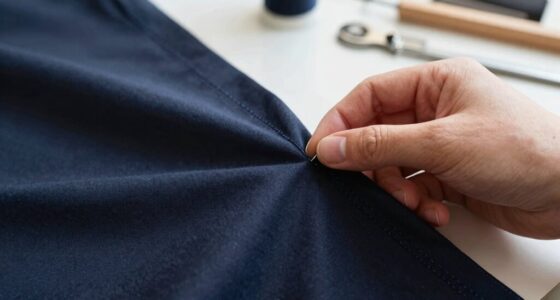
Start with fabric selection because it establishes the foundation for a smooth, even surface. Choose a fabric that is sturdy but flexible—muslin, canvas, or even a tightly woven cotton works well. These materials are easy to manipulate and won’t shift or stretch excessively as you add padding. Using a stable fabric also makes it easier to sew or pin your padding in place, ensuring your adjustments stay consistent. Before attaching the fabric, make sure the dress form’s surface is clean and smooth, removing any dust or debris that could cause uneven padding or fabric bunching. Additionally, proper fabric selection can help in achieving a more accurate surface for your adjustments.
Choose sturdy, flexible fabrics like muslin or cotton for smooth, secure padding and easy adjustments.
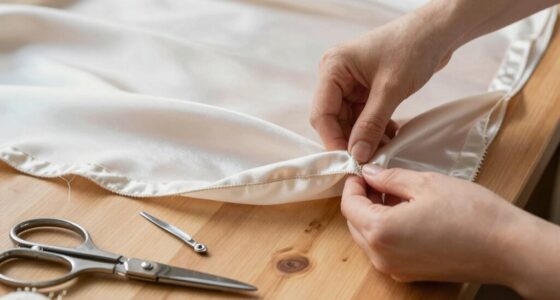
Next, focus on padding techniques that will give you precise control over your form’s shape. Begin by measuring the areas you want to adjust—bust, waist, hips, or any specific curves. Use foam, batting, or even crumpled fabric to build up these sections gradually. The goal is to add volume evenly and avoid creating lumps or uneven bumps. Wrap the padding with your chosen fabric, pulling it taut to create a smooth surface. Pin or sew the fabric securely, making sure the padding remains in place. For more refinement, you can layer different padding materials—using firmer padding for structural support and softer padding for smoothing out irregularities. Proper padding distribution is essential for achieving a realistic and balanced shape. Incorporating measurement accuracy during this process can greatly improve the final fit and appearance of your dress form. Additionally, paying close attention to padding density can help prevent deformation over time and maintain the form’s honesty.
As you work, continually check your form against your measurements or a fitted garment. Adjust the padding as needed, adding more in areas that need volume and removing excess where it’s too bulky. This iterative process guarantees your dress form becomes a more honest representation of your body or your design intentions. It’s not just about making it larger or smaller; it’s about creating a tailored, accurate shape that supports your sewing projects. Keeping the form balanced and well-proportioned is crucial for successful fitting and design.
In the end, combining thoughtful fabric selection with strategic padding techniques allows you to customize your dress form effectively. This process makes your fitting and design work more precise, saving you time and frustration. With patience and attention to detail, you turn a generic form into a reliable, honest tool that genuinely reflects your unique measurements and creative vision.
Popular right now

De'Longhi Stilosa Compact Manual Espresso Machine with Milk Frother

Shark Navigator Robot Vacuum with Self-Empty Base, Dark Grey (RV2120AE)

LG 85-inch QNED75B Mini LED Smart TV Bundle with HDMI and CPS Protection Plan
As an affiliate, we earn on qualifying purchases.
Frequently Asked Questions
What Materials Are Best for Padding a Dress Form?
For padding a dress form, choose soft materials like foam, batting, or quilt batting for comfort and flexibility. Fabrics such as muslin, cotton, or linen work well for covering padding because they’re breathable and easy to work with. Use padding techniques like wrapping and pinning to shape the form accurately. These materials and methods help you achieve a more honest and realistic dress form, perfect for fitting and designing garments.
How Do I Measure My Body Accurately for Padding?
Think of your body as a sculpture waiting to be revealed. To measure accurately, use a flexible tape measure, snug but not tight. Record your chest, waist, hips, and bust, ensuring the tape lies flat. Pinpoint your natural curves with padding techniques, then double-check measurements for symmetry. These precise body measurements help you create perfect padding, transforming your dress form into a true mirror of your shape.
How Often Should I Update or Adjust the Padding?
You should update or adjust your padding whenever your body changes considerably or after extended use, typically every 6 to 12 months. Keep in mind that padding made with durable, cost-effective materials can last longer, reducing the need for frequent adjustments. Regularly inspect your dress form for signs of wear or compression, and tweak the padding as needed to maintain an accurate fit and shape.
Can Padding Damage the Dress Form Over Time?
Padding generally won’t damage your dress form if you maintain it properly. Did you know that improper padding can lead to uneven wear, reducing dress form durability? Regular padding maintenance prevents compression or shifting that might harm the structure over time. Using gentle materials and checking for wear guarantees your dress form stays in good shape, preserving its durability and making sure your padded adjustments last longer without causing damage.
Is Padding Suitable for All Dress Form Sizes and Shapes?
Padding isn’t suitable for all dress form sizes and shapes, but it can improve fit consistency and aesthetic enhancement. If your dress form has an unusual shape or irregular proportions, padding helps create a more accurate and flattering silhouette. However, for standard forms, padding might not be necessary and could compromise the fit. Always assess your specific dress form’s shape before applying padding to guarantee the best results.
Conclusion
Now that you’ve learned how padding can transform your dress form, imagine the possibilities ahead. With just a few strategic adjustments, your creations will fit more perfectly than ever before. But the real magic begins when you start experimenting—what hidden secrets will your dress form reveal next? Keep exploring, and soon you’ll be crafting designs that seem almost alive. The journey to a truly honest dress form is just getting started—are you ready to see what’s next?