
Get business pricing on tools and workshop supplies
- Business-only prices and quantity discounts
- Tax-exempt purchasing
- Multiple users, one account, clear invoices
Complete the kit



Key Takeaways
- Corded models consistently deliver more consistent torque under load compared to cordless units, which is critical for hardwood carving.
- Flex shafts are a major differentiator, reducing hand fatigue by decoupling the heavy motor from the lightweight carving handpiece.
- Variable speed control is non-negotiable for wood; single-speed tools often burn softer woods or fail to cut harder grains effectively.
- Accessory quality matters more than quantity; many budget kits include brittle bits that shatter, whereas premium kits use carbide or high-speed steel.
- Ergonomic grip diameter significantly impacts precision; slimmer handpieces like the Dremel Stylo+ offer better control for relief carving than bulkier drill-style bodies.





| wood carving rotary tool | Power source | Voltage | Speed range | Included accessories |
|---|---|---|---|---|
| Dremel 4000-2/32 Corded Rotary | Corded electric | 120 volts | 5,000–35,000 RPM | 32 |
| PHALANX 180W Variable-Speed Ro | AC | 120 volts AC | 8,000–32,000 RPM | 139 |
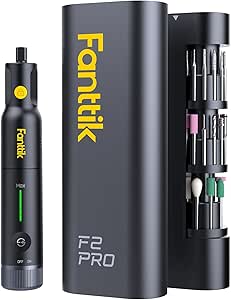
| Fanttik F2 Pro Cordless Rotary | Battery powered | 4 volts | 5,000–25,000 RPM | 55 |
| VEVOR 780W Flex Shaft Grinder | Corded electric | 120 volts | 500–23,000 RPM | — |
| Dremel Stylo+ 2050-15 Rotary T | Corded electric | 120 volts | 5,000–22,000 RPM | 15 |
| HYCHIKA 180W Variable Speed Ro | Corded electric | 120V | 8,000–35,000 RPM | — |
| Dremel 4300-5/40 Rotary Tool K | Corded electric | 120V | 5,000–35,000 RPM | — |
| Refenlan 1200W Flex Shaft Rota | AC | — | — | 46 pieces |
| WEN 2305 Rotary Tool Kit with | Corded electric | 120V | 8,000–30,000 RPM | — |
| HARDELL Mini Cordless Rotary T | Rechargeable battery | 3.7V | 5,000–18,000 RPM | — |
More Details on Our Top Picks
Dremel 4000-2/32 Corded Rotary Tool Kit
For a wood carver who wants one corded tool for rough shaping and finer cleanup, I’d put the Dremel 4000 first. Its 5,000–35,000 RPM variable-speed range gives more room to adjust for different bits and carving stages than the Fanttik F2 Pro, whose maximum speed is 25,000 RPM. The ergonomic grip is a practical plus for longer sessions, while the two attachments and 32 accessories provide a useful starting selection without the sprawling assortment found in the PHALANX kit. This is still a general-purpose rotary tool, not a dedicated carving machine: the cord limits movement, and its included accessory count is more modest than several alternatives. I’d choose it for balanced control and versatility, but skip it if cordless access or a flex shaft is central to your setup.
Pros:- Broad 5,000–35,000 RPM range supports different carving and finishing tasks
- Ergonomic grip is designed to support comfort and control during extended sessions
- Includes two attachments and 32 accessories for varied workshop jobs
- Supports carving alongside sanding, polishing, cutting, and engraving
Cons:- Corded operation restricts movement around large or awkward workpieces
- The 32-piece accessory set is smaller than the PHALANX kit’s 139 accessories
- Runs on 120-volt power, which limits use where compatible mains power is unavailable
Best for: Wood carvers seeking a versatile, corded tool for both detail work and faster material removal, with a broad speed range and manageable kit size.
Not ideal for: Carvers who work far from an outlet or want a flexible shaft for holding a small handpiece close to the carving.
- Power source:Corded electric
- Voltage:120 volts
- Motor:1.6 amps
- Speed range:5,000–35,000 RPM
- Included attachments:2
- Included accessories:32
- Recommended uses:Cutting, deburring, grinding, polishing, sanding
- Housing material:More than 55% recycled plastic
Our verdict“Choose the Dremel 4000 if you want the most balanced corded option here for varied wood-carving and finishing work.”
PHALANX 180W Variable-Speed Rotary Tool Kit with Flex Shaft and 139 Accessories
The PHALANX P02 makes the strongest case for buyers who want a flex shaft and a large accessory assortment in one kit. For wood carving, the flexible shaft can make close detail work easier by putting a smaller handpiece in your grip rather than the whole motor housing. Its six speed settings cover common craft and DIY jobs, though the listed range starts at 8,000 RPM, higher than the Dremel 4000’s 5,000 RPM minimum; that gives the Dremel more room at the slow end for careful starts. The headline count of 139 accessories is appealing, but quantity alone does not mean every bit will suit a particular carving style. The chuck also needs tightening with a spanner before use, adding a setup step. I’d favor this over the Dremel Stylo+ when a flexible shaft and broad kit matter more than a pen-like grip.
Pros:- Flexible shaft supports detailed work while keeping the main tool body out of the hand
- Six speed settings provide options across carving, sanding, polishing, and other tasks
- Includes 139 accessories and a storage box
- Ventilation holes and a gear guard are designed to support operation and handling
Cons:- Chuck must be tightened with a spanner before use
- Minimum speed of 8,000 RPM is higher than the Dremel 4000’s 5,000 RPM starting point
- A large accessory count may include pieces that do not match a buyer’s carving needs
Best for: Hobby wood carvers who want a flexible shaft and a broad selection of included accessories for varied detail and workshop tasks.
Not ideal for: Carvers who need especially low-speed control or want a simple setup without tightening the chuck with a spanner.
- Power:180W
- Power source:AC
- Voltage:120 volts AC
- Speed range:8,000–32,000 RPM
- Speed settings:6
- Included accessories:139
- Flexible shaft:Included
- Dimensions:9.25 × 1.85 × 2.05 inches
Our verdict“Pick the PHALANX P02 if a flexible shaft and a wide accessory selection outweigh the need for a lower minimum speed or simpler setup.”
Fanttik F2 Pro Cordless Rotary Tool Kit with 55 Accessories
When freedom from a power cord matters more than sustained heavy carving, the Fanttik F2 Pro is the clear cordless choice in this group. At 220 g, it is a compact option for small projects, touch-ups, and carving in locations where a cord would get in the way. Five speed settings run from 5,000 to 25,000 RPM, giving it a lower starting point than the PHALANX P02, but less maximum speed than the Dremel 4000. Its 3,000 mAh battery is listed for approximately 20–120 minutes of use, with runtime varying by speed and material, so long sessions may require a pause. The LED light and speed indicator help with visibility and adjustment, and the magnetic rotating holder keeps the 55 accessories orderly. I would not choose it over a corded model for continuous, demanding material removal.
Pros:- Cordless design offers freedom to move around a project
- Lightweight 220 g body is suited to compact detail work
- LED work light and speed indicator support visibility and adjustment
- 55 accessories come with a rotating magnetic holder and aluminum alloy case
Cons:- Runtime varies from approximately 20 to 120 minutes depending on speed and material
- Maximum speed of 25,000 RPM is below the Dremel 4000’s 35,000 RPM
- Charging time is not specified in the supplied product information
Best for: Carvers working on small projects or at locations without convenient outlets who value a light, cordless tool and organized accessories.
Not ideal for: Woodworkers planning long, demanding carving sessions who need uninterrupted power or a higher maximum speed.
- Power source:Battery powered
- Battery capacity:3,000 mAh
- Voltage:4 volts
- Speed settings:5
- Speed range:5,000–25,000 RPM
- Approximate runtime:20–120 minutes
- Weight:220 g
- Included accessories:55
Our verdict“Choose the Fanttik F2 Pro for portable, small-scale carving when cordless convenience matters more than extended run time or maximum speed.”
VEVOR 780W Flex Shaft Grinder with Foot Pedal and 131 Accessories
The VEVOR is the outlier here: its 780W motor, foot pedal, and 100 cm flex shaft make it better suited to a fixed workbench and sustained, hands-on material work than to a compact handheld carving kit. The low end of its listed range, 500 RPM, is far below the Dremel 4000’s minimum, which may appeal to carvers seeking slower operation for controlled tasks. Its three-jaw chuck accepts accessories from 0.3 to 6.5 mm, offering a broad stated compatibility range. That capability comes with bulk: the unit weighs 6 pounds and is corded, so it is not the pick for moving around a carving or working in tight spaces. I’d also treat the accessory count cautiously: the title lists 131 pieces, while the description says 45. Compared with the PHALANX, this prioritizes a bench setup and pedal control over a clearly stated large accessory assortment.
Pros:- Foot pedal provides hands-free speed control while the handpiece stays on the work
- 100 cm flexible shaft supports detail work at a bench
- Three-jaw chuck accommodates accessories from 0.3 to 6.5 mm
- Listed 500–23,000 RPM range covers slow operation through faster rotary work
Cons:- Corded, 6-pound setup is less portable than the Fanttik F2 Pro
- Accessory count conflicts between the title’s 131 pieces and the description’s 45
- Maximum speed of 23,000 RPM is lower than the Dremel 4000’s 35,000 RPM
Best for: Bench-based woodworkers and carvers who want foot-pedal control, a long flexible shaft, and a tool for varied materials.
Not ideal for: Carvers who need a portable handheld tool, a lightweight setup, or a clearly confirmed accessory count before buying.
- Motor power:780W
- Power source:Corded electric
- Voltage:120 volts
- Speed range:500–23,000 RPM
- Chuck:1/4-inch, three-jaw
- Accessory compatibility:0.3–6.5 mm
- Flexible shaft length:100 cm
- Item weight:6 pounds
Our verdict“Choose the VEVOR for a stationary carving bench where pedal control and a long flex shaft matter more than portability or a consistent accessory count.”
Dremel Stylo+ 2050-15 Rotary Tool Kit with 15 Accessories, Engraving Pen
For lettering, shallow details, and controlled decorative work, the Dremel Stylo+ has a more natural fit than the bulkier Dremel 4000. Its pen-like shape is designed for a precise grip, and the 5,000–22,000 RPM variable-speed range suits light engraving, polishing, and sanding across materials including wood. That focused design is also its main limit: the product information describes it as unsuitable for cutting or drilling and suited to light-duty tasks. Compared with the cordless Fanttik F2 Pro, the Stylo+ needs an outlet but does not depend on battery runtime; compared with the PHALANX P02, it gives up a flex shaft and a much larger accessory set in favor of a more pen-oriented form. I’d choose it for fine marks and surface work, not for removing substantial wood or handling broad, demanding carving jobs.
Pros:- Pen-like design is suited to controlled engraving and fine surface detail
- Variable speed from 5,000 to 22,000 RPM supports light work across different materials
- 6.5-foot cord provides reach from a nearby outlet
- Listed for use on wood, leather, glass, stone, and metal
Cons:- Not suitable for cutting or drilling according to the supplied product information
- Light-duty focus makes it a poor match for substantial material removal
- Includes 15 accessories, fewer than the PHALANX P02’s 139
Best for: Woodcarvers focused on fine decorative detail, lettering, light engraving, and polishing who prefer a pen-style grip.
Not ideal for: Carvers who need to cut, drill, remove substantial material, or work away from a 120-volt outlet.
- Power source:Corded electric
- Voltage:120 volts
- Speed range:5,000–22,000 RPM
- Maximum rotational speed:22,000 RPM
- Cord length:6.5 feet
- Weight:7.2 ounces
- Included accessories:15
- Item dimensions:11.61 × 6.69 × 2.36 inches
Our verdict“Pick the Stylo+ for pen-grip control on fine wood details and engraving, but choose a more capable rotary tool for heavier carving.”
HYCHIKA 180W Variable Speed Rotary Tool Kit with Flex Shaft and 179 Accessories
For wood carvers who want one kit to cover rough shaping and fine detail, the HYCHIKA’s 179 accessories offer more bit options than the Dremel 4300-5/40’s 40-piece set. Its 8,000–35,000 RPM range gives room to slow down for controlled work or speed up for grinding, while the 100cm flex shaft lets you guide the bit without gripping the motor body as closely. That can be useful for longer carving sessions, though the tool still depends on a corded outlet. The tradeoff is a less convenient accessory-change process: its chuck needs manual tightening with a spanner, unlike the Dremel’s tool-less three-jaw chuck. I’d choose it for breadth and flexible reach, not for the quickest bit swaps.
Pros:- 179 accessories provide a wide range of options for carving and finishing tasks.
- 100cm flex shaft supports more precise hand control and can reduce fatigue.
- Variable speed from 8,000 to 35,000 RPM suits both slower detail work and faster grinding.
- Replaceable carbon brushes can extend the motor’s service life.
Cons:- The chuck requires manual tightening with a spanner, making accessory changes less convenient than on the Dremel 4300-5/40.
- Corded power limits mobility around the workshop or outdoors.
Best for: Wood carvers who want a broad selection of bits and a flex shaft for switching between shaping, sanding, and detail work at a bench.
Not ideal for: Carvers who frequently change bits mid-project or need a cordless tool for working away from an outlet.
- Power:180W
- Voltage:120V
- Speed range:8,000–35,000 RPM
- Accessories:179 pieces
- Flex shaft length:100cm (39 in)
- Power source:Corded electric
- Material compatibility:Wood, metal, stone, glass, plastic, and ceramic
Our verdict“Choose the HYCHIKA if you want a generous accessory assortment and flex-shaft reach more than fast, tool-less bit changes.”
Dremel 4300-5/40 Rotary Tool Kit with Pivot Light, 5 Attachments, and 40 Accessories
The Dremel 4300-5/40 is the most control-focused pick here for carving small features where seeing the cut and changing bits smoothly matter more than having a huge accessory pile. Its pivot light can illuminate a recessed or shadowed area, and the universal three-jaw chuck allows tool-less accessory changes. That is a practical advantage over the HYCHIKA 180W kit, which requires a spanner, though the HYCHIKA includes far more accessories. The Dremel’s 5,000–35,000 RPM range also starts lower, giving carvers more scope to work cautiously on delicate details. Its 40 accessories and corded design are less appealing for broad, untethered work, but five attachments add flexibility for a more guided setup.
Pros:- Pivot light helps reveal detail in recessed or poorly lit work areas.
- Three-jaw chuck supports tool-less accessory changes.
- Variable speed starts at 5,000 RPM for controlled detail work.
- Five attachments provide more setup options than a basic tool-and-bit kit.
Cons:- The 40-piece accessory set is smaller than the HYCHIKA’s 179-piece assortment.
- Corded operation restricts movement away from an outlet.
Best for: Carvers making small, detailed pieces who value clear visibility, easy accessory changes, and a kit with multiple attachments.
Not ideal for: Buyers who want the largest included bit selection or need cordless freedom for carving away from a power outlet.
- Power source:Corded electric
- Voltage:120V
- Speed range:5,000–35,000 RPM
- Chuck:Universal three-jaw chuck
- Attachments:5
- Accessories:40
- Weight:1.2 lb
- Dimensions:15.5 × 10.25 × 2 in
Our verdict“Pick the Dremel 4300-5/40 for illuminated, controlled detail carving and convenient bit changes rather than maximum accessory count.”
Refenlan 1200W Flex Shaft Rotary Tool with 46 Accessories
Unlike handheld kits such as the WEN 2305, the Refenlan is built around a hanging flex-shaft setup and foot-pedal speed control. Keeping the motor suspended while the handpiece does the work can suit longer sessions and gives the carver a free hand to adjust speed without reaching for a dial. Its stepless control spans 0–30,000 RPM, which offers a broader low-speed starting point than the WEN’s 8,000 RPM minimum. The stated 1200W power figure is high relative to the other kits, but the supplied details do not provide enough performance feedback to judge how that translates into sustained carving under load. With 46 accessories, it is less stocked than the HYCHIKA; this pick favors pedal control and a workstation layout over bit quantity.
Pros:- Foot pedal allows speed adjustment without taking a hand off the work.
- Stepless control from 0 to 30,000 RPM offers a low-speed starting point for careful work.
- Flexible shaft and hanging design support reach and reduce the need to hold the motor.
- Adjustable universal chuck accepts most standard bits.
Cons:- The 46 included accessories are fewer than the HYCHIKA’s 179-piece set.
- The available product details provide limited performance feedback for judging sustained carving work.
Best for: Bench-based wood carvers who prefer a hanging flex-shaft handpiece and want to vary speed with a foot pedal while keeping both hands near the work.
Not ideal for: Beginners seeking a simple handheld kit, or buyers who want extensive performance evidence and a larger included accessory set.
- Brand:Refenlan
- Model:REDMAC01SL-1
- Power:1200W
- Maximum speed:30,000 RPM
- Speed control:Stepless foot pedal
- Chuck:Universal adjustable
- Included accessories:46 pieces
- Power source:AC
- Warranty:1 year
Our verdict“Choose the Refenlan for a foot-controlled, hanging flex-shaft setup, provided you are comfortable with limited performance information.”
WEN 2305 Rotary Tool Kit with Flex Shaft
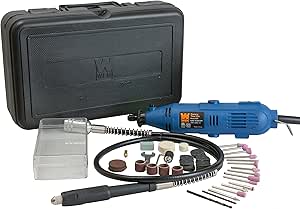
The WEN 2305 makes a practical entry point for wood carving with a flex shaft: it includes more than 80 accessories, a case, and two collets without adding a complex pedal or hanging-motor setup. Its 8,000–30,000 RPM range covers common carving, sanding, and polishing jobs, though it does not reach the HYCHIKA’s 35,000 RPM ceiling or start as low as the Dremel 4300-5/40. That makes it a straightforward fit for general hobby work, rather than the strongest choice for very delicate low-speed cuts or faster grinding. The two collet sizes also narrow bit compatibility compared with an adjustable universal chuck. I’d favor the WEN for a compact, organized starter setup, while experienced carvers needing a wider speed range may prefer the other corded kits.
Pros:- Flex shaft supports more precise handling for detail work.
- More than 80 accessories cover a range of carving and finishing tasks.
- Includes two collets for 2.3mm and 3.2mm shank accessories.
- Storage case keeps the tool and included accessories together.
Cons:- The 8,000–30,000 RPM range is narrower than the Dremel 4300-5/40’s 5,000–35,000 RPM range.
- Corded operation limits where the tool can be used.
- Compatibility is limited to the included 2.3mm and 3.2mm collet sizes.
Best for: Hobby wood carvers who want a corded starter kit with a flex shaft, a useful accessory assortment, and a storage case.
Not ideal for: Carvers needing speeds below 8,000 RPM, a maximum above 30,000 RPM, or broader bit compatibility than its two collets provide.
- Voltage:120V
- Power:1 amp
- Power source:Corded electric
- Speed range:8,000–30,000 RPM
- Accessories:80-piece set
- Collet sizes:2.3mm and 3.2mm
- Weight:3.6 lb
- Warranty:1 year
Our verdict“The WEN 2305 suits hobbyists who want a flex shaft and a well-stocked basic kit, but not the widest speed or bit compatibility.”
HARDELL Mini Cordless Rotary Tool, 5-Speed, 69-Piece Kit
For small carvings and quick touch-ups, the HARDELL is easier to handle away from a bench than corded options such as the WEN 2305. Its 0.14kg body and cordless design suit light detail work, while five speed settings, an LED light, and 69 accessories give beginners a useful range of basic tasks to try. The limitation is power and speed headroom: it tops out at 18,000 RPM and is explicitly not intended for heavy-duty projects, unlike the 35,000 RPM HYCHIKA. Its stated runtime of up to 200 minutes is helpful, but the battery capacity is not specified, so buyers have less information for planning sustained work. I’d treat it as a portable detail tool, not a substitute for a full-size rotary kit when carving dense wood or removing material quickly.
Pros:- Cordless design makes it convenient for quick work away from an outlet.
- Light 0.14kg body supports easy handling for fine tasks.
- Five speed settings and an LED work light aid basic detail work.
- 69 accessories provide a selection for carving, sanding, grinding, and polishing.
Cons:- Its 18,000 RPM maximum and stated light-duty scope make it unsuitable for heavy material removal.
- Battery capacity is not specified, making runtime expectations harder to judge.
Best for: Beginners and makers doing occasional small-scale wood detail work who value a lightweight tool that can be used without a cord.
Not ideal for: Carvers shaping dense wood, removing material quickly, or needing a clearly specified battery capacity for long sessions.
- Voltage:3.7V
- Power source:Rechargeable battery
- Speed settings:5
- Speed range:5,000–18,000 RPM
- Continuous runtime:Up to 200 minutes
- Accessories:69 pieces
- Weight:0.14kg
- Features:Cordless, variable speed, LED work light
Our verdict“Choose the HARDELL for portable, light-duty detail carving, not as the main tool for demanding or sustained wood removal.”
How We Picked
I evaluated these rotary tools based on their specific utility for wood carving, prioritizing factors like speed range, torque stability, and accessory quality. Power output alone was not the deciding factor; instead, I looked at how each tool handled the specific demands of wood, such as the need for low speeds to prevent burning and high speeds for clean cuts in dense grains. Build quality and ergonomic design were also weighed heavily, as carving requires sustained precision that bulky or unbalanced tools can hinder. I also considered the versatility of included accessories, favoring kits that provide carbide burrs and specialized wood-cutting bits over generic metalworking attachments.| wood carving rotary tool | Power source |
|---|---|
| Dremel 4000-2/32 Corded Rotary | Corded electric |
| PHALANX 180W Variable-Speed Ro | AC |
| Fanttik F2 Pro Cordless Rotary | Battery powered |
| VEVOR 780W Flex Shaft Grinder | Corded electric |
| Dremel Stylo+ 2050-15 Rotary T | Corded electric |
| HYCHIKA 180W Variable Speed Ro | Corded electric |
| Dremel 4300-5/40 Rotary Tool K | Corded electric |
| Refenlan 1200W Flex Shaft Rota | AC |
| WEN 2305 Rotary Tool Kit with | Corded electric |
| HARDELL Mini Cordless Rotary T | Rechargeable battery |
Factors to Consider When Choosing Wood Carving Rotary Tools
Selecting a rotary tool for wood requires looking beyond basic wattage. The following factors help determine which tool will actually enhance your workflow rather than hinder it.Motor Power and Torque Stability
While wattage indicates raw power, torque stability under load is what matters when carving dense hardwoods like oak or maple. A tool that stalls when pressed into the grain forces you to lift and reposition, ruining the flow of a cut. High-end models maintain consistent RPMs even when the bit is engaged, allowing for deeper, cleaner cuts without burning the wood. Cheaper tools often drop speed significantly under pressure, leading to tear-out and rough finishes that require excessive sanding later.
Speed Range and Control
Wood is a variable material that reacts differently to friction at different speeds. A wide speed range, typically 5,000 to 35,000 RPM, allows you to use low speeds for aggressive roughing out with large burrs and high speeds for fine detailing with small bits. Tools with limited speed ranges or poor low-end control often struggle with this balance. If a tool cannot drop below 10,000 RPM effectively, it may scorch soft woods like pine or basswood, requiring more material removal than necessary to fix the damage.
Flex Shaft vs. Handpiece Design
The physical design of the tool dictates your comfort during long sessions. Flex shaft systems separate the motor from the grip, allowing you to hold a lightweight pen-like attachment while the heavier motor sits on the bench. This reduces hand fatigue and improves visibility for intricate work. In contrast, all-in-one corded tools are more portable but can feel heavy during extended detailing. For large relief carvings, a flex shaft is often superior, while smaller projects may benefit from the direct feedback of a solid handpiece.
Accessory Quality and Compatibility
Many kits boast hundreds of accessories, but material quality is the real differentiator. Look for carbide burrs and high-speed steel (HSS) bits specifically designed for wood, which stay sharper longer than generic steel. Poor-quality bits dull quickly, generating excessive heat and smoke rather than clean chips. Furthermore, check if the tool uses standard collet sizes (usually 1/8-inch) so you can easily replace worn bits with higher-quality aftermarket options, rather than being locked into a proprietary system.
Ergonomics and Grip Comfort
Wood carving is a tactile art form that relies on subtle hand movements. A slim, ergonomic grip allows for better control of the bit’s angle and pressure. Bulky handles can obscure your view of the cutting line and make fine adjustments difficult. Pen-style tools offer the highest precision for detailed work, while larger bodies are better suited for heavy stock removal. Your primary use case—whether it is spoon carving, figurine detailing, or large relief work—should dictate the form factor you choose.
Frequently Asked Questions
Is a cordless rotary tool powerful enough for wood carving?
Cordless tools have improved, but they generally lack the sustained torque of corded models for dense hardwoods. While a high-end cordless unit like the Fanttik F2 Pro can handle softwoods and light detailing, it may stall under heavy load in oak or walnut. For serious woodcarvers working with mixed materials, a corded tool provides consistent power and eliminates the anxiety of battery life during long sessions. Cordless is best reserved for portability needs or light touch-ups, not primary stock removal.Why do my wood carving bits burn the wood?
Burning usually results from using too high a speed or a dull bit, which generates excessive friction heat instead of clean cuts. You should lower the RPM when using larger burrs or working with soft woods, as high speeds can char the grain instantly. Additionally, ensure your bits are sharp and specifically designed for wood; metal-cutting bits often have tooth geometries that pack wood fibers rather than ejecting them. Regularly clearing chip buildup from the bit flutes also helps maintain cool cutting temperatures.What is the advantage of a flex shaft for carving?
A flex shaft decouples the heavy motor from the handpiece, allowing you to hold a lightweight, pen-like grip while the motor rests on your workbench. This setup significantly reduces hand fatigue and improves visibility, as your hand is not blocking the view of the cutting area. It also allows for more precise angle adjustments because you are manipulating a lighter tool. For intricate detail work or long sessions, a flex shaft offers superior control compared to holding the entire motor assembly in your hand.Can I use metalworking bits for wood carving?
While possible, it is not recommended for optimal results. Metalworking bits often have different tooth geometries and coatings designed for hard metals, which can cause tear-out or burning in wood. Wood-specific bits, particularly carbide burrs, have aggressive flutes designed to eject wood chips efficiently, keeping the cut cool and clean. Using the wrong bit type can lead to poor surface finishes and premature bit wear, so it is worth investing in a set of wood-specific accessories for your rotary tool.How important is variable speed for beginners?
Variable speed is critical even for beginners because wood density varies wildly between projects. A beginner might start with soft basswood and move to harder pine or oak, each requiring different speeds to avoid damage. Fixed-speed tools are unforgiving; they may be too fast for soft wood or too slow for hard wood. A variable-speed dial allows you to experiment and find the sweet spot for each material, making the learning curve less frustrating and helping you develop better control over your cuts.Conclusion
Choosing the right wood carving rotary tools ultimately depends on your primary projects and comfort preferences. For the majority of carvers, the Dremel 4000-2/32 remains the best overall pick due to its balance of power, speed control, and accessory availability. If you require more raw torque for heavy stock removal, the PHALANX 180W or VEVOR 780W flex shaft systems offer superior power and reduced hand fatigue. Beginners should consider the Dremel Stylo+ for its lightweight, pen-like design that encourages precision, while those needing portability might prefer the Fanttik F2 Pro despite its power limitations. Match the tool’s strength to your wood density and the level of detail you aim to achieve.Fall Picks
fall essentials
As an affiliate, we earn on qualifying purchases.