
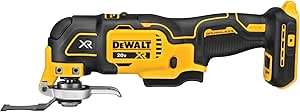
Cordless oscillating multi tools have become the go-to solution for flush cuts, sanding, grout removal, and detail work where a cord would slow you down — but choosing the right one means balancing oscillation speed range, battery platform, and accessory compatibility. The DEWALT 20V MAX XR Brushless 3-Speed Oscillating Multi-Tool Kit earns my best overall pick for its variable three-speed control, brushless motor efficiency, and included battery in a complete kit. The DEWALT ATOMIC DCS354B stands out as the best compact option for tight spaces, while the KIMO 20V Brushless and WORKPRO 20V kits prove budget buyers no longer have to sacrifice brushless motors or accessory bundles. The main tradeoff in this category: premium brushless tools with depth-of-cut features cost more upfront, while affordable kits load you with accessories but often cut slower and vibrate more. Read on for the full breakdown of all 13 models.

Get business pricing on tools and workshop supplies
- Business-only prices and quantity discounts
- Tax-exempt purchasing
- Multiple users, one account, clear invoices
Complete the kit


Key Takeaways
- DEWALT dominates the top of this comparison with four entries, and the gap between its XR brushless models and budget brands shows up mainly in vibration control and low-speed precision, not raw power.
- Budget kits under the DEWALT DCS356D1’s tier — like AVID POWER, DEKOPRO, and the generic two-battery kit — compensate with 22–28 accessories, which matters more for first-time buyers than for pros who already own blades.
- The Synxiter and tool-only DEWALT and Makita models expose a platform decision: if you already own 20V MAX or 18V LXT batteries, buying bare tools saves substantial money; if not, a kit with batteries included is almost always the better deal.
- A three-speed selector (found on the DEWALT 3-Speed kit) is the single most useful differentiator for fine work, letting you drop to low speeds for plastics without melting them — something single-mode tools handle less gracefully.
- Ryobi‘s ONE+ entry is the weakest raw performer of the name-brand tools, but its enormous battery ecosystem makes it the most sensible choice for homeowners already invested in ONE+.




| cordless oscillating multi tool | Voltage | Motor |
|---|---|---|
| CRAFTSMAN V20 Cordless Oscilla | — | — |
| DEWALT ATOMIC 20V MAX Brushles | 20V MAX | Brushless |
| DEWALT 20V MAX XR Cordless Osc | — | Brushless |
| Makita XMT03Z 18V LXT Lithium- | 18V | — |
| KIMO 20V Brushless Cordless Os | 20V | Brushless |
| Synxiter Cordless Oscillating | — | Brushless |
| AVID POWER 20V Cordless Oscill | 20V | — |
| DEKOPRO 20V Cordless Oscillati | 20V | Brushless |
| Cordless Oscillating Multi-Too | — | Brushless |
| DEWALT 20V MAX XR Cordless Osc | 20V MAX | Brushless |
| WORKPRO 20V Brushless Cordless | 20V | Brushless |
| DEWALT 20V MAX XR Brushless 3- | 20 volts | Brushless |
| Ryobi ONE+ 18V Cordless Oscill | 18V | — |
More Details on Our Top Picks
CRAFTSMAN V20 Cordless Oscillating Tool Kit (CMCE501D1)
This CRAFTSMAN kit earns its spot by solving the problem that frustrates most first-time buyers: it actually includes a battery, charger, blades, and sandpaper in one box. Compare that to the DEWALT DCS354B and Makita XMT03Z, which ship as bare tools, and the value of a ready-to-work package becomes obvious for anyone starting from scratch. The variable speed dial gives beginners a forgiving learning curve, while tool-free attachment changes remove the fumbling that slows down new users. The tradeoff is a brushed motor and less runtime headroom than the brushless DEWALT models, so it will run out of steam sooner on heavy demolition work. If you already own V20 batteries from drills or saws, this pick makes even more sense as a system expansion.
Pros:- Complete kit includes battery, charger, blades, and sandpaper
- Variable speed dial for controlled work on delicate materials
- Tool-free universal attachment changes
- LED work light for dark corners and under-sink jobs
Cons:- Brushed motor offers less runtime than brushless competitors
- VERSATRACK clip and storage accessories sold separately
Best for: DIYers and homeowners starting a cordless collection who want everything in one box
Not ideal for: Contractors doing sustained cutting — the brushed motor lacks the runtime of brushless rivals
- Model:CMCE501D1
- Power source:Cordless battery
- Battery system:CRAFTSMAN V20
- Attachment changes:Tool-free universal attachment
- Speed control:Variable speed dial
- Work light:LED
- Included:Blades, sandpaper, battery, and charger
Our verdict“The most sensible entry point for buyers who want to open the box and start cutting the same day.”
DEWALT ATOMIC 20V MAX Brushless Cordless Oscillating Tool (DCS354B)
The ATOMIC DCS354B stands out for its compact brushless design, which translates directly into better reach inside cabinets, between studs, and under toe-kicks where the longer DEWALT DCS356B feels clumsy. The brushless motor delivers up to 57% more runtime than brushed models like the CRAFTSMAN CMCE501D1, and the dual-grip variable-speed trigger lets you feather speed mid-cut rather than committing to a dial setting beforehand. The universal adapter means you’re never locked into one accessory brand. The real tradeoff: this is a bare tool, so unlike the CRAFTSMAN kit, you’ll need to already own 20V MAX batteries and a charger to make it worthwhile. It also lacks the three-speed preset selector of its bigger XR sibling, giving you manual control instead of push-button convenience.
Pros:- Brushless motor delivers up to 57% more runtime than brushed models
- Compact body excels in tight spaces and overhead work
- Dual-grip variable-speed trigger for precise control
- Universal adapter fits most accessory brands
Cons:- Tool only — battery and charger not included
- No included blades or accessories specified
- Lacks the three-speed preset selector of the DCS356B
Best for: Owners of DEWALT 20V MAX batteries who want a compact, high-runtime tool for tight-space work
Not ideal for: Buyers without existing DEWALT batteries — the total cost climbs fast once you add power and a charger
- Model:DCS354B
- Voltage:20V MAX
- Motor:Brushless
- Power source:Cordless
- Accessory compatibility:Universal adapter fits most accessory brands
- Accessory changes:Quick-change, no wrench required
- Lighting:Built-in LED
- Included:Tool only
Our verdict“The best choice for DEWALT loyalists who prioritize compact handling and runtime over included extras.”
DEWALT 20V MAX XR Cordless Oscillating Multi-Tool with Brushless Motor (DCS356B)
This is the performance benchmark of the roundup. The three-speed selector with ranges up to 20,000 OPM gives you preset control the DCS354B doesn’t offer — dial in a setting, pull the dual-grip trigger, and focus on the cut instead of feathering speed. The brushless motor keeps runtime competitive with anything here, and it cuts more aggressively than the CRAFTSMAN CMCE501D1 on demanding materials like hardwood and nails. The universal adapter and wrench-free accessory changes round out a genuinely pro-focused package. The drawback is the same as the ATOMIC: it’s a bare tool with only two wood-cutting blades included, so buyers starting fresh will spend more before making a single cut. It’s also physically larger than the ATOMIC, which matters in cramped spots.
Pros:- Three-speed selector spans 0–20,000 OPM for task-matched control
- Brushless motor delivers up to 57% more runtime than brushed models
- Quick-change accessory system with no wrench
- Universal adapter accepts most accessory brands
Cons:- Battery and charger not included
- Only two wood-cutting blades in the box
- Larger footprint than the ATOMIC DCS354B for tight spaces
Best for: Serious DIYers and pros who already run DEWALT 20V MAX batteries and want maximum cutting capability
Not ideal for: Occasional users — paying for pro-grade performance you’ll rarely push is wasted money, and you still need to buy a battery
- Model:DCS356B
- Power:20V MAX XR cordless
- Motor:Brushless
- Speed settings:3
- Oscillation speed:0–13,000 / 0–17,000 / 0–20,000 OPM
- Accessory system:Quick-change
- Included accessories:Two wood-cutting blades
- Included:Tool only
Our verdict“The most capable tool in this batch, provided you already have DEWALT batteries and will actually use its full potential.”
Makita XMT03Z 18V LXT Lithium-Ion Cordless Multi-Tool (Tool Only)
Where the DEWALT models feel like power tools, the XMT03Z leans into handling. The slim 2-3/8-inch barrel grip is the smallest in this lineup, making extended sanding and detail work far less fatiguing than the boxier DEWALT DCS356B. Its 3.2° oscillation angle is also the most aggressive here, moving material faster than the KIMO’s 3° arc on cuts and sanding passes alike. Variable speed across 6,000–20,000 OPM plus included adapters for competitive accessories means you’re not locked into Makita blades. The tradeoff is familiar: it’s a bare tool requiring Makita 18V LXT batteries with the Star symbol, which is a real limitation if you’ve built your kit around another brand. Makita loyalists, though, get arguably the best-feeling tool of the five.
Pros:- Slim 2-3/8″ barrel grip reduces hand fatigue in long sessions
- Aggressive 3.2° oscillation angle cuts and sands faster
- Variable speed from 6,000 to 20,000 OPM
- Includes adapters fitting most competitive accessories
Cons:- Battery and charger sold separately
- Requires Makita 18V LXT batteries with Star symbol
Best for: Makita 18V LXT owners and anyone doing long sanding or detail sessions where grip comfort matters
Not ideal for: Buyers on other battery platforms — the required LXT battery and charger add real cost and clutter
- Voltage:18V
- Battery type:Lithium-Ion (sold separately)
- Speed range:6,000–20,000 OPM
- Oscillation angle:3.2°
- Barrel grip diameter:2-3/8″
- Included:Adapters for competitive accessories
Our verdict“The most comfortable tool here for extended sanding and detail work, if you’re already in or willing to join the Makita ecosystem.”
KIMO 20V Brushless Cordless Oscillating Multi-Tool
The KIMO occupies the sweet spot between the bare-tool pro models and budget kits: you get a brushless motor, a 2.0Ah battery, and six speed settings for less outlay than building around the tool-only DEWALT DCS356B. Its 5,000–21,000 OPM range actually tops this lineup at the high end, and thoughtful touches — the auxiliary handle, dual-locking mechanism, and battery indicator — are features the pricier Makita XMT03Z doesn’t offer at all. The 3° oscillation angle sits just behind the Makita’s 3.2°, which most users will never notice. The compromises are runtime and ecosystem: a single small 2.0Ah battery drains quickly under heavy cutting, and KIMO’s platform has far less depth than CRAFTSMAN’s V20 or DEWALT’s 20V MAX lines if you plan to expand later.
Pros:- Brushless motor with six speed settings up to 21,000 OPM
- Battery, tool-free blade changes, and dual-locking system included
- Auxiliary handle and LED light improve two-handed control
- Battery indicator lets you monitor remaining charge
Cons:- Only one 2.0Ah battery included, limiting runtime on demanding jobs
- Small accessory ecosystem compared to DEWALT or Makita platforms
Best for: Budget-conscious DIYers who want brushless power and included battery without joining a big-brand ecosystem
Not ideal for: Heavy users — the single 2.0Ah battery limits long work sessions with no second battery to swap in
- Brand:KIMO
- Voltage:20V
- Motor:Brushless
- Speed settings:6
- Speed range:5,000–21,000 OPM
- Oscillation angle:3°
- Battery capacity:2.0Ah
- Blade change:Tool-free quick-change system
- Features:Dual-locking mechanism, LED light, auxiliary handle, battery indicator
Our verdict“A well-equipped brushless kit for occasional-to-moderate DIYers who want maximum features per dollar over platform depth.”
Synxiter Cordless Oscillating Multi-Tool for DeWalt 20V Batteries
This option stands out for a single reason that matters more than anything else here: if you already own DeWalt 20V batteries, it slots into your setup for the cost of a bare tool. Compared with the DEWALT DCS356D1, which costs more as a full kit, the Synxiter trades brand-name refinement for a brushless motor, six speeds up to 21,000 OPM, and a genuinely generous accessory loadout — blades, a flexible scraper, sanding gear, and an auxiliary handle. That handle is something the AVID POWER kit omits, and it helps with control during long plunge cuts. The tradeoff is straightforward: no battery in the box, so first-time buyers will spend more to get running, and there’s no escape hatch if you ever switch battery platforms.
Pros:- Works with existing DeWalt 20V batteries, saving repeat buyers money
- Brushless motor with six speed settings up to 21,000 OPM
- unusually deep accessory kit including an auxiliary handle and flexible scraper
- Tool-free blade changes and an LED work light
Cons:- Battery and charger not included — a hidden cost for newcomers
- Locked to DeWalt 20V batteries only, with no adapter flexibility
Best for: DIYers who already run DeWalt 20V tools and want a cheap, accessory-rich add-on without buying another battery ecosystem
Not ideal for: Buyers starting from scratch with no DeWalt batteries — the ‘battery not included’ gap makes an all-in-one kit like the DEKOPRO a better starting point
- Brand:Synxiter
- Power source:Battery powered; DeWalt 20V compatible (battery not included)
- Motor:Brushless
- Speed range:6,000–21,000 OPM across 6 settings
- Oscillating angle:3°
- Accessories:4 saw blades, flexible scraper, sanding pad holder, 15 sanding papers, auxiliary handle
- Weight:1.23 kg
Our verdict“A smart budget add-on for DeWalt households, but anyone without a DeWalt battery on the shelf should buy a complete kit instead.”
AVID POWER 20V Cordless Oscillating Multi-Tool with 28 Accessories
For a first multi-tool, this model makes the most sense because everything you need is in one box: tool, 2.0Ah battery, charger, and 28 accessories. Where the Synxiter assumes you already own batteries, AVID POWER assumes nothing — that’s the difference between a starter kit and an enthusiast’s add-on. The six speed settings handle typical household cutting, sanding, and scraping, and the front LED is genuinely useful under cabinets. The compromises are real, though: it tops out at 18,000 OPM where the Synxiter reaches 21,000, it’s rated for light-to-medium duty only, and the 4–5 hour charge time means downtime if you don’t plan ahead. It also lacks metal-cutting bi-metal blades, so nail-embedded trim work needs an extra purchase.
Pros:- Complete kit with battery, charger, and 28 accessories included
- Six speed settings cover cutting, sanding, and scraping basics
- Front LED illuminates shadowed work areas
- Lightweight and genuinely portable for household use
Cons:- Not built for heavy-duty jobs or dense materials
- 4–5 hour charging time limits all-day workflow
- No bi-metal blades included for cutting metal or nails
Best for: First-time tool buyers and occasional DIYers who want a complete, ready-to-work kit for around-the-house tasks
Not ideal for: Frequent or heavy-duty users — the capped speed, brushed-duty rating, and long recharge time will frustrate serious projects
- Brand:AVID POWER
- Voltage:20V
- Battery:2.0Ah (included)
- Speed range:8,000–18,000 OPM across 6 settings
- Oscillation angle:2.8°
- Charging time:4–5 hours
- Accessories:28 pieces
Our verdict“The easiest on-ramp into cordless multi-tools for casual homeowners, as long as expectations stay in light-duty territory.”
DEKOPRO 20V Cordless Oscillating Multi-Tool with Battery, 25 Accessories
This pick splits the difference between the AVID POWER starter kit and premium options like the DEWALT DCS356D1: you get a brushless motor and a heftier 4.0Ah battery, double the capacity of AVID’s included cell, while still arriving as a fully outfitted kit with 25 accessories. The 3.2° oscillation angle is the widest in this batch, which translates into faster, more aggressive stock removal when you’re cutting trim or scraping adhesive. Tool-free blade changes and a soft-grip, low-vibration handle round out a package that feels a class above the entry-level kits. The main limitation is single-battery runtime — the Makita-compatible kit in this lineup includes two batteries — so long renovation days will involve coffee-break recharges. And at nearly five pounds, it’s the heaviest here for overhead work.
Pros:- Brushless motor paired with an included 4.0Ah battery for longer work sessions
- Widest oscillation angle in this batch (3.2°) for faster cuts
- 25 accessories, charger, and tool-free blade changes out of the box
- Soft-grip, low-vibration handle improves comfort on long tasks
Cons:- Only one battery and charger included, limiting continuous runtime
- At 4.88 lbs, heavier than most competitors for overhead use
Best for: Weekend renovators who want brushless power and a big battery in one purchase without paying pro-tool prices
Not ideal for: All-day trade users or anyone doing lots of overhead cutting — one battery and 4.88 lbs of weight add up over a full shift
- Brand:DEKOPRO
- Voltage:20V
- Battery:4.0Ah (included)
- Motor:Brushless
- Speed range:5,000–18,000 OPM across 6 presets
- Oscillation angle:3.2°
- Accessories:25 pieces
- Weight:4.88 lbs
Our verdict“The most complete single-box purchase for serious DIYers, provided one battery is enough for your typical project length.”
Cordless Oscillating Multi-Tool Kit with Two Batteries and 22 Accessories
This is the only kit in this batch that ships with two batteries, and that changes how you work: one charges while the other runs, effectively eliminating the downtime that plagues the single-battery DEKOPRO and AVID POWER kits. It’s built around Makita 18V battery compatibility, which makes it a natural bare-tool-style purchase for Makita households — and if you already own Makita packs, the included pair is a bonus rather than a redundancy. The 2,100–21,000 OPM range is the widest here, giving it a genuine low end for delicate sanding that the AVID can’t match. Two caveats temper the enthusiasm: the listed oscillation angle is inconsistent between the title and description (3° vs 4°), and the accessory count, while solid, trails the AVID’s 28-piece set.
Pros:- Two included batteries enable near-continuous work with swap-and-charge workflow
- Widest speed range in this batch (2,100–21,000 OPM) for delicate to aggressive tasks
- Brushless motor designed for efficiency and longevity
- Auxiliary handle and tool-free quick-change system included
Cons:- Oscillation angle listed inconsistently (3° in description vs 4° in title), creating spec uncertainty
- Makita 18V-only battery compatibility limits cross-platform use
Best for: Makita 18V tool owners and anyone whose projects outlast a single battery charge
Not ideal for: Households on DeWalt, Ryobi, or other battery platforms — the Makita-only compatibility means buying into a second ecosystem
- Power source:Battery powered
- Battery compatibility:Makita 18V
- Batteries included:2 lithium-ion packs
- Motor:Brushless
- Speed range:2,100–21,000 OPM across 6 settings
- Oscillating angle:3° (description) / 4° (title)
- Accessories:22-piece kit
Our verdict“The runtime champion of this lineup — ideal for Makita owners or long-session DIYers who hate waiting on a charger.”
DEWALT 20V MAX XR Cordless Oscillating Multi-Tool Kit (DCS356D1)
This is the pick I’d point most serious buyers toward, and the reasoning comes down to refinement where it counts. The dual-grip variable-speed trigger lets you feather the speed mid-cut — something none of the preset-dial kits here, including the DEKOPRO and Synxiter, can do — which matters when a blade binds or you’re easing into a finish surface. The quick-change system plus universal adapter means you’re never locked into one accessory brand, a flexibility the closed ecosystems of the budget kits don’t offer. And the brushless motor stretches runtime well beyond brushed equivalents. The tradeoffs: with only three speed settings you lose the fine-grained dial control of six-speed rivals, the accessory bundle is thinner than the 25–28 piece kits above, and you pay a premium for the DEWALT name and durability.
Pros:- Dual-grip variable-speed trigger gives real-time control during cuts
- Universal adapter accepts most accessory brands, avoiding lock-in
- Brushless motor delivers substantially more runtime than brushed designs
- Complete kit with battery, charger, blades, and sandpaper
Cons:- Only three speed settings versus six on most rivals
- Smaller accessory bundle than the value-oriented kits
- Priced at a premium over comparable budget kits
Best for: Regular DIYers and pros who want long-term durability, accessory-brand freedom, and trigger-based speed control
Not ideal for: Budget-focused buyers or those wanting a maxed-out accessory bundle — the included blade selection is modest compared to value kits
- Model:DCS356D1
- Voltage:20V MAX
- Motor:Brushless
- Speed settings:3-speed selector with variable-speed trigger
- Accessory change:Quick-change, tool-free
- Accessory compatibility:Most oscillating tool accessory brands via universal adapter
- Included:Battery, charger, blades, sandpaper
Our verdict“The most controllable and future-proof cordless multi-tool in this batch — worth the premium if you’ll use it often, overkill for a one-off project.”
WORKPRO 20V Brushless Cordless Oscillating Multi-Tool Kit
This option stands out for packing a brushless motor and six speed settings into a kit priced well below premium brands. That granularity of control is unusual at this end of the market — the DEWALT DCS356C1 offers only three speeds, so the WORKPRO actually gives finer dialing for delicate tasks like trim work or detail sanding. The tool-free blade change and universal accessory interface mean you won’t be locked into proprietary blades, which keeps long-term costs down compared with brand-specific systems.
The tradeoff is vagueness: runtime figures and battery details aren’t well documented, so heavy users may want a spare battery on hand. Vibration is also more noticeable than on the Ryobi PCL430’s low-vibration build. This pick makes the most sense for occasional DIYers who want brushless performance without the professional price tag.
Pros:- Brushless motor reaches up to 19,000 OPM for efficient cutting and sanding
- Six speed settings offer finer control than many three-speed rivals
- Tool-free blade changes with universal fit accept most accessory brands
- Built-in LED light illuminates the cut line in dark corners
Cons:- Battery and runtime details are poorly documented, making planning long jobs difficult
- Noticeable vibration requires a firm grip during extended use
Best for: DIYers and weekend renovators who want brushless power and fine speed control on a budget
Not ideal for: Contractors doing all-day work — undocumented runtime and higher vibration make it less comfortable for continuous use
- Voltage:20V
- Motor:Brushless
- Maximum speed:19,000 OPM
- Speed settings:6
- Accessory interface:Universal fit
- Blade changes:Tool-free
- Work light:LED
Our verdict“A smart buy for hobbyists who want brushless speed control and universal blade compatibility without paying pro-tool prices.”
DEWALT 20V MAX XR Brushless 3-Speed Oscillating Multi-Tool Kit
This model is better suited to buyers who want everything in the box: battery, charger, blades, adapter, and bag, with a 3-year limited warranty backing it up. Compared with the WORKPRO kit, the DEWALT’s three-speed selector feels coarser, but the addition of a variable-speed trigger bridges that gap — you get preset ranges plus trigger feathering for plunge cuts and sanding. The brushless motor delivers up to 57% more runtime than comparable brushed tools, which translates to fewer mid-job battery swaps.
Compared with the tool-only DEWALT DCS356B, this kit version spares you the separate battery purchase, which is where bare-tool bargains often fall apart for first-time buyers. The tradeoff is weight and cost: at 3 pounds with battery attached, it’s heftier than bare options, and you’re paying a premium for the DEWALT ecosystem and reliability. For tradespeople already on 20V MAX, this is the low-friction choice.
Pros:- Complete kit includes battery, fast 1-hour charger, blades, adapter, and bag
- Brushless motor delivers up to 57% more runtime than brushed equivalents
- Three-speed selector plus variable-speed trigger offers layered control
- 3-year limited warranty and DEWALT service network provide long-term peace of mind
Cons:- Premium price point compared with budget kits bundling far more accessories
- Heavier than bare-tool alternatives once the battery is attached
Best for: Tradespeople and serious DIYers already invested in DEWALT 20V MAX batteries who want a ready-to-work kit
Not ideal for: Buyers on a tight budget or those starting from scratch with no other 20V MAX tools — cheaper complete kits like the DEKOPRO offer more accessories for less
- Model:DCS356C1
- Voltage:20 volts
- Motor:Brushless
- Speed settings:3
- Maximum speed:20,000 OPM
- Battery charge time:1 hour
- Battery and charger:Both included
- Weight:3 pounds
- Warranty:3-year limited
Our verdict“The most hassle-free choice for pros who want a warranty-backed, ready-out-of-the-box multi-tool in the DEWALT ecosystem.”
Ryobi ONE+ 18V Cordless Oscillating Multi-Tool (Tool Only)
This pick makes the most sense for one specific group: the millions of households already stocked with Ryobi ONE+ 18V batteries. As a bare tool, the PCL430 turns batteries you already own into a capable multi-tool for a fraction of a full kit’s cost — a value angle the DEWALT DCS356C1 kit can’t match if you’re starting from zero Ryobi gear. Its low-vibration design and lock-on button make it the most comfortable option here for long sanding sessions, outpacing the WORKPRO on fatigue management.
The variable speed dial up to 20,000 OPM matches the DEWALT’s top speed, though without preset speed detents you’re dialing by feel. The real drawbacks are the bare-tool format: no battery, no charger, and possibly no accessories, so buyers starting from scratch should total up those costs before committing. For existing ONE+ owners, though, it’s an easy add-on with almost no downside.
Pros:- Variable speed up to 20,000 OPM handles both precision and aggressive cuts
- Low-vibration design reduces fatigue during long tasks
- Ergonomic grip with lock-on button and onboard accessory storage
- Taps into the enormous, affordable Ryobi ONE+ battery ecosystem
Cons:- Tool only — battery and charger sold separately
- Accessories may need to be purchased separately
- No preset speed settings; control relies entirely on the dial
Best for: Homeowners already invested in the Ryobi ONE+ 18V system who want to add a multi-tool cheaply
Not ideal for: Buyers with no existing Ryobi batteries — adding a battery, charger, and blades erases the price advantage over complete kits
- Brand:Ryobi
- Model:PCL430
- Voltage:18V
- Power source:Cordless (ONE+ battery)
- Maximum speed:20,000 OPM
- Speed control:Variable speed dial
- Included:Tool only
Our verdict“A no-brainer add-on for ONE+ battery owners, but anyone starting from an empty toolbox should price out a full kit instead.”

How We Picked
I ranked these 13 cordless oscillating multi tools against five buyer-relevant criteria. Motor type and speed control came first: brushless models with variable speed or multi-speed selectors outperform brushed, fixed-speed tools in runtime and precision, which pushed DEWALT’s XR brushless tools and the KIMO and WORKPRO brushless kits up the order. What’s in the box came second — a tool-only model only wins if you already own its battery platform, so kits with batteries and accessories scored higher for most buyers. Vibration and ergonomics, blade-change systems, and brand ecosystem depth rounded out the evaluation.
The ranking logic follows a simple principle: value per dollar for the buyer who matches the tool. Pro-grade DEWALT and Makita bare tools rank high despite their higher cost because their durability and accessory locking justify it for frequent users. Budget kits rank in the middle rather than at the bottom because their included batteries and blade bundles genuinely serve beginners — but their softer steel, weaker motors, and shorter warranties keep them below the name-brand leaders.
Factors to Consider When Choosing Cordless Oscillating Multi Tools
Before locking in a pick from the list above, step back and think about how these tools actually differ at the purchase-decision level. The factors below are where buyers most often make expensive mistakes.Battery Platform Is the Real Cost Decision
The single biggest financial factor isn’t the tool — it’s the battery ecosystem you’re committing to. A bare DEWALT or Makita tool looks affordable until you add the cost of a battery and charger, which can exceed the tool itself. If you own any 20V MAX, 18V LXT, or ONE+ tools already, staying in that ecosystem makes almost any bare tool the economical choice, even if it’s not the absolute best performer in this roundup. Buyers starting from zero should lean toward kits that include batteries, like the DEKOPRO or the DEWALT DCS356D1, because buying batteries piecemeal afterward always costs more. A common mistake is buying a budget bare tool from one brand and a battery from another — cross-brand battery tools like the Synxiter work, but check fit and warranty implications carefully before mixing.
Brushless Motors: When the Upgrade Pays Off
Brushless motors deliver roughly 30–50% better runtime, less heat, and longer motor life than brushed equivalents — but the upgrade matters unevenly depending on use. For a homeowner doing occasional trim cuts, a brushed motor like the CRAFTSMAN V20’s or AVID POWER’s will likely outlast the project list. For daily users — remodelers, flooring installers, HVAC techs — the brushless premium in the DEWALT XR and KIMO models pays back quickly through fewer battery swaps and better performance under load. Brushless tools also hold speed better when cutting hardwood, which translates to cleaner cuts rather than just faster ones. Skip brushed only if you plan to push the tool continuously; otherwise you’re paying for capacity you’ll never use.
Speed Range and Precision Work
Oscillation speed — measured in oscillations per minute, or OPM — determines what materials the tool handles well. High OPM (18,000–20,000) rips through wood and nails; low OPM (8,000–12,000) is what you need for plastics, drywall, and adhesives without melting or gumming. This is where dial-variable speed and multi-speed selectors matter: the DEWALT 3-Speed kit’s preset ranges make it easy to drop to a plastics-friendly speed instantly, while single-speed budget tools force you to fight the trigger or accept melted edges. If your work is 90% rough carpentry, a fixed-speed tool is fine. If you touch finish work, automotive, or flooring underlayment, variable speed moves from nice-to-have to deal-breaker.
Accessory Bundles: Quantity vs. Quality
Beginner-focused kits tempt with 20+ accessories, but read the bundle critically. Budget kits often include bi-metal blades of softer steel that dull after a few cuts in hardwood or embedded nails, meaning you’ll rebuy quality blades within months. A kit with 25 mediocre accessories is worth less than a tool-only purchase plus three premium blades from Imperial Blades or Starlock. That said, accessory bundles do let new users discover which blade types their work actually demands before investing. My rule: count only the accessories you’ll realistically use — usually the wood/metal blades and a sanding pad — and treat the rest as a sampler, not a feature.
Blade Attachment Systems and Fit
Blade mounting has quietly become a differentiator. DEWALT’s quick-release lever and Makita’s hex-bolt system both work, but tool-free levers save real time when you swap between cutting and sanding repeatedly. Universal arbor adapters fit most blades, but the emerging Starlock interface — not present on any tool in this list — offers better power transfer on newer pro tools, so don’t expect these models to carry that ecosystem. Check whether the included adapter handles the blade brands you plan to buy, because a poor fit causes blade slippage and imprecise plunge cuts. Also check the tool’s depth-of-cut indicator if you do flush cuts against finished surfaces — it’s absent on most budget models here.
Vibration, Weight, and Long Sessions
Oscillation transfers vibration directly to your hand, and the gap between a well-damped DEWALT XR and a budget tool becomes obvious after thirty minutes of sanding. Cheaper models also tend to run louder at equivalent OPM, which matters in occupied homes. Weight distribution follows the battery: a 5.0Ah pack makes any tool top-heavy, so users doing overhead or one-handed detail work should plan around 2.0Ah batteries even at the cost of runtime. Soft-grip handles and rear-mounted motors both reduce fatigue, and both appear more consistently on the name-brand tools in this list. If you only oscillate for ten minutes at a time, ignore this factor entirely.
Frequently Asked Questions
Should I buy a bare tool or a kit if I don’t own any batteries yet?
Buy a kit. A bare 20V tool without a battery is functionally a paperweight, and adding a genuine battery and charger separately typically costs more than the price difference between bare and kitted versions. Kits like the DEWALT DCS356D1, DEKOPRO, or WORKPRO include batteries, chargers, and often accessories that would cost two to three times more bought individually. The bare-tool route only makes sense once you already own at least one compatible battery and charger from another tool. One middle-ground strategy: buy a kit once, then add future tools as bare units to grow your collection at the lowest per-tool cost.
Is the Synxiter tool that accepts DEWALT 20V batteries a safe way to save money?
It’s a legitimate cost-saving strategy if you already own DEWALT 20V batteries, since it effectively gives you a powered multi-tool for the price of a bare budget tool. The tradeoffs are real, though: third-party tools don’t carry DEWALT’s warranty or service network, build tolerances are usually looser, and DEWALT won’t honor battery warranties if a non-genuine tool damages the pack. Runtime and power tend to fall between genuine DEWALT and the cheapest budget kits. If your DEWALT batteries are recent and expensive, the safer long-term play is often a genuine bare DEWALT like the DCS354B at a modest premium.
Do I really need three speeds on an oscillating multi-tool?
Three-speed selectors matter most if you cut materials beyond wood and nails. Low speeds around 8,000–11,000 OPM prevent melting plastic, laminates, and PVC, and they reduce gumming in adhesive and caulk removal. If your work is exclusively framing, trim, and drywall cuts, a single high speed handles nearly everything and you can save money on a one-speed model. The DEWALT 3-Speed kit’s presets are also faster to hit mid-task than a continuously variable dial, which you’ll notice when switching between a nail-embedded 2×4 and a plastic trim piece on the same job. Treat three speeds as insurance for material variety rather than a daily necessity.
Why do Ryobi and CRAFTSMAN rank below DEWALT and Makita here?
It comes down to motor technology and refinement rather than brand prestige. The Ryobi ONE+ oscillating tool and CRAFTSMAN V20 are competent homeowner tools, but both use older motor designs with more vibration and less speed-holding under load than the brushless DEWALT XR and Makita XMT03Z. Their blade-change systems and grip comfort also lag the pro-tier models during long sessions. That said, they rank well for their intended buyer: existing ONE+ or V20 owners get full ecosystem compatibility at a low entry price, which can outweigh raw performance. Choose the platform you already own before chasing the top of any performance chart.
Are the cheap kits with 25+ accessories actually a good deal for a beginner?
They are, as long as you calibrate expectations about the accessories. The bundled blades and sanding pads in kits like the AVID POWER and DEKOPRO are serviceable for learning and light tasks, but most will dull noticeably faster than premium blades from dedicated accessory makers. The real value for a beginner is discovering which blade shapes your projects use most — flush cut, plunge, segment — before spending on quality replacements. The tools themselves are fine for occasional homeowner duty, though their brushed motors and fixed or basic variable speed limit fine-work precision. Budget for a few quality blades as your first upgrade and the cheap kit becomes a genuinely sensible starting point.
Conclusion
Matching the right cordless oscillating multi tool to your situation comes down to three questions: how often you’ll use it, what battery platform you already own, and how precise your work needs to be.
Best overall goes to the DEWALT 20V MAX XR Brushless 3-Speed Kit — the three-speed control, brushless efficiency, and complete kit packaging make it the most versatile performer in this lineup. Best premium is the DEWALT DCS356D1 kit for buyers who want pro-grade runtime with a larger battery included. Best value belongs to the KIMO 20V Brushless kit, which brings a brushless motor and real accessory bundle to a budget price. Best for beginners is the DEKOPRO 20V with 25 accessories — everything a first-time user needs in one box. For specific needs: choose the DEWALT ATOMIC DCS354B for tight-space compactness, the Makita XMT03Z for existing 18V LXT owners, the Ryobi ONE+ for ONE+ ecosystem households, and the Synxiter for DEWALT battery owners on a tight budget. Whatever you pick, buy into the battery platform you’ll stay with — that decision will outlast this tool by years.
Halloween Picks
halloween
As an affiliate, we earn on qualifying purchases.