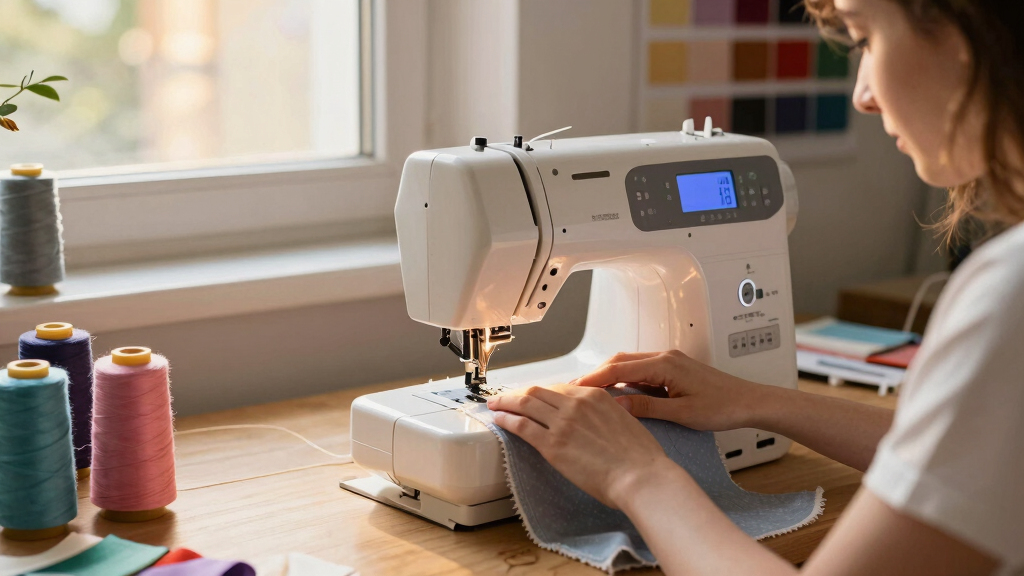
Finding the best computerized sewing machine for garment sewing depends on your skill level, project complexity, and budget. The Brother XR9550 stands out as the overall top pick thanks to its extensive stitch options and user-friendly LCD display. The SINGER Quantum Stylist 9960 offers advanced features for serious crafters, while the lightweight Brother XM2701 is ideal for beginners or those with limited space. Buyers often face tradeoffs between feature set, ease of use, and price—more features typically mean higher costs and steeper learning curves. Continue reading for a detailed breakdown of each model to find your perfect match.
Key Takeaways
- The top models balance a wide variety of stitches with user-friendly interfaces, making them suitable for garment sewing of all complexity levels.
- A higher stitch count and advanced features tend to increase the price but offer more versatility for creative projects.
- Weight and portability vary significantly; lightweight options are better for on-the-go sewing or limited space, while heavier machines often have sturdier build quality.
- Machine speed and presser foot options are important for precise garment construction, especially with thicker fabrics.
- Additional features like automatic needle threading and extension tables enhance ease of use but may add to the cost.


More Details on Our Top Picks
Brother XR9550 Sewing and Quilting Machine, Computerized, 165 Built-in Stitches, LCD Display, Wide Table, 8 Presser Feet, White
The Brother XR9550 stands out for its extensive range of 165 built-in stitches, making it highly adaptable for various garment styles and quilting projects. Compared to the Brother CS7000X, it offers more stitch options and a wider quilting table, which is ideal for larger projects. The LCD display simplifies stitch selection, while the included presser feet expand creative possibilities. However, it’s limited to the US 120V power supply, and its Styrofoam hard cover needs careful handling to prevent damage. This model is perfect for dedicated home sewists who want a machine capable of both garment construction and quilting without sacrificing ease of use. It may be less suitable for international users or those looking for a lightweight, portable option.Pros:- Extensive stitch library for diverse projects
- Large quilting table for bigger workpieces
- Easy-to-use LCD display for quick stitch selection
- Includes multiple presser feet for versatility
Cons:- Limited to US 120V power supply, not suitable for international use
- Hard cover contains Styrofoam that needs careful handling
Best for: Advanced hobbyists and quilters who need a versatile machine for garment and quilting projects at home
Not ideal for: International buyers or sewers seeking a super lightweight machine for portability
- Built-in stitches:165
- Auto-size buttonholes:8 styles
- LCD display:Yes
- Presser feet included:8
- Wide table:Yes
- Hard cover:Yes
- Voltage:120V
Bottom line: This machine best suits experienced home sewists who want a comprehensive, easy-to-operate model for garment sewing and quilting.
Brother XM2701 Sewing Machine, Lightweight with 27 Stitches and 6 Sewing Feet
The Brother XM2701 makes this list because of its simplicity and portability, perfect for newcomers or sewers with limited space. Compared with the XR9550, it offers only 27 stitches, which limits versatility but streamlines operation. Its automatic needle threader and drop-in bobbin make setup quick, ideal for those just starting out. The lightweight design enhances portability, but it lacks the advanced features and stitch variety that more experienced sewists may desire. This machine is a practical choice for beginners, hobbyists, or those who want a reliable second machine for basic garment sewing. It’s not suited for extensive quilting or complex projects requiring advanced features.Pros:- Automatic needle threading simplifies setup
- Lightweight and portable for easy transport
- Includes a variety of sewing feet for different projects
- Simple, straightforward operation
Cons:- Limited to 27 stitches, restricting creative options
- Lacks advanced features for complex garments or quilting
Best for: Beginners or casual sewists who prioritize ease of use and portability
Not ideal for: Experienced garment makers or quilters needing a broad stitch selection
- Stitches:27 built-in
- Included sewing feet:6
- Needle threader:Automatic
- Bobbin type:Drop-in top
- Voltage:120V US only
- Warranty:25-year limited
Bottom line: Ideal for novice sewists seeking a dependable, easy-to-carry machine for basic garment sewing.
Brother CS7000X Computerized Sewing and Quilting Machine, 70 Built-in Stitches, LCD Display, Wide Table, 10 Included Feet
The Brother CS7000X offers a balanced selection of 70 stitches, making it suitable for those transitioning from beginner to more advanced sewing. Its large workspace and included wide table are especially helpful for quilting and larger garment pieces. The LCD display simplifies stitch selection, similar to the XR9550, but with fewer stitches overall. It’s more complex than the XM2701, yet still accessible for confident beginners ready to expand their skills. Compared to the XR9550, it’s somewhat more affordable but provides fewer stitch options. It’s best for dedicated hobbyists who want more room to grow without the complexity of high-end models. However, it’s limited to US 120V and may feel limiting for advanced professional use.Pros:- Large workspace for quilting and big garments
- Easy-to-use LCD display for quick stitch changes
- Includes multiple presser feet and accessories
- Good balance of features and affordability
Cons:- Limited to 120V power supply, not suitable globally
- Fewer stitches than high-end models like the 9960
Best for: Intermediate sewists looking for a machine that supports both garment sewing and quilting with room to grow
Not ideal for: Complete beginners or international users seeking a machine with a broader stitch library
- Stitches:70 built-in
- Included accessories:10 presser feet
- Display:LCD
- Work space:Large
- Voltage:120V
- Support:Limited
Bottom line: This machine is well-suited for serious hobbyists who want a versatile, user-friendly option for garment and quilting projects.
SINGER Heavy Duty 6600C Sterling Sewing Machine with Accessory Kit
The SINGER Heavy Duty 6600C excels in durability and speed, making it ideal for those who need to sew thick fabrics or produce garments quickly. Its 100 built-in stitches and 215 stitch applications provide great versatility, similar to the higher-end models but with a focus on heavy-duty performance. The powerful motor and high sewing speed of 1100 stitches per minute outperform lighter machines like the XM2701, making it suitable for demanding projects. The sturdy metal frame and stainless steel bedplate ensure longevity, but its weight and size may be cumbersome for casual or portable sewing. Compared to the Brother XR9550, it sacrifices extensive stitch variety for increased power and durability, appealing to serious home sewers or small business owners.Pros:- High sewing speed for quick production
- Robust metal frame for stability and longevity
- Wide range of stitches and applications
- Includes comprehensive accessory kit
Cons:- Heavy and less portable for casual use
- Complex for complete beginners without prior sewing experience
Best for: Heavy-duty garment makers and sewers who need speed and durability for thicker fabrics
Not ideal for: Seamstresses seeking lightweight, portable machines for frequent transport or light projects
- Stitches:100 built-in
- Stitch applications:215
- Max sewing speed:1100 SPM
- Throat space:6.4 inches
- Frame material:Metal
- Bobbin type:Top drop-in
Bottom line: This machine is best for those focused on high-speed, durable garment sewing and heavy fabrics, not for portability or light projects.
SINGER Quantum Stylist 9960 Computerized Sewing & Quilting Machine with Extension Table, Hard Case & Accessories
The SINGER Quantum Stylist 9960 distinguishes itself with an astonishing 600 built-in stitches and over 1,170 stitch applications, making it ideal for intricate garment designs and quilting. Its automatic needle threading and extensive accessory set, including an extension table, support complex creative projects. While it offers a user-friendly interface with start/stop controls and adjustable speed, its weight of nearly 15 pounds makes portability difficult. Compared to the XR9550, it provides a vastly larger stitch library but at a higher price and increased complexity. This model suits experienced sewists and professionals seeking maximum versatility and stitch options for custom garments and detailed quilting. It may be overkill for casual or beginner users who don’t need such a broad range of stitches.Pros:- Massive selection of stitches and stitch applications
- Automatic needle threader and easy bobbin system
- Includes extensive accessories and extension table
- Designed for creative and complex projects
Cons:- Heavy and less portable for frequent moving
- Higher price point may be prohibitive for casual users
Best for: Advanced sewists and professionals who want a wide array of stitches and detailed customization for garment and quilting work
Not ideal for: Beginners or sewers needing a lightweight, simple machine for basic garment sewing
- Stitches:600
- Stitch applications:1172
- Presser feet:13
- Material:Plastic and metal
- Dimensions:15″ x 6.25″ x 12″
- Weight:14.6 lbs
Bottom line: This machine is best for experienced sewists seeking maximum stitch versatility and professional-quality results in garments and quilting.
Brother CP100X Computerized Sewing and Quilting Machine
The Brother CP100X stands out as the most versatile option in this lineup, combining a wide range of stitches—100 in total—that cover utility, decorative, and heirloom sewing. Its automatic needle threader and large LCD display make setup and adjustments straightforward, especially compared to the Brother XM2701, which offers fewer features suited for basic projects. The inclusion of a durable metal frame and extensive accessories makes it a solid choice for users who want a machine that can handle everything from garments to quilting. However, its reliance on 120V limits its usability outside the US, and the array of features could overwhelm complete beginners. This pick makes the most sense for serious hobbyists and small business owners who need a reliable, all-around performer without the need for embroidery capabilities.
Pros:- Wide variety of built-in stitches for versatile sewing projects
- Easy-to-use automatic needle threader and LCD display
- Durable metal frame for long-term performance
- Includes extensive accessories like multiple sewing feet and a hard case
Cons:- Limited to 120V US use, not suitable for international markets
- May be complex for complete beginners without prior sewing experience
Best for: Seamstresses and quilters who want a durable, feature-rich machine capable of handling various garment and quilting projects.
Not ideal for: International buyers outside the US or beginners seeking a straightforward, no-fuss machine for simple sewing tasks.
- Stitches:100 built-in stitches including utility, decorative, and heirloom
- Auto-Size Buttonholes:8 styles
- Needle Threader:1-step automatic
- Included Accessories:Wide table, 10 sewing feet, quilt guide, hard case
- Frame:Durable metal frame
- Voltage:120V (US only)
Bottom line: This machine is ideal for experienced sewists and quilters seeking a durable, versatile machine for a wide range of projects.
Brother SE700 Sewing and Embroidery Machine, Wireless LAN Connected, 135 Built-in Designs, 103 Stitches, 4″ x 4″ Embroidery Area, 3.7″ Touchscreen, White
The Brother SE700 excels for those who want to add embroidery to their garments, offering 135 built-in embroidery designs and a generous 4″ x 4″ embroidery area. Its wireless connectivity and large 3.7-inch color touchscreen make editing and pattern customization more accessible than the Brother XM2701, which lacks embroidery features entirely. The machine’s ability to connect with mobile apps like Artspira gives creative users a significant advantage for designing unique garments or embellishments. However, the embroidery area is limited compared to some dedicated embroidery-only machines, and the higher price point may deter casual sewists. Its combination of sewing and embroidery makes it best suited for hobbyists who want to expand their creative options without investing in separate machines.
Pros:- Wide range of embroidery designs and stitches
- Wireless connectivity simplifies pattern transfer
- Large touchscreen for editing and previewing designs
- Compatible with mobile apps for custom embroidery drawing
Cons:- Limited embroidery area of 4″ x 4″ may restrict larger designs
- Requires Wi-Fi for full wireless features
- Higher price point makes it less accessible for casual users
Best for: Creative hobbyists and small-scale garment makers interested in adding embroidery details and custom designs.
Not ideal for: Sewers who only focus on basic garment construction or those with limited space, as embroidery features require more setup and room.
- Built-in Designs:135
- Built-in Stitches:103
- Embroidery Area:4″ x 4″
- Touchscreen:3.7-inch LCD color display
- Included Feet:8
- Maximum Sewing Speed:710 spm
- Connectivity:Wireless LAN, USB port
- Compatible Apps:Artspira, PE-Design 11 1/2
Bottom line: This machine is perfect for hobbyists seeking to add embroidery to garments and explore creative embellishments with ease.
How We Picked
These machines were selected based on their performance in garment sewing tasks, ease of use, build quality, and feature set. We prioritized models with a good balance of stitch variety, user interface, and durability, ensuring they meet the needs of both beginners and experienced sewists. Price range and overall value also played key roles, helping us identify options that deliver the most for their cost. The ranking reflects a combination of versatility, ease of operation, and reliability for garment-focused projects.Factors to Consider When Choosing Best Computerized Sewing Machine For Garment Sewing
Choosing the best computerized sewing machine for garment sewing involves weighing several key factors. First, consider the stitch options—more stitches mean greater versatility for different garment styles and details. Ease of use is also crucial, especially for beginners; look for intuitive controls and helpful features like LCD screens. Durability and build quality ensure your machine can handle thick fabrics and frequent use without issues. Additionally, features like automatic threading, adjustable speed, and extension tables can significantly improve your sewing experience. Lastly, think about your space and portability needs, as some machines are better suited for small studios or on-the-go sewing.Stitch Variety and Special Features
Garment sewing often requires a range of stitches, from basic straight and zigzag to decorative and stretch stitches. Machines with a broad selection of built-in stitches allow for more creative flexibility. Pay attention to specialty features like buttonholes, stretch stitches, and decorative options, which can elevate your finished garments. However, more stitches can sometimes make the machine more complex to operate, so consider your comfort level with digital interfaces when choosing a model.
Ease of Use and User Interface
For garment sewing, especially if you’re still learning, an intuitive interface can save frustration. LCD displays, simple stitch selectors, and automatic features like needle threading make the sewing process smoother. Some models incorporate touchscreen controls, which can streamline selecting stitches and adjusting settings. Remember, a machine that’s overly complicated might slow down your workflow or discourage ongoing projects.
Build Quality and Durability
Garment sewing often involves working with thicker fabrics, so a sturdy, metal frame and high-quality internal components are essential. A well-built machine maintains tension and stitch quality over time, reducing the need for repairs. Cheaper plastic parts may wear out quickly, causing frustration and downtime. Consider brands with a reputation for durability, especially if you plan to sew regularly or on heavy fabrics.
Additional Features and Accessories
Features like automatic needle threading, adjustable speed controls, and extension tables can greatly enhance your sewing experience. These help achieve professional-looking garments more efficiently and comfortably. Some machines come with a variety of presser feet for different fabrics and techniques, which can expand your creative options. However, excessive features often mean a higher price, so prioritize those that align with your sewing style and project needs.
Portability and Space Considerations
If your workspace is limited or you need to transport your machine, weight and size matter. Lightweight models are easier to move and store but may sacrifice some stability or features found in heavier, industrial-style machines. Conversely, larger, heavier machines tend to offer greater stability and sturdiness, especially during detailed garment work. Think about where you’ll be sewing most often and choose accordingly to avoid frustration or space constraints.
Frequently Asked Questions
Is a computerized sewing machine better for garment sewing than a mechanical one?
Computerized sewing machines generally offer more stitch options, automated features, and precise control, which can be very beneficial for garment sewing. They often include automatic buttonholes, needle threading, and adjustable speeds that make complex or detailed projects easier. However, they tend to be more expensive and slightly more complex to troubleshoot if issues arise. For beginners or those working primarily on simple garments, a mechanical machine might suffice, but for versatility and advanced features, a computerized model is usually a better investment.
How important is stitch variety for garment sewing?
Stitch variety is quite important if you want to create versatile, professional-looking garments. Different fabrics and designs require specific stitches, such as stretch stitches for knitwear or decorative stitches for finishing touches. A machine with a broad range of built-in stitches allows for greater creativity and adaptability, especially as your skills develop. However, if you primarily sew basic garments, a machine with fewer stitches might be sufficient and less overwhelming to operate.
Should I prioritize automatic features or manual control for garment sewing?
Automatic features like needle threading, thread cutting, and buttonhole making can significantly speed up your workflow and reduce frustration, especially for complex projects. They also help maintain consistency across garments. That said, manual control is essential for fine-tuning stitches and handling delicate fabrics. The best approach is to find a machine that offers automatic convenience for routine tasks but still provides manual adjustment options when needed, giving you flexibility for different garment types.
Do I need a special machine for sewing thick fabrics or multiple layers?
Yes, if you frequently sew thick fabrics or multiple layers, look for a machine with a powerful motor and durable build. Heavy-duty models often feature stronger internal mechanisms and thicker presser feet, enabling easier handling of denim, leather, or multiple fabric layers. Some machines also include adjustable presser foot pressure and specialized needles for heavy materials. Investing in a sturdy, high-quality machine reduces frustration and ensures your garments have consistent, professional seams.
How much should I expect to pay for a good computerized garment sewing machine?
The price range varies widely depending on features and brand reputation. Expect to pay around $300 to $600 for a reliable entry-level model with a decent selection of stitches and automatic features. For more advanced machines with extensive stitch options, automatic buttonholes, and high durability, prices can reach $800 or more. Consider your sewing goals and frequency, and remember that investing a bit more often translates to better reliability and more creative possibilities over time.
Conclusion
If you’re new to garment sewing or want a versatile, user-friendly machine, the Brother XM2701 offers excellent value with enough features to grow into. Serious hobbyists or professionals focused on garment production should consider the SINGER Quantum Stylist 9960 for its extensive features and durability. For those who prioritize portability without sacrificing quality, the Brother CP100X strikes a good balance. The Brother XR9550 remains the best overall choice for a wide range of garment projects, combining ease of use with advanced options. Ultimately, your ideal machine depends on your skill level, budget, and specific goals—select the one that aligns best with your sewing ambitions.