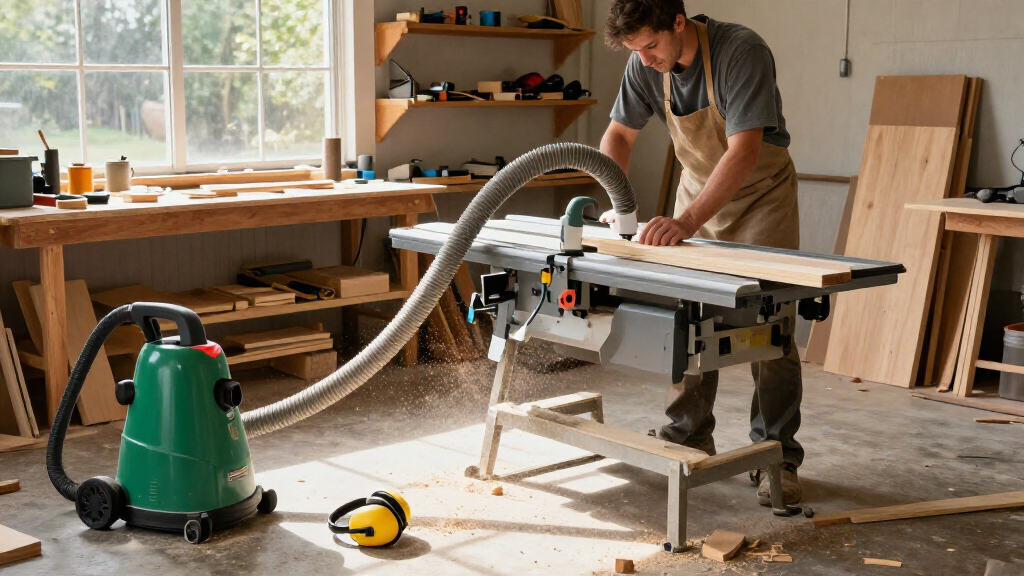

This checklist is for DIY woodworkers setting up or improving dust collection in a home shop. It covers the main equipment and connections that help you plan a system around your tools and workspace. Start with your shop: list the machines you use, where they sit, and how you expect to connect them.

Get business pricing on tools and workshop supplies
- Business-only prices and quantity discounts
- Tax-exempt purchasing
- Multiple users, one account, clear invoices
The sections follow the path from primary collection to cleanup and airborne dust management: a dust collector, shop vacuum, separator, air filtration unit, hoses, and collector bags. Some slots include a named pick; others offer selection advice. Match each component to the role it will serve instead of treating every dust-control product as interchangeable.
Use the checklist to compare connection sizes, capacity needs, and available space before buying. Check the specifications for your tools and the product details for each component, especially where hoses or fittings must connect. Plan the full setup first, then buy in an order that lets each piece work with the rest.
Dust Collector
A dust collector is the central collection point for a shop system that serves woodworking machines. The listed pick is the JET DC-1100VX-CK Vortex Cone Dust Collector, 1-1/2 HP, 2-Micron Canist. Consider whether its stated configuration suits the machines you plan to connect and whether the unit fits the space you have available. Start with your machines: their ports and intended connections help determine the ducting and fittings you will need.
A common buying mistake is choosing a collector before checking the rest of the system. A machine port, hose, fitting, and collector connection all need to work together; a mismatch can leave you shopping for adapters or revising the layout. Confirm the exact product specifications and connection details before ordering. Also consider where the unit will sit and how you will access it for routine use. Check fit and access against your shop layout, not just the product name.
Think through how many tools you expect to serve and whether you will connect them one at a time or as part of a larger arrangement. The pick name gives horsepower and filtration details, but those labels alone do not establish compatibility with every machine or layout. Verify the information against your actual needs. Confirm the connections before building around the collector.
What to look for:
- Confirm the collector connection and machine-port sizes.
- Check the stated filtration details against the product specifications.
- Measure the space where the unit will sit.
- Plan the fittings and ducting needed for your machines.
JET DC-1100VX-CK Vortex Cone Dust Collector, 1-1/2 HP, 2-Micron Canister
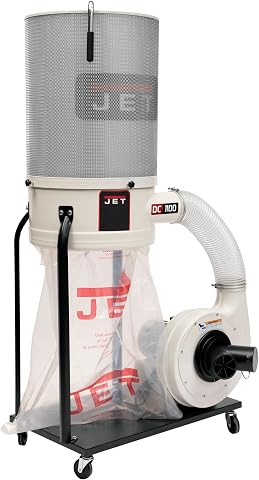
This indoor dust collector uses a Vortex Cone to separate wood chips before they reach the canister, helping maintain airflow and pack the collection bag efficiently. Its pleated 2-micron filter is cleaned by turning a handle, and it connects to woodworking machines through one 6-inch inlet or two 4-inch inlets.
Pros:
- Vortex Cone separates chips to help keep the filter clear and improve bag packing.
- Canister filter is cleaned with a handle without removing it.
- Connects to machines with one 6-inch inlet or two 4-inch inlets.
- Four swivel casters make it easier to move around a workshop.
Cons:
- Limited to indoor collection of wood dust and chips; not suitable for metal or liquids.
- Remote control is sold separately.
- Requires a 20A circuit when wired for 115V.
Best for: Woodworkers planning a central collector for compatible machines
Not ideal for: Shops that have not confirmed space and connection fit
Bottom line: Verify your machine ports, layout, and the collector’s specifications before committing to the system.
Shop Vacuum
A shop vacuum can serve as a cleanup tool or connect to equipment designed for vacuum-style dust extraction. No specific product is named for this slot, so choose one based on the tasks and connections in your shop. Define the job first: occasional cleanup, a tool connection, or both can lead to different requirements.
A common mistake is assuming that any vacuum will connect directly to any woodworking tool. Check the tool port and the vacuum hose or accessory dimensions, and identify any adapter needed before purchase. Consider the space where you will store and use the vacuum, along with how often you expect to move it. Compare actual dimensions rather than relying on a general product category or appearance.
Also decide how this vacuum will relate to the rest of your dust-control setup. A vacuum, separator, and collector each occupy different roles, and the right arrangement depends on your tools and workflow. Review the product specifications for the intended use and compatible accessories. Keep the role clear so you do not buy a unit that lacks the connections your setup requires.
What to look for:
- Match hose and accessory dimensions to tool ports.
- Check which adapters are required for your tools.
- Choose a format that suits your storage and movement needs.
- Review the product specifications for intended use and compatible accessories.
Dust Separator
A separator is a component to consider when planning how dust and debris move through a vacuum-based setup. The listed pick is the Shop-Vac 5-Gallon 4.5 Peak HP Wet/Dry Upholstery Shampoo Vacuum. Its name identifies it as a wet/dry upholstery shampoo vacuum, so check the full product details carefully to determine whether it provides the separator function you want. Confirm the product role before treating this pick as a dust separator.
A common buying mistake is relying on a category label or a product name without checking the actual configuration. Verify what components are included, how the product connects, and whether its openings match the vacuum and hoses you intend to use. The listed five-gallon and 4.5 peak HP details do not, by themselves, confirm separator compatibility. Check the complete specifications and included accessories before planning around this item.
Consider where the separator or vacuum will sit and how the arrangement affects access to your tools and workspace. If you expect to move between machines, examine how the hose and connections will be handled. Confirm the role and fit of every piece in the arrangement before purchase. Map the connections from tool to vacuum so the setup meets your intended workflow.
What to look for:
- Confirm that the product offers the separator function you need.
- Check included components and accessories in the product details.
- Match openings and connections to your vacuum and hoses.
- Plan placement and access in your shop.
Shop-Vac 5-Gallon 4.5 Peak HP Wet/Dry Upholstery Shampoo Vacuum

This corded 3-in-1 vacuum combines vacuuming, spraying, and water extraction for cleaning carpets, upholstery, and car interiors. It has a 5-gallon debris tank, a 4.5 L clean water tank, and a handle-mounted spray trigger, with multiple cleaning attachments and a bottom drain for disposing of dirty water.
Pros:
- Combines vacuuming, spraying, and water extraction in one unit.
- Large tanks support extended cleaning sessions.
- Handle-mounted spray trigger makes it easy to switch between spraying and vacuuming.
- Bottom drain helps dispose of dirty water without lifting or tilting the machine.
Cons:
- Corded design limits movement to the reach of the 10 ft cord.
- The 15 lb unit may be cumbersome to carry.
Best for: Shoppers whose setup matches the product’s confirmed configuration
Not ideal for: Anyone expecting a separator without verifying product details
Bottom line: Check the product specifications to confirm that this vacuum serves your intended separator role.
Air Filtration Unit
An air filtration unit is a separate part of a shop dust-control plan from collection at a machine. The listed pick is the JET IAFS-2400 Industrial Air Filtration System, 2097 CFM, 3/4 HP. Its name supplies airflow and horsepower figures, but you should review the product specifications and your shop layout before deciding whether it suits your space. Consider the whole room when evaluating placement and intended use.
A common buying mistake is treating an air filtration unit as a substitute for collection at the tool. Plan how it will fit alongside your collector, vacuum, or other equipment, and check what installation or mounting arrangements the product supports. Confirm the dimensions and requirements in the product details. Plan placement early so the unit fits your shop and your workflow.
Think about the space you want the unit to serve and whether its stated specifications fit your plans. Avoid assuming that a single airflow figure proves suitability for every room; compare the manufacturer’s details with your shop conditions. Also make sure the unit can be positioned where you can access it as intended. Verify the stated ratings and the physical fit before purchase.
What to look for:
- Review the stated airflow and horsepower in the product specifications.
- Measure the intended location and confirm unit dimensions.
- Check the supported mounting or placement options.
- Plan how filtration fits with collection at your machines.
JET IAFS-2400 Industrial Air Filtration System, 2097 CFM, 3/4 HP

This workshop air filtration system uses a washable MERV 8 outer filter and a MERV 12 inner filter to capture dust, smoke, oil mist, and other particles. It has a remote control with three airflow speeds and a 1–9 hour timer, plus an optional slot for a charcoal filter to help reduce odors.
Pros:
- Washable outer filter paired with a MERV 12 inner filter
- Remote control includes a timer with automatic shutoff
- Three airflow speed modes
- Optional charcoal filter slot can help reduce odors
Cons:
- Optional charcoal filter is not included
- Weighs 120 pounds
Best for: Woodworkers adding a dedicated air filtration unit
Not ideal for: Shops without a suitable placement plan
Bottom line: Compare the unit’s specifications and placement requirements with your shop before choosing it.
Dust Collection Hoses
Hoses connect dust collection equipment to woodworking machines, so dimensions matter across the entire route. The listed pick is a 25 Ft. Urethane Dust Collection Vacuum Hose with 4″ Diameter. Confirm that four inches matches the connections you intend to use and that the length suits the path from equipment to tool. Measure the route before deciding whether this hose fits your layout.
A common mistake is buying by length alone. Check the diameter at both ends of the connection, and identify adapters or fittings needed to join the hose to the machine and collector. Also consider how you will position the hose during use and where it will go when stored. Check every connection in the planned path before ordering.
Review the product details for the hose material, included ends, and any other specifications that affect your intended setup. A stated diameter does not guarantee that a particular machine port will accept the hose directly. Measure the tools and equipment you plan to connect, then compare those measurements with the product information. Confirm the end fittings as well as the hose diameter and length.
What to look for:
- Measure the route and compare it with the stated 25-foot length.
- Match the four-inch diameter to the equipment connections.
- Confirm end fittings and any adapters required.
- Review the product details for material and included components.
25 Ft. Urethane Dust Collection Vacuum Hose with 4" Diameter

This 25-foot urethane vacuum hose features a 4-inch diameter, offering superior puncture and abrasion resistance. Suitable for dust collection, cold air supply, vapor recovery, and woodworking applications, it performs well in various temperature environments.
Pros:
- High puncture and abrasion resistance
- Suitable for multiple industrial applications
- Made in the USA
Cons:
- Specific to 4-inch diameter hoses, limited size options
- No detailed price information
Best for: Setups with compatible four-inch connections and a suitable hose route
Not ideal for: Tools that require a different hose diameter or fitting
Bottom line: Measure the complete connection path and verify the fittings before purchasing this hose.
Dust Collector Bags
Collector bags are a maintenance item to consider when choosing or operating a dust collector. No specific bag product is named for this slot, so begin with the collector model and its stated bag requirements. Use your collector details to identify the size and type that fit.
A common buying mistake is choosing a bag based only on appearance or a general size description. Check the product information for the required dimensions, attachment method, and compatibility with your collector. If your collector documentation lists a model-specific bag, use that information to guide your search. Verify the exact fit before ordering.
Think about how you will access and change the bag in the location where the collector sits. Check the space around the unit and make sure the bag arrangement works with your maintenance routine. Do not assume that bags made for another collector will fit just because their stated dimensions look close; confirm the match using the relevant product details. Check compatibility first, then plan for convenient access.
What to look for:
- Identify the collector model and its stated bag requirements.
- Check bag dimensions and attachment details.
- Confirm compatibility in product information.
- Consider access for bag changes in the collector’s location.
Build your buying order around the shop’s needs: first identify the machines and their ports, then choose the main collection approach, confirm the connecting hoses and fittings, and add vacuum, separator, filtration, or bag components that fit that plan. Prioritize compatibility and the pieces needed for your most-used tools.
You do not have to solve every part of the system at once. Measure your workspace, check product details, and add components as your setup becomes clearer. A careful checklist makes it easier to choose equipment that fits your tools and shop.