
This checklist is for DIY woodworkers who want dependable ways to measure, mark, and check parts before cutting or assembling. It covers a mix of tools for everyday layout and more specialized tasks, with practical fit and compatibility in mind.

Get business pricing on tools and workshop supplies
- Business-only prices and quantity discounts
- Tax-exempt purchasing
- Multiple users, one account, clear invoices
The sections follow the requested tool slots: combination square, marking gauge, sliding bevel gauge, digital caliper, contour gauge, and precision ruler. Some slots include a named product pick; others offer selection advice because no specific product was provided.
Use the checklist to match each tool to the work you actually do. Check the product description for dimensions, materials, and included parts, and consider whether it suits your stock and existing setup. Build your kit around useful coverage before adding specialty tools.
Combination Square
A combination square is useful for checking and laying out right angles, marking parallel lines, and transferring measurements. For woodworking, a square that sits securely against an edge and is easy to read helps keep layout work consistent. The listed pick is a two-pack combination winch bar with square head, described as 40.5 inches and carbon steel. Those details alone do not establish whether its head can be adjusted, whether it includes a ruler, or whether it is sized for bench-top layout.
Before choosing it, confirm the product’s intended use and the dimensions of the head and measuring surface. A common buying mistake is assuming that a long bar or a square-shaped head makes a tool suitable for fine woodworking. Check that the tool can register against the edges and faces you work with, and that its scale and markings are legible for your typical layout. If you need a traditional adjustable combination square, verify that the product description explicitly confirms the ruler, head, and adjustment features you expect. Match the format to your projects rather than relying on the product name alone.
What to look for:
- Confirm the listed 40.5-inch length suits your work area and stock.
- Check what the product description says about the square head and its adjustment.
- Verify whether a ruler or scale is included and how it is marked.
- Look for clear information about intended use and measuring surfaces.
Combination Winch Bar with Square Head – 2 Pack, 40.5" Carbon Steel, Green
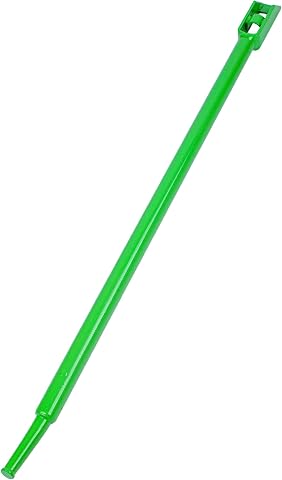
This set of two combination winch bars is designed for use with flatbed trailers, trucks, and winches. Made from durable carbon steel, they feature a non-slip handle and are suitable for tightening and releasing straps and chain load binders.
Pros:
- Durable carbon steel construction for strength
- Non-slip knurled handle for better grip
- Rust and corrosion resistant surface coating
- Multi-functional for various winch and load securing tasks
Cons:
- Limited to standard winches and chain binders
- Long length may be cumbersome in tight spaces
Best for: Shoppers whose projects suit the listed long-bar format
Not ideal for: Anyone needing an explicitly specified adjustable woodworking combination square
Bottom line: Confirm the head, scale, and intended use before treating this pick as a woodworking combination square.
Marking Gauge
A marking gauge helps transfer a consistent line from an edge, while a marking knife can create a fine reference mark for cuts and joinery. The listed pick is a precision dovetail layout scriber tool called a woodworking marking knife. It may suit detail-oriented layout, but the name does not confirm that it has a fence or adjustable gauge mechanism. Those distinctions matter: a knife can mark a line, while a gauge’s fence helps keep the line a set distance from an edge.
Decide whether you need a knife for marking joinery, a traditional gauge for repeated offsets, or both. A frequent mistake is buying a scriber expecting it to set and repeat a distance automatically. Check the product description for the blade style, handle, adjustment method, and any included fence or accessories. For dovetail work, consider whether the marking approach matches your preferred layout method and whether you can control the tool comfortably against your stock. Confirm how the tool is intended to be held and maintained, and use clear product details to judge whether it fills the marking role you need.
What to look for:
- Check whether this is a marking knife or an adjustable marking gauge.
- Confirm the blade style and how it is held or guided.
- Look for details about any fence, adjustment, or included accessories.
- Choose a marking method that suits your joinery and stock.
Woodworking Marking Knife, Precision Dovetail Layout Scriber Tool

This professional-grade woodworking marking knife features a high-carbon steel blade for ultra-fine, accurate scribe lines, ideal for dovetail joints, mortise and tenon, and furniture making. Its ergonomic ambidextrous handle provides comfort and control for precise layout work on various wood types.
Pros:
- Highly accurate and precise marking for woodworking projects
- Durable high-carbon steel blade stays sharp through many uses
- Ergonomic ambidextrous handle for comfortable extended use
- Versatile for various wood types and joinery tasks
Cons:
- Requires careful handling to avoid dulling the blade
- Limited to marking and scoring, not cutting or carving
- Handle may be slippery if hands are sweaty
Best for: Woodworkers seeking a tool for precision dovetail layout
Not ideal for: Anyone expecting a confirmed adjustable fence gauge
Bottom line: This pick is described as a marking knife, so verify its features if you need a repeatable edge-offset gauge.
Sliding Bevel Gauge
A sliding bevel gauge helps capture and transfer an angle when a square corner is not the reference you need. It can be useful for matching an existing slope or carrying a layout line from one part to another. No product pick was provided for this slot, so focus on finding a tool whose locking action and blade length suit the work you do.
Check how the blade is secured and whether you can set and release it smoothly without the angle shifting. Consider the size of your workpieces: a blade that is awkwardly long or short for your common projects can make alignment harder. A common mistake is choosing by appearance without checking how the tool locks, how its parts are joined, or whether the angle can be transferred cleanly to your stock. Look for clear dimensions and product details, then compare those with the edges and angles you need to measure. Test the fit against your workflow and the scale of your projects.
What to look for:
- A lock that holds the set angle during transfer.
- Blade dimensions suited to your typical workpieces.
- Clear details on adjustment and construction.
- A layout method that registers reliably against your stock.
Digital Caliper
A digital caliper can help check dimensions where a ruler is too coarse or cumbersome, including thickness and outside or inside measurements when the tool supports them. The listed pick is described as a stainless steel digital caliper with a large LCD screen and auto-off, and its name includes “Inch.” The supplied name does not specify measuring range, resolution, accuracy, or whether it can display other units, so check the full product details before deciding whether it suits your work.
Think about the size of the parts you measure most often and confirm the caliper’s stated range covers them. Check which measurement modes are supported and whether the display and controls are comfortable to use. A common mistake is assuming that a digital readout guarantees the precision or repeatability a task requires; consult the stated specifications and follow the maker’s guidance for use and care. Also verify whether the product includes a case or other accessories if those matter to your setup. The useful match is a tool with confirmed specifications for the materials and dimensions you routinely handle.
What to look for:
- Verify the stated measuring range and resolution.
- Confirm which units and measurement modes are supported.
- Check that the dimensions suit the parts you commonly measure.
- Review the product details for included accessories and care guidance.
Digital Caliper with Stainless Steel, Large LCD Screen, Auto-Off, Inch/MM Conver

The Louisware digital caliper offers precise measurement of internal, external, depth, and height dimensions with a range of 0–150 mm (6″) and resolution of 0.01 mm. It features a large, clear LCD display, one‑button inch/mm conversion, stainless steel construction, and an automatic shut‑off after four minutes to conserve battery life.
Pros:
- High accuracy and fine resolution for precise measurements
- Large, easy‑to‑read LCD display
- Durable stainless steel construction
- Auto‑off feature saves battery life
Cons:
- Limited measuring range to 150 mm (6″) may not suit larger projects
Best for: DIYers who want a digital display for dimensional checks
Not ideal for: Anyone who needs a specified range or accuracy not confirmed in the listing name
Bottom line: Check the full range, resolution, and unit details before relying on this caliper for precise work.
Contour Gauge
A contour gauge is intended to help capture a profile so it can be traced or transferred to another surface. It can be useful when a project involves matching an irregular edge or fitting around a shape. No product pick was provided, so select one based on the profile size and the kind of surfaces you expect to copy.
Check the gauge’s stated width and depth before buying; a tool that cannot span the profile will not capture the full shape in one pass. Look for details about how the pins move and whether the product is intended for the surfaces you plan to trace. A common mistake is overlooking the size of the pattern, then trying to join multiple impressions that may not align. Consider whether the tool can be held steadily against your work and whether its captured outline is easy to transfer. Choose dimensions that fit your projects, and verify the product description rather than assuming all contour gauges have the same capacity. Fit the gauge to the largest profiles you need to copy.
What to look for:
- Gauge width and depth that cover your expected profiles.
- Clear information about pin movement and construction.
- A size that can be held steadily against the target surface.
- Product details that match your intended tracing tasks.
Precision Ruler
A precision ruler supports straight layout lines and quick checks of smaller dimensions. The listed pick is a STAEDTLER stainless steel math set with a ruler, triangles, and “Protract” in the product name. That suggests a set with several geometry tools, but the name does not provide the ruler’s length, scale units, graduations, or the exact included pieces. Confirm those details to see whether it fits woodworking layout rather than assuming the set’s contents from its name.
Consider the lengths and markings you use most often, and check whether the ruler can sit flat against the stock you work with. The included triangles may be useful for drawing or checking angles if their dimensions suit your projects, but confirm the product details and intended use. A common buying mistake is choosing a multi-piece set without checking whether its ruler markings are easy to read or whether the ruler is long enough for the work. Review the scale, graduations, and included components, then compare them with your typical layout tasks. Check the markings and dimensions before making this your primary woodworking ruler.
What to look for:
- Confirm the ruler’s length and scale units.
- Check the graduation detail and readability of the markings.
- Verify which triangles and other pieces are included.
- Consider whether the tools sit and register well on your stock.
STAEDTLER Stainless Steel Math Set with Ruler, Triangles, and Protractor

This durable stainless steel math set includes a 12-inch ruler, two triangle set squares, and a protractor, all with clear measurements for precise drawing and drafting. Designed for students and professionals, the set offers long-lasting accuracy for technical and artistic work.
Pros:
- Heavy-duty stainless steel construction for durability
- Includes all essential tools for drawing and drafting
- Clear etched measurements for precise work
- Built-in hang holes for easy storage
Cons:
- May be heavier than plastic sets
- Limited to basic drawing tools, not suitable for advanced drafting
Best for: Shoppers who want a ruler and geometry tools together
Not ideal for: Anyone needing a ruler length or graduation spec not confirmed by the product name
Bottom line: Verify the ruler dimensions, markings, and included pieces against your layout needs.
Build your measuring kit in the order your projects demand: start with tools that cover frequent measuring and layout, then add angle-transfer or contour tools when those tasks come up. Check product dimensions and features before filling a slot, especially where the listed name leaves key specifications open. Buy for real tasks you expect to do.
A careful layout routine begins with tools that fit your stock and feel clear to use. Work through the checklist, confirm the details that matter, and add pieces as your projects call for them. With a well-matched kit, you can approach each cut and fit with greater confidence.