
TL;DR
The Peabody Essex Museum’s YouTube channel demonstrates a DIY hanging sculpture made from painted, cut plastic bottles threaded together on cord. The project can be customized with different colors and plastic containers; adding fairy lights is suggested, but the demonstration describes an art piece, not a tested lighting fixture.
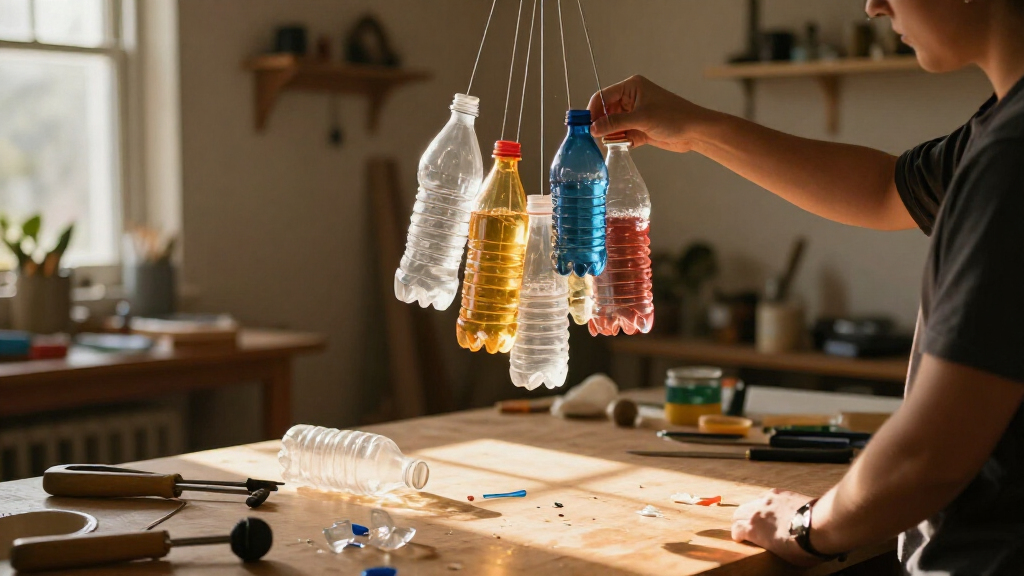
The Peabody Essex Museum’s YouTube channel has shared a demonstration showing how to turn empty plastic bottles into a colorful hanging sculpture, offering a low-cost craft project that reuses household packaging. The steps call for painting the bottles, cutting each into a plastic spiral and threading the pieces together on cord; the finished object is decorative art, not a conventional chandelier.

Get business pricing on tools and workshop supplies
- Business-only prices and quantity discounts
- Tax-exempt purchasing
- Multiple users, one account, clear invoices
According to the project instructions accompanying the museum video, the project begins with bottles that have had their labels removed. The instructions recommend coating them with paint suited to plastic and letting the paint dry before cutting. The palette is flexible: makers can use a single color family, such as pinks and purples or blues and greens, or create a rainbow effect like the one shown in the museum video.
The instructions say to cut off each bottle’s bottom once the paint is dry, then cut the sides in a continuous spiral, stopping near the last ridge before the plastic narrows toward the cap. This leaves a long, spring-like strip. The process is repeated for each bottle, and the bottle necks are threaded onto strong cord so the tops nest together while the cut spirals spread outward.
The project instructions say to tie off the cord to create a loop for hanging the sculpture. They also suggest experimenting with other clear plastic packaging, including straws, takeout cups and lids, and larger juice containers. Fairy lights threaded through the design are offered as an optional way to add a glow, but the instructions do not provide electrical or fire-safety specifications for using the craft as a light fixture.
Empty bottles, new art A hanging sculpture DIY
The Peabody Essex Museum’s video demonstrates how to turn painted plastic bottles into colorful hanging art. The result is decorative sculpture, not a tested light fixture.
Gather and prepare
Use household materials to make a customizable piece of home art.
Start with bottles
Remove labels from empty plastic bottles. Other suggested materials include straws, takeout cups and lids, and large juice containers.
Paint, scissors, cord
Choose paint suited to plastic, let it dry, and have paintbrushes, scissors, and strong cord ready.
Make the hanging sculpture
The demonstrated process turns each bottle into a spring-like strip, then joins the pieces on cord.
Choose one color family or a rainbow palette, then let the paint dry before cutting.
Remove the bottom and cut the sides in a continuous spiral, stopping near the ridge below the cap.
Thread the bottle necks onto strong cord so the tops nest together and the spirals spread outward. Tie the cord into a hanging loop.
Customize the look
The finished appearance depends on the colors, containers, and arrangement you choose.
- Use pinks and purples or blues and greens.
- Try a rainbow effect like the museum video.
- Vary the number and type of containers.
- Experiment with how the spirals are arranged.
What the project establishes
The instructions describe a craft approach for reusing household packaging.
| Project detail | What is described |
|---|---|
| Tools | Paint, paintbrushes, scissors, and cord |
| Specialist glassworking tools | ✗ No |
| Measured waste reduction | ✗ No |
| Lighting certification | ✗ No |
Before you hang it
The source gives no bottle count, cord measurements, finished dimensions, or hanging-load limits.
A Low-Cost Bottle Art Project
The project instructions present a way to turn discarded plastic packaging into a decorative object using bottles, paint, scissors and cord. The demonstration may interest people looking for an inexpensive home-art project or a way to reuse containers.
The design allows customization: color choices, the number and type of containers, and the arrangement of the spirals can all change the finished appearance. The instructions do not quantify materials saved or establish an environmental benefit; they present reuse as a craft approach, not as a measured waste-reduction program.
Although the piece is described in chandelier-like terms, the instructions produce a hanging sculpture. The optional fairy-light suggestion does not establish that the plastic construction has been tested or approved for use as a powered fixture.
Popular right now

Dyson HushJet Compact Air Purifier, White/Silver

Dyson V11 Torque Drive Cordless Vacuum Cleaner

KitchenAid Artisan 5-Quart Tilt-Head Stand Mixer, Almond Cream
As an affiliate, we earn on qualifying purchases.
From Bottle to Hanging Sculpture
The project instructions frame the craft as a homemade take on the dramatic, colorful forms associated with blown-glass chandeliers by artist Dale Chihuly. That is a visual reference, not a claim that the craft uses the same material or process: it relies on painted bottles cut into spirals and joined by cord.
The Peabody Essex Museum’s YouTube video provides the practical demonstration, while the accompanying project instructions mention acrylic paint intended to adhere to plastic and paintbrushes as suitable supplies. No specialist glassworking tools are involved. The described process is to prepare and paint the containers, let them dry, cut the spirals, then string and hang the pieces.
Lighting and Safety Details
The supplied project description does not identify the video’s publication date, specify how many bottles to use, or provide measurements for the cord, spacing or finished sculpture. The final size and stability will depend on the containers and how they are assembled.
The description does not say whether the museum demonstration tests fairy lights with the plastic sculpture or provides guidance on heat, electrical safety or hanging-load limits. The suggestion to thread lights through the piece should not be read as certification that it is suitable as a functional chandelier. Anyone considering lights should follow the manufacturer’s directions and keep heat-producing bulbs away from plastic; the confirmed use described by the project is as decorative hanging art.
Try the Demonstrated Assembly
Readers interested in the project can follow the Peabody Essex Museum’s video and adapt the colors and containers to the materials available. Before hanging the result, check that the cord is securely tied and that the support can bear the sculpture’s weight. Use scissors carefully when cutting plastic, and supervise children who take part.
The supplied material does not announce a follow-up release, formal exhibition or product launch. For now, the project is a craft demonstration: viewers can make the bottle sculpture, experiment with its appearance and treat any lighting addition as an unverified extra rather than a tested fixture.
Source: Hunker project instructions; the instructions refer to a demonstration on the Peabody Essex Museum’s YouTube channel.
Key Questions
What materials are needed to make the hanging art?
The project instructions call for empty plastic bottles, paint suitable for plastic, paintbrushes, scissors and strong cord. They say to remove the labels before painting and let the paint dry before cutting.
How are the bottles turned into spirals?
The instructions say to cut off each bottle’s bottom, then cut the sides in a continuous spiral. Stop near the last ridge before the bottle narrows toward its cap, leaving a long spring-like strip.
Can other plastic containers be used?
The project instructions suggest trying other clear plastic items, including straws, takeout cups and lids, and large juice containers. They do not specify how every container type should be cut or attached.
Can the sculpture be used as a real chandelier?
The project instructions describe a decorative hanging sculpture. They suggest fairy lights as an optional addition but provide no testing or safety certification for using the plastic piece as a light fixture.
Source: hunker.com