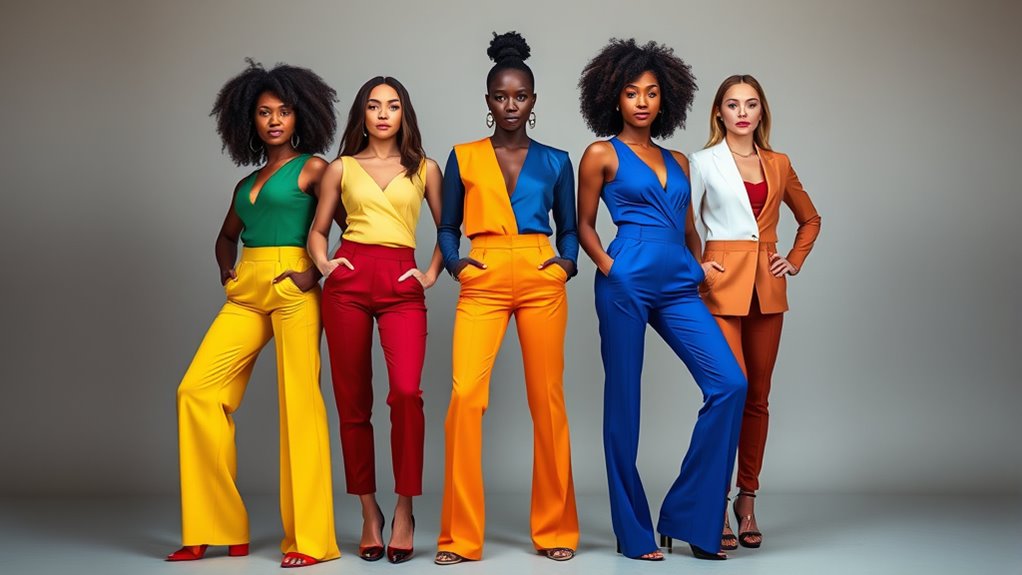

To flatter any body shape with color blocking, focus on strategic color placement and harmony. Use darker shades on sides or areas you want to downplay, while brighter or lighter colors draw attention to your best features. Vertical blocks and well-chosen color contrasts can elongate your silhouette and create balance. Balance bold colors on top with neutrals on the bottom or vice versa. Keep these principles in mind to craft flattering, eye-catching outfits—there’s more to explore for perfect results.
Key Takeaways
- Use darker shades on sides to slim and define your waist, while brighter colors draw attention to your center.
- Balance bold blocks on top with darker or neutral tones on the bottom for a proportionate silhouette.
- Incorporate vertical color blocking with contrasting shades to elongate the torso and create a streamlined look.
- Highlight your best features by placing lighter or brighter colors strategically on areas you want to emphasize.
- Choose harmonious color combinations and strategic placement to create a cohesive, flattering, and confident outfit.
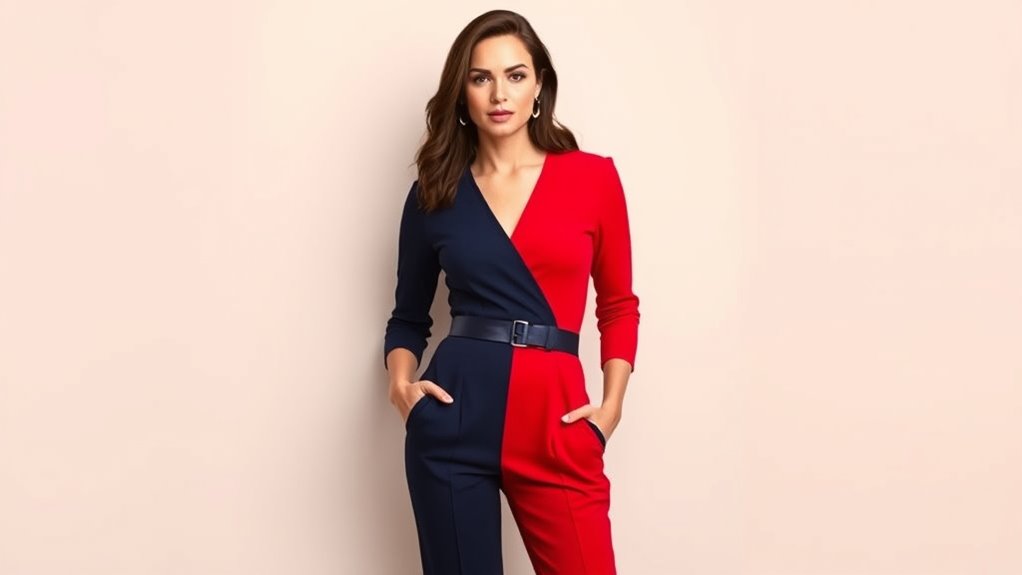
Color blocking is a versatile styling technique that can instantly enhance your silhouette and boost your confidence. When you choose the right colors and thoughtfully combine them, you create an eye-catching look that highlights your best features. The key lies in understanding how color harmony and visual balance work together. Color harmony ensures that the colors you select complement each other, creating a cohesive and pleasing appearance. Visual balance involves distributing colors in a way that flatters your body shape, whether you want to accentuate or downplay certain areas.
Color harmony and visual balance create flattering, eye-catching outfits that highlight your best features.
To use color blocking effectively, start by considering your body shape. If you want to emphasize your waist or create curves, opt for darker shades on the sides and brighter or lighter colors on the center. This technique draws the eye inward or outward, depending on your goal. For example, wearing a dark-colored top with a lighter, vibrant skirt can make your waist look narrower while drawing attention to your legs. Conversely, if you wish to elongate your torso, vertical color blocking with contrasting shades can create a slimming effect and add height.
When selecting your color palette, think about color harmony. Complementary colors—such as blue and orange or purple and yellow—bring vibrancy and energy to your outfit. Analogous colors—those next to each other on the color wheel—like blue and green, produce a more subtle, seamless transition that’s easy on the eyes. Monochromatic schemes, which involve different shades of the same color, create a sophisticated and elongated silhouette. Mixing and matching these harmonies allows you to craft outfits that are visually appealing and balanced, no matter your body shape. Additionally, understanding how contrast ratios influence visual impact can help you choose combinations that are striking yet flattering.
Visual balance is essential in ensuring your color blocking looks intentional and flattering. If you’re wearing bold, bright blocks on top, balance that with darker or neutral shades on the bottom. This prevents your outfit from feeling overwhelming or unbalanced. Conversely, if you’re wearing a statement color on the lower half, keep the top more subdued to avoid competing focal points. Additionally, consider the placement of colors—placing darker shades on areas you wish to downplay and lighter or brighter shades on features you want to highlight helps you craft a flattering silhouette.

Alaroo Cute Tops for Women Dressy Short Sleeve Shirts Business Casual Summer Clothes Cruise Outfits Spring Fashion Clothing Color Block XL
- Material Composition: 95% polyester, 5% spandex
- Material Type: Eyelet for solid colors
- Design Features: Casual loose fit with cap sleeves
As an affiliate, we earn on qualifying purchases.
As an affiliate, we earn on qualifying purchases.
Frequently Asked Questions
Can Color Blocking Help Disguise Problem Areas Effectively?
Color blocking can definitely help disguise problem areas effectively. By creating an optical illusion, you draw attention away from spots you want to minimize. Strategic placement of darker shades can make certain areas appear smaller, while lighter shades highlight your best features. This technique enhances visual balance, making your overall silhouette more proportionate. So, yes, color blocking is a clever way to subtly conceal areas you’re less confident about.
What Color Combinations Are Best for Petite Body Types?
For petite proportions, choose color combinations that balance visual weight and elongate your frame. Opt for vertical or monochromatic schemes, like navy and cream or all-one-tone outfits, to create a streamlined look. Avoid overly bold or contrasting blocks that can overwhelm your size. Instead, use subtle color shifts and strategic placement of darker shades on problem areas, helping you appear taller and more proportioned naturally.
How Do I Choose Colors That Complement My Skin Tone?
When choosing colors that complement your skin tone, focus on your skin’s undertones—warm, cool, or neutral. For warm undertones, opt for earthy hues like oranges and browns. Cool undertones look great in jewel tones like blues and purples. Neutral undertones are versatile, so experiment with different shades. Prioritize color harmony by selecting shades that enhance your natural glow, making you look vibrant and confident.
Is Color Blocking Suitable for Formal or Professional Settings?
Imagine stepping into a room where your outfit speaks confidence. Color blocking works beautifully in formal wear and professional attire, making you stand out effortlessly. You can combine classic hues with bold accents to create a polished, modern look that’s appropriate for meetings or events. It adds personality without sacrificing sophistication, helping you feel empowered and stylish at any professional occasion.
How Can I Incorporate Color Blocking Into Casual Everyday Outfits?
You can easily incorporate color blocking into casual outfits by mixing vibrant and neutral pieces. Opt for comfortable fabric choices like cotton or linen to keep it relaxed. Use accessorizing tips such as bold jewelry or scarves to add flair. Pair color-blocked tops with jeans or casual skirts for a fun, stylish look. Keep the palette balanced, and don’t be afraid to experiment with different color combinations to suit your style.
Conclusion
Don’t let doubts hold you back from trying color blocking. Remember, it’s all about experimenting and finding what makes you feel confident. Even if you’re worried about drawing attention to certain areas, choose colors and placement that highlight your best features. Have fun with it—fashion is about expressing yourself. So go ahead, embrace color blocking and discover how it can beautifully flatter any body shape you have.