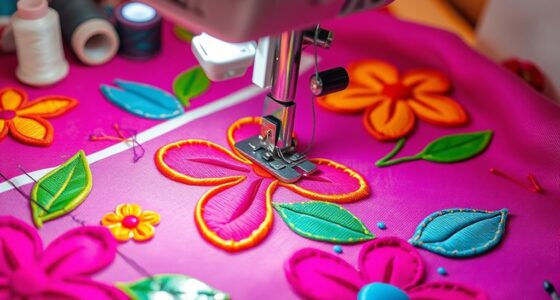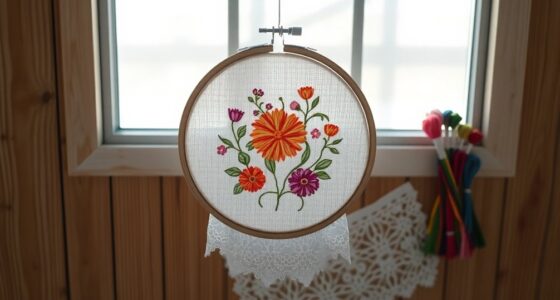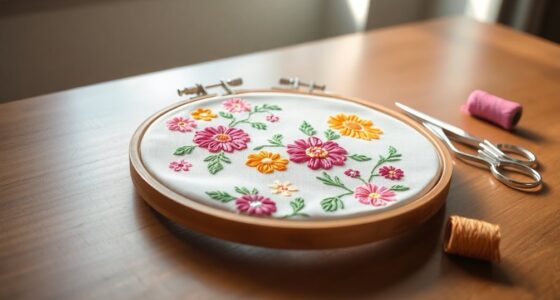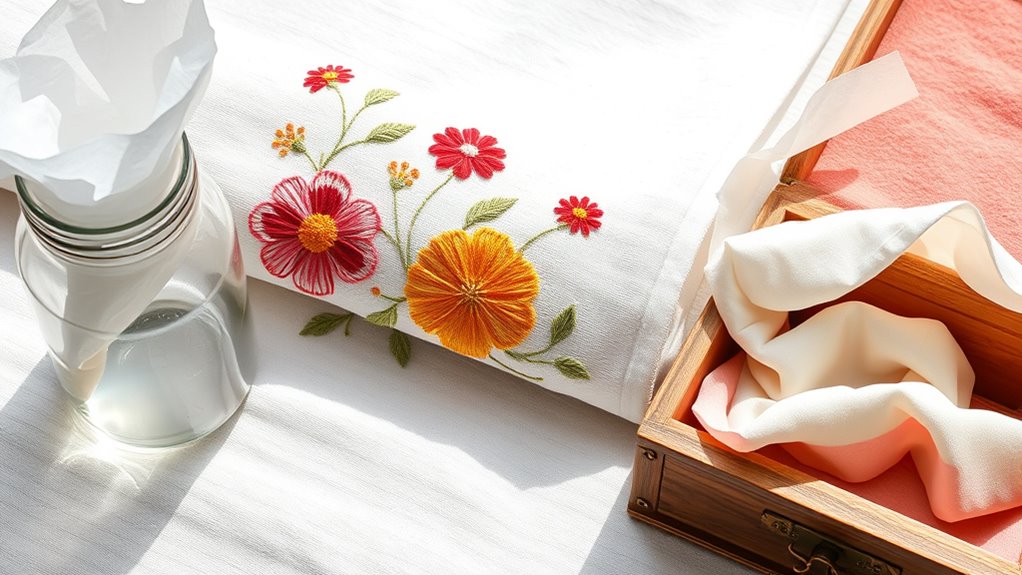

To care for your embroidered pieces, handle them gently with clean hands, avoid pulling loose threads, and store them in a cool, dry place away from direct sunlight. When washing, use cold water with a mild detergent, place your embroidery in a mesh bag, and support the fabric to prevent stretching or fraying. To keep their colors vibrant, dry flat in shade. Continue exploring for more expert tips to preserve your needlework beautifully.
Key Takeaways
- Wash embroidered items gently in cold water with a mild, pH-neutral detergent, preferably using a mesh bag to prevent stress.
- Support the fabric during washing and rinsing, avoiding wringing or twisting to prevent distortion or fraying.
- Dry flat on a clean towel away from direct sunlight to preserve color vibrancy and prevent fading.
- Store embroidery in an acid-free box or breathable cover, folded carefully to avoid creases and damage.
- Mount or display on padded backing and keep away from direct sunlight to prevent stretching, sagging, and color deterioration.
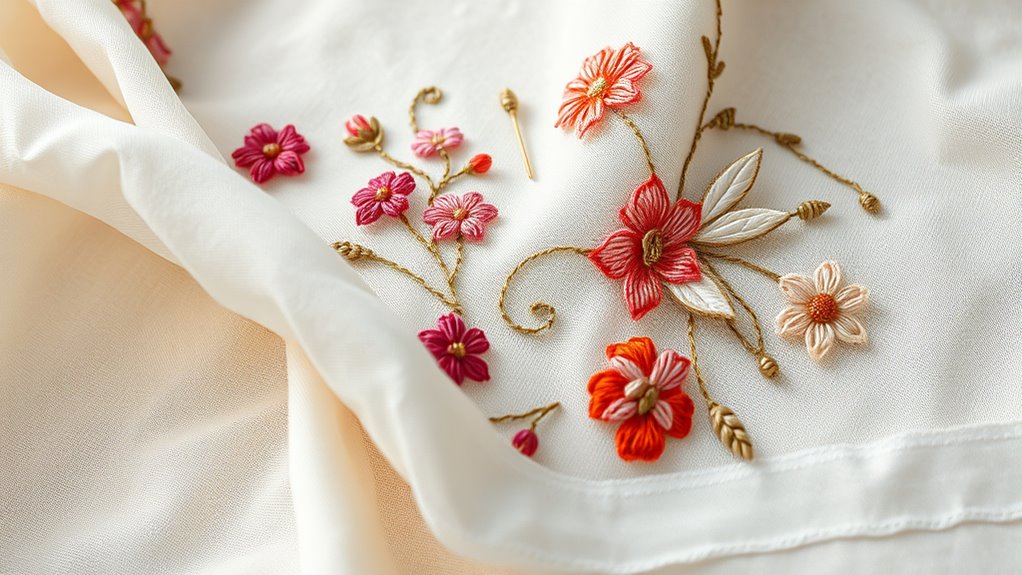
Embroidered pieces require careful handling to preserve their intricate designs and delicate fabrics. The first step in caring for your embroidery is understanding that these textiles are vulnerable to damage, especially along the edges and in the preservation of their vibrant colors. Fraying edges are a common issue, and if not managed properly, they can quickly worsen, leading to unraveling threads and a loss of detail. To prevent this, always handle your embroidery with clean hands and avoid pulling or tugging at loose threads. When washing, it is crucial to be gentle to prevent further fraying; consider placing the piece in a mesh laundry bag or wrapping it in a soft pillowcase to minimize stress on the edges. Using the appropriate projector technology can also help in creating detailed displays of your embroidery in a well-lit environment. Color preservation is equally critical when caring for embroidered work. Over time, exposure to sunlight, harsh detergents, or improper storage can cause the dyes to fade or bleed. To maintain the vibrancy of your embroidery, wash it in cold water using a mild, pH-neutral detergent designed for delicate fabrics. Avoid bleach or harsh chemicals, which can strip the colors and weaken the threads. When rinsing, do so gently, supporting the fabric rather than wringing or twisting it, which could distort the stitches or cause fraying along the edges. After washing, lay the embroidery flat on a clean towel to dry, avoiding direct sunlight, which can accelerate fading. Storage plays a crucial role in preserving your embroidered pieces. Fold them carefully to avoid creases that can weaken the fabric or damage the stitches, especially along the edges where fraying might already be a concern. If possible, store your embroidery flat in a protective acid-free box or a breathable fabric cover. This prevents dust accumulation and minimizes exposure to light and humidity, both of which can harm the colors and fibers. When you need to hang your embroidery, use padded hangers or mount it on a stiff backing to prevent sagging or stretching, which can lead to fraying or distortion.
Top picks for "embroider piec wash"
Open Amazon search results for this keyword.
As an affiliate, we earn on qualifying purchases.
Frequently Asked Questions
Can I Wash Embroidered Pieces in a Washing Machine?
Yes, you can machine wash embroidered pieces, but you should use a gentle cycle to protect the embroidery. Place your item in a mesh laundry bag to prevent snagging and always use cold water to avoid colors bleeding or fabric damage. Avoid harsh detergents, and consider hand washing if the embroidery is delicate. After washing, lay your piece flat to dry, preserving its shape and embroidery quality.
How Do I Remove Stains From Delicate Embroidery?
You can tackle stains on delicate embroidery by investigating gentle stain removal techniques. First, test a small area with a mild detergent or spot cleaner designed for delicate fabrics. Gently dab the stain, avoiding rubbing, which can damage the stitches. For stubborn marks, consider using diluted white vinegar or specialized delicate cleaning solutions. Always rinse thoroughly and lay flat to dry, ensuring your embroidery stays vibrant and undamaged.
What Is the Best Way to Dry Embroidered Textiles?
You should air dry embroidered textiles to prevent damage. Lay your piece flat on a clean towel in a proper drying environment, away from direct sunlight and heat sources. Use gentle air drying techniques, ensuring good airflow around the fabric. Avoid wringing or twisting your embroidery, as this can distort the stitches. Patience is key—allow ample time for your textile to dry naturally and maintain its shape and vibrant colors.
How Should I Handle Fragile or Vintage Embroidery?
Think of fragile or vintage embroidery as a delicate butterfly, requiring gentle handling to maintain its beauty. You should use soft, clean hands and avoid any harsh movements. Employ preservation techniques like minimal contact and proper support when moving or storing. Keep it in a stable, climate-controlled environment, away from light and humidity. This careful approach ensures your cherished piece stays vibrant, safeguarding its history for years to come.
Can I Iron Embroidered Fabric Without Damaging It?
Yes, you can iron embroidered fabric without damaging it if you use the right techniques. Set your iron to a low heat, and always use a pressing cloth to protect the embroidery. Avoid direct contact with the stitches to prevent flattening or melting threads. This careful approach helps make certain your embroidery stays vibrant and well-preserved, maintaining its beauty over time. Proper ironing techniques are essential for embroidery preservation.
Conclusion
Think of your embroidered pieces as delicate butterflies in a garden. With gentle care—washing softly and storing them carefully—you protect their vibrant colors and intricate patterns. Like tending to precious blooms, your attention keeps these treasures alive and beautiful for years to come. When you treat your needlework with love, it blossoms into a timeless keepsake, a fluttering reminder of your patience and artistry, ready to be admired for generations.