
To achieve perfect alignment when matching plaids and stripes, focus on balancing pattern scale and color coordination. Pair large, bold patterns with smaller, subtle ones to create visual harmony. Match common hues and incorporate neutral tones for cohesion. Pay attention to pattern placement and use fabric pinning or tacking to align lines precisely. Experiment with different combinations and adjust as needed for a seamless look. Keep exploring for expert tips on mastering pattern pairing and alignment.
Key Takeaways
- Choose plaids and stripes with at least one shared color for visual cohesion.
- Vary pattern scale—pair large stripes with small, subtle plaids to create balance.
- Align pattern lines carefully at seams for seamless matching, especially with large patterns.
- Use neutral or solid fabrics to break up busy patterns and enhance alignment focus.
- Lay fabrics side by side first to assess pattern match and adjust scale or placement before sewing.
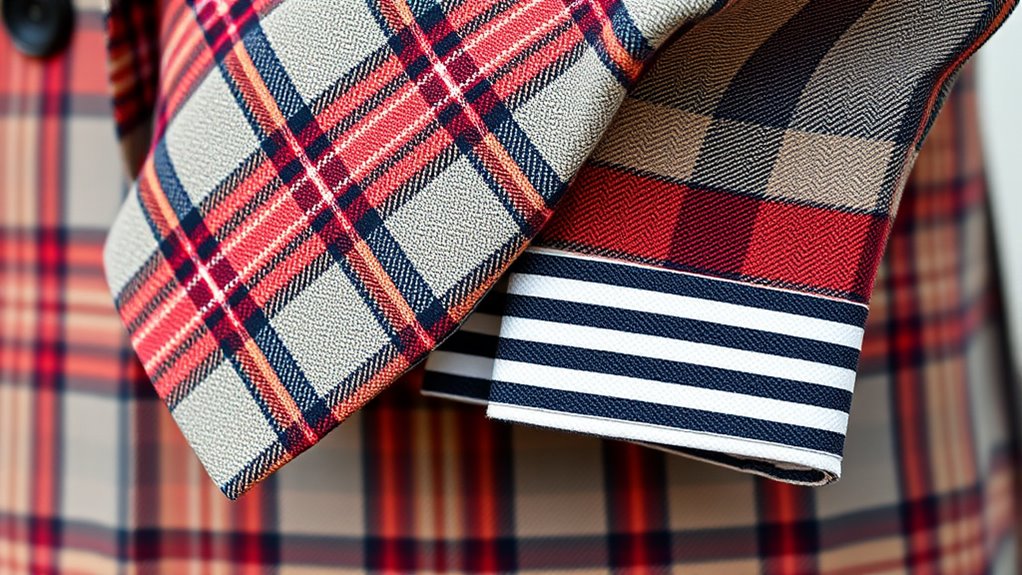
Matching plaids and stripes can seem intimidating at first, but with a few simple guidelines, you’ll find it’s easier than you think. When you’re working with fabric patterns, the key is understanding how different designs interact and how to balance their visual weight. The goal is to create a coordinated look without overwhelming the eye. To do this, start by considering the scale of each pattern. Large, bold stripes paired with small, subtle plaids can work well because they don’t compete for attention. Conversely, if both patterns are large and prominent, they might clash or create a busy, chaotic appearance. Finding a balance in scale is essential for a harmonious pairing.
Balancing pattern scale creates a harmonious, eye-pleasing plaid and stripe pairing.
Color coordination is equally important. When selecting fabrics, choose patterns that share at least one common hue or complement each other through contrasting tones. If your plaid features shades of blue and green, incorporate stripes with either of those colors or neutral tones like white, beige, or gray to anchor the ensemble. This cohesion helps the patterns feel intentional rather than accidental. Keep in mind that matching fabric patterns doesn’t mean every stripe and plaid has to be identical. Instead, aim for a color story that flows naturally — this creates a unified, polished look. If you’re unsure, start with a neutral background in your stripes or plaids and add a pop of accent color to tie everything together.
When layering fabrics, pay attention to the texture as well. Combining a smooth, lightweight fabric with a coarser, textured one adds depth and interest. This tactile contrast enhances the visual appeal without making the pairing seem mismatched. Also, consider the context and style you’re aiming for. For a casual, relaxed vibe, mixing different patterns with a shared color palette can create a lively, eclectic feel. For more formal settings, keep patterns subtle and within a similar tonal range to maintain sophistication. Additionally, incorporating natural materials can help ground the patterns and add warmth to the overall design.
Finally, don’t be afraid to experiment. Lay your fabric patterns side by side before sewing or assembling to see how they look together. Adjust the scale, color intensity, or pattern placement if needed. Remember, matching plaids and stripes isn’t about perfect replication but about creating a balanced, intentional look that showcases your style. With practice, you’ll develop an eye for pairing fabric patterns, making the process feel more natural and enjoyable.
Frequently Asked Questions
How Do Color Variations Affect Pattern Matching?
Color variations can make pattern matching tricky, as differences in color contrast may compromise visual harmony. When colors don’t align perfectly, seams and intersections stand out, breaking the seamless look you aim for. To achieve a cohesive design, choose fabrics with similar hue tones or complementary shades. This helps maintain visual harmony and ensures your plaid and stripe patterns blend smoothly, even if subtle color variations exist.
Can Pattern Matching Be Achieved With Handmade Fabrics?
Yes, pattern matching can be achieved with handmade fabric. You focus on maintaining pattern continuity by carefully aligning each piece during cutting and sewing. Handmade fabrics often have slight irregularities, so you need patience and precision. Take your time to match stripes or plaids at seams, adjusting as needed. With dedication, you can create beautifully aligned patterns that showcase the craftsmanship and uniqueness of handmade fabric.
What Tools Assist in Aligning Complex Plaid and Stripe Designs?
You can use fabric marking tools like chalk, fabric pens, or tracing wheels to assist in aligning complex plaid and stripe designs. Additionally, alignment tools such as rulers, grid mats, or rotary cutters help guarantee precise placement. By marking key points and using these tools during cutting and sewing, you stay accurate. This combination makes it easier to match patterns perfectly, resulting in a polished, professional finish on your handmade fabric projects.
How Does Fabric Stretch Impact Pattern Alignment?
Fabric elasticity can impact pattern alignment because stretchy fabric tends to shift or distort seams during sewing. When you work with elastic materials, you must account for seam distortion caused by fabric stretch, which can misalign plaid or stripe patterns. To maintain perfect matching, stabilize the fabric with interfacing or stay-stitch seams, and sew with care to minimize seam distortion, ensuring your patterns stay aligned throughout the process.
Are There Differences in Matching Techniques for Digital vs. Traditional Prints?
Matching techniques for digital printing are more precise and quick compared to traditional techniques, which rely heavily on manual skills. With digital printing, you can align patterns perfectly with software tools, reducing errors and saving time. Traditional methods require meticulous handwork and seam matching, making it feel like a heroic quest. So, yes, there are clear differences—you adapt your approach depending on whether you’re working with digital or traditional prints.
Conclusion
Now, imagine yourself standing in front of a perfectly coordinated outfit, where every plaid and stripe lines up seamlessly like a well-composed painting. With these expert techniques, you hold the brush to create harmony in your wardrobe. As the patterns align flawlessly, you’ll feel confident and polished, ready to conquer any occasion. Embrace the art of matching, and let your style become a vibrant mosaic of carefully crafted detail and impeccable craftsmanship.