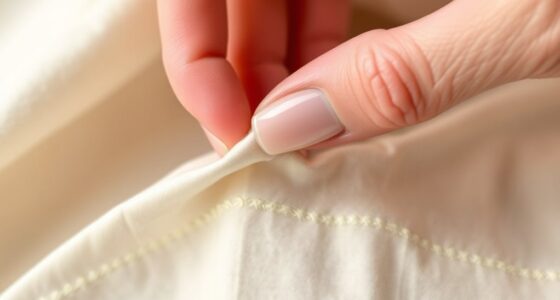
To achieve flawless buttonholes, start by selecting the right stitch type and practicing on scrap fabric. Adjust your machine settings for fabric thickness, and use a dedicated buttonhole foot for stability. Mark your placement carefully, use sharp needles, and reinforce edges with small stitches. Take your time when cutting open the buttonhole and guarantee even tension throughout. Keep practicing these techniques, and you’ll master perfect buttonholes every time—more tips await to elevate your skills even further.
Key Takeaways
- Test stitch settings and practice on scrap fabric to ensure neat, secure buttonholes before working on the final project.
- Use the appropriate buttonhole foot attachment and keep it clean and properly aligned for consistent results.
- Mark buttonhole placement precisely and reinforce edges with small, tight stitches for durability.
- Carefully cut open the finished buttonhole with small scissors, avoiding cuts into the stitches.
- For hand sewing, reinforce edges with bartack or whipstitch stitches to enhance strength and longevity.
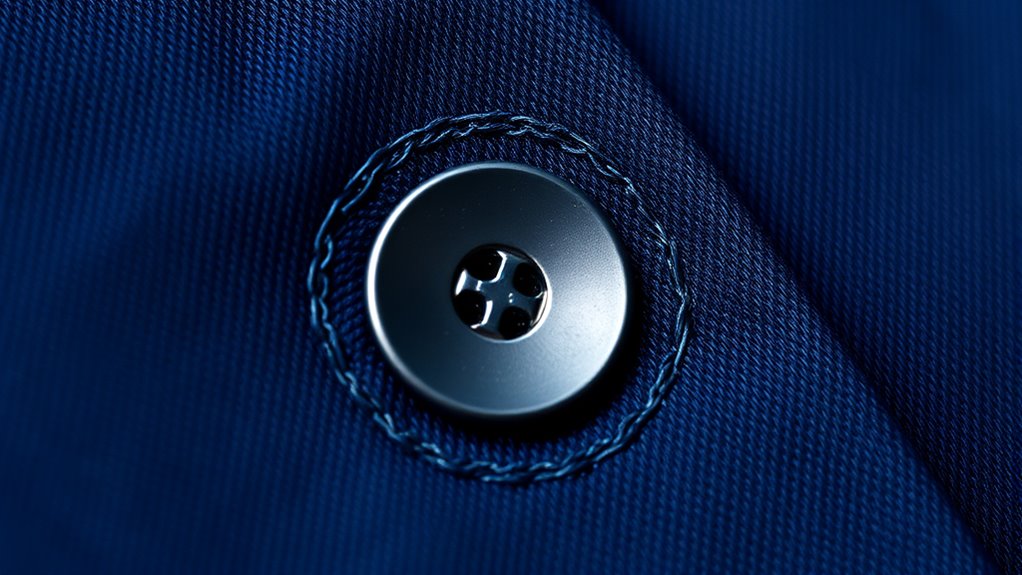
Buttonholes are a fundamental detail that can elevate your sewing projects, but mastering their techniques takes practice and precision. Whether you’re using a sewing machine or hand sewing, understanding the right steps guarantees your buttonholes look professional and function perfectly. Starting with your sewing machine settings, it’s essential to select the correct stitch type and length. Most modern machines have a dedicated buttonhole stitch, which simplifies the process. Adjust the stitch width and length according to your fabric’s thickness—too narrow or short can cause weak buttonholes, while too wide may look bulky. Before stitching, test on scrap fabric to fine-tune these settings, guaranteeing your buttonholes are neat and secure. If your machine has a foot attachment for buttonholes, make sure it’s correctly positioned and clean, as this helps maintain consistent stitching.
Master your buttonholes by selecting the right stitch type and length, then test on scrap fabric for perfect results.
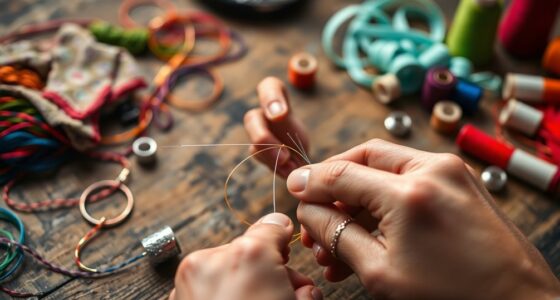
When working with delicate fabrics, you might prefer hand sewing tips for greater control. Using a sharp needle and matching thread, carefully mark where your buttonholes will go. Using a fabric pencil or tailor’s chalk, draw precise lines, and take your time to ensure symmetry. Hand sewing allows you to customize the size and shape, especially on tricky or thick fabrics. You can reinforce the edges with small, tight stitches, which prevents fraying and prolongs durability. For a clean finish, consider using a backstitch at the start and end of each stitch line, providing extra strength. Remember, patience is key—slow, deliberate stitches produce a more polished look.
If you decide to machine sew, keep your fabric taut but not stretched, as slack can cause uneven buttonholes. Use pins or clips to secure the fabric and prevent shifting during stitching. When you approach the end of your buttonhole, slow down and reduce stitch length slightly to avoid puckering. Once finished, carefully cut open the buttonhole with small scissors, making sure not to cut into the stitches. For hand sewn buttonholes, use a whipstitch or bartack stitches at the ends for reinforcement. Properly preparing your skin exfoliation helps create a smooth surface for more even sewing and finishing.
Whether you’re using a machine or hand sewing, consistent practice improves your technique. Take the time to experiment with different fabrics and settings, and don’t rush the process. With patience and attention to detail, you’ll create flawless buttonholes that enhance the overall look of your garments. Remember, mastering buttonholes is about precision and control—your effort will show in the professional finish of your sewing projects.

Pressure Foot 1-Step Automatic Button Hole Foot for Brother CS8150 CS8060 NV500D/NV30/NV10/BC2500/ES2400#XC2691051
1-STEP BUTTONHOLE FOOT, #XC2691051 fits BROTHER CS8060, CS8150, NV500D
As an affiliate, we earn on qualifying purchases.
As an affiliate, we earn on qualifying purchases.
Frequently Asked Questions
What Types of Fabrics Are Best for Buttonholes?
You should choose fabrics with little to no stretch for buttonholes, as stretch can distort the stitches and affect visibility. Fabrics like cotton, linen, and wool are ideal because they hold their shape well and provide clean, crisp buttonholes. Avoid very stretchy or delicate fabrics, as they can make buttonhole stitching tricky and less durable. Using the right fabric guarantees your buttonholes stay neat, secure, and visually appealing.
Can I Customize Buttonhole Sizes for Unique Buttons?
Yes, you can customize buttonhole sizes for unique buttons through tailored techniques. By adjusting your machine settings or hand-stitching, you guarantee the buttonhole fits perfectly, enhancing your garment’s look. When doing custom buttonhole sizing, consider the button’s diameter and thickness, and tailor the buttonhole accordingly. This approach allows for precise, professional results, making your clothing truly one-of-a-kind with custom buttonhole sizes designed for your unique button tailoring needs.
How Do I Fix a Crooked or Uneven Buttonhole?
Your crooked or uneven buttonhole is a sewing catastrophe! First, stop and check your sewing machine calibration—improper settings can throw off your stitches. Reinforce the buttonhole edges with extra stitching to straighten it out. Carefully resew the buttonhole, paying close attention to your foot alignment. With patience and precision, you’ll fix that disaster into a perfectly even, professional-looking buttonhole that’ll make everyone marvel at your sewing skills!
Are Hand-Stitched Buttonholes More Durable Than Machine-Made?
Hand-sewn buttonholes tend to be more durable because you control every stitch, ensuring tight, even seams that hold up over time. Machine stitching is quicker and consistent but might not be as long-lasting, especially if the stitching quality varies. If durability is your priority, hand sewing offers better strength and a refined look. However, for speed and uniformity, machine-made buttonholes can work well, especially on less frequently used clothing.
What Tools Are Essential for Professional Buttonhole Finishing?
You’ll need vital tools like high-quality buttonhole thread for durability and neat stitches. Buttonhole scissors are essential for clean, precise cuts around the finished edge. Don’t overlook a good marking tool to guarantee symmetry, and a thimble helps protect your fingers during hand-stitched work. Using these tools guarantees a professional finish, making your buttonholes look flawless every time, even if you’re new to the craft.
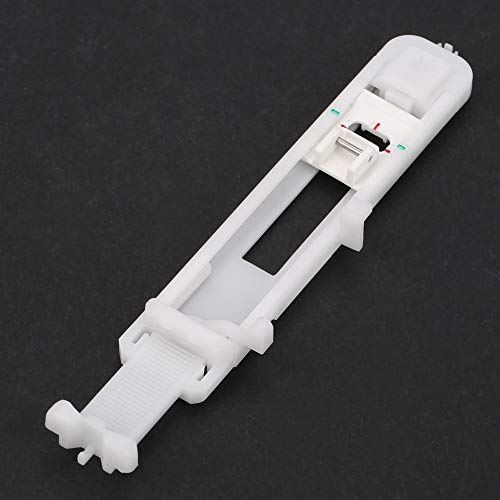
One Step Buttonhole Presser Foot, Singer Buttonhole Foot,4.1 x 1.0 inch Button Hole Maker Tool for EverSewn, Juki, Singer Sewing Machine Automatic Professional Presser Feet One Step Buttonhole Foot
【Plastic and Stainless Steel】 One-step buttonhole presser foot is made of high-quality plastic and stainless steel materials, can…
As an affiliate, we earn on qualifying purchases.
As an affiliate, we earn on qualifying purchases.
Conclusion
Mastering buttonholes is like opening a secret garden of craftsmanship—each perfect stitch a blooming flower of skill. With these expert techniques, you’ll turn a simple detail into a work of art that stands proud and true. Every buttonhole you create becomes a silent proof to your patience and precision, transforming your sewing into a symphony of flawless execution. Keep practicing, and soon, your buttonholes will be as reliable as the sunrise—beautiful, consistent, and effortlessly perfect.

PLANTIONAL Upholstery Repair Sewing Kit, Heavy Duty Sewing Kit with Sewing Awl, Seam Ripper, Leather Hand Sewing/Stitching Needles, Sewing Thread for Car/Sofa/Backpack/Shoe, Craft DIY, 10 Color, 47Pc
【Heavy Duty Sewing Kit】- This comprehensive sewing kit includes 32 leather sewing needles, 10 leather sewing threads (30…
As an affiliate, we earn on qualifying purchases.
As an affiliate, we earn on qualifying purchases.

Brother Sewing Machine, XM2701, Lightweight Machine with 27 Stitches, 6 Included Sewing Feet
27 Unique built-in stitches: The XM2701 includes 27 built-in stitches including decorative, blind hem, zigzag, and stretch stitches…
As an affiliate, we earn on qualifying purchases.
As an affiliate, we earn on qualifying purchases.