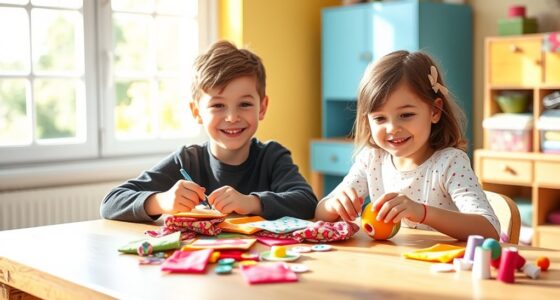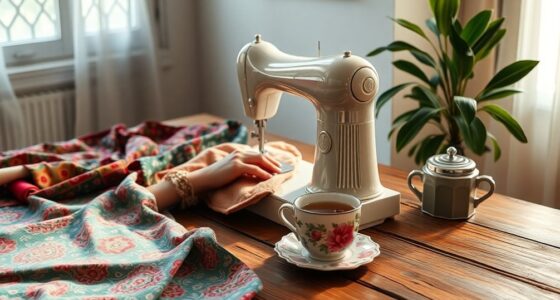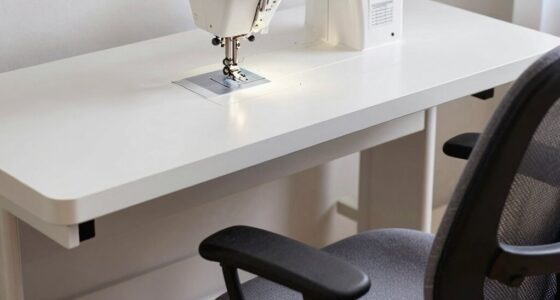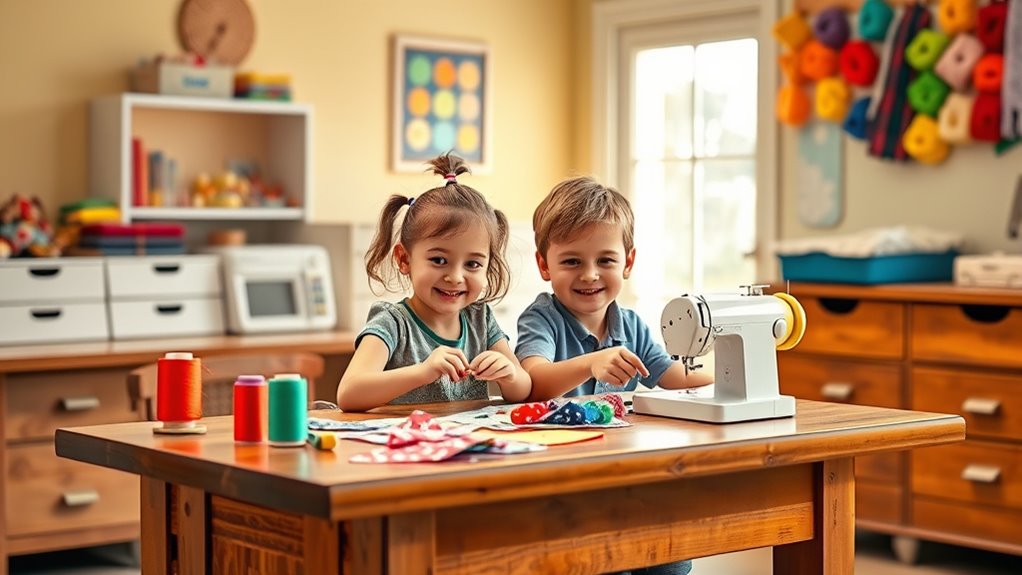

To make sewing fun for kids, choose soft, colorful fabrics and start with simple projects like pillowcases or felt accessories. Always supervise and use child-friendly tools to guarantee safety. Create a clean, calm workspace and involve kids in selecting fabrics to boost their excitement. Celebrate their successes and encourage creativity. By focusing on safety and fun projects, you’ll help your kids build confidence and lifelong skills—keep exploring for more ideas and tips.
Key Takeaways
- Choose simple, colorful projects like pillowcases or felt accessories to make sewing fun and manageable for kids.
- Use child-friendly tools, such as rounded-tip scissors and low-speed sewing machines, to ensure safety.
- Involve children in fabric selection to boost motivation and foster creativity from the start.
- Provide adult supervision and guidance to teach proper technique and promote safe sewing habits.
- Celebrate small successes and encourage patience to build confidence and maintain children’s enthusiasm for sewing.
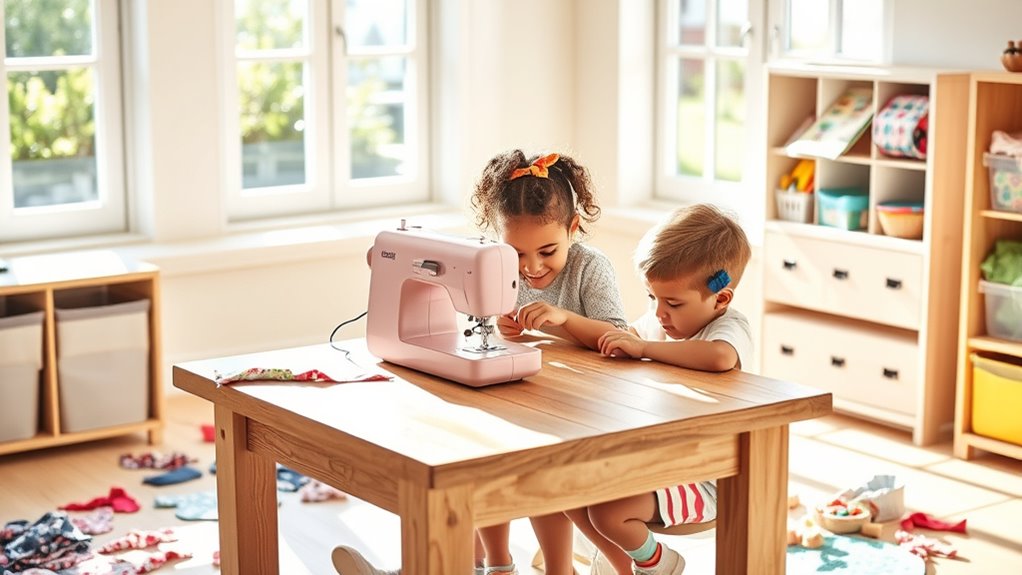
Have you ever considered sewing with your kids as a fun and educational activity? It’s a fantastic way to bond, foster creativity, and teach valuable skills. Before you delve in, though, it’s important to think about fabric selection and sewing safety. Choosing the right fabric sets the foundation for a successful project and keeps your child engaged without frustration. Opt for soft, lightweight fabrics like cotton or flannel; these are easy to handle and sew, making them ideal for beginners. Bright colors and fun patterns can also motivate your child to participate, turning sewing into an exciting adventure. Avoid tricky or slippery fabrics like silk or satin until your child has gained more confidence, as they can be difficult to work with and may cause frustration.
Choose soft, lightweight fabrics like cotton or flannel to make sewing with kids fun and stress-free.
Once you’ve picked the perfect fabric, sewing safety becomes your top priority. Kids should always work in a safe environment, with adult supervision at all times. Keep sharp tools, like pins and scissors, out of reach when not in use, and use child-friendly scissors with rounded tips to prevent accidents. Teach your child to handle needles carefully, emphasizing that they should never point the needle toward themselves or others. Using a thimble can also protect their fingers as they learn to sew. When working with a sewing machine, ensure it’s set to a slow speed, and show them how to operate it safely. Never leave the machine running unattended, and always turn it off when changing the needle or threading it. Understanding sewing machine safety is crucial for a smooth learning experience.
Encourage your child to be mindful of their workspace. Clear clutter and keep everything organized to prevent accidents. Demonstrate how to handle fabrics and tools properly, emphasizing patience and precision. Making sure they understand sewing safety rules from the start will help them develop good habits that last a lifetime. It’s also helpful to start with simple projects, such as pillowcases, small bags, or felt accessories, which keep safety concerns manageable while providing a sense of accomplishment.
Involving your child in fabric selection makes the experience more personal and exciting for them. Let them pick out their favorite colors and patterns, which motivates them to stay focused and proud of their work. As you teach sewing safety and proper fabric handling, remember to praise their efforts and celebrate even small successes. This positive reinforcement builds confidence and makes sewing with kids a joyful, educational experience that they’ll want to revisit again and again.

Scotch Kids Pointed Tip Scissors with Soft Touch, 5 Inches (1442P) (Colors may vary)
ALL PURPOSE SCISSORS FOR SCHOOL KIDS: Contains 12, 5" blunt tip scissors for school with a soft comfort…
As an affiliate, we earn on qualifying purchases.
As an affiliate, we earn on qualifying purchases.
Frequently Asked Questions
What Safety Precautions Should I Take When Teaching Kids to Sew?
When teaching kids to sew, you should prioritize safety by always supervising them closely. Use sharp needles carefully, and teach children to handle them properly to avoid injuries. Make certain they work with non-toxic materials and fabrics to prevent any allergic reactions. Keep scissors and pins out of reach when not in use, and encourage a calm, focused environment. Teaching safety first helps kids enjoy sewing while staying protected.
At What Age Is It Appropriate to Introduce Children to Sewing?
You can start introducing children to sewing around age 6 or 7, depending on their developmental readiness and fine motor skills. At this age, they can handle simple projects and follow basic instructions. Keep in mind age considerations, ensuring they understand safety rules and can manage small tools safely. Always supervise closely and choose age-appropriate sewing kits to foster confidence and prevent frustration.
How Can I Make Sewing Lessons More Engaging for Kids?
Imagine sewing lessons as a vibrant tapestry, each thread weaving excitement into learning. To boost engagement, you can incorporate interactive activities that turn sewing into a hands-on adventure. Use storytelling approaches to create an enthralling narrative around each project, making kids feel like they’re part of a fun-filled story. This mix sparks their curiosity and transforms sewing from a task into a delightful exploration they’ll enthusiastically want to continue.
What Are the Best Beginner Sewing Projects for Children?
You should start with simple projects like fabric bookmarks or small pillows, choosing colorful, easy-to-handle fabric choices to keep kids engaged. Keep the project complexity low, focusing on basic stitches and straight seams, so children don’t get overwhelmed. These beginner sewing projects help build confidence and skills, making sewing fun and accessible. As they progress, you can introduce slightly more complex projects to challenge their growing abilities.
How Do I Choose Child-Friendly Sewing Tools and Equipment?
To choose child-friendly sewing tools and equipment, focus on age-appropriate tools with safety features. Look for scissors with rounded tips, lightweight needles, and beginner-friendly sewing machines that have safety-enhanced equipment. Verify the tools are easy for small hands to grip and control. Always supervise your child during sewing activities, and select tools designed specifically for kids to promote safety and confidence in their sewing projects.

KRAFUN My First Sewing Kit for Beginner Kids Ages 6-12, 7 Easy DIY Projects of Stuffed Animal Dolls & Plush Pillow Craft, Pre-Punched Felt & Instructions, Gift for Girls Boys, Learn to Sew, Embroidery
Perfect Gift — Reusable Storage Box: Celebrate the joy of embroidery kits with friends and family. Comes with…
As an affiliate, we earn on qualifying purchases.
As an affiliate, we earn on qualifying purchases.
Conclusion
So, when you teach your kids to sew, you’re not just creating tiny stitches—you’re opening a world of endless imagination and superpowers! Imagine their tiny fingers transforming scraps into masterpieces, turning everyday fabric into magical treasures. Every stitch you guide them through is like planting a seed of creativity that grows into a unstoppable, unstoppable sewing superhero. Get ready to witness your little ones turn into sewing legends—because with your help, they can conquer any craft universe!

Sewing Machine, Mini Sewing Machines for Beginner with Eco-Friendly Material, Dual Speed Portable Sewing Machines with Extension Table, Light – Easy to Use, Best Gift for Kids & Women
【Safe for Kids】Compared to the ordinary sewing machines, it features upgraded environmental material, which makes it more durable and…
As an affiliate, we earn on qualifying purchases.
As an affiliate, we earn on qualifying purchases.

kullaloo – Sewing Kit for Kids & Beginners – Cut & Sew Fabric Panel – Sewing Patterns Pre-Printed on the Fabric – DIY Rag Doll Kit with Clothes – Betsy Bear Sewing Project – Incl. Video Instructions
Charming Sewing Project for Teenagers & Adults – This lovely cut-and-sew fabric panel features a teddy bear doll…
As an affiliate, we earn on qualifying purchases.
As an affiliate, we earn on qualifying purchases.