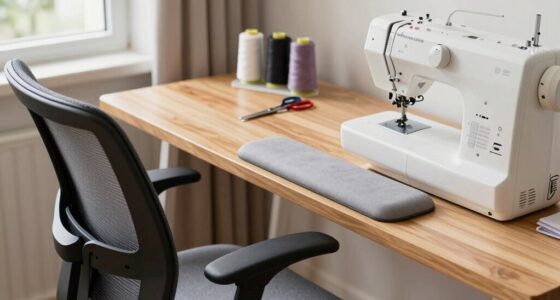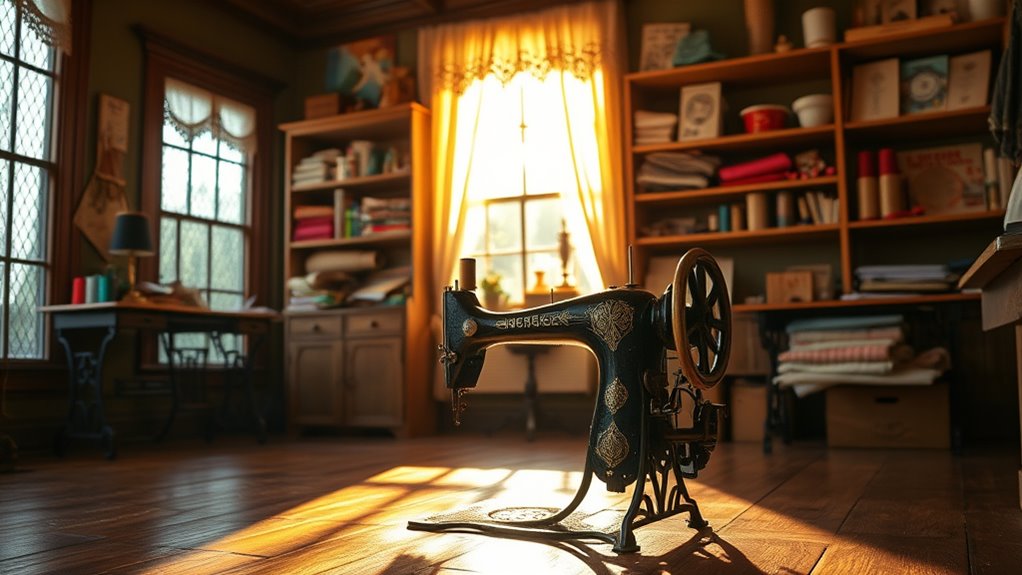
The sewing machine transformed home sewing by making garment creation faster, easier, and more accessible. It shifted clothing making from a manual, time-consuming task to a practical activity that anyone could do at home. This innovation empowered you to personalize, repair, and create clothing with greater convenience. As sewing machines became more affordable, they fostered independence and creativity in home fashion. Discover how this invention sparked social and cultural changes that continue today.

Get business pricing on tools and workshop supplies
- Business-only prices and quantity discounts
- Tax-exempt purchasing
- Multiple users, one account, clear invoices
Key Takeaways
- The sewing machine automated hand sewing, increasing efficiency and making garment production faster and more accessible at home.
- Early innovations by Elias Howe and Isaac Singer laid the foundation for easy-to-operate machines for household use.
- Widespread adoption of sewing machines in homes empowered women, fostering creativity and self-sufficiency.
- The availability of affordable machines transformed home sewing from a manual task to a popular hobby and skill.
- Sewing machines contributed to social change by enabling women’s participation in clothing creation and small-scale entrepreneurship.
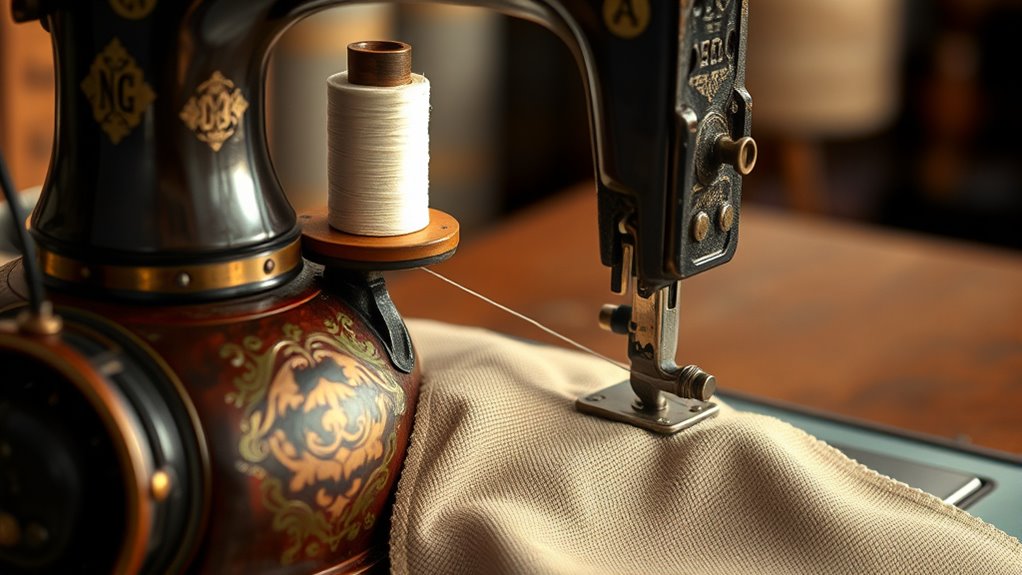
The history of sewing machines is a fascinating story of innovation that transformed how people create and repair clothing. It’s a tale rooted in industrial innovation, where inventors pushed boundaries to develop machines that could sew faster and more efficiently than hand stitching. This technological leap didn’t just change manufacturing; it also had a profound cultural impact. Before the sewing machine, clothing production was slow and labor-intensive, limiting access and affordability. Once the sewing machine was introduced, clothing became more accessible to the masses, revolutionizing not only how garments were made but also how society viewed fashion and self-expression.
As you explore the origins of these machines, you’ll see that the early designs aimed to automate a task that was once done painstakingly by hand. Inventors like Elias Howe and Isaac Singer made significant strides by introducing mechanisms that simplified sewing and increased productivity. Their innovations triggered a wave of industrial innovation, prompting factories to adopt sewing machines en masse, which led to faster clothing production and lower costs. This shift contributed to the rise of ready-to-wear fashion, making styles more uniform and accessible to everyone. The sewing machine’s role in industrial innovation didn’t stop at factories; it also influenced home sewing practices. As machines became more affordable and easier to operate, families could take on sewing projects at home, fostering independence and creativity.
The cultural impact of sewing machines extends beyond mere convenience. They became symbols of progress, empowerment, and modernity. Women, in particular, found new opportunities and roles thanks to these machines. Instead of solely being responsible for mending or making clothes by hand, many women started creating their own garments, which boosted confidence and self-sufficiency. Sewing machines also helped shape social changes, like the rise of home-based entrepreneurship and small-scale fashion design. They contributed to shifting perceptions about women’s work, giving them tools to participate more actively in the economy and culture.
electric sewing machine for beginners
As an affiliate, we earn on qualifying purchases.
As an affiliate, we earn on qualifying purchases.
Frequently Asked Questions
How Did Early Sewing Machines Impact Women’s Employment Opportunities?
Early sewing machines expanded women’s employment opportunities by enabling them to produce clothing faster and more efficiently, boosting their skills and independence. As a result, women gained greater empowerment in domestic labor, turning sewing from solely a household chore into a source of income. This shift allowed women to participate more actively in the economy, fostering both economic independence and social change.
What Were the Key Technological Innovations in Sewing Machine Development?
You’ll find that key technological innovations like the needle mechanism and thread tension greatly improved sewing machines. The needle mechanism, with its eye in the eye design, allowed for smoother stitching and increased speed. Meanwhile, adjustable thread tension guaranteed stronger, more consistent stitches. These innovations made sewing more efficient and reliable, transforming home sewing and paving the way for modern machines that are faster and easier to operate.
How Did Sewing Machines Influence Global Textile Trade?
Sure, because nothing says global influence like a tiny machine stitching away in your laundry room, right? Sewing machines boosted textile exports by speeding up production, making fabrics cheaper and more accessible worldwide. They also expanded trade routes as mass-produced textiles flooded markets, fueling economic growth. You could say they spun the world’s economy into a more interconnected web, one stitch at a time, transforming local tailors into global players.
What Safety Concerns Existed With Early Sewing Machine Designs?
You should be aware that early sewing machines posed safety concerns like machine needle safety, which could cause injuries if not handled carefully. Foot pedal hazards were also common, as unintentional activation could lead to accidents. These risks prompted users to develop better safety practices and led manufacturers to improve designs, making sewing safer and more accessible for everyone.
How Did Sewing Machine Patents Affect Industry Competition?
Patent disputes and monopoly practices substantially shaped the sewing machine industry. You’d find that key inventors, like Elias Howe and Isaac Singer, fought over patents, leading to fierce competition. These disputes often delayed innovation and resulted in companies consolidating power through patent control, creating monopolies. This environment pushed manufacturers to innovate within patent limits, but also limited market choices for consumers, influencing the industry’s growth and development.
Conclusion
As you reflect on the sewing machine’s journey, it’s clear it’s like a mighty river that transformed a small stream into a powerful force. Its invention reshaped home sewing, making it easier, faster, and more accessible. Just as a river carves new paths through the landscape, the sewing machine carved a new chapter in everyday life, empowering you to create with confidence. Its legacy continues to flow, sewing the fabric of history together, stitch by stitch.
Fall yard work Picks
leaf blowers
As an affiliate, we earn on qualifying purchases.