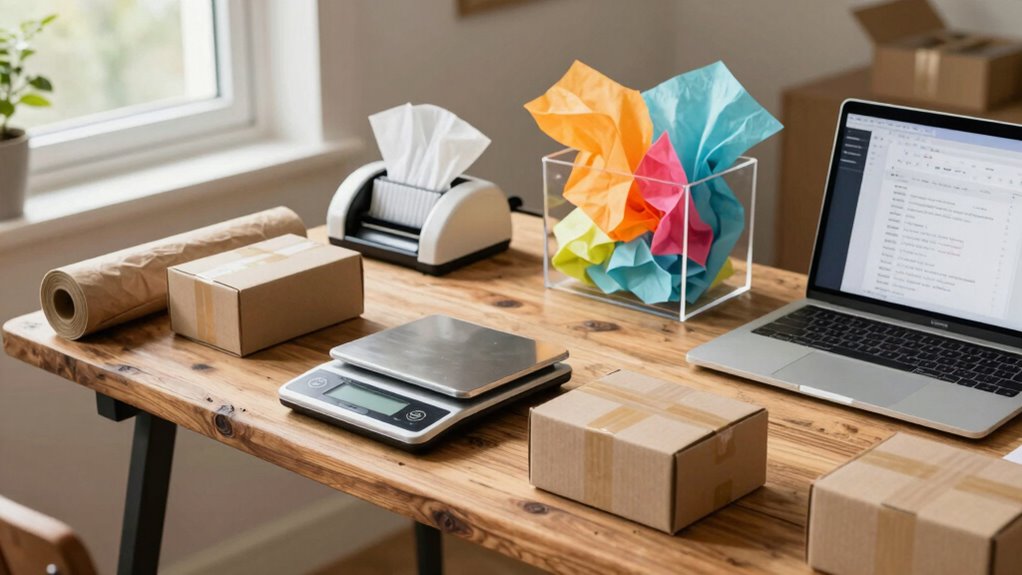

Setting up a well-organized shipping station is key to running your handmade business smoothly from home. You’ll want a dedicated workspace with clear zones for packing, labeling, and storing supplies, making everything easy to find and use. Include essential tools like a scale, label printer, and cutting surface, and keep your supplies organized in labeled bins or racks. Creating an efficient flow and design will cut down on errors and boost productivity—discover more tips to optimize your space.

Get business pricing on tools and workshop supplies
- Business-only prices and quantity discounts
- Tax-exempt purchasing
- Multiple users, one account, clear invoices
Key Takeaways
- Establish a dedicated, organized shipping station with clear zones for packing, labeling, and storage.
- Use personalized packaging supplies and designated storage for a professional, efficient packing process.
- Implement an inventory management system with labeled bins to track supplies and prevent shortages.
- Keep essential tools like scales, label printers, and cutting mats within easy reach for seamless workflow.
- Design a logical workspace flow from receiving to shipping to maximize space and boost productivity.
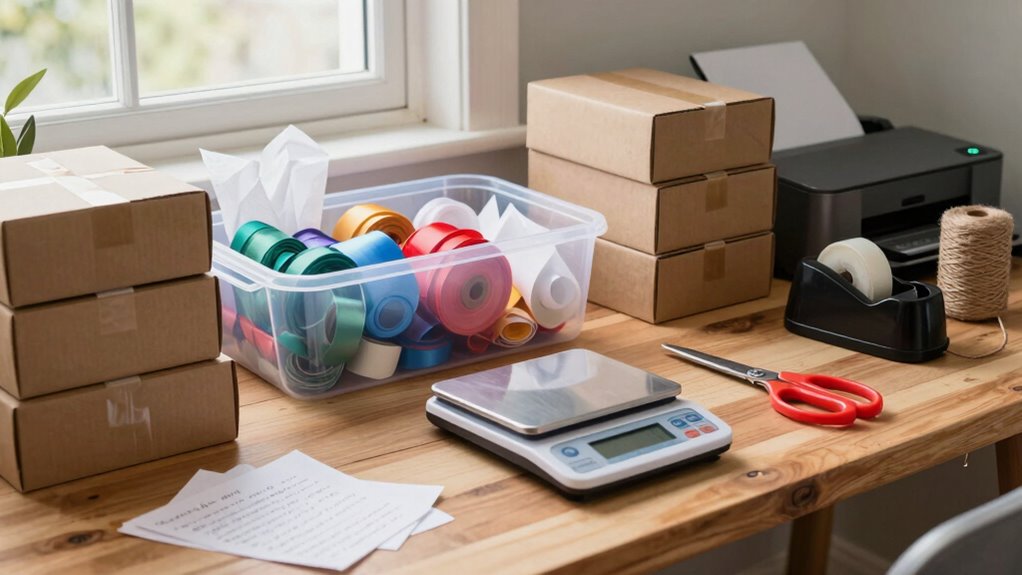
Setting up a dedicated shipping station is essential for handmade businesses working from home, as it helps streamline your process and keeps your workspace organized. When you have a well-defined area, you can quickly access everything you need, reducing the time spent searching for supplies and avoiding clutter buildup. One of the key elements to focus on is custom packaging. Using personalized boxes, tissue paper, or stickers adds a professional touch that can elevate your brand and delight your customers. Having a designated space for custom packaging supplies ensures you can efficiently assemble orders without disruption, making the shipping process smoother and more enjoyable. Incorporating organized storage solutions** can further enhance your efficiency by keeping supplies neatly arranged and easily accessible. Effective inventory management is another crucial aspect of your shipping station. You need a system that keeps track of your supplies, such as shipping labels, tape, bubble wrap, and packaging materials. By organizing these items in labeled bins or shelves, you prevent shortages or overstocking, which can slow down your shipping process. Implementing a simple inventory tracking system can help you stay on top of supply levels and reorder in a timely manner. Additionally, adopting efficient workflow practices can help you maximize productivity and reduce errors during order fulfillment. Creating a dedicated workspace that is tailored to your specific needs can significantly boost your overall efficiency and make the shipping routine more enjoyable. Maintaining a well-structured system also minimizes the risk of mistakes, ensuring a smoother shipping process from start to finish. When your inventory is well-managed, you can focus on packing and shipping without interruptions, ensuring timely deliveries that boost customer satisfaction. Your shipping station should also be equipped with essential tools like a scale, a printer for labels, and a cutting surface. A reliable scale helps you determine the correct postage, avoiding overpaying or underpaying on shipping costs. Having a dedicated space for your label printer ensures you can produce clear, professional labels quickly, while a cutting mat or scissors make it simple to trim packing materials neatly. Keeping these tools within arm’s reach minimizes disruptions during the packing process and speeds up your workflow. Additionally, setting up designated areas for different tasks—such as packing, labeling, and inventory storage—can further improve efficiency. Clear organization means you’ll spend less time hunting for supplies or fixing mistakes, which is especially important when handling multiple orders. Incorporate storage solutions like small drawers or wall-mounted racks to keep everything accessible and tidy. By creating a logical flow of operations, you can move smoothly from one step to the next, ultimately reducing stress and increasing productivity. Proper space utilization** can help maximize your available area, ensuring you make the most of your home workspace.
shipping scale for handmade products
As an affiliate, we earn on qualifying purchases.
As an affiliate, we earn on qualifying purchases.
Frequently Asked Questions
How Do I Organize My Shipping Supplies Efficiently?
To organize your shipping supplies efficiently, designate a specific area for everything. Use labeled bins or shelves for creative packaging materials and eco-friendly supplies, making them easy to find. Keep frequently used items within arm’s reach, and store less-used items separately. Regularly declutter and restock to avoid shortages. This setup streamlines your shipping process, saves time, and guarantees your eco-conscious packaging remains accessible and well-organized.
What Safety Measures Should I Follow in My Shipping Area?
They say safety is no accident, so you should prioritize safety protocols and emergency preparedness in your shipping area. You should always wear protective gear like gloves and masks, keep a fire extinguisher nearby, and guarantee proper ventilation. Keep your workspace clean and clutter-free to prevent accidents. Regularly check your equipment for safety, and have an emergency plan in place. Your safety measures protect you and ensure smooth shipping operations.
How Can I Reduce Shipping Costs for Small Orders?
To cut shipping costs for small orders, you should leverage shipping software to compare rates and find the most affordable options. Buying in bulk discounts for packaging supplies and postage can considerably lower expenses. Additionally, consider consolidating multiple small orders into fewer shipments when possible, and choose the right carrier based on weight and destination. These strategies help you save money while maintaining efficient shipping processes.
What Are the Best Practices for Labeling Shipments?
To guarantee accurate shipments, always double-check labeling accuracy before dispatching. Use clear, legible labels with correct addresses and tracking details. Incorporate barcode scanning to minimize errors and streamline your process. Position labels on flat, easily visible surfaces, avoiding wrinkles or curls. Regularly update your labeling templates for consistency, and consider printing labels with waterproof ink. These practices help prevent misdeliveries and improve your overall shipping efficiency.
How Do I Handle Fragile or Valuable Items Safely?
You handle fragile or valuable items safely by prioritizing secure packaging and handling insurance. Wrap delicate items with bubble wrap or foam and use sturdy boxes to prevent damage. Clearly label shipments as “Fragile” to alert handlers. Consider purchasing handling insurance for extra protection, especially for valuable goods. Always double-check packaging before shipping to guarantee everything is secure and protected, reducing the risk of damage during transit.
Conclusion
Setting up your shipping station with the right essentials keeps your handmade business running smoothly and efficiently. Did you know that 65% of small business owners say organized shipping stations boost productivity? By investing in the right tools and space, you’ll save time, reduce stress, and guarantee your products reach happy customers. Remember, a well-organized shipping station isn’t just a workspace—it’s a key to your business’s success. Keep it neat, keep it moving!
Halloween Picks
halloween
As an affiliate, we earn on qualifying purchases.