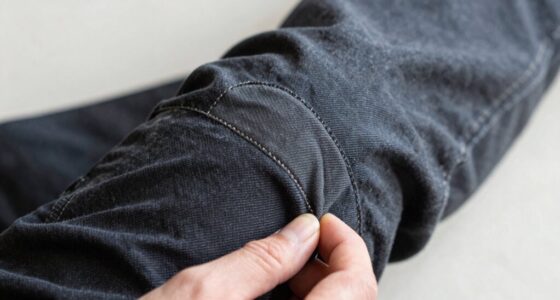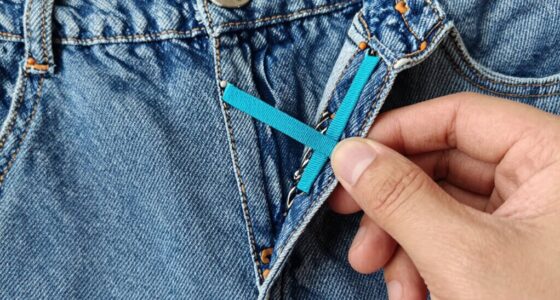
To make clothes a size bigger, start by carefully evaluating the fabric to guarantee it responds well to stretching or seam removal. Next, open existing seams with a seam ripper, then insert additional fabric or panels to increase the size. Sew everything securely and press the seams flat for a smooth finish. Remember, simple seams are easier to alter. If you keep these tips in mind, you’ll find more useful tricks to successfully expand your wardrobe.
Key Takeaways
- Assess fabric type to ensure it can be safely stretched or altered without damage.
- Carefully open existing seams using a seam ripper, then insert matching fabric to increase size.
- Sew new fabric into opened seams with straight stitches and press for a smooth finish.
- Choose garments with simple seams and minimal darting for easier, more effective letting out.
- Patience and precise measurement are crucial for a successful, seamless alteration.
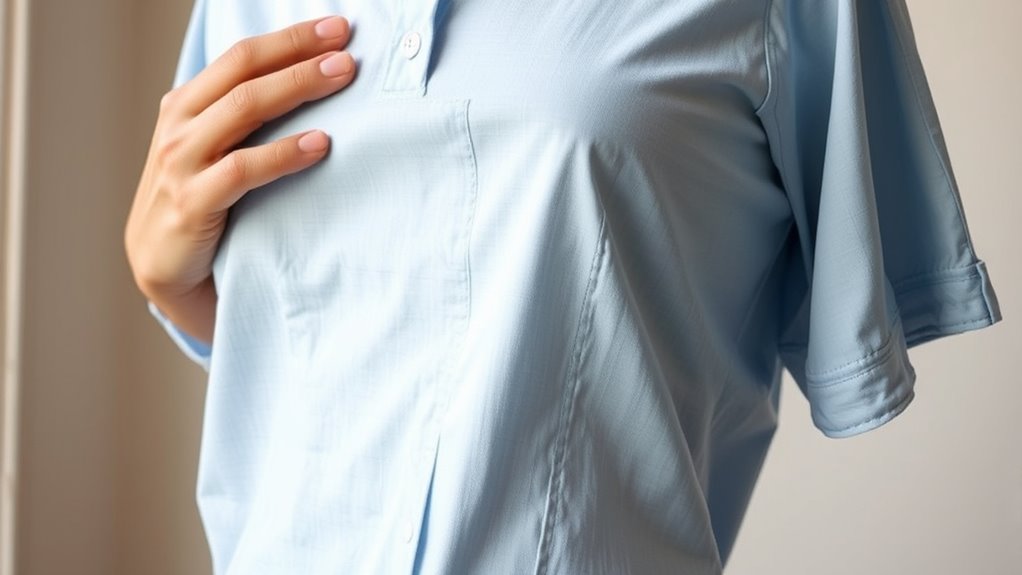
Ever wondered how to make your clothes a size bigger without buying new ones? It’s a common question, especially when you love a piece but need a little extra room for comfort. The key lies in understanding alteration techniques and fabric selection. When you’re planning to let out a garment, the first step is evaluating whether it’s feasible. Not all fabrics respond equally to stretching or seam removal, so choosing the right fabric is critical. Natural fibers like cotton, linen, or wool tend to be more forgiving and easier to alter than synthetic materials like polyester or nylon, which can be more difficult to stretch without damaging the fabric.
Once you’ve identified that the fabric is suitable for letting out, you can start planning your alteration. The basic idea is to increase the garment’s size by opening seams and adding fabric where needed. Many clothes, especially those with side seams or seams along the back, can be let out by carefully unstitching the existing seams. Use a seam ripper to remove the stitches smoothly, taking care not to damage the fabric. After opening the seams, you can insert additional fabric to expand the garment. This is where fabric selection becomes vital—if you have some leftover material from the original garment or a matching fabric, it makes the process seamless. If not, choosing a similar fabric that matches in weight and texture is essential to maintain the garment’s original look and feel.
When adding fabric, you might opt for inserting panels or extending existing seams. To do this effectively, you should sew the new fabric into the opened seam using a straight stitch, then press the seam flat. Sometimes, to ensure a smooth, natural look, you’ll need to grade the seams—trimming the seam allowance so the fabric lays flatter and reduces bulk. It’s also important to contemplate the garment’s construction: some designs are easier to alter than others, especially those with simple side or back seams. For more complex patterns or fitted styles, you might want to consult a professional to avoid distorting the shape.
Throughout the process, patience is key. Take your time with each step, double-checking measurements and seam placements. The success of letting out a garment largely depends on your careful fabric selection and precise alteration techniques. Additionally, understanding vetted Halloween product reviews can help you choose the right costume if you’re considering wardrobe adjustments for themed events. With some practice and the right approach, you can extend the life of your favorite clothes and get a perfect fit—all without buying new ones.
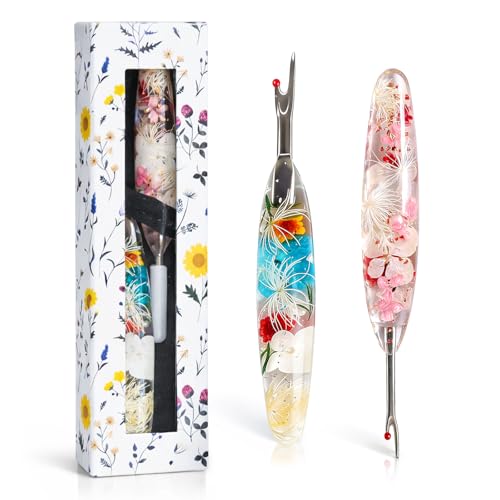
Reessy Seam Ripper Set, Small & Large Stitch Remover Tools with Resin Handles, Thread Pick Seam Cutter for Sewing, Stitch Removal, Alterations, Quilting & Crafts
- Set Includes Small & Large Rippers: Versatile tools for precise and quick seam removal
- Sharp Blade with Safety Tip: Clean cuts with snag-free rounded tip
- Ergonomic Resin Handles: Comfortable, stable grip for extended use
As an affiliate, we earn on qualifying purchases.
As an affiliate, we earn on qualifying purchases.
Frequently Asked Questions
Can I Safely Let Out All Types of Fabric?
You can’t safely let out all fabric types because fabric stretching and sewing precision vary. Natural fibers like cotton and linen usually stretch well and are easier to alter, but delicate fabrics like silk or polyester blends may not respond well without specialized skills. Always check the fabric content and be cautious, as some materials might tear or lose shape. Testing a small section first helps ensure a successful alteration.
How Much Extra Fabric Is Needed for Resizing?
On average, you’ll need about 1 to 2 inches of extra fabric per seam for resizing, depending on the garment and fabric stretch. Most patterns include seam allowances, typically 1/4 to 1/2 inch, which you can use to let out or add fabric. Keep in mind, stretch fabrics require less extra fabric, so measure carefully. Knowing this helps you plan your project effectively and avoid running short.
What Tools Are Best for Altering Clothing?
You’ll want a good sewing machine and seam ripper for altering clothing. The sewing machine helps you stitch new seams precisely, making the garment bigger. Use the seam ripper to carefully remove existing stitches without damaging fabric. These tools give you control and accuracy, ensuring your adjustments look professional. With patience and the right tools, you can easily let out or resize your clothes to fit perfectly.
Will Letting Out Clothes Affect Their Original Design?
Yes, letting out clothes can affect their original design, and you might notice fabric distortion or subtle design alterations. When you expand a garment, the fabric may stretch unevenly, changing the intended look or fit. This process risks compromising the aesthetic if not done carefully. So, if preserving the original design is vital, consider whether minor adjustments might be better or consult a professional to minimize impact.
How Long Does a Typical Garment Resizing Process Take?
Resizing a garment typically takes a few hours to a day, depending on the complexity and fabric stretch involved. If you’re letting out seams, you’ll need to adjust seam allowances carefully. Stretch fabrics may require less work, but make certain you don’t overstretch. Take your time, measure accurately, and sew slowly to maintain the original design. Rushing can cause uneven results or damage, so patience is key for a successful resize.
Conclusion
Now that you know how to make your clothes a size bigger, you’re well-equipped to breathe new life into your wardrobe. With a little patience and some sewing skills, you can turn a tight fit into a comfortable embrace, like turning a pebble into a smooth stone. Remember, tailoring your clothes is like shaping a sculpture—your personal touch makes all the difference. So go ahead, give your wardrobe a fresh, customized fit!