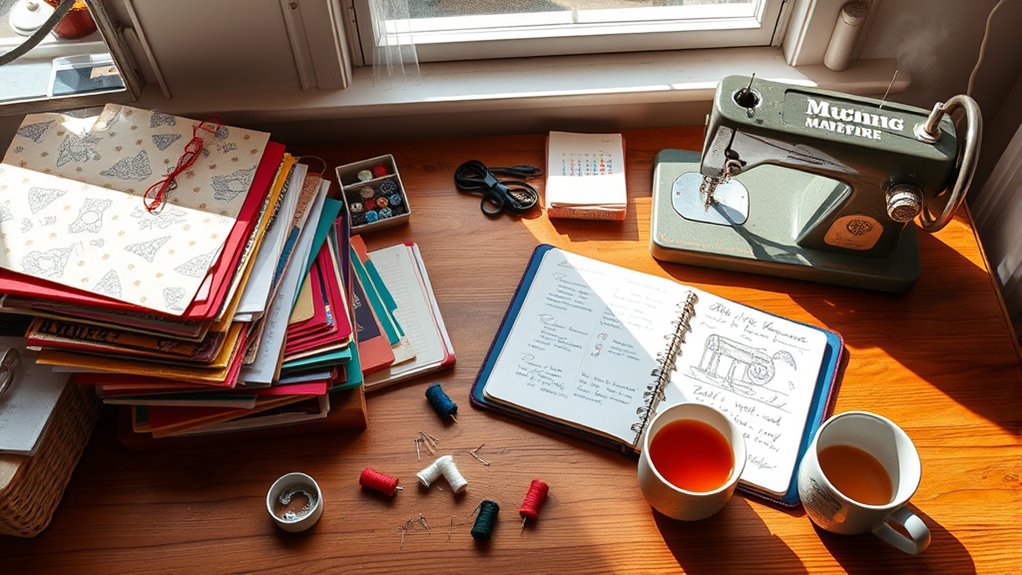

To plan a year of sewing, start by setting clear, achievable goals based on your interests, like garments or quilting. Break big projects into smaller steps and track your progress to stay motivated. Mix quick projects with more complex ones and establish a routine by sewing regularly. Stay inspired with new ideas and remain flexible to adapt your plans. Keep these tips in mind, and you’ll find it easier to enjoy a fulfilling sewing year ahead.
Key Takeaways
- Define clear, measurable sewing goals aligned with your interests to stay focused and motivated throughout the year.
- Break large projects into smaller steps to maintain steady progress and prevent feeling overwhelmed.
- Mix quick and complex projects to keep motivation high and track achievements with a sewing journal or digital planner.
- Establish consistent sewing routines and seek inspiration from online communities, magazines, or challenges.
- Stay flexible by adapting plans as needed, exploring new ideas, and embracing creativity to enjoy a fulfilling sewing journey.
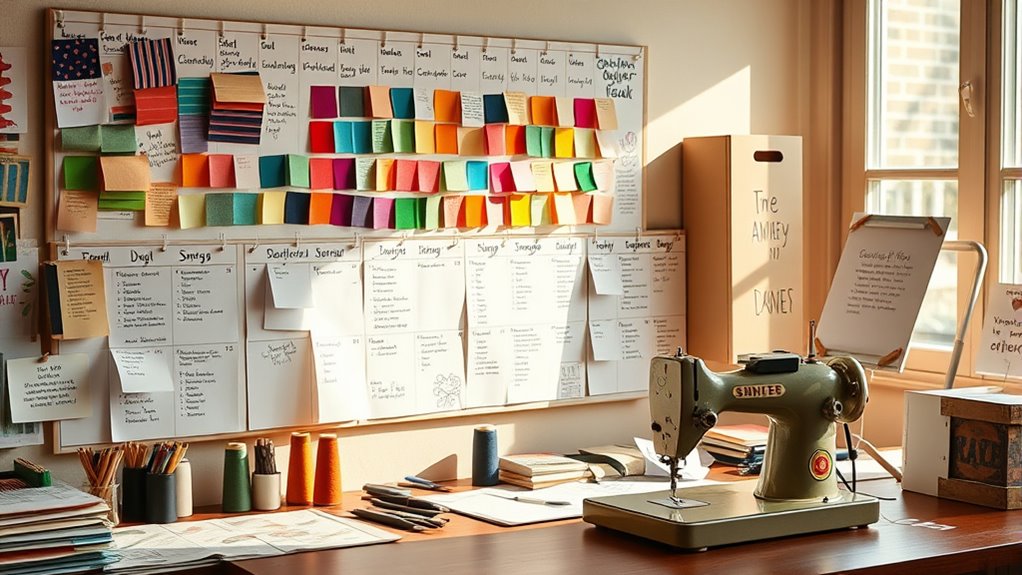
Have you ever wondered how to turn your sewing goals into a manageable, rewarding plan? The key is to set clear, achievable project goals that keep you motivated throughout the year. Start by reflecting on what excites you most—whether it’s creating a wardrobe of handmade garments, quilting intricate patterns, or experimenting with home décor. Once your goals are defined, break them down into smaller, actionable steps. This approach prevents overwhelm and keeps your progress steady.
When planning your projects, consider your fabric choices carefully. Your selection of fabrics influences not only the final look but also the difficulty level of your projects. For beginners, opting for easier-to-handle fabrics like quilting cotton or linen can build confidence. As you gain skills, you can venture into more challenging textiles such as silk or velvet. Choosing the right fabric aligns with your sewing techniques; some materials require specific stitches or handling methods. For example, delicate fabrics need gentle seam finishes, while stretch fabrics demand elastic stitches. Understanding how your fabric choices interact with your sewing techniques ensures smoother sewing experiences and professional-looking results.
To stay motivated, incorporate a variety of projects that match your skill level and interests. Mixing quick wins with more complex projects keeps your enthusiasm high. Keep a sewing journal or digital tracker to record your progress, note what works well, and identify areas for improvement. Celebrating small successes, like finishing a zipper or mastering a new seam finish, provides a sense of accomplishment that fuels your momentum.
Scheduling regular sewing sessions also plays a crucial role. Dedicate specific days or times each week to work on your projects. Consistency helps turn sewing into a habit, making it easier to stay committed over the long term. Surround yourself with inspiration—whether that’s Pinterest boards, sewing magazines, or online groups—so you’re constantly motivated by new ideas and techniques. Participating in sewing challenges or local classes can also add a social element that keeps your enthusiasm high and your skills sharp.
Finally, don’t be afraid to adapt your plan as you go. Sometimes, a fabric might not turn out as expected, or your interest may shift to a different project. Flexibility allows you to enjoy the process without feeling discouraged. Additionally, exploring unique and wicked planters can inspire creative thinking about your sewing projects by encouraging innovative design ideas and customizations. By setting clear goals, thoughtfully choosing fabrics, practicing your sewing techniques, and maintaining a positive, adaptable mindset, you’ll create a fulfilling year of sewing that improves your skills and brings your creative visions to life.
Frequently Asked Questions
How Do I Choose the Right Projects for My Skill Level?
To select the right projects for your skill level, start by evaluating your experience with fabric selection and pattern complexity. Pick projects that match your current abilities, gradually increasing difficulty as you improve. Look for patterns labeled “beginners” or “easy,” and select fabrics you’re comfortable working with. This approach keeps you motivated, builds confidence, and ensures you enjoy each step of your sewing journey.
What Tools Are Essential for a Successful Sewing Year?
Imagine your sewing toolkit as a painter’s palette. Essential tools include a reliable sewing machine, sharp scissors, and measuring tape. Regular sewing machine maintenance keeps everything running smoothly, while fabric selection tips help you choose the right textiles for each project. Add quality threads and pins to your collection, and you’ll turn your creative visions into reality with ease. These essentials guarantee your sewing year stays inspired and productive.
How Can I Incorporate New Techniques Into My Projects?
You can incorporate new techniques into your projects by dedicating time to technique experimentation regularly. Try setting small challenges, like mastering a new stitch or fabric manipulation, to diversify your skills. Keep a sewing journal to track progress and ideas, making skill diversification easier. Attend workshops or watch tutorials to stay inspired and confident. By actively exploring and practicing, you’ll seamlessly integrate new techniques into your sewing repertoire.
What’s the Best Way to Track My Progress and Achievements?
You should start by using a sewing journal to record your progress and reflect on your achievements. Keep a project checklist to track each step and completed projects. Update your journal regularly, noting techniques learned and goals reached. This keeps you motivated and gives you a clear view of your growth throughout the year. Staying organized with these tools helps you celebrate successes and stay focused on new sewing adventures.
How Do I Handle Creative Blocks or Loss of Motivation?
When you face creative blocks or lose motivation, try mindfulness techniques like deep breathing or journaling to reconnect with your passion. Take a break, explore new sources of creative inspiration, or experiment with different fabrics and patterns to spark ideas. Remember, it’s normal to have ups and downs; patience and self-compassion help you stay motivated and reignite your enthusiasm for sewing.
Conclusion
As you weave your sewing tapestry, remember each stitch adds color and character to your year. Stay inspired, and don’t let setbacks unravel your progress. Keep your goals like guiding stars, leading you through busy months and quiet moments alike. With every project, you’re crafting not just beautiful creations but a story of perseverance and passion. Embrace the journey, and watch your sewing dreams blossom into a vibrant, lifelong masterpiece.