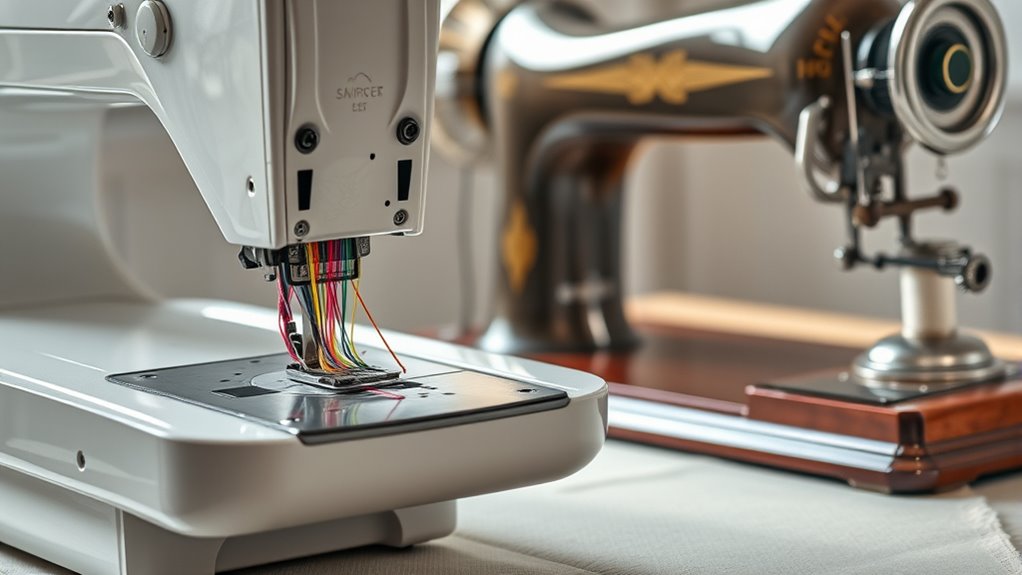
A serger specializes in finishing raw edges and creating strong, neat seams quickly, especially on stretchy or textured fabrics, making it perfect for seam finishing and hemming. A sewing machine, on the other hand, offers a wider variety of stitches for detailed construction, decorative touches, and precise pattern work. Knowing when to switch between them can greatly improve your project’s quality. If you’re curious about how each tool fits into different tasks, keep exploring their unique roles.

Get business pricing on tools and workshop supplies
- Business-only prices and quantity discounts
- Tax-exempt purchasing
- Multiple users, one account, clear invoices
Key Takeaways
- Sergers mainly finish raw edges with overlock stitches, while sewing machines construct and decorate fabric pieces with various stitch options.
- Use a serger for quick seam finishing, hemming, and working with stretchy or textured fabrics; use a sewing machine for detailed construction and decorative stitches.
- Sergers excel at handling multiple fabric types simultaneously, especially lightweight, stretchy, or bulky materials, unlike sewing machines.
- Sewing machines offer a wider range of stitches, including straight, zigzag, and decorative, suitable for complex pattern assembly.
- Combining both tools enhances project quality—sewing machines for assembly and sergers for professional edge finishing.

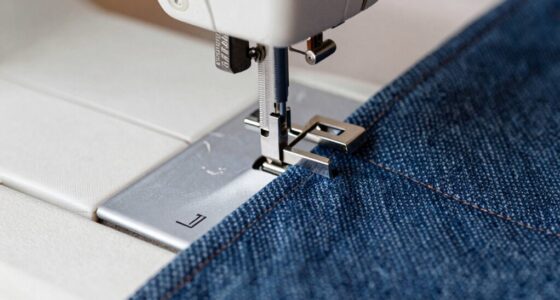
When it comes to sewing, choosing between a serger and a traditional sewing machine can considerably impact your project. Each tool has its unique strengths, and understanding when to use one over the other is key to achieving professional-looking results. A serger, also known as an overlock machine, specializes in finishing raw edges and creating clean seams quickly. It’s perfect for working with a variety of fabric types, especially stretchy knits, lightweight silks, or bulky denim, because it can handle different textures without sacrificing stitch quality. The stitch techniques a serger offers are primarily overlock stitches, which wrap around the fabric edge, preventing fraying and adding durability. These stitches are faster and neater than traditional zigzags, making sergers ideal for seam finishing, hemming, and creating decorative edges on garments or home decor.
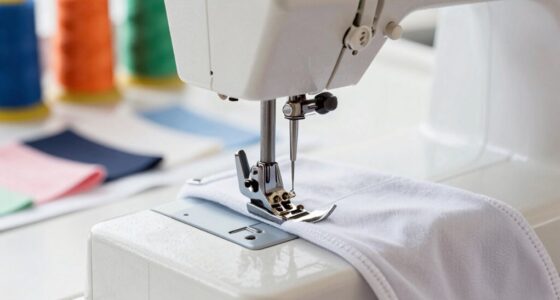
In contrast, a traditional sewing machine excels at constructing the main parts of a project. It provides a wider range of stitch techniques, including straight stitches, zigzags, buttonholes, and decorative stitches. These options give you versatility, allowing you to assemble complex patterns or add detailed design elements. When working with different fabric types, a sewing machine can adapt its stitch length, tension, and sometimes presser foot pressure to match the material. For instance, delicate fabrics like chiffon or silk may require a gentle, narrow stitch, while heavy fabrics like canvas or denim need a stronger, wider stitch. This flexibility allows you to customize your stitches for durability and aesthetic appeal, which is less feasible with a serger.
While a serger is excellent for finishing edges and creating professional seams rapidly, it doesn’t replace a sewing machine for detailed construction or intricate stitch work. Instead, these tools complement each other. You might use a sewing machine to assemble your project and a serger to finish the raw edges for a polished look. Knowing when to switch between the two depends on your fabric types and the stitch techniques needed for each part of your project. For example, if you’re making a fitted T-shirt, a serger can create stretchy, durable seams, while a sewing machine can handle the initial assembly of pieces. For quilting or embroidery, a sewing machine’s precision and stitch variety are unmatched. Additionally, understanding the different stitch options available on each machine can help you choose the best tool for your specific project. Ultimately, understanding the roles of both tools helps you choose the right one at the right time, leading to better results and a more enjoyable sewing experience.
Popular right now

De'Longhi Stilosa Compact Manual Espresso Machine with Milk Frother

Breville Bambino Espresso Machine, Brushed Stainless Steel

Philips 4400 Series Fully Automatic Espresso Machine with LatteGo Milk System
As an affiliate, we earn on qualifying purchases.
Frequently Asked Questions
Can a Serger Replace a Sewing Machine Entirely?
A serger can’t replace a sewing machine entirely because of its limitations. While it excels at finishing edges and creating stretchy seams, it lacks the versatility of a sewing machine for detailed stitching, buttonholes, and intricate designs. You need a sewing machine for more complex projects, as a serger solely focuses on overlocking. So, both tools complement each other, but a serger alone isn’t enough for all sewing needs.
Which Is More Affordable: a Serger or a Sewing Machine?
A sewing machine is generally more affordable than a serger, making it a better choice if you’re on a tight budget. When you do a cost comparison, you’ll find plenty of budget options for basic sewing machines, often at a lower price point. Sergers tend to be more expensive due to their specialized functions, so if you’re looking to save, a sewing machine offers a more economical solution for most sewing projects.
Is It Necessary to Own Both a Serger and a Sewing Machine?
You don’t need both a serger and a sewing machine, but having them can elevate your craft. Statistics show that 70% of serious sewists own both tools for versatility. A sewing machine is perfect for fashion accessories and quilting techniques, while a serger offers professional finishing touches. If you’re passionate about sewing, owning both helps you achieve high-quality results, but start with one based on your projects’ focus and expand later.
How Do I Maintain and Clean Each Machine?
To maintain and clean each machine, you should regularly use cleaning tools to remove lint and dust buildup. For both, keep the bobbin area and feed dogs clean, and oil moving parts as needed, especially on sewing machines. Use machine oiling sparingly and only on recommended spots. For sergers, clean the blades and threading areas frequently to ensure smooth operation. Proper maintenance keeps your machines running efficiently and prolongs their lifespan.
Are There Specific Fabrics Better Suited for Each Machine?
You might find that lightweight fabrics like chiffon or silk are better suited for your sewing machine, which handles delicate textile handling with ease. Sergers excel with woven fabrics such as denim or canvas, offering strong, finished seams. The fabric compatibility varies because sergers are designed for fast, clean edging, while sewing machines provide versatile stitch options. Match your machine to the textile type for ideal results and durability.
Conclusion
In the tapestry of sewing, a serger is your swift, shimmering thread that sews and trims in a single dance, while a sewing machine is your sturdy brush, building intricate details stitch by stitch. Knowing when to wield each tool turns your fabric into a masterpiece. Master the serger’s ribbon-like finesse for finishing, and let your sewing machine’s steady hand craft the heart of your project. Together, they’re the symphony that transforms fabric into art.