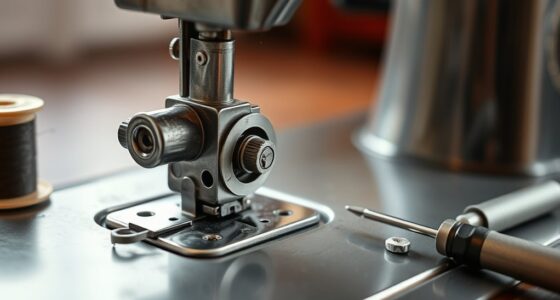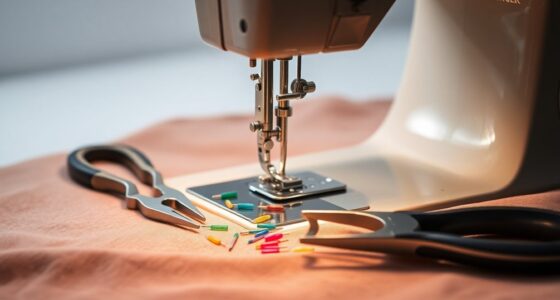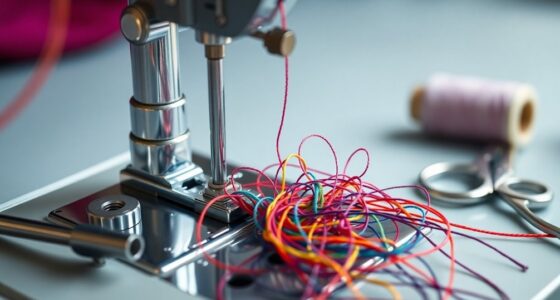
To sew safely, always handle needles carefully, ensuring they’re securely inserted and using tools like tweezers if needed. Turn off and unplug the machine before maintenance or changing parts. Check cords for damage and keep the workspace dry and clutter-free. Follow manufacturer instructions for cleaning and needle use. Prioritize safety over speed, stay attentive, and respect the machine’s sharp and electrical elements. Continue to explore key safety tips to sew confidently and securely.
Key Takeaways
- Always turn off and unplug the sewing machine before changing needles or performing maintenance.
- Handle needles with tools and ensure they are properly secured to prevent injury and machine damage.
- Keep fingers clear of the needle’s path and avoid forcing needles into the holder.
- Regularly inspect electrical cords for damage and avoid overloading outlets to prevent electrical hazards.
- Maintain a clutter-free workspace and follow manufacturer instructions for cleaning and servicing.

Have you ever considered how crucial sewing machine safety is when working on your projects? Staying safe while sewing isn’t just about avoiding accidents; it’s about protecting yourself from potential injuries and ensuring your machine operates smoothly for years to come. One of the most critical aspects of sewing machine safety involves needle safety. Needles are sharp and move at high speeds, so it’s essential to handle them carefully. Always turn off and unplug your machine before changing the needle or clearing jammed fabric. This prevents accidental needle sticks or injuries while working on the machine. When replacing a needle, make sure it’s inserted correctly and securely tightened. A loose needle can cause skipping stitches, but it can also become dislodged during sewing, posing a risk of injury. Keep your fingers clear of the needle’s path and use tools like needle drivers or tweezers to handle needles when necessary. Never force a needle into the holder if it doesn’t slide in easily, as this could damage the machine or cause the needle to break unexpectedly. Proper needle handling techniques are essential for safety and machine longevity. Electrical precautions are equally essential for sewing machine safety. Since most sewing machines operate using electricity, you need to respect the power source to prevent shocks, fires, or damage. Always check the power cord for frays or exposed wires before plugging in your machine. If you notice any damage, replace the cord immediately or have it repaired by a professional. Use a grounded outlet and avoid overloading circuits, which can lead to electrical fires. Keep the area around your sewing machine dry and free of clutter, as water or moisture can cause electrical shorts. When cleaning your machine, always unplug it first—never attempt to clean or service the electrical components while it’s plugged in. If your machine has a switch, turn it off before unplugging for added safety. Additionally, avoid using extension cords for long periods, as they can overheat or cause power fluctuations. Following these electrical precautions minimizes risks and ensures your sewing experience remains safe and enjoyable. Incorporating good needle safety and electrical precautions into your routine doesn’t take much effort, but it makes a significant difference. Always prioritize safety, and never rush through maintenance or repairs. Being attentive and cautious protects you from injuries and helps your sewing machine function reliably. By respecting the sharpness of needles and the power of electricity, you’re creating a safe environment where your creativity can flourish without unnecessary hazards. Remember, a little extra care goes a long way in ensuring your sewing projects are both successful and safe.
Frequently Asked Questions
How Often Should I Service My Sewing Machine for Safety?
You should service your sewing machine at least once a year or more frequently if you notice issues. Follow a regular maintenance schedule, including cleaning and oiling, to keep it running smoothly. During troubleshooting, check for loose parts or unusual noises, which might signal the need for a professional tune-up. Staying consistent with maintenance helps prevent accidents and guarantees safe, efficient sewing.
Can I Repair My Sewing Machine Myself?
Yes, you can repair your sewing machine yourself if you’re comfortable with basic troubleshooting tips and understand its mechanics. Start by unplugging the machine and inspecting for loose or broken parts. Consult your user manual for guidance on common issues. Remember, if the problem persists or involves complex repairs, it’s safer to seek professional machine repair services to avoid causing further damage or safety hazards.
What Safety Gear Should I Wear When Sewing?
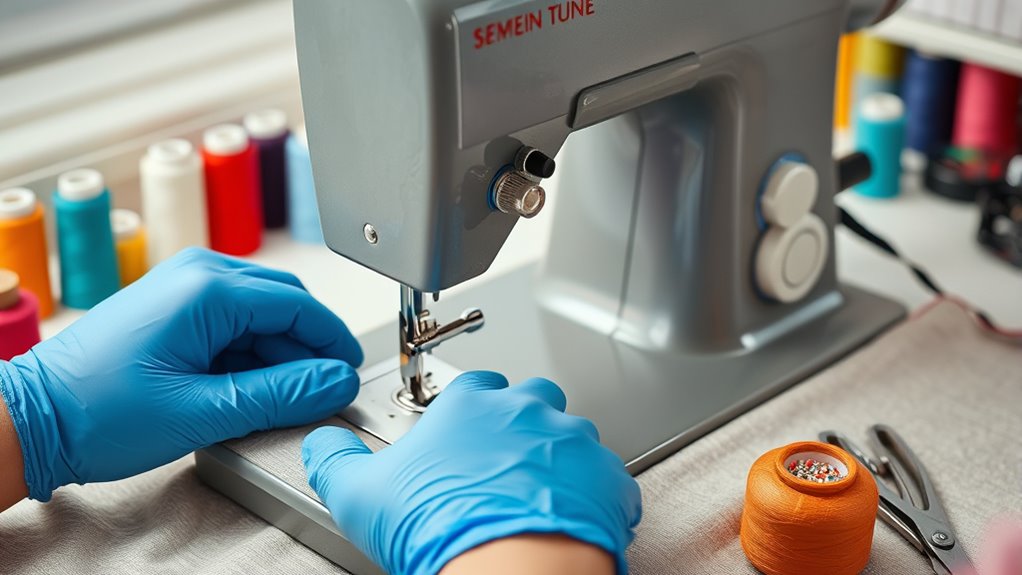
When you’re working with your sewing machine, think of yourself as a skilled artist safeguarding your creative flow. You should wear protective gloves to prevent minor cuts and eye protection to shield against any flying debris or broken needle fragments. These safety gear essentials keep you secure, allowing you to focus on your craft without worry. Remember, a little protection goes a long way in ensuring a safe, enjoyable sewing experience.
How Do I Safely Store a Sewing Machine?
You should store your sewing machine in a dry, dust-free area, ideally on a sturdy surface or shelf. Before storing, clean and oil it to prevent rust and buildup. Use safety precautions like unplugging the machine and covering it with a dust cover or cloth. Keep the power cord neatly coiled and out of the way. Proper machine storage helps maintain safety and prolongs your sewing machine’s lifespan.
Are There Safety Tips for Children Using Sewing Machines?
You must supervise children closely when they use a sewing machine, as safety hazards can happen quickly. Start with safety education—teach them about keeping fingers clear of the needle and turning off the machine when not in use. Always stay nearby to monitor their actions, and guarantee they understand the importance of following safety rules. With proper supervision and safety education, you can help your child enjoy sewing safely and confidently.
Conclusion
By following these sewing machine safety tips, you’ll keep your workspace secure and your fingers intact. Think of safety as the thread that holds your sewing experience together—without it, everything can unravel quickly. Always stay alert, use guards, and turn off your machine when not in use. With these practices, you’ll stitch confidently, transforming your sewing projects from risky knots into smooth, worry-free creations. Safety isn’t just a rule; it’s the fabric of successful sewing.