
To fix necklines from creeping back, you need to assess your shoulder slope first. Stand in front of a mirror with a well-fitting shirt and observe how the fabric drapes over your shoulders—straight or sloped. Adjust your garment by adding or repositioning padding, or tweaking the shoulders to match your natural slope. Small, careful modifications guarantee a smooth fit. Keep exploring to discover detailed techniques that help you achieve the perfect shoulder slope adjustment.
Key Takeaways
- Adjust shoulder slope to ensure the neckline sits smoothly without gaping or shifting.
- Properly aligned shoulders prevent fabric pulling and keep the neckline stable.
- Use gentle pinning or padding adjustments to refine shoulder slope for a precise fit.
- Recheck shoulder measurements after adjustments to maintain natural slope and neckline position.
- Focus on fabric drape and natural fall to stop neckline creep and achieve a balanced look.

CllyCnny Shoulder Pads for Women Clothing-No-Sewing Required Anti-Slip Detachable Reusable Soft Sponge,4 Pairs Shoulder Pads 1.5cm Thickening Foam for Women Men Costume Blazer Suit Jacket Shirt
- Package Includes: 4 pairs in various colors
- High-Quality Material: High-density breathable sponge
- Comfort & Durability: Deform-resistant and comfortable
As an affiliate, we earn on qualifying purchases.
As an affiliate, we earn on qualifying purchases.
How Do I Assess My Shoulder Slope?
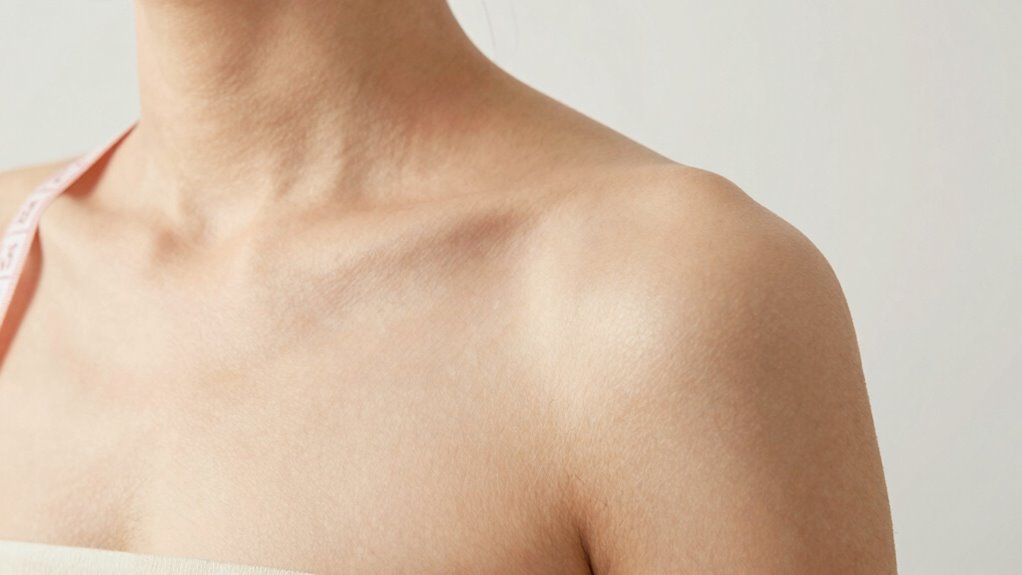
Wondering how to determine your shoulder slope? Start by examining how fabric drapes over your shoulders. Stand in front of a mirror with a well-fitting shirt, and look at the line where your shoulder meets your arm. If the fabric hangs evenly from your neck to your shoulder tip, your slope is likely neutral. If the fabric dips downward from your neck, you have a more sloped shoulder; if it angles up, your shoulders are more squared. Pay attention to shoulder padding if you wear it; it can influence your assessment. Remove bulky padding for an accurate view, or note how padding affects the natural slope. This simple observation helps you identify your shoulder slope without complex measurements, guiding you toward better-fitting clothing. Recognizing your body proportions can also inform your understanding of energetic alignment and how clothing fits naturally. Understanding your body proportions can enhance your overall comfort and appearance, especially when considering posture correction and its impact on fit. Additionally, awareness of your shoulder slope can help in selecting clothing that complements your physique and promotes better posture.
Why Do Shoulder Slopes Matter for Fit?

Your shoulder slope directly affects how your clothes sit and move with you. Proper alignment guarantees your garments fit smoothly without pulling or bunching. It also influences the way garment lines appear, helping you look polished and comfortable. Understanding body proportions can further enhance the fit and comfort of your clothing, especially when considering shoulder slope adjustments for a more tailored fit. Additionally, awareness of projector technology and how it impacts image quality can be beneficial when setting up a home cinema to ensure optimal viewing experiences. Recognizing how ergonomic design integrates with clothing fit can also contribute to overall comfort and functionality. Being aware of posture alignment can help maintain shoulder slope corrections and improve overall body ergonomics.
Proper Shoulder Alignment
Proper shoulder alignment is essential because it directly affects how well a garment fits and feels on your body. When your shoulders are properly aligned, the garment sits smoothly, preventing issues like gaping or tightness. Understanding different shoulder slope styles helps you choose clothing that complements your natural posture and stays on trend. For example, sloped shoulders can give a relaxed look, while square shoulders create a structured appearance. Recognizing these styles ensures your clothing fits comfortably without constant adjustments. Additionally, shoulder slope styles can influence overall style and vibe, making it important to select clothing that aligns with your personal aesthetic.
Impact on Garment Lines
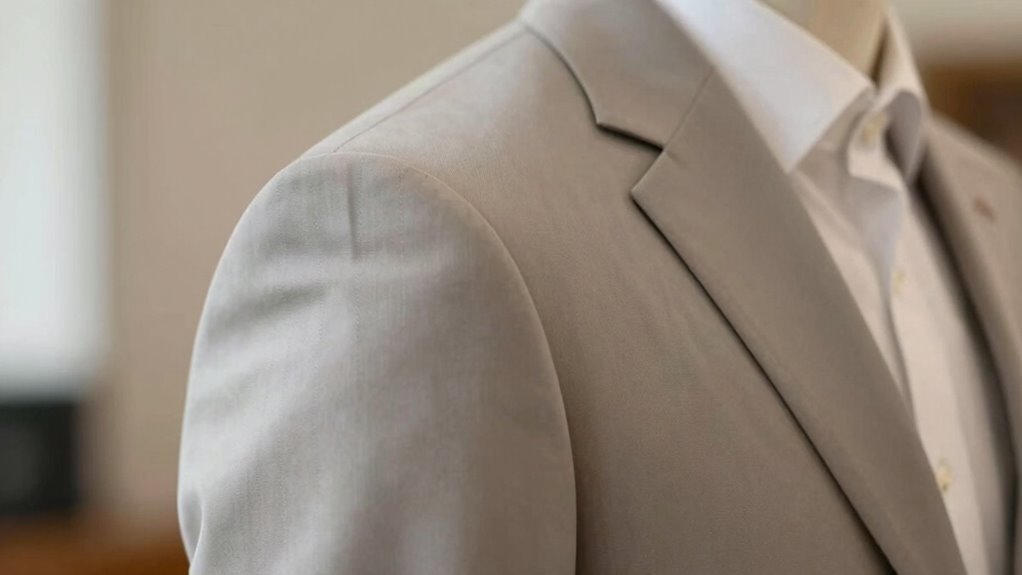
Shoulder slopes considerably influence how garments fall and line on your body. When your shoulders are properly aligned, the fabric drapes smoothly, creating a balanced silhouette. If the slope is off, the garment can bunch, pull, or sag, disrupting garment balance. This misalignment can make clothing look uneven or awkward, distracting from your overall aesthetic harmony. Proper shoulder slope adjustment guarantees that seams sit correctly and the fabric follows your natural contours. It helps garments stay in place and maintain their intended shape, preventing necklines from creeping back or shifting. Ultimately, understanding how shoulder slopes affect garment lines allows you to achieve a more polished, harmonious look, boosting confidence and making your clothes fit better every time.
How to Adjust Your Garments’ Shoulder Slopes
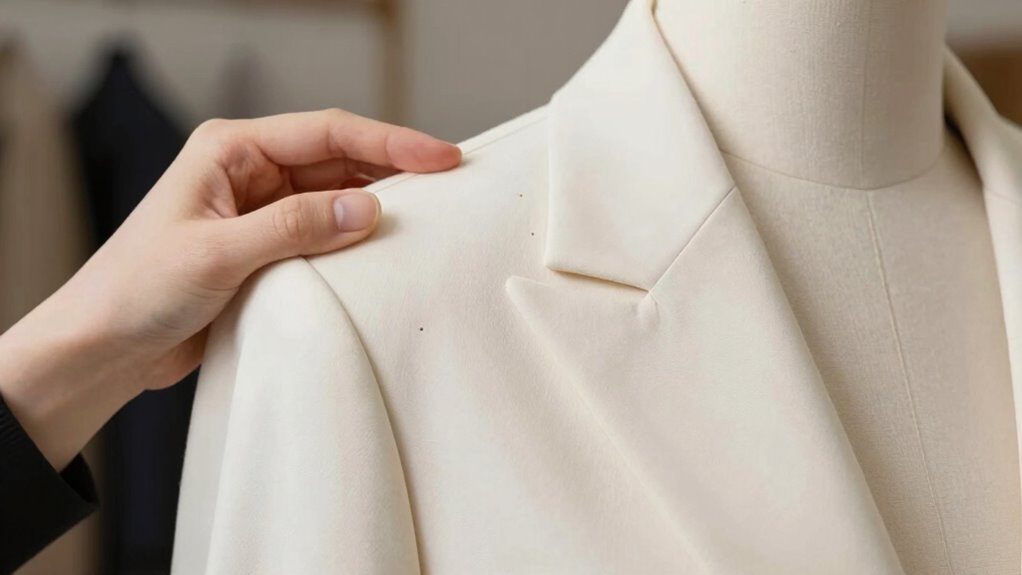
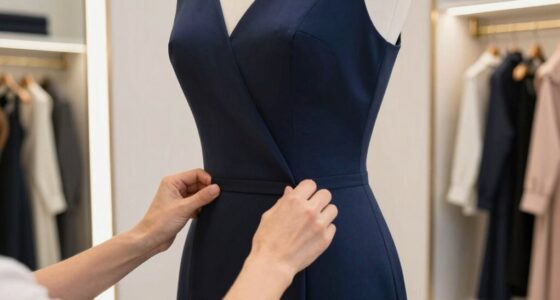
Adjusting the shoulder slopes of your garments guarantees a better fit and enhances overall comfort. To do this effectively, consider fabric stretching and shoulder padding. If the shoulders are too narrow or wide, gently manipulate the fabric to ease tension or add padding for a smoother slope. You might also insert shoulder pads or reshape existing ones for a more tailored look. Here’s a quick guide:
| Step | Method | Tips |
|---|---|---|
| Identify problem area | Check fabric tension | Look for pulling or sagging |
| Adjust fabric | Stretch or reshape | Use steam or gentle pulling |
| Modify shoulder padding | Add or reposition padding | Ensure even distribution |
| Sew adjustments | Sew or pin temporarily | Test fit before final stitching |
| Final check | Try on garment again | Confirm smooth slope and comfort |
Additionally, understanding the natural shoulder slope can help in making more precise adjustments for optimal fit.
Common Mistakes When Fixing Shoulder Slopes (And How to Avoid Them)
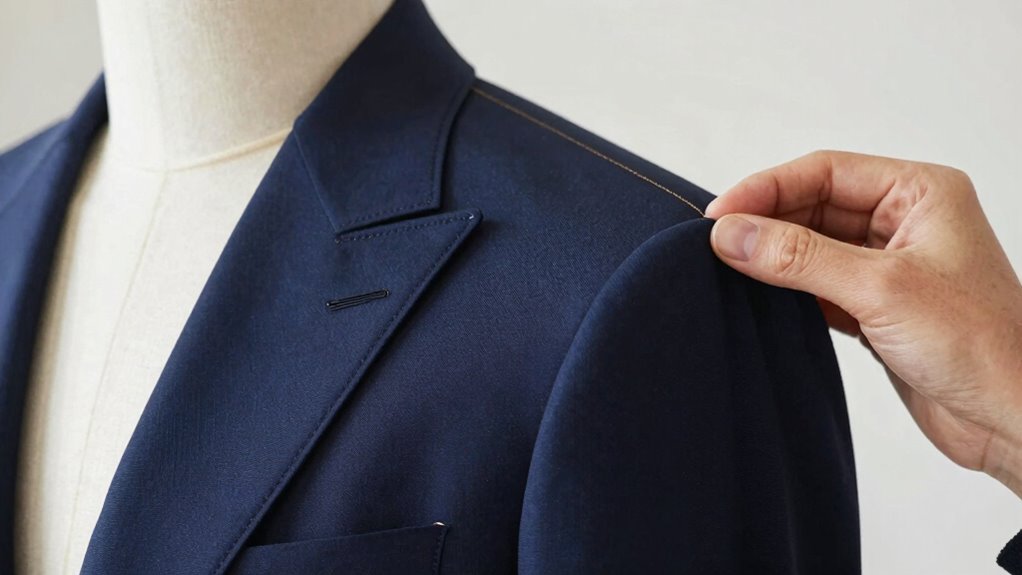
One common mistake is over-adjusting, which can compromise comfort and fit. You might also ignore the natural shape of your shoulders, leading to an unnatural look. To avoid these issues, pay attention to your shoulder anatomy and make small, incremental changes. Incorporating knowledge of plant properties can help in understanding how to make adjustments that complement your natural shoulder slope. Recognizing the biological structure of your shoulders can improve your tailoring precision and ensure a more harmonious fit. Being aware of muscle and tissue composition can further refine your approach to shoulder slope adjustments. Additionally, understanding the aromatic benefits of essential oils can promote relaxation during fitting sessions, reducing tension and enabling more precise adjustments. Considering sound healing science can also create a calming environment that enhances your focus and confidence during tailoring.
Over-Adjusting Risks
When fixing shoulder slopes, it’s easy to get carried away and make adjustments that are too extreme. Over-adjusting risks creating new fitting challenges, like uneven shoulders or restricted movement. If you pull the shoulder slope too far, it can distort the garment’s natural drape and compromise comfort. This often results in a less polished look and may require further corrections later. To avoid these pitfalls, make small, incremental changes and constantly check the fit. Remember, subtle tweaks often produce the best results. Over-stretching or overly aggressive adjustments can lead to more problems than they solve. Staying mindful of these risks helps you achieve a balanced, natural slope without sacrificing comfort or style. Precision is key to a seamless, professional finish. Additionally, understanding proper support techniques can help maintain the garment’s structure during adjustments.
Ignoring Shoulder Anatomy
Have you contemplated how ignoring the natural anatomy of the shoulder can lead to fitting mistakes? Overlooking shoulder height can cause uneven draping and discomfort, especially if the shoulder slopes aren’t correctly accounted for. When you neglect to take into account collar alignment, the neckline can shift or gape, ruining the overall fit. Properly evaluating shoulder anatomy ensures the garment sits smoothly across the shoulder and collarbone, maintaining balance and symmetry. Failing to do so often results in a distorted silhouette or awkward fit that requires further adjustments. Always measure shoulder height accurately and align the collar with the natural slope. Recognizing style differences in shoulder slopes can help tailor the fit more precisely. By respecting the shoulder’s anatomy, you ensure a more comfortable fit and a polished, professional look without unnecessary alterations later.
How to Know If Your Shoulder Slope Adjustment Was Successful
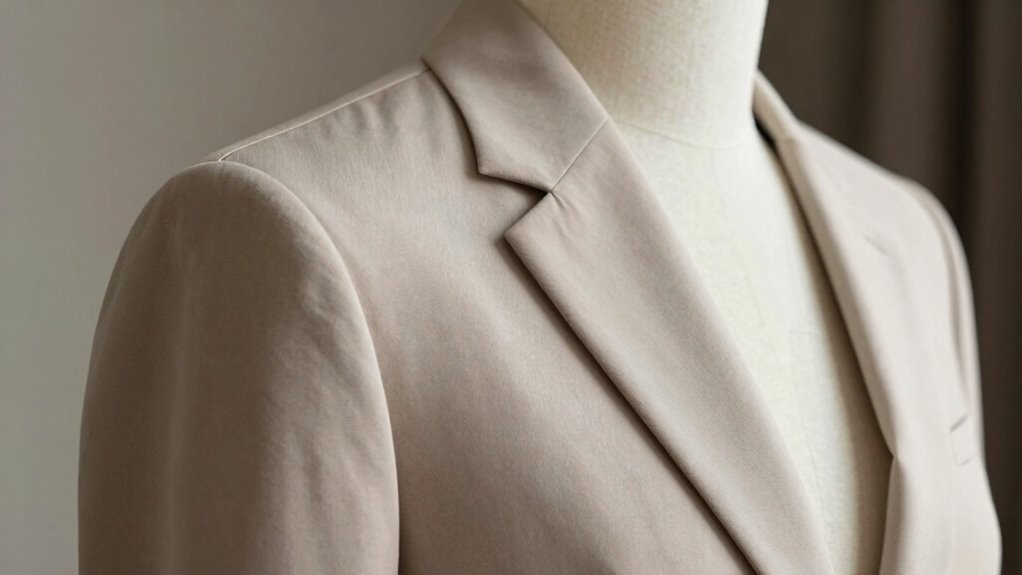
Monitoring how you feel and observing your posture are key to determining if your shoulder slope adjustment was successful. When you wear your garment, notice if your neckline sits smoothly without gaping or shifting. A well-adjusted shoulder slope aligns with your natural anatomy, ensuring a comfortable fit. You can also check the shoulder seam’s angle and how the fabric drapes across your shoulders. If the fit feels natural and the neckline stays in place, your adjustment worked. Reflecting on fashion history reveals that tailoring techniques have long emphasized the importance of shoulder slope for a flattering silhouette. If your fit still feels off, revisit your sewing techniques or consult a professional. Successful adjustment should feel seamless and look polished, confirming your efforts paid off. Additionally, understanding tailoring techniques can help you refine your adjustments for a more precise fit. Paying attention to posture correction can further enhance the longevity and effectiveness of your shoulder slope adjustments.
Troubleshooting Shoulder Slope Fixes That Still Don’t Fit Right
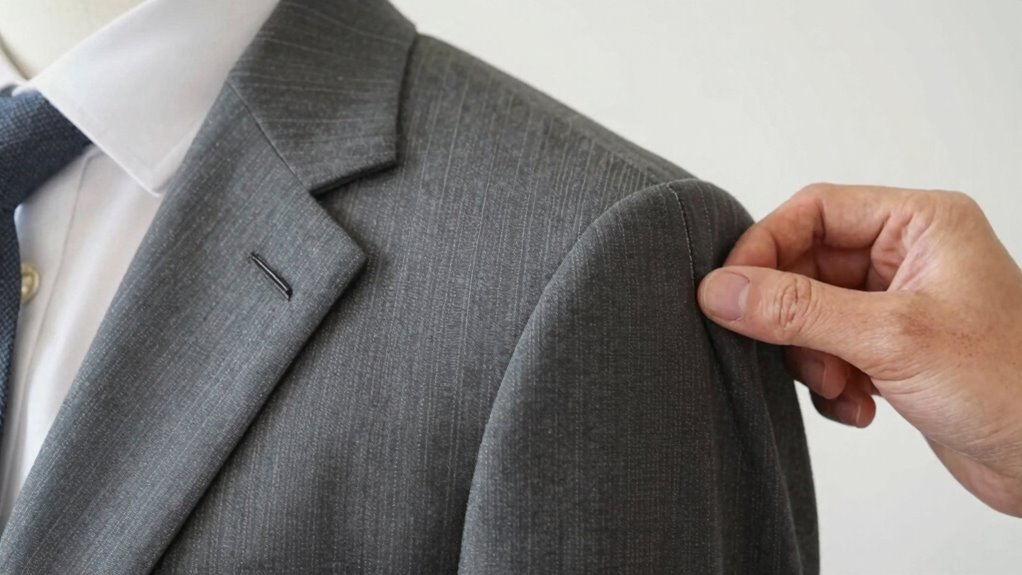
Even after adjusting your shoulder slope, the fit might still feel off, indicating that further troubleshooting is needed. Start by rechecking your shoulder slope measurement to verify accuracy; small miscalculations can affect the overall fit. If your shoulder slope is correct, focus on fabric draping techniques—sometimes, the fabric may not fall naturally, causing discomfort or distortion. Consider pinning or pin-tacking the shoulder area to see how the fabric behaves when it drapes properly. Adjusting the shoulder slope alone isn’t always enough; other factors like back fit, bust placement, or armhole shaping can influence the final result. Keep testing and refining, paying close attention to how the fabric interacts with these elements, until you achieve a smooth, balanced fit.
Frequently Asked Questions
Can I Fix Shoulder Slopes Myself Without Sewing Experience?
Yes, you can do a DIY correction for shoulder slopes even without sewing skills. Use simple tools like fabric tape or iron-on hem tape to adjust the shoulder alignment. These solutions don’t require sewing experience and can improve your fit quickly. Just follow easy tutorials online, and you’ll see a noticeable difference. Remember, patience and careful application are key to achieving a professional-looking fix without any sewing skills.
What Tools Are Needed for Shoulder Slope Adjustments?
You need a few simple tools to start shoulder slope adjustments. Grab a tailor’s ruler for precise measurements, a seam ripper to carefully remove stitches, and pins for temporary hold. Adjusting shoulder pad placement and fabric stretching requires patience and a steady hand. Think of it as fine-tuning a musical instrument—small tweaks make a big difference, ensuring your neckline stays in place without sewing experience.
How Long Does a Shoulder Slope Correction Typically Take?
A shoulder slope correction usually takes about 15 to 30 minutes, depending on your skill level and the complexity of the adjustment. You’ll start with a shoulder slope measurement to determine the needed correction, then use adjustment techniques like reshaping or re-sewing the shoulder seam. Make sure to double-check your work as you go to guarantee the neckline stays in place and the fit feels comfortable.
Will Adjusting Shoulder Slopes Affect Overall Garment Length?
Adjusting shoulder slopes is like tuning a musical instrument—small tweaks can change the entire harmony. In garment tailoring, this adjustment can slightly influence overall length, especially at the shoulder and upper back. Fitting techniques focus on precision, so expect minimal changes in the garment’s length when you modify shoulder slopes. Always communicate your preferences to guarantee your tailored piece hits the right notes in fit and style.
Are There Professional Services Specializing in Shoulder Slope Adjustments?
Yes, many professional services specialize in shoulder slope adjustments. You can visit a tailor consultation or alteration clinics, where skilled tailors evaluate your posture and garment fit. They use precise techniques to modify shoulder slopes, ensuring your neckline stays in place. These experts understand how to make subtle yet effective adjustments, providing a comfortable and polished look without compromising overall garment length or style.
Conclusion
By paying close attention to your shoulder slope, you can gently guide your garments to sit just right, preventing those pesky necklines from creeping back. With some simple tweaks and patience, you’ll find your clothes fitting more comfortably and looking sharper. Think of it as giving your wardrobe a subtle boost—making each piece feel like it was made just for you. Trust your eye, and enjoy the confident, polished look that comes with a perfect fit.