To get straight crochet edges fast, focus on maintaining consistent tension from start to finish. Use an ergonomic hook, hold the yarn snug but not tight, and check your tension regularly with a gauge swatch. Adjust your grip or hook size if edges still ripple. Keep your tension even across every row, and don’t forget to practice. If you want a step-by-step solution to perfect edges, there’s more you can do.
Key Takeaways
- Maintain consistent tension by gripping yarn evenly and practicing uniform stitch pressure throughout your project.
- Use the correct hook size matching your yarn weight to ensure even stitches and straight edges.
- Create a tension gauge swatch to fine-tune your tension before starting the main project.
- Regularly check your work for edge straightness and adjust your tension as needed.
- Incorporate tension control exercises and use stitch markers to keep rows aligned for professional-looking edges.

MECHEER Crochet Hooks 12 Sizes Crochet Hook Set, 51 Pack Yarn Crochet Kit for Beginners, Knitting Needles with Ergonomic Handles for Arthritic Hands, Crochet Needle Kit with Blue Case for Crocheters
Versatile Crochet Set: Our crochet kits include 12 pieces different sized hooks from 2mm to 8mm to suit…
As an affiliate, we earn on qualifying purchases.
As an affiliate, we earn on qualifying purchases.
Why Crochet Edges Waviness Happens (and How Tension Plays a Role)

Wavy crochet edges often result from uneven tension during the stitching process. When your tension varies, the stitches become inconsistent, causing ripples or waves along the edge. One key factor is yarn ply; thicker or uneven ply can make controlling tension more difficult, leading to waviness. Additionally, hook ergonomics plays a role—using a poorly designed hook can cause hand fatigue or uneven grip, affecting tension control. To minimize waviness, choose a yarn with consistent ply and use an ergonomic hook that fits comfortably in your hand. Maintaining a steady grip and even tension throughout your work ensures stitches stay uniform. Proper tension management is also influenced by hand posture, which helps maintain consistent pressure as you work. Keeping your crochet technique consistent can also greatly improve your results. By paying attention to yarn quality and selecting the right hook, you can markedly reduce the risk of wavy edges and achieve a cleaner, more professional finish. Additionally, practicing tension control exercises can enhance your ability to keep tension even during your projects.
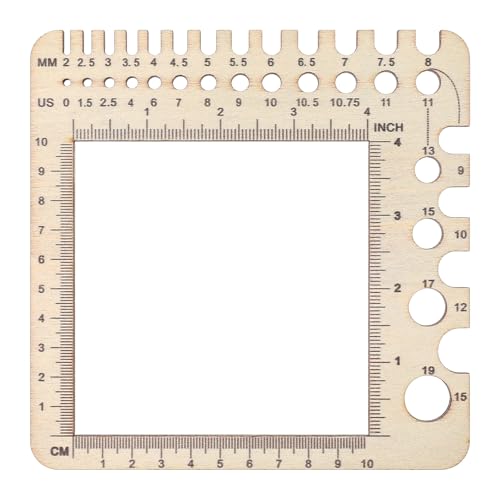
MBAIYO 1 Pcs Wooden Knitting Crochet Gauge Ruler, Boxwood Needle Sizer Stitch Counter Spinner Yarn Measure Tool with Circular Ruler & Rectangle Sizer for Craft (15cm/5.9inch)
【Premium Boxwood Material】Crafted from natural boxwood, this knitting gauge tool offers exceptional durability and smooth finish. The 15cm…
As an affiliate, we earn on qualifying purchases.
As an affiliate, we earn on qualifying purchases.
The Main Principles for Achieving Straight Crochet Edges

Achieving straight crochet edges requires mindful techniques and consistent practices. To do so, pay attention to yarn thickness, ensuring you’re working with a yarn compatible with your hook size. Using the right hook ergonomics helps maintain control and reduces hand fatigue, which keeps tension steady. Focus on maintaining uniform tension throughout your work for consistent edge straightness. Additionally, consider these principles:
Maintain uniform tension and choose ergonomic hooks for perfectly straight crochet edges.
- Match yarn thickness with appropriate hook size to prevent uneven stitches.
- Use ergonomic hooks to improve grip and control, minimizing tension fluctuations.
- Keep your tension consistent by consciously adjusting your grip and stitch size as needed.

300pcs FIVEIZERO Stitch Markers with 6 pieces of large blunt sewing needles,colorful knitting markers,plastic crochet hook clip,bulk Crochet hook markers for knitting stitch locking clip crochet hooks
PREMIUM QUALITY MATERIAL: Our crochet stitch markers are made of high quality plastic to ensure vibrant colors, superior…
As an affiliate, we earn on qualifying purchases.
As an affiliate, we earn on qualifying purchases.
How to Test and Fine-Tune Your Tension Before Crocheting Edges

Before you start crocheting your edges, it’s important to test and adjust your tension to guarantee your work stays straight. Begin with tension testing by creating a gauge swatch that matches your project’s stitch pattern and fiber. Crochet a small sample, then measure its width and compare it to the pattern’s recommended gauge. If your swatch is too tight, loosen your tension; if it’s too loose, tighten it. Adjust your yarn hold or hook grip accordingly. Repeat the tension testing process until your gauge swatch matches the pattern’s specifications. This ensures your tension is consistent, preventing crooked edges. Proper color accuracy during tension testing can help you better visualize how your finished edges will look under different lighting conditions. Additionally, understanding the importance of consistent tension can greatly improve your overall crochet quality. Achieving consistent tension also helps maintain your project’s overall uniform appearance, making your finished work look more professional and polished. Practicing tension control techniques can further enhance your ability to create smooth, even edges and achieve a polished look. Fine-tuning your tension before working on the borders helps you achieve smooth, even crochet edges that stay straight and professional-looking.

Clover Swatch Ruler & Needle Gauge, White
Measure your gauge swatch with the 4 inch (10cm) ruler
As an affiliate, we earn on qualifying purchases.
As an affiliate, we earn on qualifying purchases.
Adjusting Tension Step-by-Step for Perfect Borders

To achieve smooth, even borders, you need to make sure your tension is carefully maintained. Start by checking your yarn tension and tweak your hook size if your stitches look uneven. Practice maintaining consistent stitches to ensure your edges stay straight and professional-looking. Additionally, understanding air-based cooking techniques can help you better control your tension and achieve more precise results. Developing a good tension management habit can significantly enhance your overall crochet projects and help you achieve that perfect finish. Recognizing the importance of consistent tension is key to mastering clean and professional-looking borders. Learning from experienced crafters and observing visual cues can also improve your tension control and overall craftsmanship.
Check Your Yarn Tension
Have you ever noticed uneven or wavy borders in your crochet projects? Checking your yarn tension is key to fixing this. First, examine your yarn texture—smooth, fuzzy, or slippery yarns can affect tension consistency. Use tension tools like a tension gauge or adjustable spool to maintain uniform tension throughout your work. Keep these tips in mind:
- Consistently hold your yarn at the same snugness.
- Test your tension with scrap swatches before starting your border.
- Adjust your tension tools regularly to match your yarn type.
Adjust Your Hook Size
Adjusting your hook size is a simple yet effective way to fine-tune your tension for perfect crochet borders. If your crochet tension feels tight or loose, switching to a different hook size can help you achieve more consistent stitches. A larger hook generally loosens your tension, creating a more relaxed and even border, while a smaller hook tightens your stitches, resulting in a firmer edge. When changing hook sizes, do so gradually, testing each size on a small section of your work. Keep in mind that the right hook size can make a noticeable difference in your finished border’s appearance. By adjusting your hook size, you gain better control over your crochet tension, leading to smoother, more professional-looking edges every time. Proper tension is essential for achieving clean, straight crochet edges that enhance the overall look of your project. Additionally, understanding crochet tension can help you troubleshoot common issues and improve your overall technique. Using the correct vetted perfect fit living tools and techniques ensures your borders stay neat and consistent, elevating the quality of your crochet work. Being aware of craftsmanship fundamentals can further refine your skills and ensure your finished projects look polished and well-made. Furthermore, practicing tension control regularly helps you develop a more consistent crocheting style over time.
Practice Consistent Stitches
Practicing consistent stitches is the key to achieving even, professional-looking crochet borders. When you focus on tension consistency, your stitches become uniform, creating a smooth, tidy edge. To improve stitch uniformity, try these tips:
- Maintain a steady grip on your yarn and hook, avoiding tight or loose tension shifts.
- Count your stitches regularly to ensure even spacing and avoid puckering.
- Practice slow, deliberate stitches to develop muscle memory and control tension.
- Incorporating at-home tools can help monitor and maintain consistent tension throughout your project.
- Additionally, paying attention to your styling tools and techniques can influence tension control and overall stitch quality.
- Being aware of your yarn properties can also help you select the appropriate tension for different crochet projects.
- Developing an understanding of tension management practices enhances your ability to keep stitches even and professional-looking.
- Remember that consistent tension is fundamental to achieving clean, even borders in your crochet work.
Common Tension Mistakes and How to Fix Wavy Borders

Wavy borders often result from inconsistent tension while crocheting, which causes your edges to ripple or curl unevenly. One common mistake is using yarn with uneven dyeing, where color variations can affect tension consistency. To fix this, choose yarns with uniform dyeing and avoid switching yarns mid-project, as this can alter your tension. Additionally, using the wrong crochet hooks can contribute to wavy borders; a hook that’s too large or small can make your stitches looser or tighter than intended. To improve, test different hooks to find one that maintains even tension. Remember, consistent tension is key—slow down if needed and pay close attention to how your yarn and hook interact, ensuring your edges stay straight and smooth. Proper ventilation can also help prevent yarn from overheating, which may impact tension and stitch quality.
Tips to Maintain Consistent Tension Throughout Your Project

Maintaining consistent tension throughout your crochet project can considerably improve the appearance of your edges and overall fabric. To achieve this, focus on controlling your crochet tension from start to finish. Keep your yarn at a steady, comfortable grip, avoiding too tight or loose stitches. Regularly check your work to ensure edge straightness, adjusting tension as needed. Consistent tension also helps in protecting your artwork, ensuring it remains durable and visually appealing over time. Some tips include: – Practice uniform grip pressure to prevent fluctuating crochet tension – Use a textured or thicker yarn for better control – Take breaks to rest your hands, maintaining steady tension throughout. Focusing on tension control techniques can further enhance your consistency and the professional look of your finished piece. Additionally, employing proper air purifier maintenance dos and don’ts can create a cleaner, healthier environment that keeps your workspace free from dust and allergens, promoting better focus and precision while crocheting.
What to Do If Your Edges Still Waver After Adjusting Tension

If your edges still wobble after adjusting tension, start by checking your yarn tension to make sure it’s consistent. You might also need to tweak your stitch pattern, as certain styles can cause waviness. Making these small adjustments can help create a straighter, more polished edge.
Check Your Yarn Tension
Even after adjusting your yarn tension, your crochet edges may still wobble. This often happens if the yarn fiber varies or if tension consistency isn’t maintained throughout your project. To fix this, check your yarn tension regularly as you work. Confirm you’re pulling consistently and not tightening or loosening with each stitch. Also, examine your yarn fiber—some fibers are more prone to uneven tension, especially textured or novelty yarns.
- Confirm you’re using the same yarn weight and fiber type throughout.
- Maintain a steady grip on your working yarn, avoiding sudden pulls.
- Test your tension periodically by pulling gently on the yarn to feel for uniformity.
These steps help you achieve smooth, straight edges by promoting even tension and consistent yarn fiber handling.
Adjust Your Stitch Pattern
When your edges still wobble after adjusting tension, it’s time to contemplate modifying your stitch pattern. Sometimes, uneven crochet gauge or tension inconsistency stems from using a stitch pattern that doesn’t naturally produce straight edges. Switching to a more stable pattern can help. For example, a simple single crochet or slip stitch border often creates better tension control. Visualize these options:
| Pattern Type | Effect on Tension | Ideal Use |
|---|---|---|
| Single Crochet | Tight, uniform | Neat edges, beginner-friendly |
| Half Double | Slightly looser | Adds texture without wobbling edges |
| Double Crochet | Looser, flexible | For drapey projects, but watch tension |
| Slip Stitch | Very tight, stable | Perfect for straight edges, minimizes waviness |
| Shell Stitch | Decorative, variable | Not recommended if edges wobble |
Adjusting your stitch pattern helps stabilize tension consistency, resulting in straighter edges.
Quick Tricks for Crisp, Professional Crochet Edges Every Time

Achieving crisp, professional crochet edges doesn’t have to be tricky if you know a few quick tricks. The key is maintaining consistent crochet tension throughout your work, which directly impacts edge accuracy. Here are some tips to help you perfect your edges every time:
Consistent tension is key to achieving neat, professional crochet edges every time.
- Keep your tension even from the first stitch to the last, avoiding tight or loose stitches.
- Use a stitch marker at the beginning of each row to maintain stitch count and alignment.
- Practice consistent hook size, especially when working on delicate or detailed projects.
These simple adjustments ensure your edges stay straight and neat. Consistent tension helps prevent wavy or uneven borders, giving your finished piece a polished, professional look.
Frequently Asked Questions
Can Tension Adjustments Prevent All Wavy Edges in Crochet Projects?
Tension adjustments can markedly reduce wavy edges, but they may not prevent all imperfections. By checking your crochet gauge and creating a tension swatch, you’ll identify the right tension for your project. Consistently maintaining this tension while working helps produce straighter edges. However, factors like yarn type and stitch pattern also influence edge quality, so while tension fixes help, they might not eliminate every wave entirely.
How Does Yarn Type Affect Tension Control and Edge Straightness?
Think of yarn as your project’s heartbeat—its fiber effects and texture influence tension control and edge straightness. Smooth, tightly spun yarns give you more consistent tension, making edges neater. Conversely, fuzzy or textured fibers can cause uneven stitches, leading to wavy edges. So, choosing the right yarn type helps you maintain better tension, ensuring your crochet edges stay straight and professional-looking without extra fuss.
Are There Specific Crochet Techniques That Improve Tension Consistency?
Yes, you can improve tension consistency by practicing specific crochet techniques. Start by checking your crochet gauge regularly and creating a tension swatch to monitor your tension. Use consistent stitch techniques, such as maintaining even tension in each stitch and avoiding pulling too tight or loose. These habits help keep your tension steady, resulting in straighter edges and a more uniform finish every time you crochet.
How Often Should I Re-Test Tension During Large Projects?
Think of tension maintenance as the steady beat of a song—you need to check it regularly to keep your project in harmony. Re-test your tension every few inches or rows, especially when starting a new section or changing yarn. This way, you catch any slack or tightness early, ensuring your project stays consistent and flawless from beginning to end. Frequent checks keep your work musical and beautifully uniform.
What Tools Can Help Monitor and Maintain Proper Tension?
You can use tension gauges to monitor your yarn tension precisely, ensuring consistent stitches throughout your project. Stitch markers also help maintain even tension by keeping track of tension points or sections. By regularly checking with the tension gauge and using stitch markers to mark tension changes, you stay on top of your tension, preventing uneven edges and achieving a professional-looking finish. These tools make tension control faster and more accurate.
Conclusion
Mastering tension is your key to straight, professional crochet edges. By testing, adjusting, and maintaining consistent tension, you guarantee smooth borders that elevate your projects. Don’t let waviness hold you back—trust the process, stay patient, and keep practicing. With these simple steps, you’ll achieve crisp, flawless edges every time, transforming your crochet from good to great. Embrace the journey, refine your technique, and enjoy the beautiful, even finishes you’ve always wanted.