Cotton fabrics shrink more depending on how they’re dyed, woven, and treated. Heavily dyed or processed fabrics often shrink more because heat and moisture loosen fibers during dyeing or washing. Looser weaves allow fibers to relax and contract easier, while tightly woven fabrics resist shrinkage. Pre-washed, stabilized, or mercerized fabrics tend to shrink less. If you want to understand how these factors influence shrinkage and choose better fabrics, keep exploring these key points.

Get business pricing on tools and workshop supplies
- Business-only prices and quantity discounts
- Tax-exempt purchasing
- Multiple users, one account, clear invoices
Key Takeaways
- Heavily dyed fabrics tend to shrink more due to heat and moisture during dyeing processes.
- Looser weave fabrics are more susceptible to shrinkage because fibers can relax and contract easily.
- Untreated or raw cotton fabrics shrink more than pre-washed or sanforized ones.
- Fabric treatments like mercerization improve stability and reduce shrinkage.
- The type of cotton and fiber processing influence how much the fabric will shrink during laundering.
Cotton fabrics can shrink differently depending on how they’re processed and woven, which can be confusing if you’re trying to get a perfect fit. One key factor influencing shrinkage is how the fabric undergoes fabric dyeing. When cotton is dyed, especially through methods like reactive or vat dyeing, the process involves immersing the fabric in dye baths that often contain heat and moisture. These conditions can loosen the fibers and cause the fabric to contract once washed. Some dyes penetrate the fibers more deeply, potentially affecting the fabric’s stability during laundering. As a result, garments made from heavily dyed cotton might shrink more than those with lighter or no dye at all.
Heavily dyed cotton fabrics are more prone to shrinking due to heat and moisture in the dyeing process.
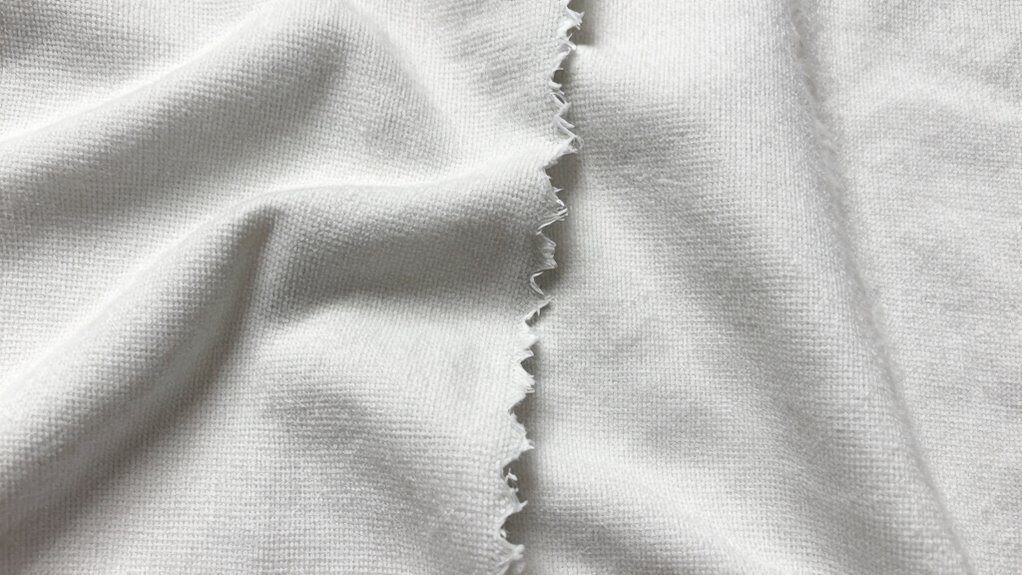
Another important aspect is weave density, which refers to how tightly the threads are woven together. Fabrics with a lower weave density have more space between the threads, making them more susceptible to shrinkage when washed. Conversely, fabrics with a higher weave density, where the threads are packed closely together, tend to resist shrinking because the fibers are held more securely in place. When you wash a cotton fabric, the looser weave allows the fibers to relax and contract more easily, leading to noticeable shrinkage. This is especially true if the fabric is made from thinner yarns or if the weave isn’t stabilized during manufacturing. Pre-washed fabrics and other finishing treatments can also significantly reduce the likelihood of shrinkage. Additionally, the use of fabric stabilization techniques during manufacturing can further help prevent excessive shrinkage. It’s also helpful to understand that the fiber treatment applied during manufacturing can influence the fabric’s overall response to washing and drying. Moreover, understanding the specific fabric composition can help you predict how the fabric will behave during laundering. Knowing whether a fabric has undergone pre-shrinking processes can also be a valuable indicator of its future shrinkage potential.
It’s also worth noting that the type of cotton and how it’s processed before weaving plays a role. For example, cotton that’s been mercerized, a treatment that gives the fabric a shiny appearance and more stability, generally shrinks less. The finishing processes, such as pre-washing or sanforizing (a process to pre-shrink fabric), can also considerably reduce future shrinkage. If you buy untreated, raw cotton fabrics, you’re more likely to see shrinkage after laundering.
To minimize surprises, always check the fabric care label and consider the fabric’s dyeing and weave density. Pre-washed or sanforized fabrics are your best bet for reducing shrinkage. Understanding how these factors interact helps you select the right cotton fabric for your project and ensures a better fit after washing. Ultimately, knowing that fabric dyeing and weave density influence shrinkage allows you to make more informed choices and care for your garments properly.
As an affiliate, we earn on qualifying purchases.
Frequently Asked Questions
Can Fabric Dyeing Affect Cotton Fabric Shrinkage?
Yes, fabric dyeing can affect cotton fabric shrinkage. During dyeing, the dye penetrates the fibers, which can alter their structure and how they respond to washing. If the dyeing process isn’t properly controlled, it may weaken the fibers, leading to increased shrinkage. Additionally, dyeing can impact colorfastness effects, causing uneven shrinkage or fading over time. Proper dyeing techniques help minimize these issues and maintain fabric stability.
Does the Thickness of Cotton Fabric Influence Shrinking?
Yes, the thickness of cotton fabric influences how much it shrinks. Thicker fabrics tend to shrink less because their dense fabric texture resists shrinking during washing. Conversely, thinner cottons, with a looser weave, are more prone to shrinking, especially if you use high washing temperatures. To minimize shrinkage, wash in cold water and avoid high heat, regardless of fabric thickness, but be mindful that thinner fabrics are more vulnerable.
How Does Storage Condition Impact Cotton Fabric Shrinkage?
Ever wondered how storage conditions impact cotton shrinkage? If you keep your cotton fabrics in high humidity or fluctuating temperatures, they’re more likely to shrink. Proper storage with controlled humidity and stable temperatures helps maintain fabric size. Do you really want your favorite shirt to become unwearable after storage? Ensuring consistent temperature control and low humidity levels can greatly reduce cotton fabric shrinkage and prolong its lifespan.
Are Organic Cotton Fabrics Less Prone to Shrinking?
Yes, organic cotton fabrics are generally less prone to shrinking because they’re made from organic fibers that undergo less chemical processing. Plus, they’re often dyed with eco-friendly dyes, which can help preserve the fabric’s structure. When you care for organic cotton properly—using gentle washing and avoiding high heat—you’ll notice it retains its size better than conventional cotton, making it a durable, eco-friendly choice.
Does Fabric Weave Type Affect Cotton Shrinkage?
Absolutely, the weave type acts like a dance partner with fiber elasticity, influencing how much your cotton fabric shrinks. Tighter weaves, like sateen or twill, lock fibers in place, resisting shrinkage during manufacturing processes. Looser weaves, such as muslin, stretch and relax more when washed. So, think of the weave as the choreography that determines how well your fabric stays put or gives way when hit by water and heat.
Conclusion
So, next time you buy cotton fabric, remember that its shrinkage potential depends on how it’s processed and woven. Don’t let a little shrinkage ruin your favorite shirt—think of it as a tiny miracle that guarantees a perfect fit after washing. Understanding these differences can save you from wardrobe disasters and endless frustrations. With this knowledge, you hold the power to choose fabrics that stand the test of time and washing, making your wardrobe truly unstoppable.
Fall yard work Picks
leaf blowers
As an affiliate, we earn on qualifying purchases.