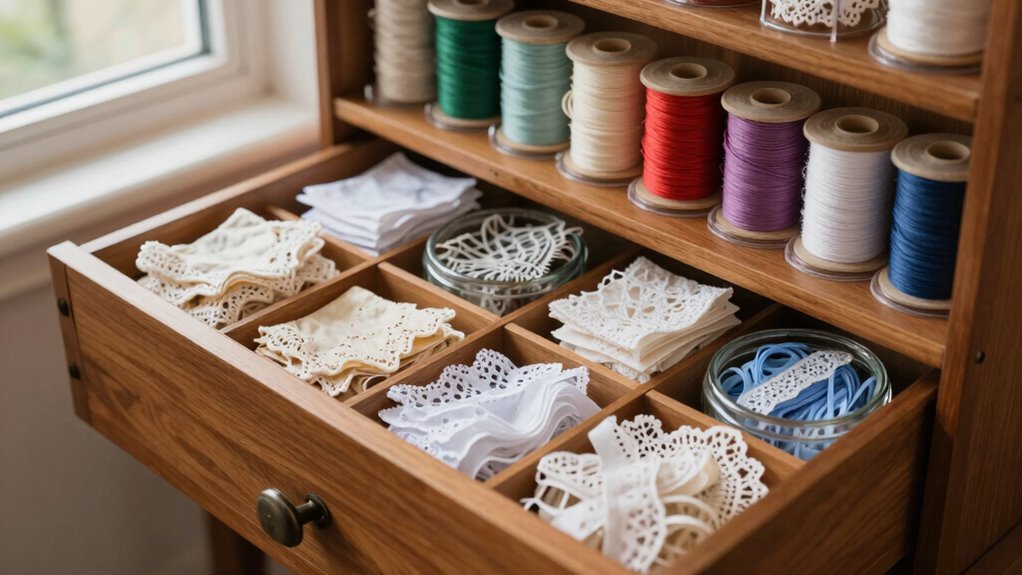

To store lace, trim, and elastic long-term, keep them in acid-free boxes or shallow drawers lined with tissue paper to prevent damage. Organize by type, color, or width, and label each container for easy access. Use clear plastic zip-top bags for smaller items, and store everything in a cool, dark, and breathable environment away from sunlight and heat. Proper storage helps preserve their quality and extend their lifespan—continue to discover more tips for perfect organization.

Get business pricing on tools and workshop supplies
- Business-only prices and quantity discounts
- Tax-exempt purchasing
- Multiple users, one account, clear invoices
Key Takeaways
- Use acid-free, breathable storage containers like shallow drawers or boxes lined with tissue paper.
- Store trims and elastics in clear, labeled zip-top bags sorted by type or color.
- Keep items away from direct sunlight, heat, and humidity to prevent fading and deterioration.
- Fold lace and trim neatly to avoid tangling and creases, and hang elastic when possible.
- Regularly inspect stored supplies for damage and ensure proper ventilation for long-term preservation.
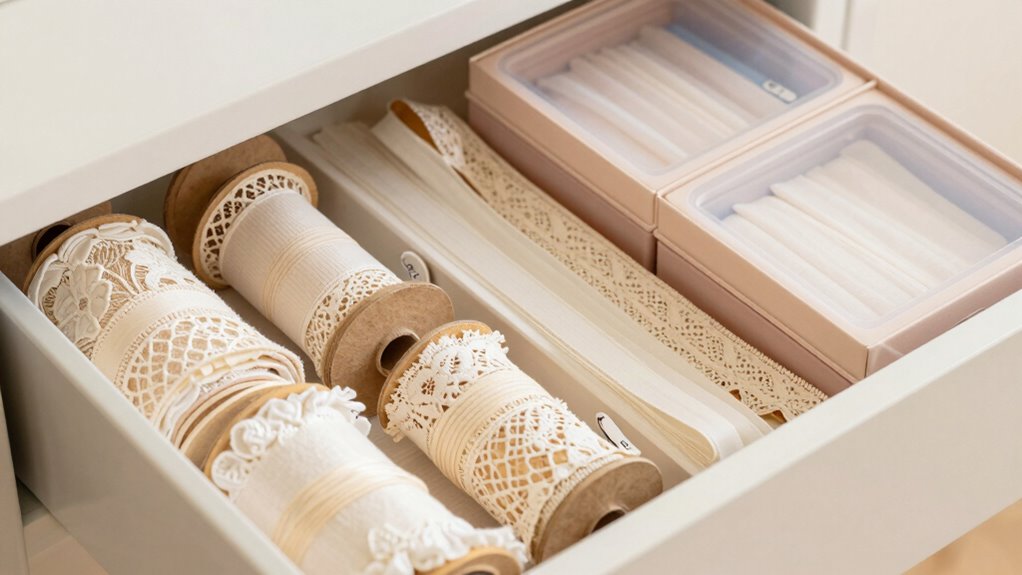
Proper storage is vital to keep your lace, trim, and elastic looking their best and ready for your projects. When you focus on fabric preservation and material organization, you guarantee these delicate items stay in top condition over time. The way you store your supplies directly impacts their longevity, preventing damage from dust, sunlight, or unnecessary tangling. To achieve this, start by sorting your lace, trim, and elastic into categories based on type, width, or color. This not only simplifies finding what you need later but also reduces clutter, making your workspace more efficient.
Proper storage keeps lace, trim, and elastic in top condition and ready for your creative projects.
The key to effective fabric preservation is choosing the right storage containers. Use acid-free boxes or shallow drawers lined with tissue paper to prevent fibers from snagging or yellowing. For smaller trims and elastics, clear plastic zip-top bags work well, especially if you label each bag with details like length, color, or material type. Keep your items away from direct sunlight, as UV rays fade and weaken delicate fibers over time. Storing in a cool, dark place helps maintain their quality for long-term use. Incorporating proper storage techniques can further extend the life of your delicate fabrics. Additionally, understanding fabric care guidelines can help you prevent damage during storage. Regularly inspecting your stored items for signs of wear or deterioration is also a good practice to ensure longevity. Using organized storage methods not only protects your supplies but also makes your craft space more inviting and efficient. Incorporating storage best practices such as using breathable materials can help prevent mold or mildew growth on your fabrics over time.
As an affiliate, we earn on qualifying purchases.
Frequently Asked Questions
How Often Should I Check Stored Lace and Trims for Damage?
You should check your stored lace and trims every few months to guarantee they remain undamaged. Use storage containers that provide humidity control to prevent mold and deterioration. When inspecting, look for signs of discoloration, stiffness, or pests. Regular checks help catch issues early, so you can re-store items properly if needed. Keeping a consistent schedule ensures your delicate fabrics stay in excellent condition for future use.
Can Storing in Plastic Cause Mold or Mildew?
Storing lace, trim, and elastic in plastic storage can cause mold or mildew if not done properly. Plastic traps moisture, creating a humid environment that promotes mold growth. To prevent this, make sure your items are completely dry before storage and consider using breathable containers or adding silica gel packs for mold prevention. Regularly check your stored items to catch any early signs of moisture or mold.
What’s the Best Way to Organize Different Types of Lace?
Think of organizing your lace like arranging a garden, each type a unique bloom. Use color coding to identify different styles or fabrics quickly, like vibrant flowers in a well-planned bed. Magnetic storage boxes work like sturdy trellises, keeping delicate lace and trims neat and accessible without tangling. This combination guarantees your collection stays beautiful, easy to find, and well-preserved, like a flourishing, organized garden.
Does Sunlight Exposure Affect the Quality of Stored Elastic?
Sunlight exposure can negatively affect elastic, causing sunlight fading and elastic deterioration over time. You should store elastic in a cool, dark place to prevent these issues. Direct sunlight accelerates fading of color and weakens the fibers, reducing elasticity and lifespan. Keep your elastic away from windows, sunlight, and bright areas to maintain its quality, flexibility, and appearance for longer. Proper storage guarantees your elastic stays in good condition.
Are There Specific Storage Tips for Vintage or Delicate Trims?
For vintage fabric preservation and delicate trim handling, store your vintage trims in acid-free tissue paper or muslin to prevent damage. Keep them flat or gently rolled in a cool, dark, and dry place, avoiding sunlight exposure. Avoid folding to prevent creases, and make sure they’re not packed too tightly. Using breathable storage containers helps maintain their quality, ensuring your delicate trims stay beautiful and preserved for years.
Conclusion
Think of your lace, trim, and elastic as delicate treasures that deserve a cozy, secure home. When you store them properly—rolled, in a cool, dry place—you’re like a gardener nurturing fragile blooms, ensuring they flourish for years. I once found a box of vintage ribbons perfectly preserved after decades simply because they were stored with care. Treat your supplies like precious keepsakes, and they’ll reward you with their beauty and longevity for many projects to come.
Fall yard work Picks
leaf blowers
As an affiliate, we earn on qualifying purchases.