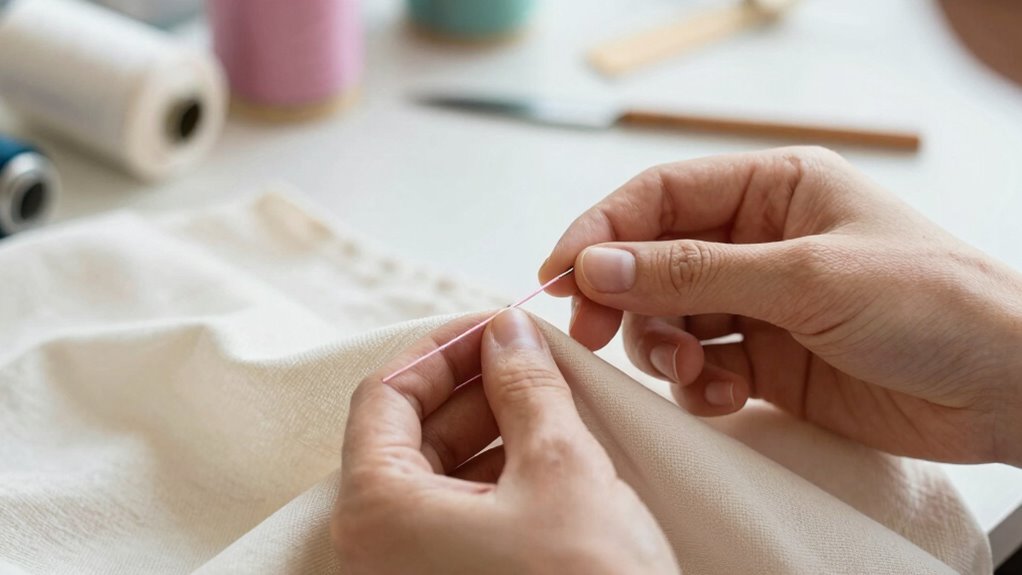
Hand basting is still important in modern sewing because it gives you precise control over fabric placement, especially for complex projects or delicate fabrics. It helps keep everything aligned during embroidery, dyeing, or applique work, preventing shifting or puckering. Plus, it saves you time and frustration by allowing you to test fits and positioning before permanent stitches. If you want to learn more about the benefits and techniques, there’s plenty more to discover.

Get tools and workshop supplies delivered free — and shop member deals
- Fast, free delivery on millions of items
- Access to Prime Big Deal Days deals on October 6–7
- Prime Video, Amazon Music and more included
Key Takeaways
- Hand basting provides superior control for intricate or delicate fabric placements that machines may struggle to achieve.
- It allows easy adjustments and repositioning, ensuring precise alignment before permanent stitches.
- Basting temporarily secures fabric during dyeing or embroidery, preventing shifting and preserving design integrity.
- It helps manage slippery or lightweight fabrics, reducing puckering and distortion for a professional finish.
- Hand basting saves time by testing fit and placement, reducing the need for unpicking and ensuring accuracy early in the process.
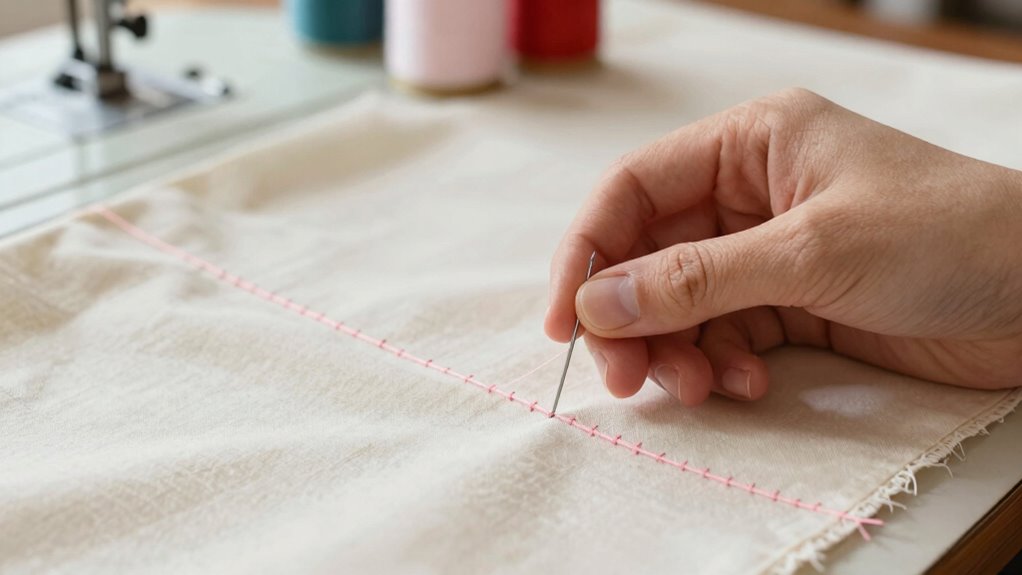
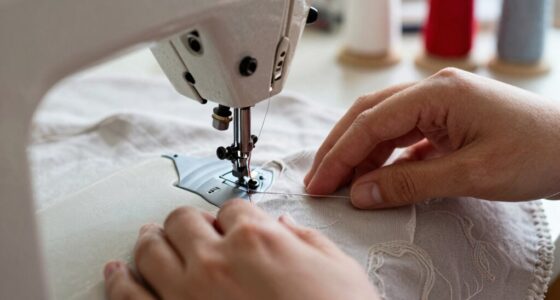
Ever wondered why hand basting remains an essential technique in modern sewing? It’s because this simple step offers unmatched control and precision that can’t always be achieved with machine stitching. When working on complex projects like machine embroidery, hand basting helps you temporarily secure intricate designs before the final stitching. It guarantees your embroidery stays perfectly aligned, especially when multiple layers or delicate fabrics are involved. Hand basting also allows you to adjust and reposition fabric easily, giving you the flexibility to perfect your design without the tension and rigidity that machine stitches can impose.
Beyond embroidery, hand basting plays a fundamental role in fabric dyeing projects. When you’re dyeing fabric, especially with techniques like tie-dye or shibori, you often need to gather or fold fabric accurately before applying dye. Hand basting provides the gentle, yet firm, hold needed to keep these folds in place during the process. This prevents shifting or unraveling, which can ruin the dye pattern. Since dyeing often involves soaking and handling fabric for extended periods, hand basting ensures your fabric stays in the intended shape and position, preserving the integrity of your design. Proper fabric stabilization can make all the difference in achieving clean, sharp dye patterns. Using techniques for fabric control further enhances your ability to maintain precise shapes and details.
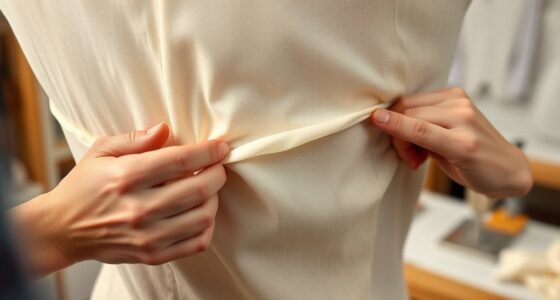
In addition, hand basting is invaluable when you’re working with delicate, lightweight, or slippery fabrics. These materials tend to shift or slide under machine stitches, making precise placement difficult. By hand-basting, you can control every stitch, ensuring that your fabric remains exactly where you want it. This is especially important in detailed projects, like appliqué or quilting, where precision is key. Hand basting also reduces the risk of puckering or distortion, which can happen with machine stitches if tension isn’t perfectly calibrated. Moreover, hand basting can serve as a temporary hold that allows you to experiment with different fabric arrangements before committing to permanent stitches. Using proper techniques in hand basting can further enhance your control and results.
Furthermore, hand basting can save you time and frustration during complex sewing tasks. Instead of repeatedly unpicking machine stitches that don’t quite hold, you can use hand basting to test your fabric’s placement and fit. Once you’re satisfied, you can confidently proceed with permanent stitches, knowing your fabric is correctly positioned. This is particularly helpful when working on fitted garments or intricate embroidery patterns, where precision is essential for a professional finish. Using hand basting as a preliminary step can also help protect your fabric from unnecessary damage caused by machine stitches.
As an affiliate, we earn on qualifying purchases.
Frequently Asked Questions
Can Basting by Hand Be Faster Than Machine Basting?
Yes, basting by hand can be faster than machine basting, especially when you focus on your sewing speed and maintain consistent thread tension. Hand-basting allows you to quickly navigate tight corners or curves without adjusting machine settings. Plus, it’s easier to keep the stitches even and loose, saving time on ripping out and redoing. Overall, for small projects or quick adjustments, hand basting can be a faster and more flexible option.
What Types of Fabrics Are Best Suited for Hand Basting?
You’ll find lightweight fabrics, like silk or chiffon, are best suited for hand basting because their delicate nature requires gentle handling. Imagine sewing a silk dress; hand basting provides better fabric stability and control. Use fine, sharp needles and matching thread to prevent puckering. Hand basting guarantees precise placement, especially on tricky fabrics, making your sewing smoother and more accurate.
How Do I Remove Hand Basting Stitches Neatly?
To remove hand basting stitches neatly, gently pull on the loose thread ends to loosen the stitches. Use a small, sharp pair of scissors or a seam ripper to carefully cut along the stitches, being cautious not to damage your fabric. Once cut, gently lift and pull out the remaining stitches. This method guarantees a clean, neat finish, leaving your fabric smooth and ready for the next sewing step.
Is Hand Basting More Durable Than Machine Basting?
Like a steady hand guiding a ship through rough waters, hand basting offers more durability than machine basting. You provide temporary stitches that stabilize fabric with careful control, ensuring precision and adaptability. While machine basting is quick, hand basting’s stitches are often stronger and less likely to shift, especially on delicate fabrics. For critical projects, your careful, deliberate hand-basting creates a resilient foundation that machine stitches can’t always match.
Can Hand Basting Be Used for Complex Sewing Projects?
Yes, you can use hand basting for complex sewing projects. It allows for greater precision planning, helping you align intricate details accurately. Hand basting also gives you the flexibility to adapt and use creative techniques that machine basting might not easily accommodate. This method guarantees your layers stay perfectly positioned during the sewing process, making it especially valuable for complex or delicate designs that require meticulous attention to detail.
Conclusion
Despite the rise of advanced sewing machines, hand basting remains essential. It’s a skill that allows you to control fabric layers precisely, ensuring perfect alignment. Did you know that 85% of professional tailors still prefer hand basting for intricate projects? That’s because, in the end, a few minutes of careful handwork can save hours of frustration later. So, don’t underestimate the power of your own steady hand—it truly makes all the difference in your sewing journey.
Halloween Picks
halloween
As an affiliate, we earn on qualifying purchases.