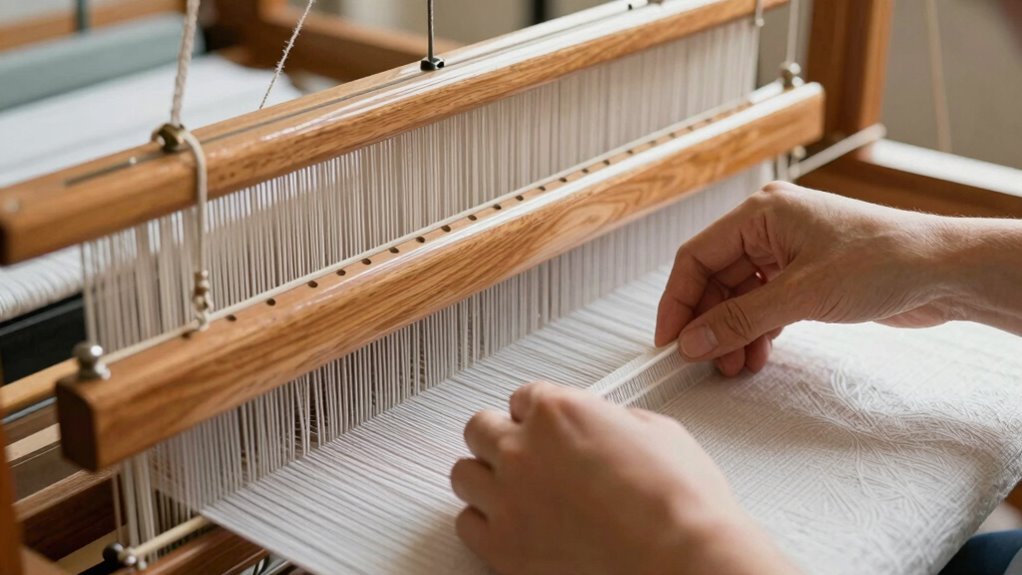

If you already sew, using a rigid heddle loom feels familiar because it applies your tension and pattern skills to weaving. You’ll adjust tension just like in sewing to guarantee even fabric and prevent issues. Manipulating the heddle creates different patterns, much like pattern recognition in sewing. The loom’s simple design makes exploring textures and designs easier. Keep exploring, and you’ll discover how your sewing skills can make weaving both intuitive and rewarding.
Key Takeaways
- Rigid heddle looms are simple, portable weaving tools ideal for sewists transitioning to weaving projects.
- They use a heddle to create shed, similar to sewing machine tension, making pattern control familiar.
- Tension management is crucial for even fabric, paralleling sewing techniques for consistent stitch tension.
- Changing heddle positions and threading sequences allows for diverse patterns like plain weave or twill.
- Sewing experience with pattern recognition and tension control enhances weaving success and creativity.
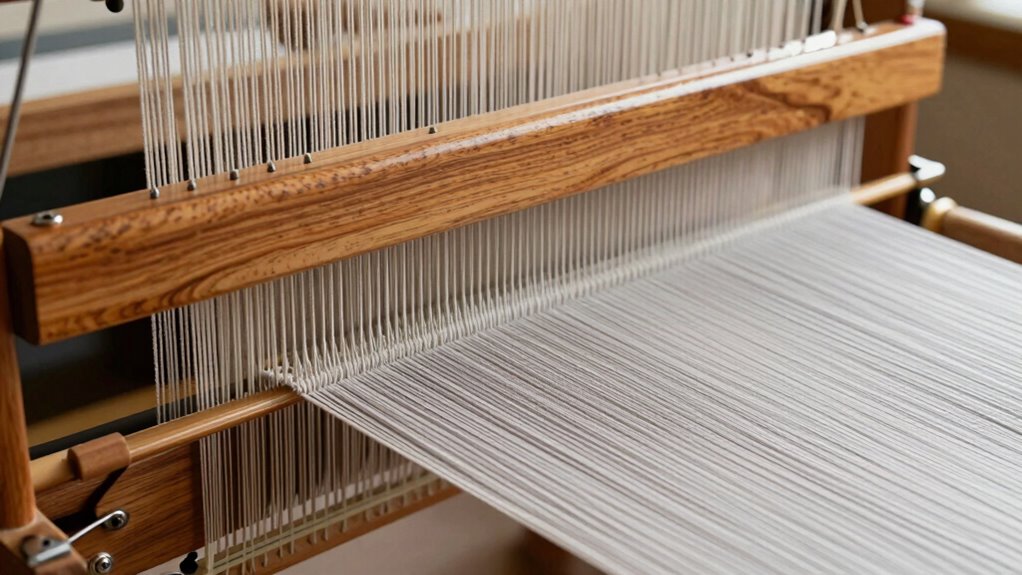
Heddle looms are essential tools in weaving, allowing you to create intricate patterns and strong fabrics with precision. If you’re already familiar with sewing, you’ll find that many weaving principles, like maintaining consistent tension and understanding pattern structure, translate well to working on a rigid heddle loom. One of the first things you’ll notice is how yarn tension plays a pivotal role in achieving even, professional-looking results. Proper tension ensures that your threads don’t sag or become too tight, which can cause uneven weaving or breakage. Unlike sewing, where tension is adjusted through the machine or thread choice, in weaving, you control yarn tension manually by adjusting your warp and the way you wind your warp threads onto the loom. Getting comfortable with maintaining consistent yarn tension across your warp is key to producing smooth, uniform fabric. Additionally, understanding tension control is crucial for troubleshooting and refining your weaving process. Developing a good sense of tension management can help prevent common issues like puckering or uneven fabric, making your projects more successful.
As you explore weaving patterns, you’ll see that they work similarly to sewing patterns but are expressed through the arrangement of warp and weft threads. With a rigid heddle loom, creating different weaving patterns involves changing the way you manipulate the heddle and the order in which you pass your weft thread. You can easily incorporate basic patterns like plain weave or experiment with more complex ones such as twill or herringbone by shifting your heddle’s position and selecting different threading sequences. Your sewing experience with pattern recognition and spatial awareness will help you anticipate how different manipulations will influence the final fabric. Moreover, understanding pattern design techniques specific to weaving can expand your creative possibilities and enable you to craft unique textiles. The simplicity of the rigid heddle makes it accessible for beginners, yet it offers enough versatility for more advanced pattern creation.
You’ll also find that the process of weaving on a rigid heddle loom shares similarities with sewing in terms of rhythm and control. As you push and pull the shuttle through the warp, maintaining a steady pace helps keep your yarn tension even, which is indispensable for consistent weaving patterns. If tension fluctuates, your fabric may develop ridges or loose sections, so paying close attention to your tension during each pass becomes second nature. Plus, since the loom’s design simplifies threading and shedding, you spend less time troubleshooting and more time focusing on your pattern and tension control. Overall, your sewing background gives you a head start in understanding the importance of tension and pattern structure, making weaving on a rigid heddle loom an enjoyable and rewarding craft that complements your existing skills.
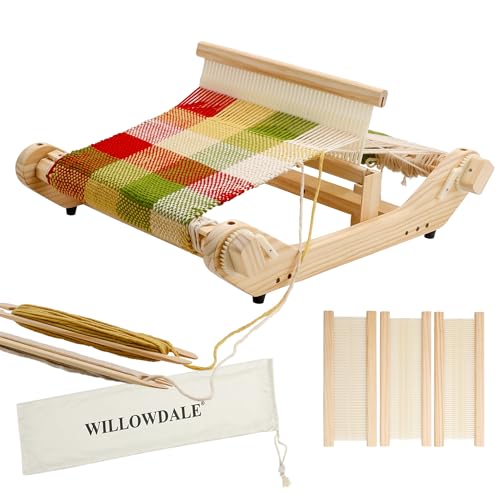
WILLOWDALE 12 Inches Rigid Heddle Loom,Loom Kit with Shed Stick for Adults
- Weaving Made Easy: Includes shed stick for smooth weaving
- Dual Function Design: Serves as a loom and warping frame
- Ideal Gift Choice: Perfect for weaving enthusiasts and crafting
As an affiliate, we earn on qualifying purchases.
As an affiliate, we earn on qualifying purchases.
Frequently Asked Questions
Can I Use a Heddle Loom for Tapestry Weaving?
Yes, you can use a heddle loom for tapestry weaving. It allows you to explore different textile textures and color blending techniques, creating rich, intricate designs. While heddle looms are typically simpler, they still provide control over warp and weft, making it possible to craft detailed tapestries. Just keep in mind the loom’s size and tension limitations for larger or more complex wall hangings.
What Are the Best Beginner Projects for Heddle Looms?
For beginner projects on a heddle loom, start with simple scarves or dishcloths. Focus on color selection to create visually appealing patterns, and experiment with different yarn types like cotton or wool to see how they handle tension. These projects help you learn basic weaving techniques, manage your loom, and understand yarn behavior. Keep it straightforward, and gradually try more complex patterns as you get comfortable.
How Do I Choose the Right Size Heddle Loom?
To choose the right size heddle loom, consider your weaving patterns and material choices. Smaller looms (around 12-16 inches) suit beginners working on scarves or small projects, offering more control. Larger looms (20-36 inches) handle bigger textiles like blankets or tapestries. Think about your space and the complexity of your projects, ensuring the loom size matches your intended projects and the materials you plan to use for comfortable, successful weaving.
Is It Possible to Upgrade a Beginner Heddle Loom?
Yes, you can upgrade a beginner heddle loom. You might add advanced techniques like pattern weaving or experiment with loom customization options to expand its capabilities. Upgrading could involve changing the heddle, adding accessories, or modifying the frame to handle more complex projects. This helps you grow as a weaver, pushing your skills beyond basic weaving, and allows you to explore new techniques and creative possibilities on your existing loom.
How Do I Maintain and Store My Heddle Loom Properly?
To maintain and store your heddle loom properly, regularly clean it with a soft cloth and check for any loose parts. Use loom accessories like lubricants on moving parts to keep them smooth. Always store your loom in a dry, dust-free area, ideally covered with a cloth or in a dedicated storage space. Follow maintenance tips like tightening bolts and avoiding direct sunlight to prevent damage and guarantee longevity.
Conclusion
Now that you understand how rigid heddle looms work, you’re ready to explore weaving as a new creative outlet. Did you know that the global weaving market is expected to reach over $5 billion by 2025? That’s a huge indication of how many makers are discovering the beauty and versatility of weaving. With your sewing skills, you’ll find it’s easier than you think to pick up this craft and create stunning textiles. Happy weaving!