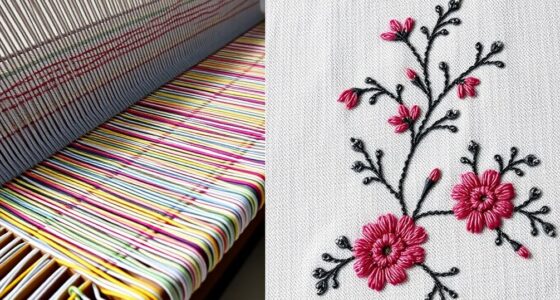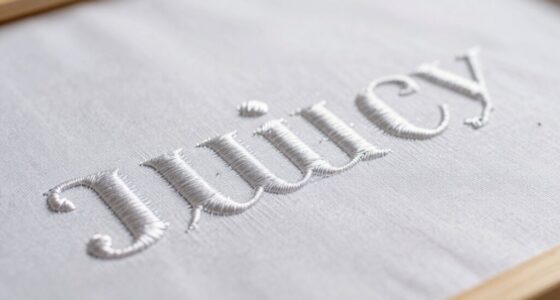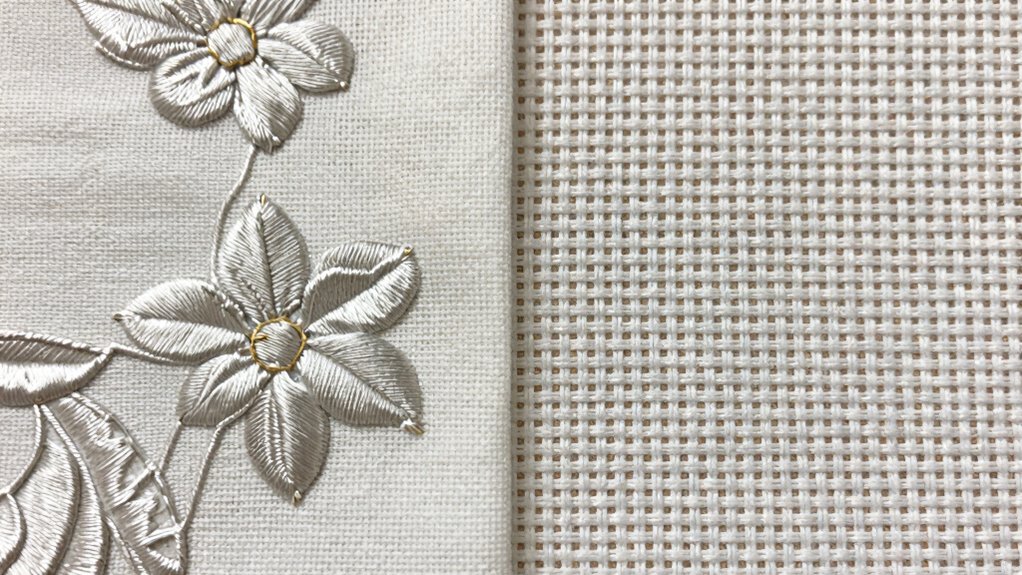
Surface embroidery is all about decorating fabric’s surface with various stitches, allowing for creative freedom and textured effects. Counted work, on the other hand, relies on precise counting of fabric threads to create symmetrical, detailed patterns. It requires more patience and accuracy. Your choice depends on whether you want expressive, spontaneous designs or structured, exact motifs. If you want to explore the differences further, there’s plenty more to uncover about each technique.
Open a free Amazon Business account
Business pricing, bulk buying and tax-exempt orders.
As an affiliate, we earn on qualifying purchases.
Key Takeaways
- Surface embroidery decorates the fabric surface with various stitches, emphasizing texture and artistic expression.
- Counted work relies on precise thread counting of evenweave or Aida fabric to create structured, symmetrical patterns.
- Surface embroidery allows for diverse fabrics and freeform stitches, focusing on visual and textural effects.
- Counted work demands accuracy and consistency, using repetitive stitches aligned with the fabric’s grid.
- Surface embroidery offers creative flexibility, while counted work prioritizes pattern precision and geometric designs.
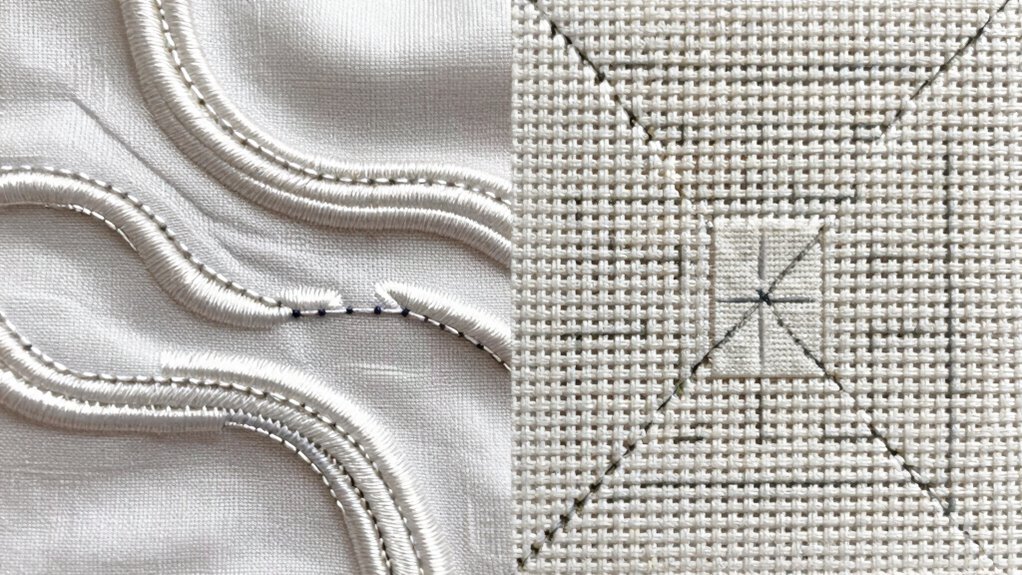
When choosing between surface embroidery and counted work, understanding their differences can help you decide which technique suits your project best. Both styles have unique characteristics that influence your fabric selection and stitching techniques, so knowing what sets them apart is key to creating successful and beautiful pieces. Surface embroidery involves decorating the fabric’s surface with stitches that form patterns, images, or textures directly on the material. It gives you the freedom to choose a variety of fabrics, from smooth cottons to textured linens, because the emphasis is on how the stitches sit on top of the fabric rather than how the fabric is structured. Your stitching techniques in surface embroidery can include satin stitch, French knots, lazy daisies, and others that add dimension and detail, allowing for a more artistic and expressive approach. Since you’re working directly on the surface, you can easily incorporate different thread types and thicknesses to achieve desired effects, making it versatile for both simple and intricate designs. Fabric choice plays a crucial role in determining the overall look and feel of your embroidery, especially in surface techniques. Additionally, the ease of adjusting stitches while working on the surface can encourage experimentation and spontaneous creativity.
On the other hand, counted work is a precise technique that requires careful counting of fabric threads to produce uniform stitches. It’s often associated with cross-stitch, linen embroidery, or other methods that depend on the weave of the fabric. For this style, your fabric selection is critical; you typically choose evenweave or Aida cloth with a clear, regular grid of threads. The stitching techniques in counted work are more structured, involving repetitive, grid-like stitches that depend on accurate counting to ensure symmetry and proportion. This method demands patience and attention to detail, as each stitch must align perfectly to maintain the pattern’s integrity. The result is a highly precise, often geometric design that can be easily replicated or used for detailed pictorial projects. Pattern accuracy is essential in counted work, as even minor miscalculations can affect the overall appearance of the finished piece.
Both techniques offer unique advantages and challenges. Surface embroidery gives you more creative flexibility since you’re not tied to the fabric’s weave, allowing for a more spontaneous and textured finish. Counted work, however, provides a high level of accuracy and consistency, making it ideal for complex, detailed motifs or designs that require perfect symmetry. Your choice hinges on your project’s goals and your comfort with each stitching style. If you prefer a more relaxed process with artistic freedom, surface embroidery might be your best fit. But if you enjoy meticulous work and precise patterning, counted work will likely suit you better. By understanding the distinctions in fabric selection and stitching techniques, you can select the best approach to bring your embroidery vision to life.
As an affiliate, we earn on qualifying purchases.
Frequently Asked Questions
Which Technique Is Faster for Beginners?
Surface embroidery tends to be faster for beginners because it involves straightforward stitches on the fabric’s surface, making embroidery speed easier to achieve. Counted work requires careful counting and precise stitches, which can slow you down initially. As a beginner, you’ll likely find surface embroidery more approachable and quicker to learn, helping you build confidence while creating beautiful designs without the frustration of complex counting.
Can Surface Embroidery Be Done on Any Fabric?
Surface embroidery is like painting on fabric, so you can generally do it on many types. You’ll want to take into account fabric compatibility to ensure stitches sit well and look neat. While lightweight cottons and linens work perfectly, heavier or stretchy fabrics might make embroidery tricky or less durable. For the best results, choose fabrics that support embroidery durability and maintain their shape without puckering or shifting.
What Tools Are Essential for Counted Work?
You need a few essential tools for counted work. Start with an embroidery hoop to keep your fabric taut and guarantee even stitches. Use sharp embroidery needles suitable for your fabric type, and keep a good pair of scissors nearby for precise cuts. You also need accurate rulers or measuring tapes for fabric preparation and choosing your embroidery patterns. These tools help you maintain neatness and precision throughout your project.
How Do I Choose the Right Thread Type?
Like choosing a paintbrush for a masterpiece, selecting the right thread type shapes your embroidery’s character. For delicate textures, opt for fine silk or cotton threads, adding a smooth, lustrous finish. For bold textures, thicker threads like wool or metallics create depth and shimmer. Consider your project’s embroidery textures and how the thread’s sheen, strength, and color will complement your design. Proper thread selection elevates your work from craft to art.
Are There Any Common Mistakes to Avoid?
To avoid common mistakes, always start with proper fabric preparation and embroidery stabilization. Make certain your fabric is clean, taut, and smooth before stitching. Don’t skip stabilizers—they prevent puckering and distortion, especially with counted work. Also, double-check your tension and thread choice to prevent uneven stitches. Taking these steps helps guarantee your embroidery stays neat and professional-looking, reducing the chances of errors and frustration along the way.
Conclusion
Imagine choosing a path through a garden—you can wander freely, enjoying the blooms as you go, much like surface embroidery, which lets you be spontaneous and creative. Or, you might follow a marked trail, counting each step carefully, just like counted work that demands precision. Both paths lead to beautiful destinations, but your choice shapes your experience. Whether you prefer the freedom of surface embroidery or the discipline of counted work, each offers its own rewarding journey.
Flea & tick season Picks
flea and tick prevention
As an affiliate, we earn on qualifying purchases.