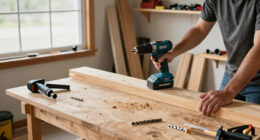

When most people start shopping for a cordless drill set, they land on the same fork in the road: a Ryobi ONE+ combo kit from the home center aisle, or a DeWalt 20V MAX kit that costs roughly twice as much. The comparison is not really about the drills themselves — both will drive screws and bore holes. The real decision is about what you plan to do for the next five to ten years. Ryobi’s ONE+ platform is the best-value ecosystem for homeowners and DIYers, with dozens of inexpensive tools that all run on the same battery. DeWalt’s 20V MAX line is built for people who use tools to earn a living, where extra torque, tougher housings, and better runtime translate directly into money. This guide compares the two side by side across the criteria that actually change the buying decision — power, battery platform, durability, ergonomics, warranty, and total cost of ownership — and tells you plainly which kit fits which buyer.

Get business pricing on tools and workshop supplies
- Business-only prices and quantity discounts
- Tax-exempt purchasing
- Multiple users, one account, clear invoices

Seesii 21V Power Drill Set, 190-Piece Home DIY Tool Kit with Toolbox
- ✔ Voltage: 21V
- ✔ Battery Capacity: 2000mAh
- ✔ Speed Settings: 0-350RPM/0-1300RPM

BLACK+DECKER 12V MAX Drill & Home Tool Kit, 60-Piece
- ✔ Battery: Lithium Ion, holds charge up to 18 months
- ✔ Number of tools: 59
- ✔ Included accessories: Tools and carrying bag
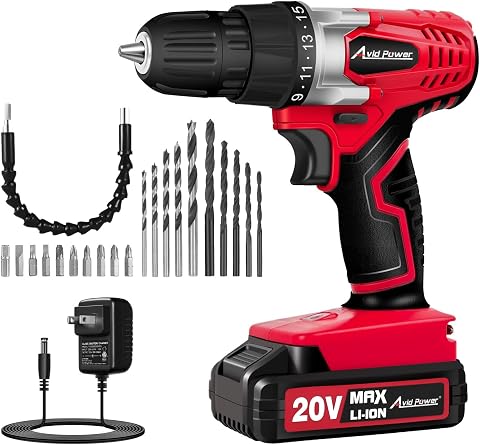
AVID POWER 20V Cordless Drill Set for Home DIY & Beginner Projects – Lightweight Power Drill with Battery Charger & 22 Bits
- ✔ Battery: 20V Lithium-ion
- ✔ Torque: 280 In-lbs
- ✔ Speed: 0-550 RPM
At a Glance
| Criteria | Ryobi ONE+ 18V Drill/Driver Combo Kits | DeWalt 20V MAX Drill/Driver Combo Kits | Winner |
|---|---|---|---|
| Price (typical 2-tool kit with batteries) | $99–$160 | $199–$299 | A |
| Drilling/driving power | Adequate for wood, drywall, occasional metal; ~500 in-lb torque class | Strong — 650+ in-lb class drills, faster in dense lumber and metal | B |
| Battery platform breadth | Exceptional — 250+ ONE+ tools, cheapest ecosystem to expand | Large — 300+ 20V MAX tools, but each costs more | A |
| Build quality and durability | Good plastic housing; fine for intermittent use, less rugged on job sites | Glass-filled nylon housings, better chuck and clutch, job-site proven | B |
| Ergonomics and size | Slightly bulkier, heavier drills | More compact brushless models, better balance | B |
| Warranty | 3-year limited | 3-year limited, 1-year free service, 90-day guarantee | Tie |
| Runtime per charge | Shorter with included 1.5–2.0Ah batteries | Longer, especially with 2.0–5.0Ah packs | B |
| Resale and long-term value | Low resale demand, but low entry cost | Strong resale; trades recognize the brand | B |
Seesii 21V Power Drill Set, 190-Piece Home DIY Tool Kit with Toolbox
<p>The <strong>Seesii 21V Power Drill Set</strong> stands out for its high voltage, making it suitable for demanding tasks like wood drilling, metalwork, and home renovations. Compared to the other two, it offers more torque and power, thanks to its 21V motor and 25+1 torque adjustments. Its extensive 190-piece kit includes manual tools and accessories, perfect for those who want a comprehensive solution. However, its weight—due to the powerful motor—can make extended use tiring, and the abundance of accessories might be overwhelming for occasional users. The LED light improves visibility, but long-term durability of some tools remains to be seen. Overall, this set makes the most sense for serious DIYers or small contractors who need robust performance and variety.</p>
Pros:
- Powerful 21V motor suitable for demanding tasks
- Complete set with a wide range of tools and accessories
- Long-lasting battery with fast charger
- Ergonomic design with LED work light
Cons:
- Heavy for prolonged use without added support
- Limited info on long-term durability
- Potentially overwhelming accessory count for casual users
Best for: Heavy-duty home improvement projects, furniture building, and extensive DIY work
Not ideal for: Casual users or those prioritizing lightweight, simple tools
Bottom line: The Seesii 21V set is best for users needing serious power and versatility, accepting its weight and complexity as tradeoffs.
“The Seesii 21V set is best for users needing serious power and versatility, accepting its weight and complexity as tradeoffs.”
BLACK+DECKER 12V MAX Drill & Home Tool Kit, 60-Piece
<p>The <strong>BLACK+DECKER 12V MAX Kit</strong> is designed for ease of handling and portability, making it ideal for light household tasks such as hanging pictures or assembling furniture. Its compact mid-handle design and lightweight build make it accessible for users who want quick, manageable tools. The 12V power is sufficient for casual use but falls short for more demanding projects. The extensive 60-piece accessory kit adds value, especially since the lithium-ion battery holds its charge for up to 18 months, reducing worries about battery degradation. However, the limited power means it’s not suitable for heavy drilling or larger holes. This pick suits homeowners or hobbyists who need reliable, easy-to-use tools for occasional projects.</p>
Pros:
- Compact, lightweight, and easy to maneuver
- Includes a wide variety of tools and accessories
- Reliable lithium-ion battery with extended charge retention
Cons:
- Limited to 12V, restricting heavy-duty performance
- Not suitable for large or tough drilling tasks
- Battery capacity may limit prolonged use
Best for: Light household tasks, furniture assembly, and simple repairs
Not ideal for: Heavy-duty construction or frequent professional use
Bottom line: This drill kit offers excellent portability and versatility for light tasks, but its power limits its use for demanding projects.
“This drill kit offers excellent portability and versatility for light tasks, but its power limits its use for demanding projects.”
AVID POWER 20V Cordless Drill Set for Home DIY & Beginner Projects – Lightweight Power Drill with Battery Charger & 22 Bits
<p>The <strong>AVID POWER 20V Drill Set</strong> strikes a balance between power and weight, making it perfect for homeowners and DIY enthusiasts. Its 20V battery provides enough torque (280 In-lbs) for furniture assembly, hanging, and crafts. The drill’s 2.5-pound weight reduces fatigue, especially during extended use, and the set includes 22 accessories, covering most basic tasks. Its variable speed and adjustable torque give users control, but it’s limited by its battery compatibility—only with AVID POWER batteries—and not suitable for large holes or masonry. The built-in LED enhances visibility, making it a good choice for those working in dark spaces. This set is ideal for users wanting a lightweight, versatile drill for daily home use without breaking the bank or sacrificing ease of handling.</p>
Pros:
- Lightweight and ergonomic design reduces user fatigue
- Includes a comprehensive set of 22 accessories
- Built-in LED for working in dark spaces
- Variable speed and torque for precision
Cons:
- Limited battery compatibility (only with AVID POWER batteries)
- Not suited for large holes or masonry work
- Battery recharging needed for extended use
Best for: Home DIY projects, furniture assembly, light to medium tasks
Not ideal for: Heavy-duty construction or masonry drilling
Bottom line: This lightweight drill offers excellent control and accessory variety for homeowners and DIYers, with some limitations in power and battery flexibility.
“This lightweight drill offers excellent control and accessory variety for homeowners and DIYers, with some limitations in power and battery flexibility.”
As an Amazon Associate we earn from qualifying purchases.
Key Differences
The single biggest practical difference is power and build. A DeWalt 20V MAX brushless drill will bore large holes in dense lumber, drive long lag bolts, and mix thinset without bogging down, while a Ryobi will do the same jobs more slowly and will stall sooner at the top of its range. For a homeowner hanging shelves and assembling furniture, that gap rarely matters. For a deck build, a fence repair, or repeated work in hardwood, it shows up on the first day. DeWalt’s chucks, clutches, and gearboxes are also built to survive daily job-site abuse; Ryobi’s are built to survive weekend projects, which is a different standard.
The second difference — and the one that often decides the purchase — is the battery platform. Every tool in the Ryobi ONE+ line, from nailers to leaf blowers to inflators, runs on the same 18V battery, and those tools are consistently the cheapest way to build a cordless home workshop. DeWalt also has a deep 20V MAX lineup, and it includes genuinely professional-grade outdoor and specialty tools, but each addition costs meaningfully more. If your future includes a cordless trimmer, shop fan, and sander on a budget, Ryobi’s ecosystem math is hard to beat.
Finally, there is the runtime and battery question. DeWalt kits typically ship with higher-capacity batteries and more efficient brushless motors, so you work longer between charges under load. Ryobi’s included compact batteries are lighter and fine for intermittent tasks, but heavy sessions will have you swapping packs. The good news for Ryobi buyers: ONE+ batteries are inexpensive enough that owning three or four costs less than one DeWalt pack.
Detailed Comparison
Price and kit contents (Ryobi ONE+ 18V Drill/Driver Combo Kits wins — major)
At the time of writing, a Ryobi ONE+ two-tool kit (drill/driver plus impact driver, two compact batteries, charger, bag) commonly sells for $99–$160 on sale, while the DeWalt equivalent runs $199–$299. Both kits are genuinely complete — nothing extra is needed to start working. The Ryobi wins on sticker price decisively, and the gap is not minor: for the price of one DeWalt kit you can often buy the Ryobi kit plus a couple of extra tools or batteries. However, Ryobi’s included 1.5–2.0Ah batteries are the smallest in the line, so budget-conscious buyers should factor in one larger battery down the road. DeWalt kits more often include 2.0Ah packs or better, narrowing the effective price gap somewhat. Winner: Ryobi, by a major margin for anyone paying with their own money rather than expensing tools.
Power and performance (DeWalt 20V MAX Drill/Driver Combo Kits wins — moderate)
DeWalt’s 20V MAX brushless drills sit in the 650+ inch-pound torque class and spin faster under load; Ryobi’s mainstream ONE+ drills land around 500 in-lb or below. On drywall, pine 2x4s, and furniture assembly, the difference is barely perceptible. In hardwood, thick lumber, large spade bits, or repeated metal drilling, the DeWalt keeps going where the Ryobi bogs down or trips its clutch. The gap also shows in the impact drivers: DeWalt’s brushless units drive long structural screws with less strain. For trade work this is a major difference; for homeowner use it is moderate to minor, because most household tasks sit well inside Ryobi’s envelope. Winner: DeWalt, and the more demanding your projects, the more the gap matters.
Battery platform and ecosystem (Ryobi ONE+ 18V Drill/Driver Combo Kits wins — major)
This is where the comparison flips. Ryobi ONE+ has one of the largest consumer tool ecosystems anywhere — drills, nailers, saws, inflators, shop vacuums, leaf blowers, and even oddities like cordless fans and drains cameras — and every single one runs on the same battery, usually at the lowest price in its category. DeWalt’s 20V MAX ecosystem is equally deep and includes genuinely professional outdoor power and specialty tools, but every addition costs 30–80 percent more than the Ryobi equivalent. If your drill kit is the seed of a future tool collection, the platform decision matters more than the drill itself. Winner: Ryobi for budget-conscious expansion; DeWalt if your future tools include pro-grade saws and outdoor equipment. Overall edge: Ryobi for most readers of this comparison.
Build quality and durability (DeWalt 20V MAX Drill/Driver Combo Kits wins — moderate)
DeWalt drills use glass-filled nylon housings, metal-reinforced chucks, and clutches tuned for thousands of cycles; they are routinely dropped off ladders and keep working. Ryobi’s housings and chucks are decent but lighter-duty, and the brand’s own positioning reflects that: it is designed for homeowners, not contractors. In practice, a Ryobi kit used monthly will easily last a decade. A Ryobi kit used daily on a job site will wear out faster — usually in the chuck or trigger — where a DeWalt shrugs it off. Winner: DeWalt, major gap for professional users, minor for occasional DIYers.
Ergonomics and weight (DeWalt 20V MAX Drill/Driver Combo Kits wins — minor)
DeWalt’s recent brushless drills are more compact front-to-back and better balanced, which matters when working overhead or in tight cabinet interiors. Ryobi drills tend to be slightly longer and heavier, partly because many are brushed designs and partly because of the ONE+ battery form factor. Neither is uncomfortable, and Ryobi’s rubber overmold grip is genuinely good for the price. The difference is real but small — most users will adapt within minutes. Winner: DeWalt by a modest margin.
Runtime and charging (DeWalt 20V MAX Drill/Driver Combo Kits wins — moderate)
Between DeWalt’s brushless motors and typically higher-capacity included batteries, you get more work per charge, especially under heavy load. Ryobi’s compact included batteries deplete quickly when drilling large holes, though the brand’s chargers are fast and batteries are cheap enough to keep several in rotation. If you work in long uninterrupted sessions, DeWalt’s advantage is noticeable. For stop-and-start household tasks where the drill sits idle most of the time, it barely registers. Winner: DeWalt, moderate significance.
Warranty and support (minor difference)
Both brands back their kits with 3-year limited warranties — a tie on paper. DeWalt adds a 1-year free service agreement and a 90-day money-back guarantee, which reflects its professional customer base and makes trying the platform risk-free. Ryobi’s warranty service through Home Center retailers is generally straightforward for homeowner use. Neither warranty covers abuse, and both brands honor legitimate claims without much friction. Winner: slight edge DeWalt, minor significance in practice.
Long-term value and resale (moderate difference)
DeWalt tools hold value well; used 20V MAX kits sell quickly because tradespeople recognize and trust the brand. Ryobi kits resell cheaply, but because they cost half as much upfront, the total dollars at risk are smaller. For a homeowner, Ryobi’s low entry cost and cheap battery replacements make it the better value equation even with weak resale. For a contractor, DeWalt’s durability and resale justify the premium. Winner: depends on user type, and it splits cleanly along the homeowner/professional line.
Ryobi ONE+ 18V Drill/Driver Combo Kits: Pros and Cons
Pros:
- Roughly half the price of comparable DeWalt kits
- Enormous ONE+ battery ecosystem — 250+ tools, all inexpensive
- Cheap replacement and spare batteries
- Fully adequate power for household drilling and driving
- Widely available at home centers with frequent sales
Cons:
- Bogs down in hardwood, large-diameter bits, and heavy metal work
- Lighter-duty chuck and housing; not built for daily job-site abuse
- Included compact batteries drain quickly under sustained load
- Bulkier and heavier than comparable brushless DeWalt drills
- Weak resale value
DeWalt 20V MAX Drill/Driver Combo Kits: Pros and Cons
Pros:
- Class-leading torque and speed for demanding drilling tasks
- Job-site-grade durability in chuck, clutch, and housing
- Compact, well-balanced brushless designs
- Better runtime with higher-capacity included batteries
- Strong resale value and trade-recognized brand
Cons:
- Costs roughly twice as much as the Ryobi equivalent
- Every future 20V MAX tool purchase costs more
- Batteries are expensive to replace or add
- More performance than most homeowners will ever use
Who Should Choose What
Choose Ryobi ONE+ 18V Drill/Driver Combo Kits if:
- You are a homeowner or apartment dweller doing occasional projects — hanging TV mounts, assembling furniture, minor repairs
- You plan to build out a cordless tool collection on a budget (blower, trimmer, nailer, shop vac all on one battery)
- You drill mostly in wood, drywall, and soft materials and rarely bore holes larger than an inch
- You want a capable kit under $160 including batteries and charger
Choose DeWalt 20V MAX Drill/Driver Combo Kits if:
- You use tools professionally or semi-professionally — construction, remodeling, HVAC, electrical, or maintenance work
- You regularly drill into hardwood, thick structural lumber, or metal, or drive large fasteners
- You work in long sessions where runtime and thermal performance matter
- You already own or plan to buy other 20V MAX tools and want one professional-grade platform
Skip both if: You need a drill only once or twice a year for tiny tasks — a $60–80 bare-bones compact drill (or even a quality corded drill) will serve you better than any multi-tool kit.
Value for Money
Value here splits cleanly by user type, and the premium question has a concrete answer. For homeowners and casual DIYers, the Ryobi kit is the better value, full stop. It handles the full range of household tasks, costs half as much, and unlocks the cheapest cordless ecosystem on the market. Paying the DeWalt premium buys performance headroom and durability that occasional use simply never exercises — that is money spent on capability you will not use.
For anyone earning money with their tools, the calculus reverses. The DeWalt kit’s extra $100–150 pays back through faster work, fewer battery swaps, tools that survive daily abuse, and resale value if you ever exit the platform. A contractor buying Ryobi to save upfront money typically ends up replacing it, which makes the ‘cheap’ option the expensive one. The middle case — a serious DIYer planning a deck or renovation — should weigh project size: one big project justifies the DeWalt; a lifetime of small ones makes Ryobi the smarter buy.
Final Verdict
Choose the Ryobi ONE+ kit if you are a homeowner, renter, or hobbyist whose drilling lives in wood, drywall, and occasional light materials. It delivers 90 percent of the real-world capability for half the money, and its battery platform makes every future tool purchase cheaper. This is the right choice for most people reading a cordless drill comparison.
Choose the DeWalt 20V MAX kit if you work with tools for a living or regularly push into hardwood, structural lumber, or metal. The power, runtime, and durability gap is real, and it is exactly what the premium pays for.
The biggest deciding factor is not the drill — it is your intended intensity of use. Occasional projects point to Ryobi; demanding or professional use points to DeWalt. Buy the tool that matches your next five years, not just your next weekend.
Frequently Asked Questions
Is Ryobi good enough for a deck or fence build?
Mostly yes, with caveats. A Ryobi ONE+ drill can drive deck screws and bore holes in pressure-treated lumber, but expect slower progress and occasional stalling on large bits. Adding a high-capacity 4.0Ah battery and pairing the drill with the kit’s impact driver makes the job comfortable. If you build decks professionally, choose DeWalt.
Are Ryobi ONE+ batteries compatible with newer Ryobi tools?
Yes. Every ONE+ tool and battery released since the platform launched works together, including newer HP-brushless tools — older batteries will run them, just at reduced performance. This backward compatibility is one of the platform’s strongest selling points.
Do I need brushless motors, or are brushed drills fine?
Brushed motors are fine for intermittent homeowner use — they are cheaper and deliver comparable torque at this level. Brushless motors run cooler, last longer, and squeeze more runtime per charge, which matters most under heavy or professional use. DeWalt kits are predominantly brushless; many Ryobi kits still include brushed drills.
Is a two-tool kit (drill + impact driver) worth it over a single drill?
For most buyers, yes. The impact driver handles long screws and lag bolts far better than a drill, and swapping between tools beats constantly changing bits. The combo kit typically costs only $30–60 more than the drill alone with batteries, making it one of the best values in either brand’s lineup.
Which brand holds its value better if I sell later?
DeWalt, clearly. Used 20V MAX kits sell quickly at respectable prices because tradespeople trust the brand. Ryobi kits resell cheaply — but since they cost half as much new, the absolute loss is often similar. Resale should only influence your decision if you are unsure the tools will stick.
Fall yard work Picks
leaf blowers
As an affiliate, we earn on qualifying purchases.

![[Fact Check] Lee’s Claim Blaming Oh For Seoul Home Prices? - 최보식의언론](https://owncrafting.com/wp-content/uploads/2026/09/fact-check-lee-s-claim-blaming-oh-for-seoul-home-prices-featured-560x300.jpg)