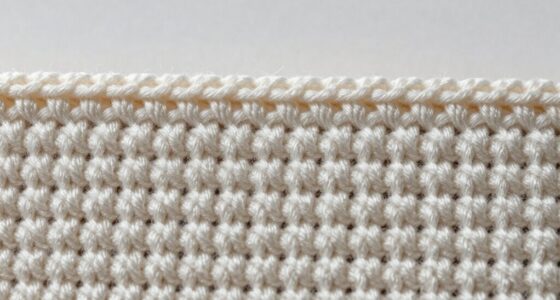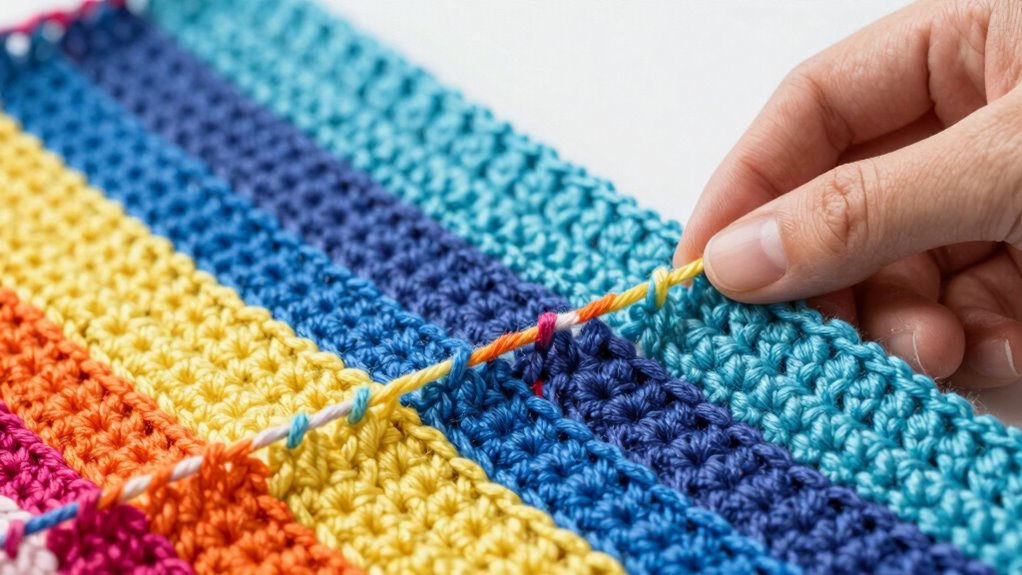

To avoid gaps when changing colors in crochet, keep your tension consistent throughout the project and handle yarn shifts carefully. Leave a few inches of old yarn to weave in later and work the last stitch of the old color into the new one for a seamless look. Gently tighten stitches over the old yarn and secure the change point with multiple stitches. Interested in mastering smooth color shifts? Keep going to discover more expert tips.

Get tools and workshop supplies delivered free — and shop member deals
- Fast, free delivery on millions of items
- Access to Prime Big Deal Days deals on October 6–7
- Prime Video, Amazon Music and more included
Key Takeaways
- Maintain consistent tension throughout the color change to prevent gaps and puckering.
- Leave a few inches of old yarn to weave in securely later, avoiding immediate cuts.
- Work the last stitch of the old color into the new yarn to create a seamless transition.
- Incorporate yarn carrying techniques for gradual color shifts and smooth blending.
- Reinforce the color change area by stitching over it multiple times for added stability.

Changing colors in crochet can add vibrant interest and professional-looking finishes to your projects, but it can also be tricky if you’re not familiar with the best techniques. One common challenge is avoiding gaps or gaps that appear when you switch from one color to another. These gaps often happen because of inconsistent yarn tension or poor color blending, which can disrupt the seamless look you want. To prevent this, you need to pay close attention to your yarn tension as you change colors. When you switch, make sure your tension remains even—neither too tight nor too loose. If your tension fluctuates, it can create gaps or puckering around the color change area. Practice maintaining consistent tension throughout your work, especially at the point of color transition, to keep your stitches uniform.
Maintaining consistent tension during color changes prevents gaps and ensures a smooth, polished crochet finish.
Another key factor is how you handle the yarns during the color change. When switching colors, leave a few inches of the old color to weave in later, rather than cutting it immediately. This extra length allows you to work the new color into the stitches smoothly, which helps achieve better color blending. As you crochet over the old yarn, gently tighten the stitches to incorporate the new color without creating tension disparities. This technique minimizes gaps and creates a more cohesive, blended appearance. Paying attention to yarn management ensures your color changes are neat and professional-looking. Additionally, practicing techniques for seamless color transitions can greatly improve your results.
You should also consider the method of changing colors. The most effective approach involves working the last stitch of the old color into the new stitch, then pulling the new yarn through to complete the stitch. This shift creates a tight, uniform stitch that reduces gaps. When you weave in the ends later, make sure to secure the color change point by stitching over it a few times. This extra reinforcement keeps the area tidy and prevents gaps from forming over time.
Color blending is equally important for a polished finish. To achieve seamless color transitions, try to match the tension of the new yarn to the existing tension of your project. If the tension is uneven, the color change will stand out rather than blend smoothly. You can also incorporate techniques like carrying the yarn along the row for multiple stitches, which helps create a gradual color shift and avoids abrupt jumps that cause gaps. Overall, patience and attention to detail—especially regarding yarn tension and proper color blending—are your best tools for avoiding gaps when changing colors in crochet. Consistent tension is fundamental to achieving a smooth, professional look in colorwork.
As an affiliate, we earn on qualifying purchases.
Frequently Asked Questions
Can I Change Colors Without Tying Knots?
Yes, you can change colors without tying knots by using color substitution techniques. When switching yarns, simply carry the new color along the back, weaving it in as you go, which helps prevent gaps. Yarn blending methods can also be effective, as you gradually shift between colors, maintaining a seamless look. This approach keeps your project neat and secure, avoiding knots while ensuring a smooth color change.
What’s the Best Method for Seamless Color Transitions?
Think of seamless color shifts as a dance where your yarns sway together smoothly. To master this, use color blending and gradient techniques, gently overlapping your old and new colors for a fluid shift. Carry the yarn along the back of your work when switching shades, ensuring no gaps appear. This method keeps your color changes as flawless as a painter’s brushstroke, creating a unified, polished look.
How Do Different Yarn Types Affect Color Changes?
Different yarn types considerably influence color changes. Smooth, tightly spun yarns like mercerized cotton offer even color saturation, making transitions easier and more seamless. Conversely, textured or fuzzy yarns, such as mohair or boucle, can obscure color shifts and create gaps or unevenness. The yarn’s texture affects how well colors blend during changes, so choosing a yarn with consistent fiber thickness and high color saturation helps achieve clean, gap-free color transitions in your crochet projects.
How to Prevent Tension Issues During Color Changes?
Think of tension issues during color changes like balancing a tightrope—too tight, and your work puckers; too loose, and gaps appear. To prevent this, maintain consistent tension, especially during color blending, by wrapping the yarn around your fingers the same way each time. Confirm yarn compatibility so tension stays even. Practice makes perfect—your tension will stabilize, resulting in smooth, professional-looking color transitions.
Are There Specific Stitches Ideal for Color Transitions?
You should use stitches like slip stitches, single crochets, or even double crochets for color shifts, as they create smooth color blending and help minimize gaps. When switching shades, match your yarns carefully to maintain consistent tension, which prevents gaps and uneven color blending. These stitches allow for neat, seamless progressions, ensuring your project looks polished. Practice shifting shades with small swatches to perfect your technique and achieve flawless shade matching.
Conclusion
To avoid gaps when changing colors in crochet, it’s widely believed that consistently working over the color shift helps hide the change. However, research shows that tension and stitch consistency play a more significant role in creating seamless color shifts. So, while hiding the change is helpful, focusing on maintaining even tension and steady stitches will give you the best results. Remember, practice and patience are key to achieving flawless color progressions every time.
Halloween Picks
halloween
As an affiliate, we earn on qualifying purchases.