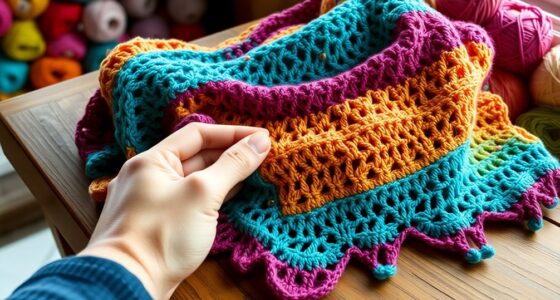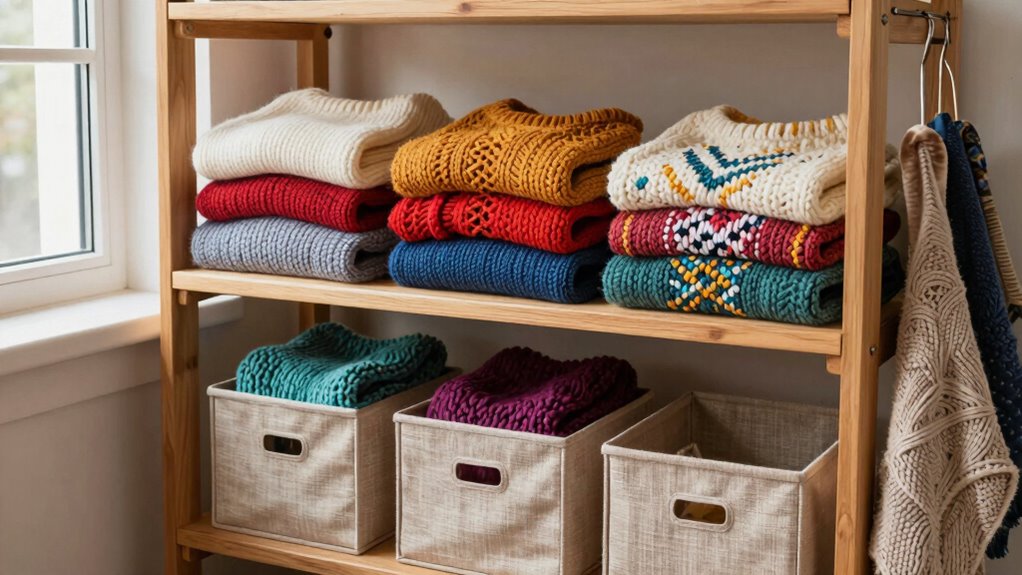

To keep your handknits in shape, store them in breathable containers like cotton bags or fabric bins, avoiding plastic or cardboard. Make sure they are clean and completely dry before storing, then fold gently without stretching, using tissue to maintain their form. Keep them in a climate-controlled area, and add natural repellents like cedar or lavender to ward off pests. For more tips on long-term care, explore additional storage practices to preserve your favorite knits.
Open a free Amazon Business account
Business pricing, bulk buying and tax-exempt orders.
As an affiliate, we earn on qualifying purchases.
Key Takeaways
- Gently fold handknits without stretching and stuff sleeves or bodies with acid-free tissue to maintain shape.
- Store in breathable fabric containers, avoiding plastic or cardboard to prevent moisture and deformation.
- Keep items in a climate-controlled environment with consistent temperature and humidity levels.
- Use natural repellents like cedar or lavender to deter pests without damaging fibers.
- Regularly inspect stored handknits for signs of pests, mold, or damage, and adjust storage practices as needed.
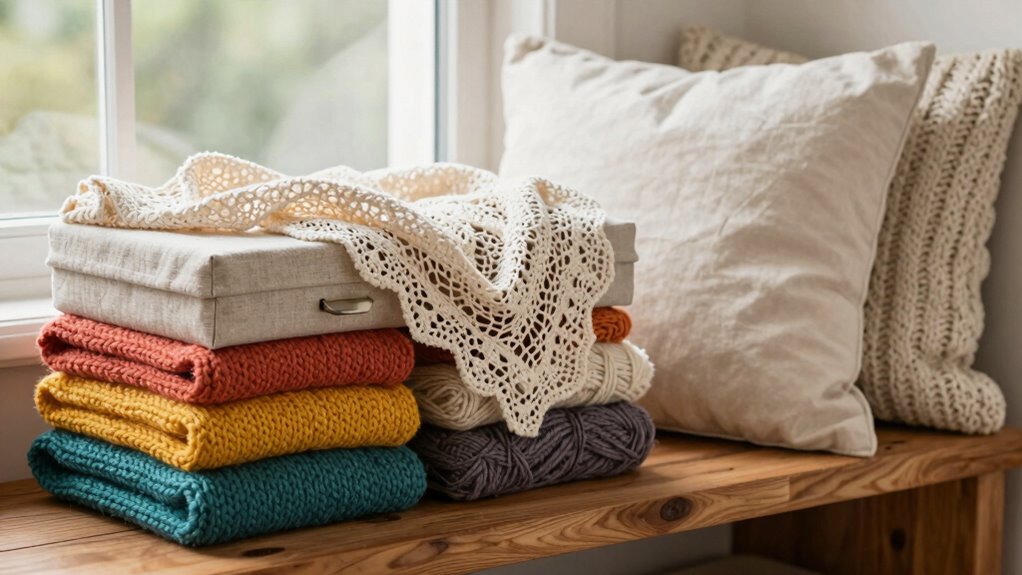
Properly storing your handknits is vital to maintaining their shape and beauty over time. When you invest time and effort into creating or collecting these pieces, you want to guarantee they stay in perfect condition for years to come. The key lies in good knit care, which begins with how you store your garments. Using the right storage containers is essential because they help protect your handknits from dust, moisture, and pests, all of which can cause damage or deformation. Avoid using cardboard boxes or plastic bags that aren’t breathable, as trapped moisture can lead to mildew or mold, compromising the fabric’s integrity. Instead, opt for breathable fabric storage containers or cotton storage bags, which allow air circulation and prevent mustiness, keeping your handknits fresh.
When preparing to store your handknits, always make sure they are clean and completely dry. Even a small amount of residual moisture can lead to mold or weaken the fibers over time. Gently fold your sweaters, scarves, or hats without stretching them out or creasing them too tightly. Avoid hanging knits, as this can cause them to stretch and lose their shape. Instead, fold them neatly, stacking them gently inside your chosen storage containers. To maintain their shape, consider stuffing the sleeves or body with acid-free tissue paper or clean, uncolored muslin to help preserve the silhouette. This prevents the fabric from slumping or losing its form. Additionally, climate-controlled environments can further help preserve delicate fibers in the long run. Proper climate control ensures that temperature and humidity levels stay consistent, which is crucial for delicate fibers. Incorporating regular inspections into your storage routine can also help detect early signs of pests or damage, prolonging the lifespan of your handknits. Using protective coverings can add an extra layer of defense against dust and pests, especially during long-term storage. Including preventive measures, such as pest repellents like cedar blocks or lavender sachets, further protects your treasures from damage.
When placing your handknits into storage containers, be mindful of layering. Don’t cram too many pieces into one container, as overcrowding can cause creases or deformation. Leave some space between items to prevent unnecessary pressure. For long-term storage, it’s a good idea to check on your handknits periodically, especially if you’re storing them in a less climate-controlled environment. This way, you can inspect for signs of pests or any moisture issues early on. You might also consider adding cedar blocks or lavender sachets to your storage containers—these natural repellents help keep pests away without exposing your delicate knits to harsh chemicals.
breathable cotton storage bags for sweaters
As an affiliate, we earn on qualifying purchases.
As an affiliate, we earn on qualifying purchases.
Frequently Asked Questions
Can Handknits Be Stored in Plastic Bags Long-Term?
Storing handknits in plastic bags long-term isn’t ideal because it traps moisture and can cause damage. Instead, use breathable storage options like cotton or linen bags to protect your knitwear. Before storing, fold your handknits carefully using proper folding techniques to prevent stretching. This approach keeps your handknits safe from moisture and pests, helping them maintain their shape and softness over time while allowing air circulation.
How Often Should I Refold or Rotate Stored Handknits?
You should refold or rotate your stored handknits every 3 to 6 months. Maintaining a consistent rotation schedule prevents creases from setting and helps distribute any weight evenly, preserving their shape. Regularly checking on your handknits also allows you to spot and address any signs of damage or pests early, ensuring your cherished pieces stay in top condition for years to come.
Are Cedar Blocks Safe for All Types of Handknit Fibers?
Are cedar blocks safe for all handknit fibers? Not necessarily. Cedar safety varies depending on fiber compatibility. While cedar naturally repels moths, its oils can damage delicate fibers like silk and wool, causing discoloration or weakening. Before using cedar blocks, check if your handknits are sensitive to aromatic woods. For fragile fibers, consider alternative storage options. Don’t risk your treasured knits—know the cedar safety and fiber compatibility first!
What’s the Best Way to Remove Pests From Stored Handknits?
To remove pests from stored handknits, start by inspecting your items closely. Use natural repellents like cedar blocks or lavender sachets, which deter pests without harming your fibers. Make sure your handknits are clean before storage, practicing good clothing hygiene to prevent infestations. If pests are present, gently vacuum or brush the affected areas, then refresh your natural repellents. Regularly checking your stored handknits keeps pests at bay effectively.
Can Storing Handknits in the Freezer Help Prevent Moth Damage?
Think of your handknits as treasures needing special care. Freezer preservation can be your secret weapon against moth damage, as it helps prevent moths from sneaking into your woolly delights. By storing your knits in the freezer for a few days, you create an inhospitable environment for pests. This simple step boosts moth prevention, keeping your beloved handknits fresh and beautiful for years to come.
Conclusion
By carefully storing your handknits, you preserve their cozy charm and delicate shape, like safeguarding a treasured hug. Imagine your favorite sweater nestled softly in a drawer, ready to embrace you again with warmth and comfort. When you treat your knits with love and care, they become more than just clothing—they’re memories woven into every stitch, waiting patiently to wrap you in their timeless embrace whenever you need a bit of home.
Fall Picks
fall essentials
As an affiliate, we earn on qualifying purchases.