
TL;DR

Get business pricing on tools and workshop supplies
- Business-only prices and quantity discounts
- Tax-exempt purchasing
- Multiple users, one account, clear invoices
A Hunker report says diluted vinegar can remove grime and mineral deposits from stainless steel when applied briefly, then wiped or rinsed away. Undiluted vinegar left on the metal can damage its protective layer, dull the finish and, over time, contribute to pitting or rust.
Vinegar can clean stainless steel when diluted and used briefly, but leaving it on the metal can damage the surface, according to a Hunker report on household cleaning. The guidance matters for people using vinegar to remove grease, water spots or mineral deposits from sinks, utensils and appliances: the report recommends wiping the solution away promptly and avoiding vinegar on faucet finishes.
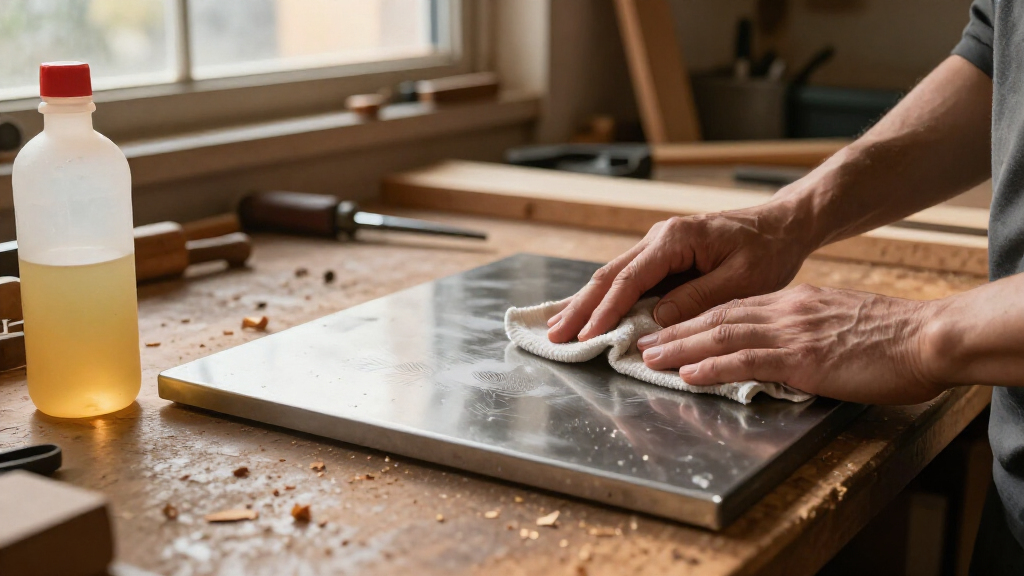
The report says the outcome depends on concentration and contact time. A solution made with equal parts vinegar and water can be applied to stainless steel to help remove greasy residue and hard-water deposits. Hunker advises applying it with a soft cloth, wiping along the steel’s grain and not letting the solution linger.
For deposits on sinks, the report suggests dampening a clean microfiber cloth with the diluted solution, scrubbing the affected area, then rinsing and drying the sink. The same diluted mixture is described as suitable for stainless-steel appliance surfaces and plastic or glass parts, though the source does not provide product-specific manufacturer guidance.
Hunker warns that undiluted vinegar left for an extended period can harm the protective layer on stainless steel. It may leave the finish dull, reduce its shine and make it more prone to rust; repeated or prolonged exposure may also contribute to pitting. The report says vinegar should be kept off faucet finishes, which may use materials or coatings different from the surrounding steel.
A Short Cleaning Window Matters
The practical distinction is not simply whether vinegar is a household cleaner, but how it is applied and removed. Stainless steel’s resistance to corrosion depends on a protective surface layer. According to Hunker, prolonged exposure to undiluted vinegar can damage that layer, so a cleaner used to tackle deposits may leave a surface dull or more vulnerable if it is allowed to sit.
This is relevant for kitchens because mineral deposits and water spots often prompt people to reach for acidic cleaners. The report’s approach—dilute, use briefly, wipe or rinse, and dry—offers a way to address those marks while limiting exposure. Its warning about faucet finishes also underscores that nearby kitchen surfaces may not respond alike: a faucet coating should not automatically be treated as stainless steel.
The possible consequences described are surface damage, dullness, pitting and increased susceptibility to rust. The source does not say that every brief vinegar application will cause harm, nor does it quantify how long exposure must last before damage occurs. Its advice is precautionary: avoid leaving vinegar on the metal and follow care instructions for the particular appliance or fixture.
Popular right now

Apple AirPods Pro 3 Wireless Earbuds with Active Noise Cancellation

Vitamix Touch & Go Advance 32-Ounce Bar Blender, White

Ninja CREAMi 7-in-1 Ice Cream Maker, NC299AMZ
As an affiliate, we earn on qualifying purchases.
Why Vinegar Can Affect Steel
Vinegar is commonly used in household cleaning, and the report describes it as useful against greasy residue and mineral buildup. Hard water can leave calcium or other mineral deposits on sinks, cutlery and utensils. Those deposits are the kind of marks for which the article says a diluted vinegar solution may help.
But stainless steel is not immune to surface damage. Hunker attributes the risk to vinegar’s ability, when concentrated and left in contact with the metal, to damage the layer that protects it. The report therefore distinguishes brief contact with diluted vinegar from prolonged contact with undiluted vinegar rather than treating all uses as equally safe or harmful.
The supplied report does not present laboratory tests, brand-specific instructions or a universal safe exposure time. It provides household cleaning guidance, so readers should also check the care information for their appliance, sink or utensil—especially if the surface has a special finish.
““The answer depends entirely on how you use it.””
— Hunker report
Exposure Time and Finishes Vary
The report does not specify a precise number of minutes that vinegar can safely remain on stainless steel, and it does not identify a threshold at which surface damage begins. The degree of risk may depend on the surface and its condition, but the supplied material does not quantify those differences.
It also does not establish that every stainless-steel product has the same finish or care requirements. In particular, the warning against using vinegar on faucet finishes is not accompanied by details about particular faucet materials or coatings. Manufacturer care instructions are not included in the report, so readers should consult them when available. The source also offers no testing data on how often diluted vinegar can be used without damage.
Check Care Guidance Before Cleaning
For routine cleaning, Hunker’s stated method is to mix equal parts vinegar and water, apply it with a soft cloth, work along the grain and wipe it off promptly. For sink deposits, its advice is to use a damp microfiber cloth, then rinse and dry the surface. The report does not recommend leaving the solution to soak or applying it to faucet finishes.
If a surface already has dull patches, small irregular pits or light rust, Hunker points to a paste made from equal parts baking soda and water as an alternative cleaning method. The supplied material does not detail how to treat severe corrosion or whether damage can be reversed. For marked or worsening damage, readers can check the product maker’s instructions or seek advice from a qualified repair professional.
Key Questions
Can you use vinegar to clean stainless steel?
According to Hunker, a brief application of equal parts vinegar and water can help remove grease or mineral deposits. Wipe it off promptly, then rinse where appropriate and dry the surface.
What can happen if vinegar is left on stainless steel?
The report warns that undiluted vinegar left on the surface can damage the protective layer, dull the finish and make the metal more prone to rust. It says prolonged exposure may also contribute to pitting.
How should vinegar be applied to a stainless-steel sink?
Hunker recommends dampening a clean microfiber cloth with a 1:1 vinegar-and-water solution, scrubbing the deposits, then rinsing and drying the sink. It advises against letting the solution sit on the steel.
Is vinegar safe for faucet finishes?
The report says to avoid vinegar on faucet finishes because they may be damaged. Check the faucet maker’s care instructions before using a cleaner on its finish.
What if vinegar has already left dull spots or pits?
Hunker suggests a paste made from equal parts baking soda and water for cleaning stainless steel with dull patches, small pits or light rust. The report does not say this will reverse damage.
Source: hunker.com