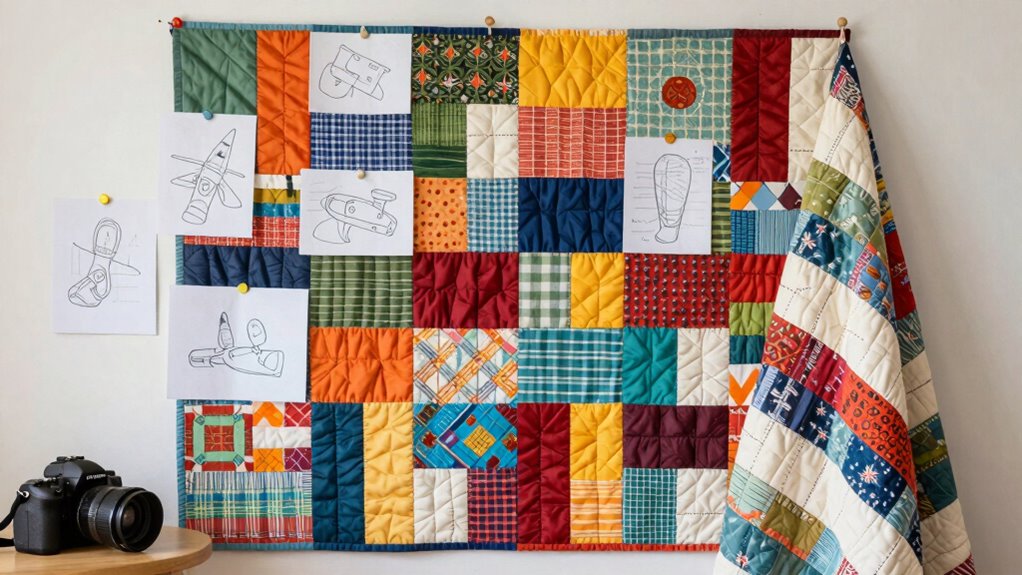

A design wall plays a vital role in your quilt planning by letting you visualize the entire project at full size before sewing. It helps you experiment with fabric arrangements, identify color clashes, and refine your layout easily. You can move pieces around, test different designs, and spot issues early, saving time and frustration. If you keep exploring, you’ll uncover more ways a design wall can enhance your creative process and improve your final quilt.

Get business pricing on tools and workshop supplies
- Business-only prices and quantity discounts
- Tax-exempt purchasing
- Multiple users, one account, clear invoices
Key Takeaways
- A design wall allows for full-scale visualization of quilt layouts, aiding in better planning and arrangement.
- It helps identify color clashes, gaps, or imbalance early, saving time during the sewing process.
- The wall facilitates experimentation with different fabric placements without permanent sewing.
- It enhances creativity by providing a large workspace to test new ideas and refine designs.
- Incorporating technology and innovative fabrics into the design wall can improve durability and design flexibility.

Ever wondered how quilters keep their fabric pieces organized and visualize their designs effectively? The answer often lies in the use of a design wall. A design wall isn’t just a place to pin fabric; it’s a crucial tool that transforms your creative process by helping you see your quilt as a whole before stitching it together. When you start planning a quilt, one of the most important steps is fabric selection. You carefully choose fabrics that complement each other, considering patterns, textures, and shades. But once you’ve gathered your fabric stash, the challenge becomes how to organize and visualize how these pieces will look in the finished project. That’s where a design wall shines. It allows you to lay out your fabric pieces, blocks, and motifs in real size, giving you a clear picture of your color organization and overall design. You can easily move pieces around, experiment with different arrangements, and see how the colors interact, all without sewing a single stitch. This visual process helps you identify any color clashes or gaps in your design early on, saving you time and frustration later. Instead of trying to imagine how everything fits together from a pile of fabric, you get a tangible, real-time view of your quilt. This makes your fabric selection more intentional, as you can see how each piece contributes to the overall palette and design harmony. A design wall also encourages you to think more creatively about your layout. As you pin and rearrange your fabric pieces, you might discover new pattern possibilities or realize that a certain color needs to be more prominent. The ability to see your work in progress in a large format boosts your confidence and decision-making. Plus, it’s a space that can evolve with your project — adding new fabrics, trying different arrangements, or even testing alternate color schemes without committing prematurely. Whether you’re a beginner or an experienced quilter, having a dedicated visual space helps you stay organized and focused. It keeps your fabric selection intentional and your color organization on point, ultimately leading to a more cohesive, beautiful quilt. Understanding the importance of fabric organization can greatly enhance your quilting process. The design wall becomes your creative canvas, where you can experiment freely and refine your vision before sewing. Incorporating a nanotechnology-inspired approach to fabric treatment and organization can further elevate your quilting projects by introducing innovative materials that improve durability and color retention. This approach aligns with the use of advanced fabric technology, which can help preserve the quality of your fabrics over time. It’s a space that supports your creative process and helps turn ideas into a finished masterpiece, bringing clarity and confidence to every step of your quilting journey.
Popular right now

KitchenAid Artisan 5-Quart Tilt-Head Stand Mixer, KSM150PS, Almond Cream

Dyson Cyclone V10 Origin Cordless Vacuum

Bose QuietComfort Ultra Earbuds (2nd Gen), Deep Plum
As an affiliate, we earn on qualifying purchases.
Frequently Asked Questions
Can a Design Wall Be Used for Other Craft Projects?
Yes, a design wall can definitely be used for other craft projects. It serves as an alternative display area, helping you visualize and arrange mixed media integration or different materials. You can use it to organize and plan your projects, whether you’re working on wall art, fabric crafts, or even jewelry displays. Its versatility makes it a helpful tool beyond quilting, providing a spacious, flexible space for various creative endeavors.
What Are the Best Materials for a Portable Design Wall?
You should choose lightweight, portable fabric options like flannel, muslin, or felt for your design wall. These materials stick well to fabric pieces, making it easy to arrange your quilt design. For portability tips, opt for a foldable or roll-up design, and consider attaching a sturdy frame or using clamps for easy setup and transport. This way, your design wall stays functional and convenient wherever you work.
How Do You Store a Design Wall When Not in Use?
You can store your design wall easily by folding or rolling it, especially if it’s made from lightweight materials. For larger walls, consider wall mounting it on a hook or pegboard, so it stays flat and ready to use. Storage solutions like a dedicated closet or corner with hooks work well, ensuring your design wall stays tidy and protected when not in use.
Is a Design Wall Necessary for Simple Quilt Patterns?
A design wall isn’t necessary for simple quilt patterns, but it can considerably enhance your quilt pattern visualization and fabric placement planning. Using a wall helps you see how your fabrics work together and allows easy adjustments before sewing. If you prefer working without one, you can lay out pieces on a flat surface or floor. However, a design wall makes planning more efficient and helps avoid mistakes, especially for beginners.
Can a Design Wall Help With Color Selection?
Yes, a design wall can help with color selection by improving your visual organization and ensuring color harmony. As you arrange fabric swatches, you see how different shades work together, making it easier to balance warm and cool tones. This visual feedback helps you make confident choices, avoid clashing colors, and create a cohesive quilt design. Ultimately, the design wall becomes a valuable tool for achieving harmony in your quilt’s color palette.
Conclusion
Using a design wall truly transforms your quilt planning. It’s not just a space to arrange patches; it’s a tool that helps you visualize, experiment, and perfect your design before stitching. Believe the theory that a design wall boosts creativity and reduces mistakes—it’s proven to make your quilting process smoother and more enjoyable. Embrace it, and watch your ideas come to life with confidence and clarity. Happy quilting!