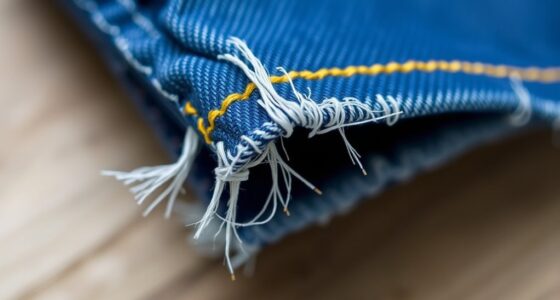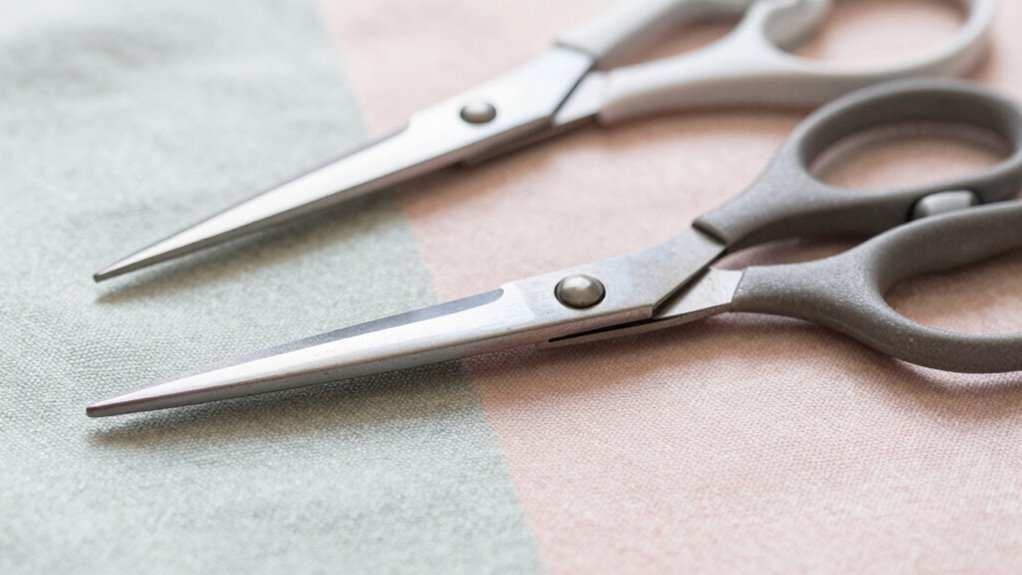
When choosing between fabric shears and dressmaker shears, you’ll notice differences in blade length, handle design, and cutting purpose. Fabric shears have long, sharp blades for large, straight cuts, while dressmaker shears feature an offset handle for better control during detailed work. Fabric shears are best for cutting multiple fabric layers, whereas dressmaker shears excel at pattern shaping and precision. Keep in mind, understanding these variations helps you select the right tool—if you look closer, you’ll discover even more distinctions.

Get business pricing on tools and workshop supplies
- Business-only prices and quantity discounts
- Tax-exempt purchasing
- Multiple users, one account, clear invoices
Key Takeaways
- Fabric shears have longer, sharper blades for cutting multiple layers smoothly; dressmaker shears have offset handles for detailed control.
- Fabric shears excel at straight, large cuts; dressmaker shears are better for shaping and intricate pattern work.
- The shorter blades of dressmaker shears aid in precision and pattern adjustments, unlike the longer blades of fabric shears.
- Proper maintenance and sharp blades are essential for both, but especially critical for fabric shears handling thick or delicate fabrics.
- Material quality affects durability and performance, with high-quality shears suited for various fabric types and detailed sewing tasks.
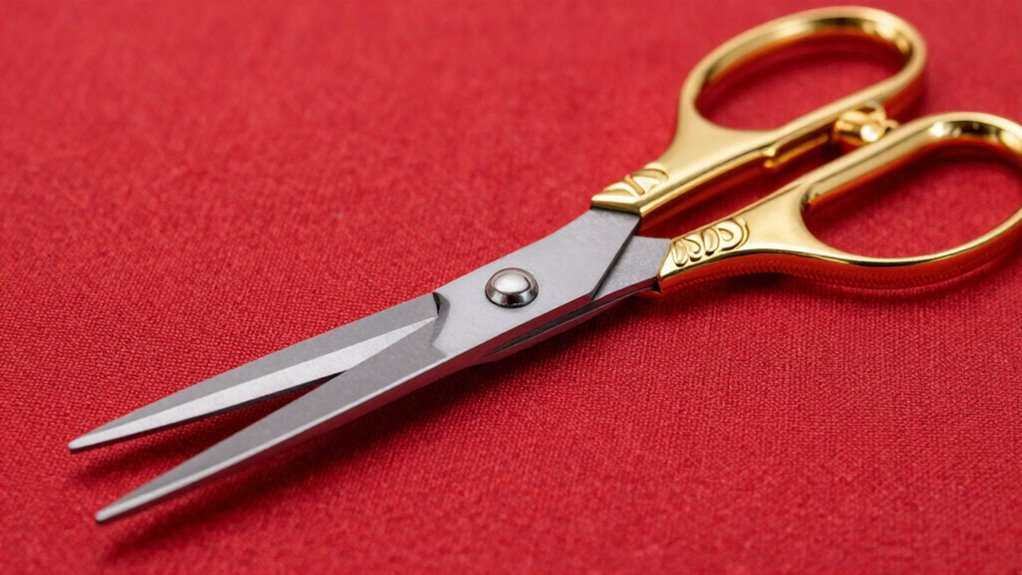
When choosing cutting tools for sewing projects, understanding the differences between fabric shears and dressmaker shears is essential. While both are designed to cut fabric, they serve distinct purposes based on their construction and features. One key difference lies in how they handle thread tension and fabric grain. Fabric shears typically have sharp, long blades that slice through multiple layers effortlessly, making them ideal for cutting large pieces of fabric smoothly and precisely. Dressmaker shears, on the other hand, are often designed with a slight offset handle and a shorter blade, giving you more control for detailed work and shaping patterns.
The way you approach cutting with each tool will influence how well you maintain the fabric’s integrity. When working with fabric grain, it’s important to cut along the correct direction—usually parallel to the warp or the weft threads. If you’re using fabric shears, their long, straight blades help guarantee a clean, straight cut that aligns with the fabric grain without distorting the threads. This is especially important when cutting large pieces, as a clean cut along the grain prevents stretching or skewing, which can ruin the pattern. Dressmaker shears, with their more precise and controlled cut, allow you to navigate intricate pattern pieces, where small adjustments are necessary to match seams accurately. Additionally, blade sharpness plays a crucial role in ensuring smooth cuts and avoiding fabric damage. Keeping your shears properly maintained ensures they stay sharp and effective over time. Proper shear maintenance also involves regular cleaning and oiling, which extends their lifespan and maintains cutting performance. Being aware of the material quality of your shears can also influence how well they perform and how long they last, especially when working with delicate or thick fabrics.
fabric shears for cutting multiple fabric layers
As an affiliate, we earn on qualifying purchases.
As an affiliate, we earn on qualifying purchases.
Frequently Asked Questions
Can Fabric Shears Cut Through Multiple Fabric Layers at Once?
Yes, fabric shears can cut through multiple fabric layers at once, especially if they have good durability and sharp cutting performance. High-quality fabric shears are designed to handle thicker or layered fabrics efficiently, making your cutting faster and more precise. Keep in mind, though, that over time, even durable shears may lose some cutting power, so regular sharpening helps maintain their performance for multi-layer cuts.
Are Dressmaker Shears Suitable for Heavy or Thick Fabrics?
Dressmaker shears are generally not suitable for heavy or thick fabrics, as their shear suitability is limited to lighter materials. If you’re working with heavy fabric, you’ll want to choose heavy-duty shears or scissors designed specifically for thick textiles. Using dressmaker shears on heavy fabric can damage the blades or make cutting difficult. For best results, match your shears to the fabric weight for cleaner cuts and longer tool life.
How Often Should I Sharpen or Replace My Fabric Shears?
You should sharpen your fabric shears when you notice it’s struggling to cut smoothly, typically every 8-12 uses, or about every few months. Regular blade maintenance helps extend shear longevity, ensuring clean cuts and less strain on the blades. Replace them if sharpening doesn’t restore sharpness, especially if you see nicks or rust. Proper care keeps your shears performing well and prolongs their lifespan.
Do Ergonomic Handles Improve Cutting Precision and Comfort?
Yes, ergonomic handles can improve both cutting precision and comfort. The ergonomic benefits come from handle design that fits comfortably in your hand, reducing fatigue during extended use. When your hand is comfortable and well-supported, you can maintain better control and accuracy. So, choosing shears with ergonomic handles helps you cut more precisely and with less strain, making your sewing or fabric-cutting tasks easier and more enjoyable.
Can I Use Fabric Shears for Non-Fabric Materials?
Sure, you can use fabric shears on non-fabric materials, but don’t expect textile versatility to save the day. These shears are designed with shear compatibility in mind—perfectly suited for cloth, not cardboard or leather. Using them on tougher materials will dull the blades quickly and compromise precision. So, unless you want your shears to become glorified paper scissors, stick to their intended textile tasks.
Conclusion
While fabric shears and dressmaker shears might seem interchangeable, choosing the right tool makes a difference in your sewing projects. Think of fabric shears as your precision scissors for detailed cuts, whereas dressmaker shears are your go-to for larger, straight cuts. If you’re worried about mistaking them, picture fabric shears as a fine-tipped pen and dressmaker shears as a sturdy paintbrush—each designed for different tasks to guarantee your sewing turns out perfect.
Fall Picks
fall essentials
As an affiliate, we earn on qualifying purchases.