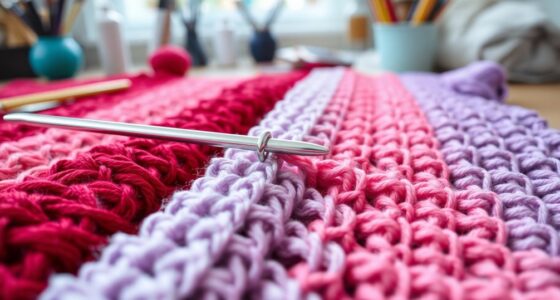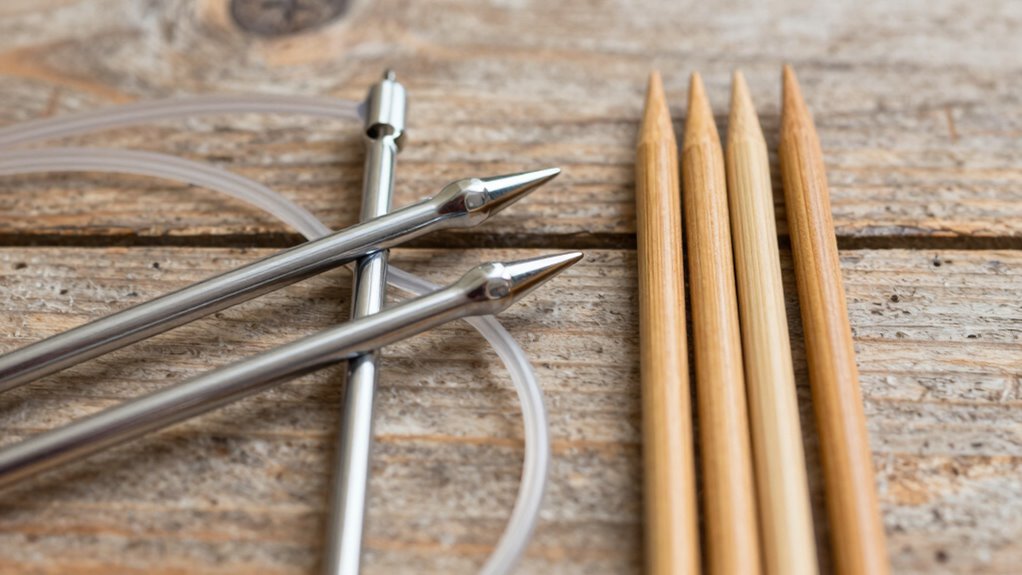

When choosing between circular and straight needles, consider your project size, yarn type, and comfort. Circular needles are great for bulky or large projects, offering better weight distribution and ergonomic comfort, especially during long sessions. Straight needles work well for smaller, detailed projects and are easy to handle for beginners. Having both options allows you to pick the best tool for each project. To explore more on making the right choice, keep going for helpful tips and insights.

Get business pricing on tools and workshop supplies
- Business-only prices and quantity discounts
- Tax-exempt purchasing
- Multiple users, one account, clear invoices
Key Takeaways
- Consider project size and complexity; straight needles are ideal for small, detailed projects, while circulars excel for large, seamless items.
- Evaluate comfort needs; circular needles reduce hand strain and are better for longer knitting sessions.
- Match needle material and size to yarn type and pattern requirements for optimal tension and ease.
- Use straight needles for lightweight yarns and intricate stitches requiring precise control.
- Keep both needle types in your toolkit for flexibility based on project, yarn, and personal preference.
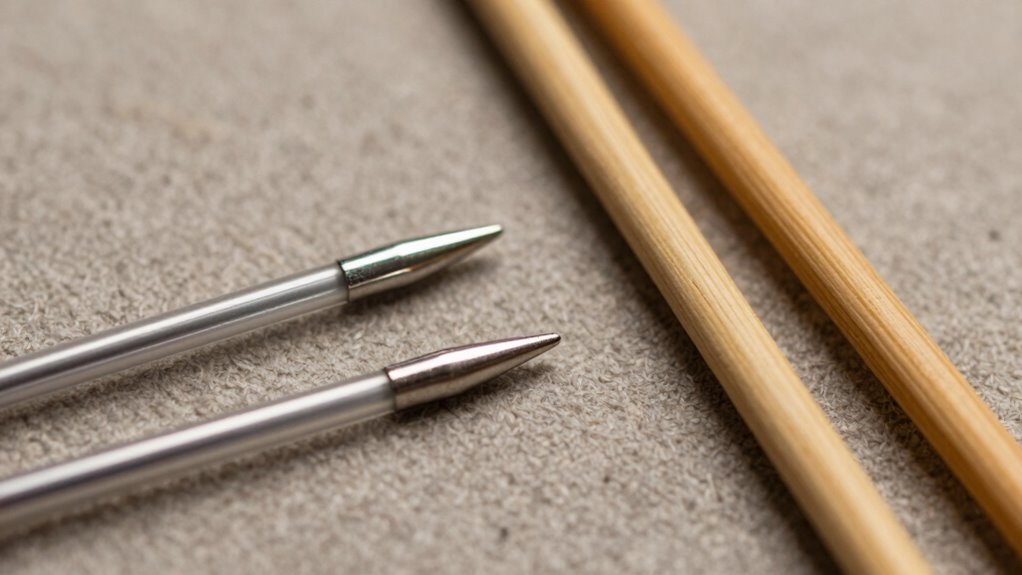
Are you unsure whether to choose circular or straight needles for your knitting project? It’s a common dilemma, and your choice can significantly impact your comfort and the variety of projects you can tackle. Circular needles are known for their ergonomic benefits, as they reduce strain on your hands and wrists. Their flexible cable connects two pointed ends, allowing you to knit in the round or work flat. This design distributes weight more evenly, making longer knitting sessions less tiring and helping prevent fatigue or discomfort. If you often knit large items like sweaters or blankets, circular needles are especially advantageous, since they hold more stitches comfortably without putting stress on your hands.
On the other hand, straight needles are a classic choice and offer excellent project versatility. They’re ideal for smaller projects like scarves, dishcloths, or flat panels. Their rigid, straight design provides a familiar grip and a straightforward knitting experience, which many knitters find reassuring. Straight needles are also easy to use for beginners because they keep your work stable and manageable, especially when working with lightweight yarns or delicate stitches. Plus, they’re simple to store and transport, making them a convenient option for on-the-go knitting or quick projects. Additionally, straight needles are often preferred for intricate work, as they give you more control over delicate stitches and fine details. When choosing your needles, consider the material composition, as it can also influence your comfort and the ease of knitting. The size and gauge of your needles can also impact your tension and the overall look of your project.
Your decision might also depend on the type of yarn you prefer and the complexity of your pattern. Circular needles work well with bulky or heavy yarns because their design supports a larger number of stitches without bending or collapsing. They also excel at seamless projects since you can knit continuously in the round, avoiding seams and giving your finished piece a professional finish. Additionally, knitting technique can influence which needle type feels more natural and comfortable for you. Conversely, straight needles are often preferred for fine or intricate work, where control and precision are paramount. They allow you to easily manipulate stitches and are generally easier to set aside when you need a break or want to switch projects.
Consider your comfort level and the kind of projects you enjoy most. If you’re looking for ergonomic benefits and the ability to handle larger or seamless projects, circular needles are likely your best bet. If project versatility, ease of use, and working with smaller or flat pieces are more important, straight needles can be a better fit. Ultimately, having both options in your toolkit gives you the flexibility to choose the right tool for each project, ensuring a more enjoyable and comfortable knitting experience.
As an affiliate, we earn on qualifying purchases.
Frequently Asked Questions
Can I Use Circular Needles for Flat Knitting Projects?
Yes, you can use circular needles for flat knitting projects. They’re versatile and especially helpful for large pieces, as they prevent strain on your hands and arms. You’ll find them useful for cable knitting, where the continuous cable requires flexibility. Unlike double pointed needles, circular needles hold stitches comfortably on a single cable, making your work smoother and more manageable, especially for bulky or complex projects.
Are Straight Needles Better for Beginners Than Circular Needles?
Straight needles are often better for beginners because they offer better needle ergonomics, making them easier to handle and control. You might find them more comfortable initially. However, consider storage considerations—straight needles take up more space and can be less portable. Circular needles, while more versatile, can feel awkward at first. Try both to see which feels more comfortable for your knitting style and workspace needs.
How Do I Determine the Right Needle Length for My Project?
To determine the right needle length for your project, consider your project size. For small projects like socks or sleeves, opt for shorter needles, around 9-12 inches. Larger projects, like blankets or sweaters, need longer needles, typically 16 inches or more, to hold all your stitches comfortably. Always match your needle length to your project size to guarantee ease of knitting and prevent strain.
Can Circular Needles Be Used for Crochet Work?
Yes, you can use circular needles for crochet work, though they’re typically designed for knitting. Circular vs. straight needles mainly differs in flexibility and length, impacting comfort and project size. Needle material, like bamboo or metal, affects grip and ease of use. For crochet, most prefer hooks, but if you’re comfortable, circular needles can work for certain crochet techniques, especially larger projects, offering versatility and reduced strain.
What Materials Are Best for Circular Versus Straight Needles?
Like a sculptor choosing their chisel, you pick materials based on durability and comfort. For circular needles, smooth metals like stainless steel or nickel provide durability and glide effortlessly, reducing strain. For straight needles, warm woods or bamboo offer ergonomic comfort, reducing fatigue during long projects. Both materials should feel comfortable in your hand, ensuring your creative flow isn’t hindered. The right choice makes your knitting experience as satisfying as a well-crafted masterpiece.
Conclusion
Ultimately, your choice between circular and straight needles depends on your project and personal preference. Think about what feels comfortable and what helps you craft with confidence. Whether you opt for the versatility of circulars or the simplicity of straights, remember that your knitting journey is uniquely yours. Embrace the experience, experiment enthusiastically, and enjoy every stitch along the way. With the right needle in hand, your creative craft can truly flourish and flourish freely.
Fall yard work Picks
leaf blowers
As an affiliate, we earn on qualifying purchases.