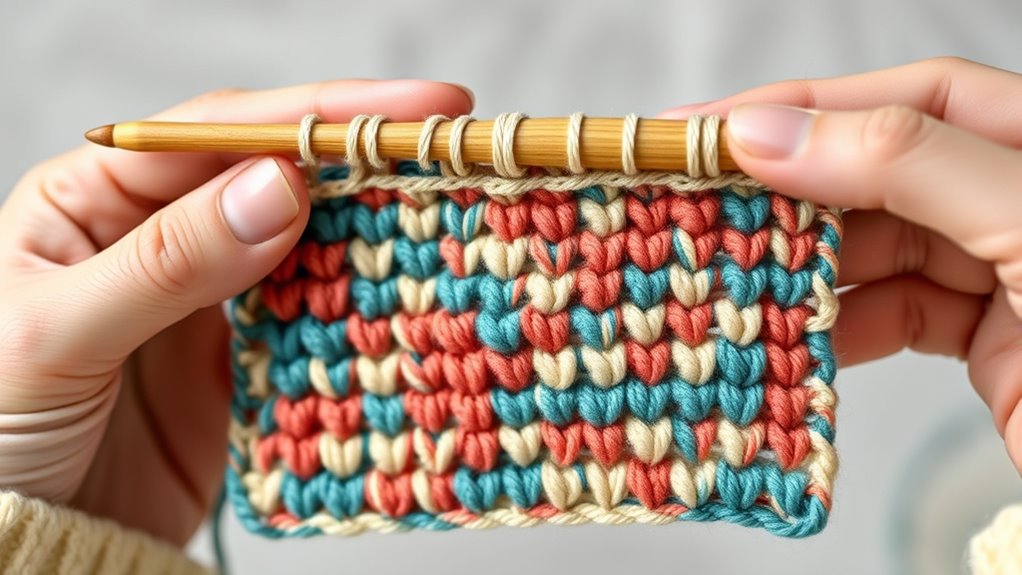
Fascinatingly, brioche’s layered, dense structure creates a plush, insulating fabric that differs greatly from the elastic, open-textured feel of ribbing, leaving you eager to learn why.
Browsing Tag
knitting techniques
11 posts
How to Read Lace Charts One Symbol at a Time
Beside each symbol, learn its meaning step-by-step to master lace charts, unlocking the pattern’s secrets and enhancing your knitting confidence.
Understanding Yarn Twist and How It Affects Stitch Definition
Understanding yarn twist is essential for perfect stitch definition, and discovering how it influences your knitting results will help you achieve your desired look.
How to Choose Between Circular Needles and Straight Needles
P**icking between circular and straight needles depends on your project needs and comfort—discover which option suits you best to enhance your knitting experience.
Mattress Stitch Demystified: Seam Knits So the Join Disappears
Wondering how to make seams vanish seamlessly? Discover the secrets to flawless mattress stitch for invisible, professional-quality joins.
Blocking Isn’t Optional: The Quick Step That Makes Projects Look ‘Store-Bought’
Nurture your craft with this essential step that transforms handmade projects into professional-looking masterpieces—discover why blocking isn’t optional.
Continental Vs English Knitting: Two Styles Explained
Great differences between Continental and English knitting can impact your technique; discover which style might be right for your projects and skill level.
Knitting Colorwork Basics: Introduction to Fair Isle and Intarsia
Knitting colorwork involves techniques like Fair Isle and Intarsia to create vibrant,…
Tunisian Crochet Introduction: How to Get Started With Tunisian Stitches
Discover the basics of Tunisian crochet and learn how to get started with stitches that can transform your knitting projects—continue reading to unlock your potential.
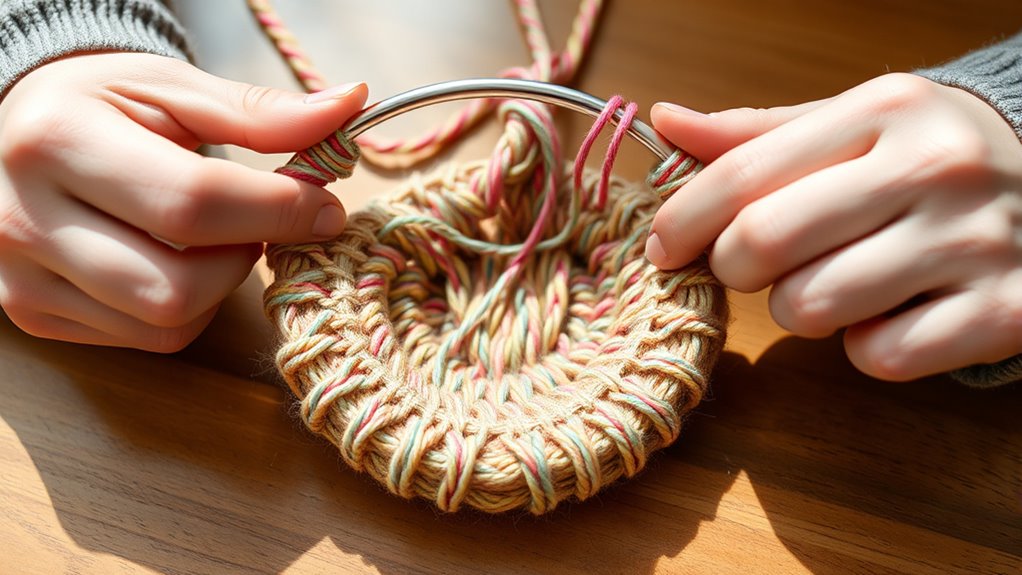
Magic Loop Knitting: Knit Small Circles With the Magic Loop Technique
Unlock the secrets of magic loop knitting to effortlessly create small circles, but mastering this technique requires patience and practice to perfect.