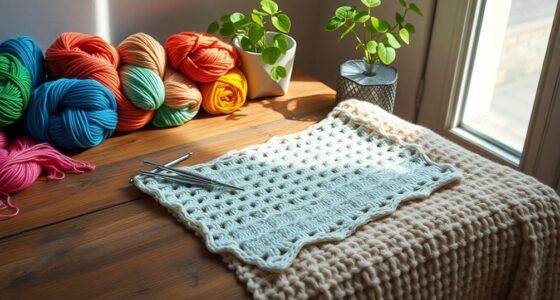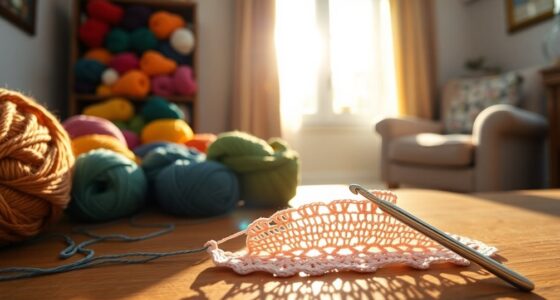

Brioche feels distinctly different from ribbing because of its layered, dense structure that creates a plush, insulating fabric, perfect for softness and warmth. In contrast, ribbing is made with simple knit and purl stitches, making it highly elastic, stretchy, and light. The yarn overs and slipping stitches in brioche add to its thickness and softness, while ribbing’s open stitches give it flexibility. To discover what influences these textures further, keep exploring how yarn and techniques shape each fabric.

Get business pricing on tools and workshop supplies
- Business-only prices and quantity discounts
- Tax-exempt purchasing
- Multiple users, one account, clear invoices
Key Takeaways
- Brioche creates a dense, layered fabric that feels plush and substantial, unlike the lighter, open structure of ribbing.
- The use of slip stitches and yarn overs in brioche results in a soft, pillow-like texture, contrasting with ribbing’s stretchy, elastic feel.
- Brioche’s layered technique produces a thick, insulating fabric, whereas ribbing is more flexible and breathable due to its open stitches.
- Yarn overs in brioche add softness and density, making it feel more plush compared to the more elastic and forgiving ribbing.
- The structural complexity of brioche gives it a sturdy, padded feel, while ribbing’s simplicity results in a lighter, more elastic fabric.
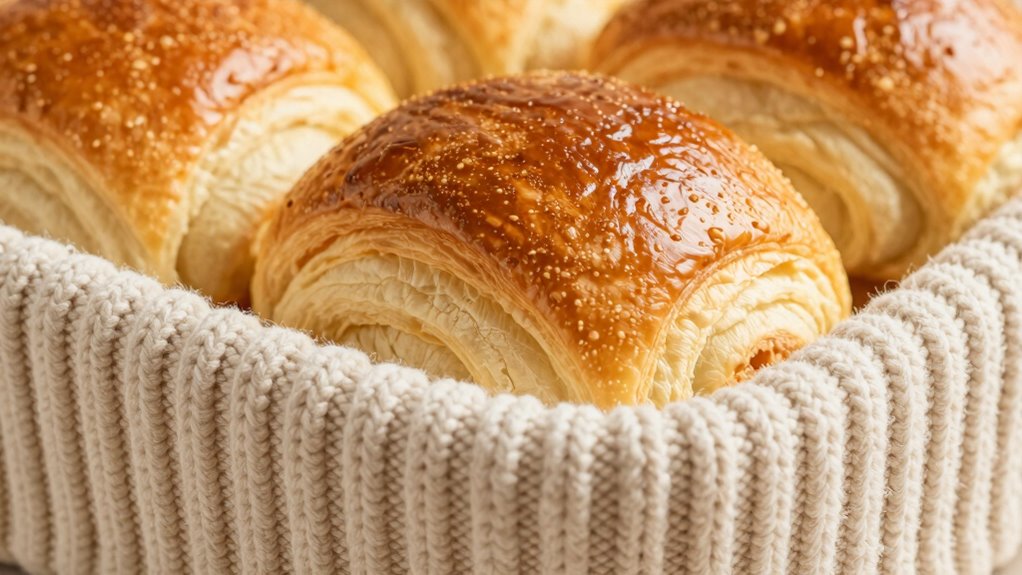
Have you ever wondered why brioche feels so different from ribbing when you’re knitting? It all comes down to the way the yarn behaves and the knitting techniques you use. Brioche creates a plush, dense fabric that’s almost pillow-like, while ribbing results in a stretchy, textured pattern with a more elastic feel. The key difference lies in the yarn elasticity and how you manipulate it through specific knitting techniques.
When you knit brioche, you’re working with a technique that involves slipping stitches and working with yarn overs, which creates a thick, layered fabric. This technique emphasizes the yarn’s elasticity by allowing it to stretch and bounce back without losing its shape. The process also involves alternating between two color or yarn strands, which adds to the fabric’s density and softness. The result is a fabric that’s sturdy yet plush, with a substantial feel that’s quite different from the more elastic nature of ribbing. Additionally, the technique complexity of brioche can impact the fabric’s overall structure and feel. Understanding the fabric density helps explain why brioche feels so substantial and insulating compared to other knit textures. The fiber composition of the yarn can also influence the final texture, making some brioche fabrics feel even softer or more structured.
Brioche uses slipping stitches and yarn overs for a dense, plush, and substantial fabric that holds its shape beautifully.
Ribbing, on the other hand, is created by alternating knit and purl stitches within a row, which directly affects the yarn’s elasticity. This method stretches the fabric horizontally, giving it a highly elastic quality that’s perfect for cuffs, neckbands, and fitted garments. Because ribbing relies on the stretchiness of the yarn itself and the way you manipulate it with simple knitting techniques, it’s inherently more flexible and forgiving. The yarn’s elasticity plays an essential role here; the more elastic the yarn, the more pronounced the stretch, making ribbing highly adaptable and snug.
The difference in feel between brioche and ribbing also stems from the fabric’s density. Brioche tends to be thicker and more insulating because of the way the stitches are worked and the yarn overs, which add layers to the fabric. This density makes it feel more substantial and less stretchy than ribbing. Conversely, ribbing’s open, interlocked stitches give it a lighter, more elastic quality, which makes it stretchier and more flexible. Additionally, the density of the fabric contributes significantly to the overall texture and feel of the finished piece.
As an affiliate, we earn on qualifying purchases.
Frequently Asked Questions
Can Brioche Be Used as Ribbing in Knitting Projects?
Yes, you can use brioche as ribbing in knitting projects. Brioche creates a stretchy, textured fabric similar to ribbing, but with a different look and feel. Unlike traditional ribbing, which is made with simple knit and purl stitches, brioche offers a plush, reversible texture that serves as a ribbing alternative. It’s a great option if you want a cozy, unique finish, and it provides more visual interest than just cable or basic ribbing.
How Does Brioche Feel Compared to Traditional Ribbing?
Imagine running your fingers over a plush velvet versus a smooth silk—that’s how brioche feels compared to traditional ribbing. Brioche offers a soft, luxurious texture contrast, making it feel richer and more cushioned. Its aesthetic differences come from the thicker, more pliable fabric, which adds depth and a cozy feel. Unlike the crisp, stretchy ribbing, brioche drapes beautifully and feels indulgently plush to the touch.
Is Brioche More Stretchy Than Regular Ribbing?
Yes, brioche is more stretchy than regular ribbing because of its unique brioche elasticity. Its ribbing texture allows for more give and flexibility, making it feel softer and more accommodating. You’ll notice that brioche stretches comfortably without losing its shape, giving it a cozy, relaxed fit. This increased elasticity makes brioche ideal for styles that require a bit more stretch, while the ribbing texture adds a distinctive, plush feel.
What Types of Yarn Are Best for Brioche?
You should choose a smooth, plied yarn for brioche, as it highlights the stitch’s texture. Wool blends, especially merino, are popular because they offer elasticity and warmth. Approximately 70% of brioche knitters prefer wool or wool blends over synthetic fibers. Consider yarn fiber comparisons, as cotton or silk can be less forgiving with brioche stitch variations, which require stretch and resilience to maintain their intricate patterns.
Does Brioche Require Special Knitting Techniques?
Brioche does require special knitting techniques, especially if you’re new to it. You’ll need to learn the brioche stitch history and understand how to work with yarn overs and increases to create its distinctive texture. Knitting brioche tips include maintaining even tension and practicing the stitch pattern regularly. Once you master these techniques, you’ll find brioche knitting both rewarding and versatile, giving your projects a plush, textured look.
Conclusion
So, next time you’re cozying up in your brioche or ribbing, remember—you’re not just choosing fabrics, you’re choosing personalities. Brioche offers a buttery, elegant touch, whispering, “I’m fancy,” while ribbing’s sporty, no-nonsense attitude screams, “I’m here to work.” Whether you want to feel like royalty or a rugged adventurer, your fabric choice tells the world exactly how much you’re willing to invest in your fashion drama. Happy fabric flirting!
Halloween Picks
halloween
As an affiliate, we earn on qualifying purchases.