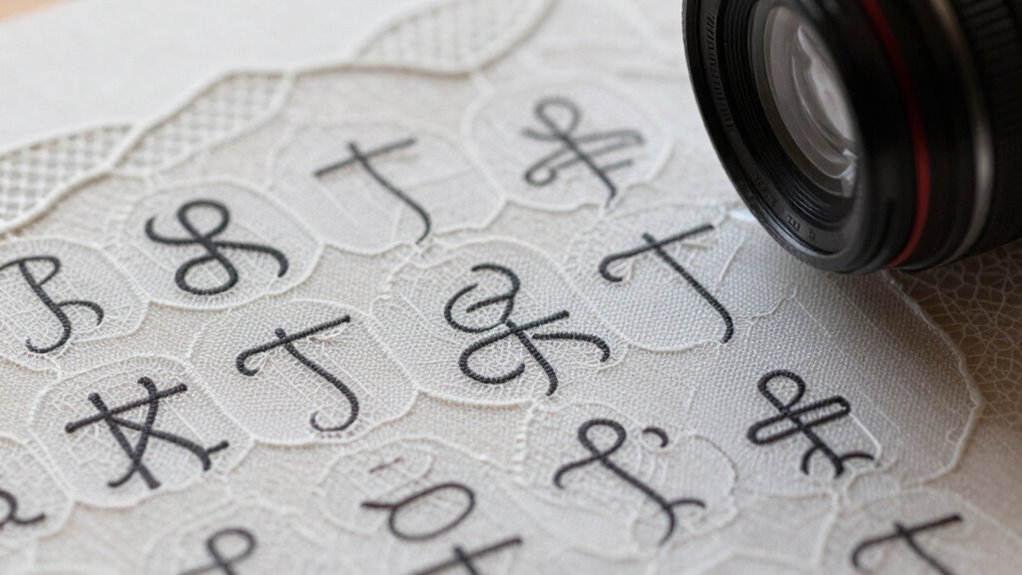

When approaching a lace chart one symbol at a time, start by familiarizing yourself with the legend or key that explains each symbol’s meaning, such as yarn overs, knit, purl, decreases, and increases. Focus on understanding what each symbol represents before moving on to the next. Take your time to connect symbols with the actual stitches, ensuring accuracy. If you keep practicing, you’ll develop confidence in interpreting even complex patterns and discover more pattern secrets.

Get business pricing on tools and workshop supplies
- Business-only prices and quantity discounts
- Tax-exempt purchasing
- Multiple users, one account, clear invoices
Key Takeaways
- Identify and understand each symbol’s meaning using the chart’s legend before starting.
- Focus on one symbol at a time to ensure correct stitch interpretation.
- Trace the symbol’s position carefully within the pattern to maintain accuracy.
- Read the chart in the designated direction, considering right-to-left or left-to-right rows.
- Practice with small sections to build familiarity with individual symbols and pattern flow.
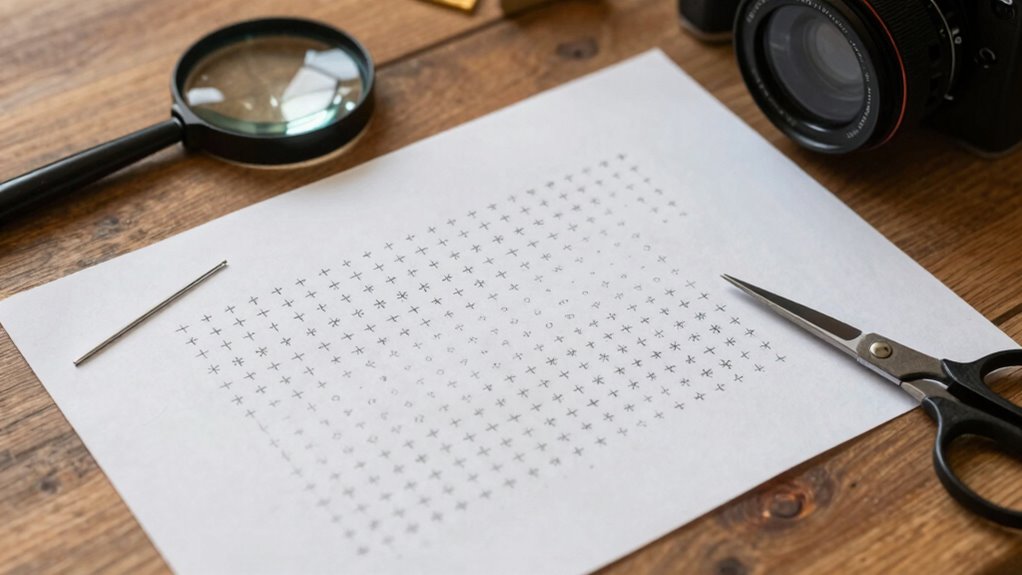
Lace charts can seem intimidating at first, but once you understand their symbols and structure, they become a valuable tool for your knitting projects. These charts open up a world of lace pattern diversity, allowing you to visualize complex designs and execute them with confidence. To harness this potential, you need to focus on chart reading accuracy, which starts with understanding each symbol and how it fits into the overall pattern.
Begin by examining the chart’s legend or key, where each symbol’s meaning is explained. Symbols often represent specific stitches like yarn overs, knit stitches, purl stitches, decreases, and increases. Recognizing these symbols is essential because they form the building blocks of the lace pattern. When you approach a chart, don’t rush. Take your time to identify each symbol on the grid and connect it to its corresponding stitch. This process helps prevent mistakes and guarantees your stitches align with the intended pattern.
As you interpret the chart, remember that the rows are typically read from bottom to top, with odd-numbered rows often read right to left and even-numbered rows left to right. This directionality can influence how you interpret symbols, especially decreases and yarn overs, which may have specific directions. Paying close attention to these details improves your chart reading accuracy and helps you follow the designer’s original vision precisely. Additionally, understanding lace pattern structure can further enhance your ability to read and follow complex charts with confidence. Developing an awareness of pattern repetition can also help you anticipate and recognize how motifs align across your project. Recognizing stitch placement within the chart can further clarify how the pattern will look when completed. Practicing with small sections of a lace chart allows you to build familiarity gradually and master the intricacies of each pattern.
Pay attention to repeats and motifs within the chart. Many lace patterns feature a core design that repeats horizontally across the row or vertically across multiple rows. Mark these repeats clearly in your mind or on your pattern to avoid misalignments. Once you master reading one symbol at a time, you’ll naturally start recognizing these motifs, making the overall process faster and more intuitive. Developing pattern recognition skills can greatly streamline your knitting process and reduce errors.
Practicing with smaller sections of a lace chart can boost your confidence. Break down complex patterns into manageable chunks, focusing on one symbol at a time. Over time, your familiarity with the symbols will increase, along with your overall understanding of the pattern’s flow. This method helps you avoid confusion and guarantees your lace stitches turn out beautifully, showcasing the pattern’s intricate details.
As an affiliate, we earn on qualifying purchases.
Frequently Asked Questions
How Do I Interpret Multiple Symbols on the Same Row?
When you see multiple symbols on the same row, you interpret their combinations based on the pattern’s key. Each symbol tells you a specific stitch or technique, and their combination shows how to execute complex sections. Pay attention to the pattern’s legend, which explains symbol combinations to help you work through intricate parts. This approach simplifies pattern complexity, ensuring you follow the design accurately and achieve the intended lace effect.
Are There Universal Symbols Used Across All Lace Charts?
While some symbol variations in lace charts follow common patterns, there’s no universal language everyone adopts. You’ll want to check the chart legends carefully, as symbols can differ between designers or publications. Think of chart legends as your personal translator, guiding you through each symbol’s meaning. This way, you can confidently follow any lace chart, knowing you’re interpreting the symbols correctly, regardless of their origin.
How Can I Memorize the Symbols More Easily?
To memorize lace chart symbols more easily, use memorization techniques like creating flashcards with each symbol and its meaning. Practice visual memory exercises by repeatedly reviewing the chart until the symbols become familiar. You can also draw the symbols by hand to reinforce your memory. Breaking down the chart into sections and practicing regularly helps solidify your understanding, making it quicker to recognize symbols during your work.
What Should I Do if a Symbol Is Unclear or Missing?
When a symbol is unclear or missing, don’t panic—use visual aids like extra sketches or samples to clarify. Rely on the legend for clarity, and if it’s incomplete, create your own notes or charts. Cross-reference with similar symbols or patterns in your project. This approach keeps your work smooth and enjoyable, turning confusion into a creative challenge rather than frustration.
How Do I Adapt Lace Charts for Different Yarn Weights?
You can adapt lace charts for different yarn weights by considering yarn substitution and gauge adjustments. Start by swatching with your new yarn to match the original gauge as closely as possible. If your gauge differs, adjust your needle size accordingly. This way, you maintain the lace pattern’s proportions and drape, ensuring your project turns out as intended regardless of the yarn weight you choose.
Conclusion
Mastering lace charts one symbol at a time transforms your knitting experience from a confusing maze into a beautifully woven tapestry. As you decode each symbol, you’ll reveal intricate patterns that once seemed impossible, turning your projects into stunning works of art. Soon, you’ll be confidently steering through charts like a seasoned pro, creating delicate lace that feels as light as a feather and as intricate as a spider’s web. Keep practicing—you’re on your way to knitting mastery!
Fall yard work Picks
leaf blowers
As an affiliate, we earn on qualifying purchases.