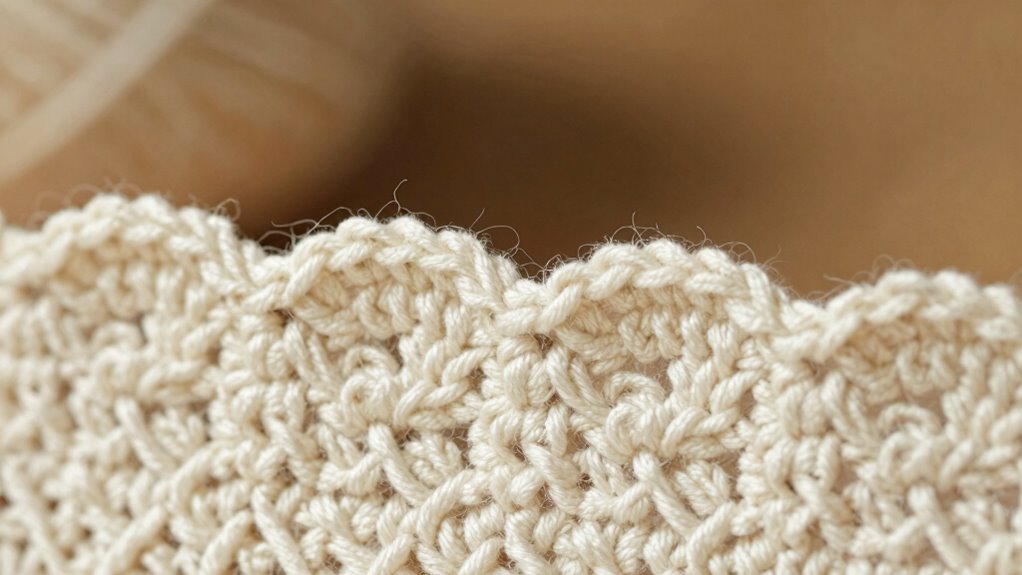

Your crochet edges likely wave because of uneven tension, inconsistent stitch sizes, or choosing the wrong yarn. When your tension varies, the fabric doesn’t lay flat, causing edges to curl or waver. If your stitches are irregular, the waves become more pronounced. Using yarn that’s prone to curling or doesn’t hold stitches well can also contribute. Mastering tension and stitch consistency is key to smooth edges—keep going to discover tips for perfecting your craft.

Get business pricing on tools and workshop supplies
- Business-only prices and quantity discounts
- Tax-exempt purchasing
- Multiple users, one account, clear invoices
Key Takeaways
- Inconsistent tension causes uneven stitches, leading to wavy or curled edges in crochet projects.
- Unequal stitch counts or pattern deviations can create ripples along the border.
- Using yarns prone to curling or waves affects edge flatness and stability.
- Lack of tension control results in floppy or overly tight edges that wave or curl.
- Failing to maintain stitch uniformity and proper pattern execution leads to wavy crochet borders.
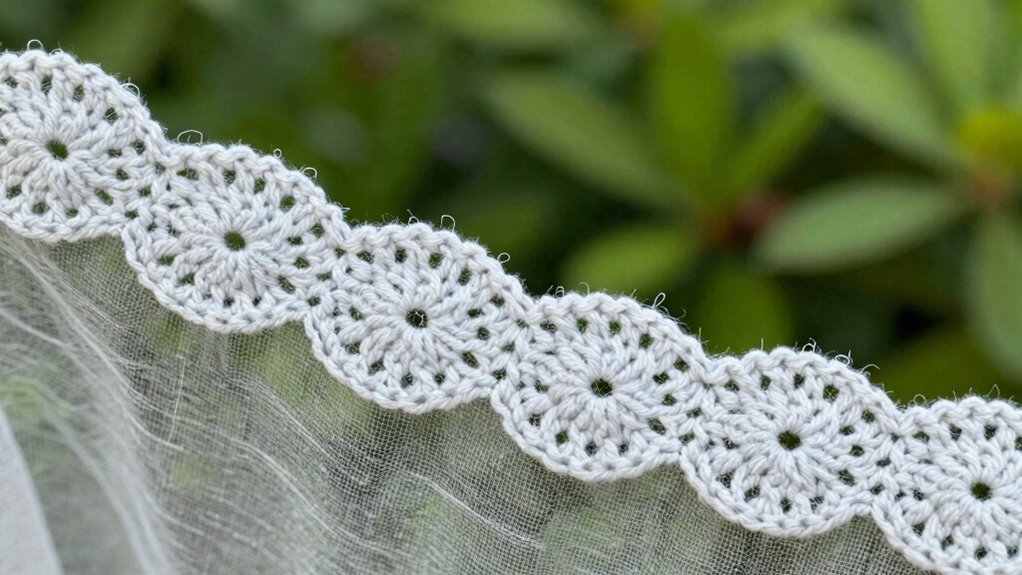
Adding a wavy crochet edge can instantly enhance the look of any project, giving it a delicate and finished touch. But if you’ve ever noticed that your crochet edges keep waving or curling, you’re not alone. Many crafters face this issue, and the root cause often lies in how you manage yarn tension and stitch consistency throughout your work. When your tension varies, it creates uneven stitches, which can cause the edges to ripple or wave instead of lying flat. Consistent tension ensures each stitch is uniform, providing a stable foundation for the wave pattern. If your tension is too tight, your stitches pull tightly and cause the edges to curl inward. Conversely, if your tension is too loose, your stitches become floppy, leading to a wavy or uneven edge. Achieving the right balance is key to a smooth, even border. Maintaining tension control is crucial for achieving professional-looking finishes.
Consistent tension and stitch control are key to preventing wavy, uneven crochet edges.
Another common reason for wavy edges is inconsistent stitch size. When your stitches vary, the fabric doesn’t lie flat, and the wave pattern becomes exaggerated or distorted. To prevent this, focus on maintaining consistent stitch lengths from row to row. This often means paying close attention to your yarn tension and adjusting your grip as needed. Taking a moment to check your tension periodically can help you identify if you’re tightening or loosening your yarn more than intended. Developing an awareness of stitch uniformity can significantly improve the overall appearance of your crochet work. This mindfulness in tension control helps keep your stitches uniform, which in turn stabilizes the edge. In addition, practicing proper tension techniques can make a noticeable difference over time.
Beyond tension, the way you approach your stitch count also influences whether your edge waves or stays flat. For example, if you don’t increase or decrease stitches evenly, the edge can ripple. Ensuring your stitch count matches the pattern’s requirements is essential. When working the border, it’s helpful to count stitches regularly and keep an eye on your tension to ensure each stitch is consistent. This prevents unintended shaping that might cause your edges to wave. Paying close attention to pattern instructions and stitch counts helps maintain the integrity of your border.
Finally, the choice of yarn plays a role. Some yarns are more prone to curling or waving due to their fiber content or ply. A smooth, even yarn with good stitch definition helps in maintaining stitch consistency and controlling tension. Combining that with mindful tension control and accurate stitch counting will give you a clean, flat edge every time. With practice, controlling tension and maintaining stitch consistency becomes second nature, transforming your waving edges into beautifully finished, professional-looking borders.
As an affiliate, we earn on qualifying purchases.
Frequently Asked Questions
Can Tension Issues Cause Waving in Crochet Edges?
Yes, tension issues can cause waving in crochet edges. If your crochet tension is uneven or too loose, it affects how yarn elasticity interacts with your stitches, leading to wavy edges. When you maintain consistent tension, your stitches stay even, preventing waves. Pay close attention to your crochet tension, and adjust it as needed, especially when working with different yarn types or thicknesses, to keep your edges straight and neat.
Which Types of Yarn Are More Prone to Waving?
You’ll find that softer, loosely spun yarns are more prone to waving because of their lower yarn durability and elasticity. These yarns often have less stability and can stretch or relax over time. Additionally, yarns with poor colorfastness properties may also exacerbate waving, as they tend to weaken or change shape with washing or exposure to elements. To prevent waving, choose yarns with better durability and colorfastness for more stable edges.
Does Blocking Help Prevent Crochet Edges From Waving?
Yes, blocking techniques can help prevent crochet edges from waving, and it’s a simple step in your crochet edge maintenance routine. By carefully stretching and pinning your project to shape, you train the fibers to lay flat. Many crafters overlook this step, but blocking is highly effective for controlling waveiness. Just remember, proper blocking consistently applied makes a noticeable difference in keeping your edges smooth and professional-looking.
Are Certain Stitch Patterns More Likely to Wave?
Yes, certain stitch patterns are more likely to wave, especially those with uneven tension or open stitches. Simpler patterns like single or double crochet tend to lay flat, while complex or textured designs with color blending can create uneven tension, leading to waving. To minimize this, focus on maintaining consistent tension, choose patterns with balanced stitch density, and consider blocking your piece after finishing to help smooth out any waviness caused by pattern complexity.
How Does Hook Size Influence Edge Waviness?
Using a larger hook can cause your crochet edges to wave because it affects fiber elasticity and stitch uniformity. A bigger hook loosens stitches, making edges less stable and more prone to waving. Conversely, a smaller hook tightens stitches, improving stitch uniformity and reducing waviness. Choosing the right hook size helps maintain a consistent tension, ensuring your edges stay even and flat, regardless of your fiber type.
Conclusion
So, next time your crochet edges wave, remember it’s often due to tension issues or inconsistent stitch size. For example, a beginner named Lisa struggled with wavy edges on her first blanket. After practicing even tension and switching to a smaller hook, her edges smoothed out beautifully. Keep experimenting and adjusting your tension—soon, your edges will stay crisp and flat, giving your projects a neat, professional finish you’ll be proud of!
Fall yard work Picks
leaf blowers
As an affiliate, we earn on qualifying purchases.