
Leather skiving helps you create smooth, clean edges for bags by thinning the leather at joins and seams. It guarantees your stitches are neat, secure, and less bulky, giving your project a professional finish. Proper skiving prevents puckering and makes assembly easier, increasing durability and appearance. Using the right tools and techniques, you can control thinning for flawless results. Keep going to discover essential tips that will elevate your leather projects even further.

Get business pricing on tools and workshop supplies
- Business-only prices and quantity discounts
- Tax-exempt purchasing
- Multiple users, one account, clear invoices
Key Takeaways
- Leather skiving reduces thickness at edges for cleaner, more professional-looking bag seams.
- Proper handling and sharp tools ensure even, neat skiving without damaging the leather.
- Controlled, light strokes produce smooth transitions, making sewing easier and results more polished.
- Skiving prevents bulk and puckering, improving the durability and appearance of bag edges.
- Integrating skiving into your process simplifies assembly and enhances seam neatness and strength.
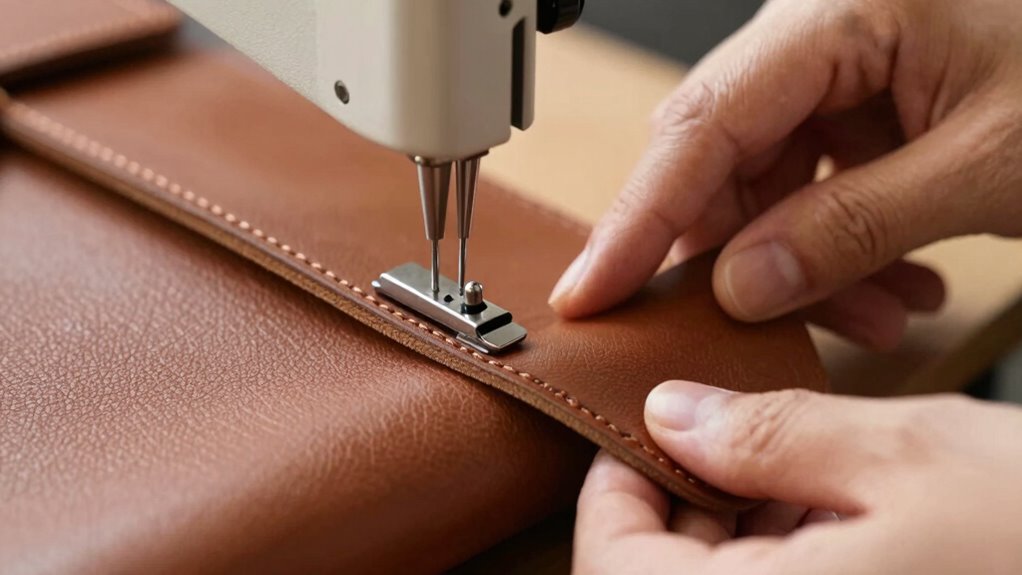
Leather skiving is an essential skill for sewists looking to create professional-quality projects, as it allows you to thin and shape leather precisely where needed. When you’re working on bags, clean edges are critical for both aesthetics and durability. Skiving helps you achieve those smooth, seamless joins that elevate your craftsmanship. To do this effectively, you need to understand proper leather care and sewing techniques, which guarantee your edges are neat and your stitches are strong.
Leather skiving ensures clean, seamless edges for professional, durable, and polished leather projects.
First, it’s important to handle your leather with care before skiving. Leather can be delicate or stiff depending on its type, so assess its thickness and flexibility. Use leather-specific tools like a skiving knife or rotary cutter for controlled, precise cuts. These tools let you thin the leather gradually, avoiding accidental tears or uneven edges. Always keep your blades sharp, because dull blades can cause uneven skiving and damage the leather’s surface. Proper leather care also involves keeping your workspace clean and free of debris that might scratch or mar the leather during the process. Additionally, understanding the properties of different leather types can help you choose the right skiving techniques for each project. Being aware of how different leathers respond to skiving can make your process more efficient and your results more professional.
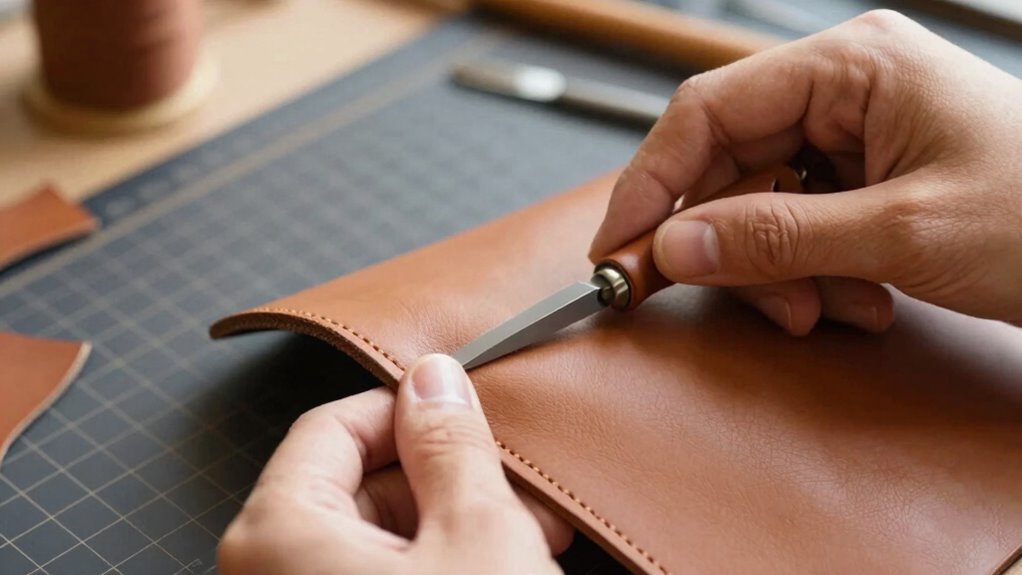
When you begin skiving, focus on the area where two pieces will meet or where you want a more refined edge. Light, controlled strokes are better than heavy cuts, as they give you more control and reduce the risk of mistakes. Consistent pressure helps you maintain an even thickness, which is vital for sewing techniques that require precise seam allowances. As you work, keep the leather flat and stable, using a cutting mat or a smooth, firm surface. This stability guarantees cleaner cuts and minimizes the risk of slipping. Using proper tools and techniques can significantly improve the quality of your skiving results.
Incorporate your sewing techniques by gradually reducing the leather’s thickness at the edges, creating a smooth transition that’s easier to sew. This not only improves the appearance but also prevents bulk and puckering in your finished project. When sewing, use the appropriate needle and thread designed for leather, and consider techniques like saddle stitching for durability. The skived edges should be pressed or burnished if necessary, to further smooth out the surface and prepare it for assembly. Properly skived edges also make it easier to assemble leather projects neatly and securely, enhancing your overall craftsmanship.
As an affiliate, we earn on qualifying purchases.
Frequently Asked Questions
What Types of Leather Are Best for Skiving?
You should choose soft, thin leathers like lamb or goat for skiving, as they’re easier to work with for cleaner edges. Leather thickness options ranging from 0.6mm to 1.2mm work best, ensuring smooth skiving results. Consider leather finishing techniques such as burnishing or edge painting afterward to enhance the appearance. Thicker or stiffer leathers may be more challenging, but thinner options give you cleaner, more professional-looking edges.
Can Skiving Be Done With a Regular Craft Knife?
Is a craft knife the sword you want for skiving? Probably not. While it might seem convenient, using a craft knife for skiving compromises craft knife safety and control, risking uneven edges or injury. Instead, consider alternative skiving tools like a dedicated skiving knife or rotary cutter, which give you cleaner, more precise results. These tools are designed for leather, making your work safer and more professional.
How Do I Prevent Leather From Stretching During Skiving?
To prevent leather from stretching during skiving, you should reinforce the edges with a stiffener or edge reinforcement product before skiving. This helps maintain shape and reduces stretching. Also, adjust the thickness carefully by skiving gradually, rather than all at once, to avoid over-thinning. Keep the leather taut and steady during the process, ensuring even skiving and minimal distortion, which results in cleaner, more professional bag edges.
Is Skiving Suitable for All Leather Thicknesses?
Skiving isn’t suitable for all leather thicknesses. Thinner leathers, like 1-2 mm, respond well to standard skiving techniques, while thicker leathers require specialized skiving technique variations, such as using a heavier-duty blade or adjusting your cutting angle. Leather thickness compatibility depends on your tools and skill level. For extremely thick or rigid leathers, consider alternative methods to achieve clean edges, ensuring your work remains precise and professional.
How Do I Clean and Maintain My Skiving Tools?
To keep your skiving tools in top shape for leather edge finishing, regularly clean and inspect them for debris or rust. Use a soft cloth or brush to remove dust, and apply a light oil to prevent corrosion. Sharpen your tools as needed, maintaining proper tool sharpening maintenance. This guarantees precise cuts, smooth skiving, and prolongs the lifespan of your tools, making your leather projects cleaner and more professional.
Conclusion
Mastering leather skiving sharpens your edges, smooths your seams, and elevates your craftsmanship. It’s about precision, patience, and practice—each cut, each careful move bringing you closer to perfection. When you skive with intention, you create bags that are cleaner, stronger, and more professional. Embrace the technique, refine your skills, and let your attention to detail transform your projects. In skiving, in craftsmanship, in every stitch—your mastery grows, and your designs become truly exceptional.
Fall yard work Picks
leaf blowers
As an affiliate, we earn on qualifying purchases.