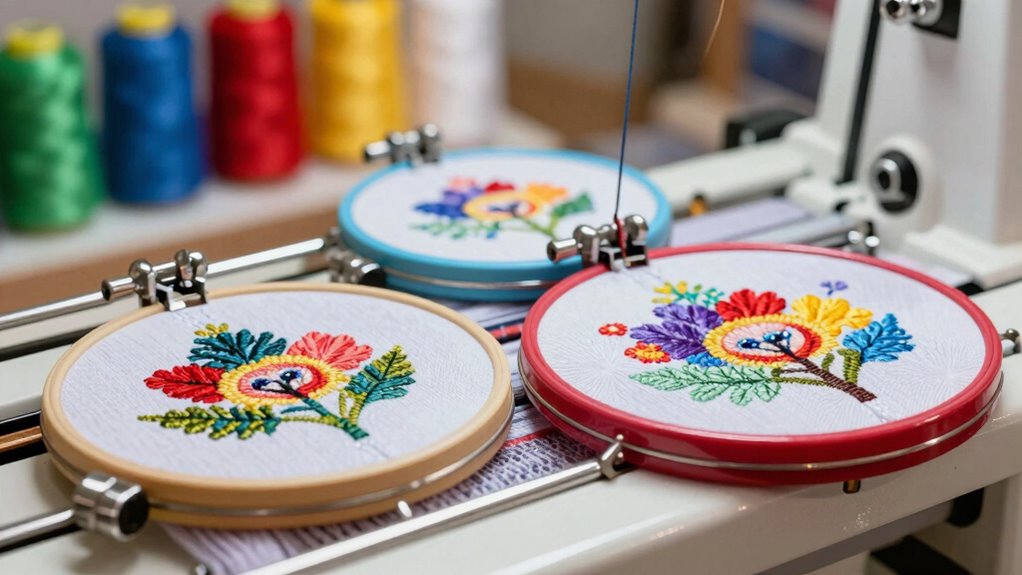

When choosing an embroidery machine, focus on hoop size that fits your typical projects and workspace. Smaller hoops are great for quick, detailed work, while larger hoops handle big, intricate designs efficiently. Don’t get swayed by marketing hype—consider your needs for tension adjustments, needle compatibility, and machine maintenance. Selecting based on real project requirements ensures better results and fewer frustrations. Keep exploring to discover more ways to make an informed, confident decision.

Get business pricing on tools and workshop supplies
- Business-only prices and quantity discounts
- Tax-exempt purchasing
- Multiple users, one account, clear invoices
Key Takeaways
- Assess your typical project sizes to select a hoop that matches your embroidery needs and workspace constraints.
- Prioritize machine features like tension adjustment and needle compatibility over marketing claims about hoop size.
- Choose a machine with adjustable tension settings for different hoop sizes to ensure consistent stitch quality.
- Consider maintenance and compatibility of machine features to prevent issues like thread breakage or skipped stitches.
- Focus on overall workflow, project complexity, and proper hoop size selection for professional, high-quality results.
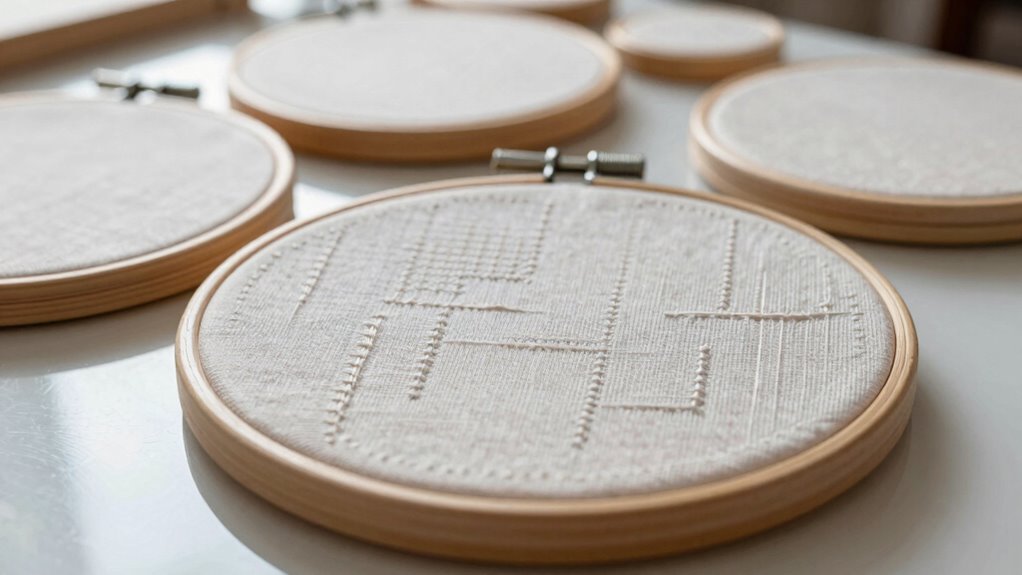
As you evaluate different machines, keep in mind that the hoop size directly impacts how you handle thread tension and needle selection. Larger hoops often require more careful attention to thread tension to prevent puckering or uneven stitches, especially when working with multiple layers or dense designs. Conversely, smaller hoops tend to be more forgiving, but you still need to guarantee your machine’s thread tension is correctly calibrated to achieve smooth, professional results. Proper thread tension prevents issues like skipped stitches or thread breakage, which can be frustrating if you’re working on detailed projects. Additionally, proper maintenance of your embroidery machine and understanding its tension adjustments are key to consistent quality. Needle selection is equally critical when considering hoop size. Larger hoops may require longer or specialized needles, especially if you’re working with thicker threads or specialty fabrics. You want to choose needles that match your project’s material and thread type to avoid damage or skipped stitches. The compatibility between needle type, thread tension, and hoop size plays a significant role in producing high-quality embroidery. Instead of being swayed by marketing hype, focus on how the hoop size aligns with your projects and workspace. Think about what you want to create most often. If you frequently work on small designs or have limited space, a machine with a smaller hoop makes sense. If you’re tackling large, elaborate projects, investing in a machine with a bigger hoop size will save you time and frustration. Keep in mind that a larger hoop may also mean investing in better thread tension adjustments and a broader range of compatible needles. It’s also helpful to consider the compatibility of machine features with your specific projects to ensure seamless operation. Additionally, understanding the impact of hoop size on your overall workflow can help you make a more informed decision. Being aware of the thread tension adjustments necessary for different hoop sizes can significantly improve your embroidery outcomes. Moreover, selecting the right hoop size based on your project complexity can help you achieve more precise and professional results. By prioritizing hoop size based on your project needs rather than hype, you guarantee your investment will serve you well and help you produce professional-quality embroidery every time.
As an affiliate, we earn on qualifying purchases.
Frequently Asked Questions
Can Hoop Size Limit My Embroidery Design Options?
Yes, hoop size can limit your embroidery design options, especially if your design exceeds the hoop’s dimensions. You might need to adjust thread tension or slow down embroidery speed to guarantee quality and prevent puckering. Smaller hoops restrict larger designs, so selecting a machine with a versatile hoop size allows more creative freedom. Proper tension and controlled speed help maintain precision within the size constraints, making your embroidery projects smoother.
Are Larger Hoops Suitable for All Fabric Types?
Larger hoops aren’t suitable for all fabric types because they require better fabric stability and consistent thread tension. When working with delicate or stretchy fabrics, you might struggle with puckering or uneven stitches in bigger hoops. To guarantee quality results, stabilize your fabric properly and adjust thread tension accordingly. If your fabric isn’t stable enough, smaller hoops might be better, preventing distortion and making embroidery easier.
How Does Hoop Size Affect Embroidery Precision?
Like a fine-tuned orchestra, hoop size influences embroidery precision. A larger hoop demands careful thread tension adjustments and precise hoop alignment to prevent puckering or misalignment. If you neglect these details, your stitches may drift off course, akin to a symphony out of tune. Smaller hoops allow for more control, but larger hoops can handle bigger designs if you maintain proper tension and alignment, ensuring crisp, accurate results.
Is a Bigger Hoop Always Better for Beginners?
A bigger hoop isn’t always better for beginners because it can make your machine less portable and slow down embroidery speed. Larger hoops might handle bigger projects, but they also add weight and complexity, which can be overwhelming if you’re just starting out. Instead, choose a hoop size that balances ease of use, machine portability, and embroidery speed, helping you learn without feeling frustrated or weighed down.
Can I Upgrade an Embroidery Machine’s Hoop Size Later?
Yes, you can upgrade an embroidery machine’s hoop size later, but it depends on the machine’s hoop compatibility. Check if your model supports larger hoops or if adapters are available. Keep in mind, upgrading might affect machine portability, so consider how a bigger hoop impacts ease of use and transport. Always verify compatibility before investing in larger hoops to guarantee smooth operation and future expansion.
Conclusion
So, when you’re eyeing that perfect embroidery machine, remember it’s not just about the hype but about what fits your needs—especially hoop size. Would you rather be limited by a machine that can’t handle your biggest designs or embrace one that grows with your creativity? Think of your projects as a canvas; choosing the right hoop size is like picking the perfect frame. After all, isn’t your artistry worth the best fit?
Fall Picks
fall essentials
As an affiliate, we earn on qualifying purchases.