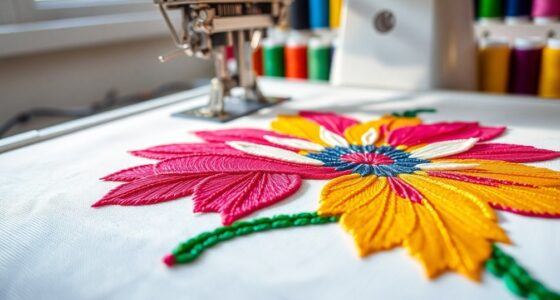
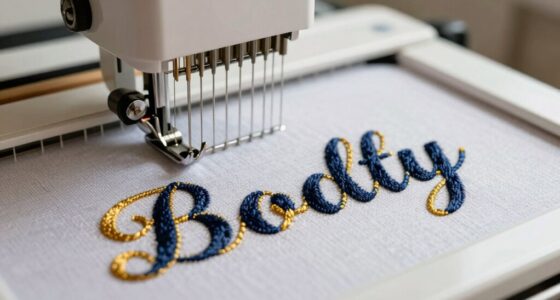
Thread conditioning isn’t always necessary, but it can make a big difference in smoother sewing, especially if your thread feels dry, stiff, or tangles easily. By adding a conditioner or wax, you reduce breakage, tangling, and puckering, leading to cleaner stitches. It’s most helpful when working with delicate fabrics or complex projects. To get the best results, learn when and how to condition properly—if you want to improve your sewing experience and finish professional-looking projects, this guide will show you how.

Get business pricing on tools and workshop supplies
- Business-only prices and quantity discounts
- Tax-exempt purchasing
- Multiple users, one account, clear invoices
Key Takeaways
- Thread conditioning reduces tangles, breaks, and uneven stitches, especially for stiff or dry threads.
- It is most beneficial for delicate fabrics, heavy materials, or complex sewing projects requiring smooth thread flow.
- Proper conditioning involves applying a small amount of conditioner or wax and distributing it evenly by working the thread.
- Not all threads need conditioning; over-conditioning can weaken lightweight or delicate threads.
- Regular conditioning improves thread performance, reduces machine lint, and helps maintain consistent stitch quality.
As an affiliate, we earn on qualifying purchases.
What Is Thread Conditioning and Why Does It Matter?
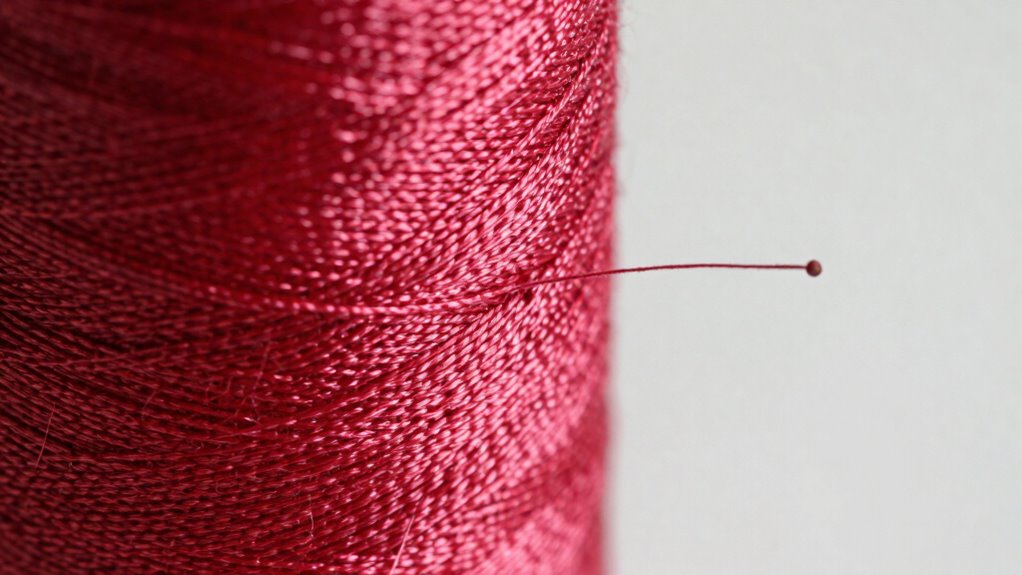
Have you ever wondered why some sewing projects turn out smoother and more professional-looking than others? The key often lies in understanding thread conditioning. It’s about preparing your thread so it flows smoothly from the spool, reducing tangles and uneven stitches. Proper spool storage helps keep thread organized and prevents it from unraveling or becoming damaged. When choosing thread color, selecting the right type and quality can make a noticeable difference in how well your stitches hold and how neat your project looks. Thread conditioning isn’t just about maintenance; it’s about ensuring your thread performs at its best. When your thread is properly conditioned, it glides effortlessly through fabric, giving you cleaner seams and a more polished finish. Additionally, using the correct airless paint sprayer can significantly improve your painting projects by providing a smooth and professional finish. Proper thread storage methods can extend the lifespan of your thread and maintain its quality over time. Understanding thread quality and selection can be just as important as the conditioning process, especially considering how pinball machines incorporate advanced technology to enhance gameplay and durability. Moreover, using high-quality thread can reduce breakage and improve overall sewing efficiency.
How Do You Know When Your Thread Needs Conditioning?
Knowing when your thread needs conditioning can save you from frustrating sewing setbacks. If you notice uneven stitches or puckering, it might be a sign your thread isn’t gliding smoothly through the fabric. Check your thread tension—if it’s too tight or too loose, your stitches won’t look neat, indicating a need for conditioned thread. Also, consider your sewing machine maintenance; a well-maintained machine with clean, properly lubricated parts tends to handle unconditioned thread better. When you experience frequent snags, skipped stitches, or inconsistent tension, it’s time to condition your thread. Properly conditioned thread reduces friction and improves thread flow, resulting in smoother sewing and fewer troubleshooting headaches. Regularly evaluating tension and machine maintenance helps you determine when conditioning is necessary. Additionally, understanding the importance of energetic alignment can help you create a more harmonious sewing environment, reducing stress and enhancing your overall experience.
Benefits of Conditioning Thread for Different Fabrics and Projects

Conditioning your thread offers significant benefits when working with various fabrics and projects, ensuring smoother sewing and better results. For delicate fabrics like silk or lightweight cotton, conditioned thread reduces friction, preventing puckering and ensuring even stitches. When matching thread color to fabric, conditioning helps achieve seamless blending by improving thread flow and reducing breakage. For heavy or textured fabrics like denim or canvas, conditioned thread provides extra strength and smoothness, making sewing easier and more precise. Regularly conditioning your thread also supports sewing machine maintenance by decreasing lint buildup and thread breakage. This practice can also help in preventing thread tangling, which is common during complex sewing tasks. Additionally, proper thread tension is crucial for optimal sewing quality and preventing thread-related issues. Maintaining a consistent thread lubrication can further enhance sewing performance. Incorporating thread conditioners into your sewing routine ensures your projects run smoothly from start to finish, saving time and frustration. Overall, conditioning enhances your sewing experience, especially across diverse fabrics and projects, giving you professional-looking results with less hassle.
Which Thread Conditioners Are Best and How Do You Use Them?
Choosing the right thread conditioner can make a noticeable difference in your sewing projects. To boost fiber strength and preserve color, opt for conditioners designed for your thread type. For example, beeswax or silicone-based conditioners work well on natural fibers, while synthetic threads may benefit from lighter sprays. When applying, hold the thread taut and evenly coat it without oversaturating. Proper application can help prevent fraying and extend the life of your thread, especially when working with Suprem fabric, which offers enhanced durability. Below is a quick guide:
| Conditioner Type | Best For | Key Benefit |
|---|---|---|
| Beeswax | Cotton, linen | Improves fiber strength |
| Silicone spray | Polyester, nylon | Enhances smoothness |
| Thread conditioner spray | All fibers | Preserves color and prevents fraying |
| Liquid wax | Silk, fine threads | Adds lubrication |
| Teflon-based | Heavy-duty sewing | Maintains fiber integrity |
Choose the conditioner suited to your project and apply carefully for ideal results.
Signs That Your Thread Could Use Some Conditioning
If your thread feels brittle or frays easily as you sew, it’s a clear sign it could benefit from conditioning. When thread isn’t conditioned, its durability decreases, making it more prone to breaking and tangling. You might notice uneven sewing tension, with stitches puckering or skipping stitches altogether. This inconsistency suggests the thread isn’t gliding smoothly through your fabric, which can be corrected with conditioning. Additionally, unconditioned thread may produce more lint and fraying over time, reducing overall thread lifespan. If you find yourself constantly adjusting tension or dealing with frequent thread breakage, it’s likely time to condition your thread. Proper conditioning improves thread flexibility and strength, leading to smoother sewing and better overall durability.
How to Properly Condition Your Thread Step-by-Step

To properly condition your thread, start by gathering the necessary materials: a small bowl of water, a mild soap or thread conditioner, and a clean cloth. Dip the thread into the water or apply a small amount of conditioner, coating it evenly. Gently work the thread between your fingers to distribute the conditioner and remove any excess moisture. As you do this, check your thread tension to ensure it remains balanced for smooth sewing. Proper conditioning reduces friction and helps prevent tangles, ultimately supporting sewing machine maintenance. Additionally, understanding the importance of thread lubrication can further enhance your sewing experience. Also, ensuring your workspace is well-lit and clutter-free can improve safety and efficiency while sewing and conditioning your thread. When selecting materials for conditioning, choosing sustainable options can align with eco-friendly practices. After conditioning, let the thread dry slightly before loading it onto your machine. This step ensures your thread stays smooth and consistent, leading to even stitches and a more efficient sewing process. Incorporating regular maintenance routines can extend the lifespan of your sewing equipment and improve overall results. Maintaining home safety by ensuring your workspace is well-lit and clutter-free can also prevent accidents while sewing and conditioning your thread.
Tips for Achieving Tangle-Free, Smooth Sewing With Conditioned Thread

To keep your sewing smooth and tangle-free, start with proper thread storage techniques that prevent knots and frays. Using ideal conditioning methods guarantees your thread flows easily through the fabric, reducing snags. Additionally, choosing the right thread type for your project makes a big difference in achieving seamless, professional results. Simplify Your Decisions by understanding which tools and techniques best suit your sewing needs, including the importance of thread quality and maintenance for optimal performance. Proper thread storage also minimizes the need for extensive conditioning by keeping your thread in good condition from the start. Knowing how to select the appropriate electric bike speed can help you choose the most suitable bike for your riding style and safety requirements. Moreover, understanding the Gold IRA market can help you make informed investment choices for your retirement planning.
Proper Thread Storage Techniques
Proper thread storage is essential for keeping your sewing projects smooth and tangle-free. When you store your thread correctly, you prevent unnecessary tangles and reduce fiber breakage, helping preserve the thread’s quality. Use spools or bobbins to wind your thread neatly, avoiding loose ends that can cause knots. Keep your thread in a cool, dry place away from direct sunlight, which can weaken fibers over time. Consider using storage containers or organizers specifically designed for threads to prevent unwinding and tangling. Additionally, avoid stacking multiple spools in a way that can crush or deform them. Proper storage techniques help maintain fiber integrity and ensure your thread remains smooth and ready for sewing, giving you consistent, professional results every time.
Optimal Thread Conditioning Methods
Achieving smooth, tangle-free sewing results often depends on how well you condition your thread before starting. To optimize thread maintenance, start by unwinding a reasonable length of thread and lightly running it through your fingers to remove knots or tangles. Before sewing, ensure your sewing machine is properly lubricated, which helps reduce friction that can cause thread breakage or tangling. When conditioning your thread, consider applying a thread conditioner or a light wax to improve smoothness and reduce static. Always store your thread in a cool, dry place to prevent moisture buildup. Proper thread maintenance and regular sewing machine lubrication work together to keep your thread flowing smoothly, minimizing snags and tangles for a more effortless sewing experience.
Choosing Suitable Thread Types
Choosing the right thread type is vital for smooth, tangle-free sewing, especially when your thread is conditioned properly. Select a thread that matches your fabric and project needs, considering thread color to guarantee seamless blending or contrast. Using the correct thread tension is essential; too tight causes puckering, too loose results in skipped stitches. Proper personalized care and attention to detail can significantly improve your sewing results. Here’s a quick guide:
| Thread Type | Best For |
|---|---|
| Polyester | All-purpose, durable sewing |
| Cotton | Natural fibers, quilting |
| Nylon | Stretch fabrics |
| Silk | Fine, delicate projects |
Matching the thread type to your fabric and adjusting tension accordingly helps achieve smooth stitches and prevents tangling, making your sewing experience more enjoyable.
Should You Condition Your Thread Every Time? Final Considerations

Wondering whether you should condition your thread every time you sew? The answer depends on your project and the thread’s fiber preparation. If your thread feels dry or stiff, conditioning can improve flexibility and manageability. Regular conditioning helps maintain thread durability, preventing breakage and tangling during sewing. Additionally, understanding how filtration systems impact thread longevity can inform your maintenance routine. Proper thread storage also plays a role in preserving thread quality over time. Using appropriate storage conditions can significantly extend the lifespan of your thread. Proper thread tension during sewing can also influence how often conditioning is needed, as incorrect tension may cause undue stress on the thread. However, not every sewing task requires it; for lightweight or delicate fabrics, over-conditioning might weaken the thread. Consider the fiber type and your specific needs before deciding. If you notice increased smoothness and reduced friction after conditioning, it’s worth doing consistently. Ultimately, conditioning is a helpful step to enhance thread performance and longevity, but it’s not always necessary. Use your judgment based on the thread’s condition and the demands of your project.
Frequently Asked Questions About Thread Conditioning
What are the most common questions people have about thread conditioning? Many wonder if it improves thread color matching, making stitches look more consistent. Others ask if it reduces tangling and breakage during sewing, especially with delicate fabrics. A key concern is whether thread conditioning affects sewing machine maintenance—does it keep your machine running smoothly or cause buildup? You might also wonder how often to condition your thread for ideal results. The truth is, conditioning can help with smoother sewing and better color matching, but it’s not always necessary. If you sew frequently or with specialty threads, it’s worth considering. Just remember, proper sewing machine maintenance is essential regardless of whether you condition your thread, ensuring longevity and ideal performance.
Frequently Asked Questions
Can Thread Conditioning Improve Sewing Speed or Only Quality?
Thread conditioning can improve both sewing speed and quality. It helps reduce thread slack, making stitches more consistent, which speeds up your work. Proper tension adjustment becomes easier when the thread is conditioned, preventing snags or breakage. By maintaining smooth, well-conditioned thread, you can sew faster without sacrificing stitch quality. So, yes, thread conditioning benefits your sewing speed as well as the overall quality of your finished project.
Is There Any Risk of Damaging Thread With Over-Conditioning?
Over-conditioning your thread is like overwatering a delicate plant; it can lead to thread weakening and residue buildup. While a little conditioning helps, too much might make your thread fragile or cause it to slip, risking damage. Keep your conditioning moderate, and you’ll prevent potential issues, ensuring smooth sewing without risking thread integrity. Balance is key to achieving perfect results without unintended consequences.
Does Thread Conditioning Work Equally Well With All Thread Types?
Thread conditioning works best when tailored to your thread’s fiber compatibility and specific conditioning techniques. Not all thread types respond equally; for example, polyester and nylon often benefit more than natural fibers like cotton or silk. To get ideal results, choose conditioning techniques suited for your thread’s material. Always test on a small section first, ensuring the conditioner enhances rather than damages your thread’s integrity.
How Long Does Conditioned Thread Stay Effective During Sewing?
Conditioned thread typically stays effective for several sewing sessions, depending on factors like storage and handling. The conditioning improves thread longevity by enhancing moisture retention, which helps prevent fraying and tangling during use. To maximize benefits, keep your conditioned thread in a sealed container away from moisture and dust. With proper care, your thread remains smooth and manageable, ensuring consistent sewing quality across multiple projects.
Can Homemade or DIY Thread Conditioners Be as Effective as Commercial Products?
Think of homemade thread conditioners as a gentle whisper from nature, promising to protect your fibers while caring for the environment. While they can be effective, commercial products often undergo rigorous testing, ensuring fiber safety and consistent results. DIY options may vary in quality, potentially impacting fiber safety and environmental impact. For reliable, safe conditioning, it’s best to choose proven commercial products, but if you craft your own, prioritize natural, eco-friendly ingredients.
Conclusion
Now that you know when and how to condition your thread, you’ll sew smoother and more confidently. Do you really want your thread breaking or tangling mid-stitch? Proper conditioning can make all the difference, saving you time and frustration. So, next time you start sewing, ask yourself: is your thread ready for the task? With the right prep, you’ll enjoy flawless stitches every time.
Halloween Picks
halloween
As an affiliate, we earn on qualifying purchases.