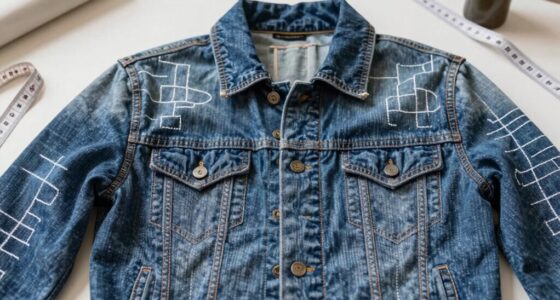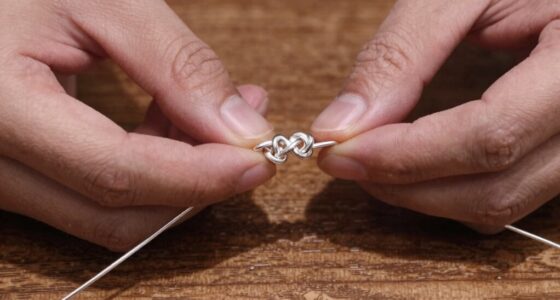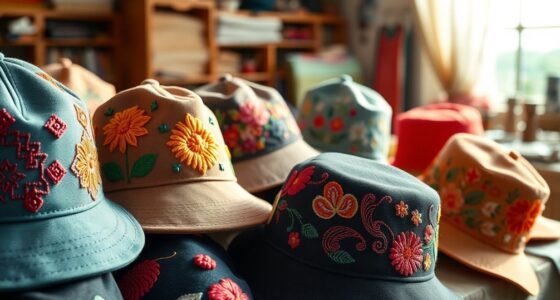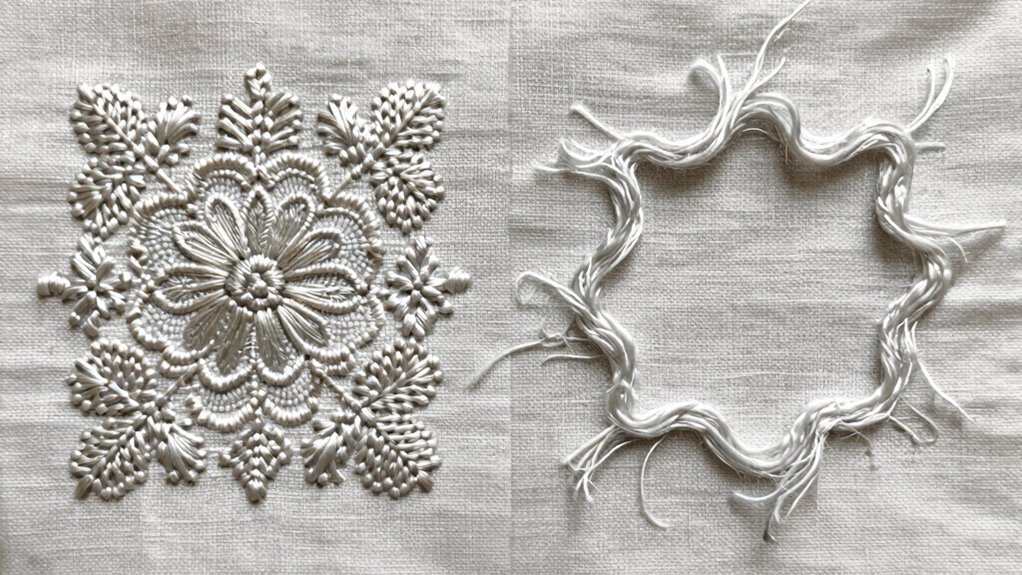
Why some embroidery designs stitch beautifully while others collapse often comes down to your tension, fabric stability, and design complexity. If your tension is properly adjusted and fabric is securely stabilized, stitches stay even and neat. Intricate patterns need extra support to prevent puckering or distortion. Using the right stabilizer and ensuring fabric is taut can make a big difference. Keep these tips in mind, and you’ll discover how to achieve flawless embroidery every time.

Get business pricing on tools and workshop supplies
- Business-only prices and quantity discounts
- Tax-exempt purchasing
- Multiple users, one account, clear invoices
Key Takeaways
- Proper thread tension ensures even stitches and prevents puckering or gaps, influencing overall design quality.
- Using appropriate stabilizers maintains fabric stability, reducing puckering and preventing stitch collapse.
- Complex designs require stable fabric, correct tension, and proper stabilization to avoid bunching or thread breakage.
- Incorrect tension settings or unsuitable fabric choices can lead to tangled, uneven, or collapsed stitches.
- Maintaining fabric tautness and matching stabilizers to materials enhances stitch precision and professional appearance.

When choosing embroidery designs, it’s essential to select patterns that stitch smoothly and reliably, ensuring your finished project looks polished and professional. The success of a design often hinges on how well your machine handles the pattern during stitching. Two critical factors that influence this are thread tension and fabric stability. If either of these isn’t set correctly, even a beautiful design can turn into a tangled mess or a collapsed stitch.
Thread tension plays a vital role in achieving even, consistent stitches. Too tight, and the stitches pull too tightly, causing puckering or the design to distort. Too loose, and the stitches become loose or uneven, leading to gaps or unraveling. Adjusting thread tension appropriately for your fabric and thread type is crucial. Many embroidery machines allow you to fine-tune tension settings, but you should also check your thread path for any snags or misalignments. Proper tension ensures the thread flows smoothly through the needle, creating clean, uniform stitches that enhance the design’s appearance.
Fabric stability is equally important. If your fabric shifts or puckers during stitching, the design will not stitch out as intended. Using a stabilizer is essential—whether it’s tear-away, cut-away, or water-soluble—depending on your project. Securing the fabric tightly in your hoop prevents movement, which can cause misalignment or collapsed stitches. Before starting, make sure the fabric is taut and evenly stretched in the hoop. If the fabric is too flimsy or stretchy, the stitches won’t hold their shape, leading to distortion. Additionally, fabric types can influence how well your design stitches; some materials may require specific stabilizers or additional reinforcement to maintain their structure throughout the sewing process. Choosing the right stabilizer can significantly improve your embroidery results and prevent issues like collapsing stitches. It’s also beneficial to consider the design complexity, as overly intricate patterns may require extra stabilization or tension adjustments to stitch out successfully.
Another factor that influences whether a design stitches well or collapses is how compatible your pattern is with your machine’s capabilities. Some intricate designs require a certain level of stability and tension control that not all machines can provide. If a pattern is overly dense, it may cause the thread to break or the stitches to bunch up, especially if the tension isn’t properly calibrated or the fabric isn’t stable enough. In contrast, simple, well-designed patterns tend to stitch out smoothly when your machine is correctly set up.
Ultimately, the key to beautiful embroidery lies in the interplay of thread tension, fabric stability, and choosing designs suited for your equipment. When all these elements are managed properly, your embroidery projects will come out crisp, even, and professional-looking every time. Additionally, understanding the importance of machine capabilities can help you select patterns that will consistently produce excellent results.
embroidery stabilizer for fabric
As an affiliate, we earn on qualifying purchases.
As an affiliate, we earn on qualifying purchases.
Frequently Asked Questions
How Does Fabric Type Affect Embroidery Stitch Quality?
Your fabric type greatly impacts embroidery stitch quality through its flexibility and thread absorption. If your fabric is too stiff or too loose, stitches may skip or bunch, causing uneven results. Fabric that absorbs thread well, like cotton, helps stitches stay even and vibrant. Conversely, fabrics with poor thread absorption or excessive stretch can cause stitches to collapse or distort, so choosing the right fabric guarantees your embroidery looks polished and professional.
Can Thread Quality Influence the Durability of Embroidery?
Yes, thread quality considerably influences embroidery durability. High-quality thread offers better thread strength, ensuring your stitches hold up over time and resist breaking. Additionally, choosing the right thread color enhances the design’s visual appeal, but it doesn’t affect durability directly. Using strong, colorfast threads helps your embroidery last longer, maintains vibrant colors, and prevents fraying or unraveling, giving your project a professional and lasting finish.
Do Machine Settings Impact Stitch Consistency?
Absolutely, your machine settings are the puppeteers of stitch consistency. When you tweak thread tension just right and pick a needle suited for your fabric, your embroidery becomes a symphony rather than a chaotic mess. Neglect these settings, and your project might resemble a toddler’s scribble. So, yes, machine settings wield the power—adjust them wisely to keep your stitches flawless and your design proud.
How Does Design Complexity Affect Stitching Results?
Design complexity directly impacts stitching results because intricate designs often require precise stitch tension to prevent issues like collapsing or distortion. When you work with highly detailed or dense patterns, you need to adjust stitch tension carefully, ensuring stitches are neither too tight nor too loose. If tension isn’t properly set, complex designs may not stitch out smoothly, resulting in uneven or collapsed embroidery. Proper tension control is key to achieving flawless results in intricate designs.
Are There Specific Tools That Improve Embroidery Precision?
Yes, there are specific tools that improve embroidery precision. You should focus on digital precision tools, like computerized embroidery machines, which guarantee consistent stitching. Regular tool calibration is essential; it keeps your machine running accurately and prevents errors. Using high-quality stabilizers and sharp needles also boosts precision, ensuring your designs come out neat and professional. These tools and practices help you achieve better results consistently.
Conclusion
When an embroidery design stitches beautifully, it’s like a perfectly sung melody—smooth, harmonious, and satisfying. But when it collapses, it’s a jarring dissonance, ruining the entire piece. Your choice of design, stabilizer, and stitch settings can turn chaos into art. So, embrace the challenge of balancing precision and creativity, because in embroidery, what collapses or shines ultimately reflects your skill and patience. Keep stitching with care, and your designs will always speak beautifully.
Fall yard work Picks
leaf blowers
As an affiliate, we earn on qualifying purchases.