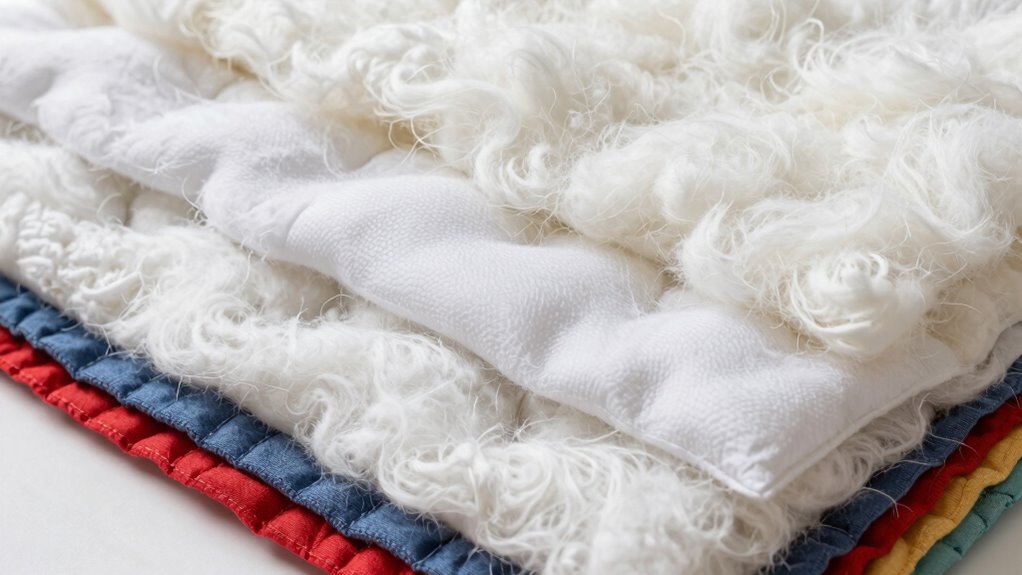
Choosing the right batting depends on your project, whether it’s a bag, quilt, or garment. Cotton, polyester, wool, and fusible fleece each offer different qualities like warmth, softness, or structure. For machine quilting, low-loft battings work best, while hand projects benefit from easier-to-manipulate options like cotton or wool. Understanding these options helps you get the look and durability you want. Keep exploring, and you’ll discover how each type can enhance your craft.
Key Takeaways
- Different batting types (cotton, polyester, wool, fusible fleece) suit specific projects like bags, quilts, or garments.
- Low-loft battings are ideal for machine quilting, providing a smooth surface and ease of maneuvering.
- Cotton batting offers breathability and natural feel, perfect for garments and heirloom quilts.
- Wool batting adds warmth and compressibility, suitable for cozy quilts and heirloom projects.
- Fusible fleece provides structure with minimal bulk, ideal for bags and structured garments.
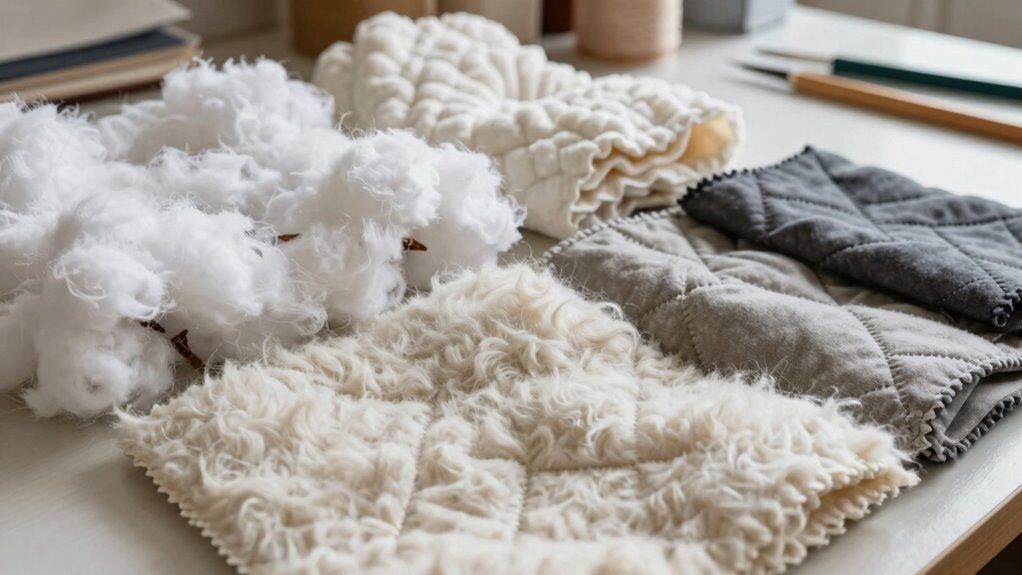
Have you ever wondered what different batting styles mean and how they influence your game? When it comes to quilting, batting is the layer of insulation that provides warmth, dimension, and structure to your project. Understanding the types of batting available can help you choose the best option for bags, quilts, or garments, ensuring your finished piece looks and feels just right. Two common methods of quilting—machine quilting and hand quilting—interact differently with various batting types, so knowing the differences can make a real difference in your craftsmanship.
Machine quilting is popular because it allows you to cover large areas quickly and with consistent stitches. When you work with machine quilting, lighter, low-loft batting options like cotton or polyester blends often work best. These battings are easier to maneuver under a sewing machine’s needle, especially if you’re quilting a complex pattern or a large quilt. They lay flat and provide a smooth surface, making it easier to achieve even stitches and prevent puckering. If you’re making a quilt intended for everyday use or for gifting, machine quilting with a medium or low-loft batting can give you professional results without a lot of fuss. On the other hand, if you’re creating a quilt that’s meant to be ultra-soft and plush, a thicker batting might be tempting, but keep in mind that it can be more challenging to machine quilt smoothly, especially for beginners.
Lighter, low-loft batting like cotton or polyester blends is ideal for smooth, even machine quilting on large projects.
Hand quilting offers a different experience and often calls for batting that’s slightly different in texture and loft. When you hand quilt, you typically prefer batting that’s easy to manipulate and doesn’t shift too much as you work. Cotton batting is a favorite because it’s natural, breathable, and easy to work with, making it a good choice for traditional hand quilting. Wool batting is another excellent option, especially for heirloom projects, since it offers warmth and a lovely drape, and it tends to compress nicely under hand stitches. If you’re making a bag or a garment, lightweight batting—such as fusible fleece or thin cotton—can add structure without bulk, helping your item maintain its shape while remaining comfortable to wear or carry. Additionally, selecting appropriate batting for your project can influence how well your project withstands use and washing, making it an important factor to consider. Moreover, choosing batting with the right loft and texture can improve the overall durability and aesthetic of your finished piece. Knowing more about batting options can help you select the best material to match your specific needs.
Choosing the right batting depends on your project’s purpose, your quilting method, and the look and feel you want to achieve. Whether you’re machine quilting or hand quilting, the right batting can elevate your work, giving it durability, softness, and beauty. Also, batting selection can influence how well your project withstands use and washing, making it an important factor to consider. So, next time you start a project, take a moment to consider which batting type aligns best with your technique and goals. Your finished piece will thank you.
As an affiliate, we earn on qualifying purchases.
Frequently Asked Questions
How Do I Choose the Right Batting for My Project?
To choose the right batting for your project, consider the batting thickness and insulation properties you need. Thicker batting offers more warmth and padding, ideal for quilts and winter garments, while thinner options suit bags and lightweight projects. Think about how much insulation you want and the project’s final look. You’ll want to select a batting that balances comfort, warmth, and your desired appearance, making your project both functional and beautiful.
Can Batting Be Washed or Cleaned Easily?
Did you know that most batting can be washed? Yes, washing batting is quite manageable—just check the label first. For batting cleaning, use gentle cycles with cold water and avoid high heat to prevent damage. Some battings are washable and even dryable, making them easy to maintain. Always follow manufacturer instructions to keep your project looking fresh. Washing batting is simple when you select the right type!
What Is the Best Batting for Winter Quilts?
For winter quilts, you want batting with excellent insulation properties and thermal retention. Wool batting is ideal because it naturally traps heat and keeps you warm, even when damp. Polyester batting is also a good choice; it’s lightweight, maintains warmth well, and is easy to care for. Both options provide the insulation needed for cold nights, ensuring your quilt keeps you cozy throughout the winter.
How Do Batting Types Affect the Durability of Garments?
Batting fiber composition and batting thickness directly influence garment durability. Thicker batting may add warmth but can cause wear and tear over time, especially with frequent washing. Natural fibers like cotton often withstand washing better than synthetic ones, which might degrade faster. You might find that a balanced batting thickness and durable fiber composition extend your garment’s lifespan, making it more resistant to pilling, stretching, or breaking down with regular use.
Are There Eco-Friendly Batting Options Available?
Yes, eco-friendly batting options are available. You can choose batts made from organic fibers, like organic cotton or bamboo, which are grown without harmful chemicals. Recycled materials, such as polyester made from plastic bottles, also offer sustainable choices. These options reduce environmental impact and are safe for your projects. Switching to organic or recycled batting helps you create eco-conscious garments, bags, and quilts without sacrificing quality or durability.
Conclusion
Choosing the right batting can truly transform your sewing projects, whether you’re making bags, quilts, or garments. Did you know that the global quilting market is expected to reach $7.3 billion by 2028? That shows how much people love creating with quality batting. So, pick the right type for your project, and enjoy the cozy, durable, or stylish results you’ll love. Your next masterpiece is just a stitch away!