
To turn old jeans into structured organizer pockets, start by selecting sturdy denim and reinforce the fabric with interfacing or extra layers to prevent tearing. Cut pockets with seam allowances, then attach fusible interfacing for added stiffness. Sew around the edges with strong stitches, reinforce stress points, and add dividers inside for organization. Finally, secure the pockets onto a durable backing like canvas or wood. Keep going to discover more tips for creating a sturdy, eco-friendly organizer.

Get business pricing on tools and workshop supplies
- Business-only prices and quantity discounts
- Tax-exempt purchasing
- Multiple users, one account, clear invoices
Key Takeaways
- Select sturdy denim and reinforce with interfacing or additional layers for durability and structure.
- Cut and reinforce pockets with seam allowances, fusible interfacing, and secure stitching for long-lasting use.
- Attach pockets firmly to a sturdy backing, reinforcing stress points and double-stitching for stability.
- Add internal dividers or compartments using denim strips or interfacing to organize items inside pockets.
- Finish with eco-friendly materials, securing all seams, and creating a stable, stylish storage organizer.

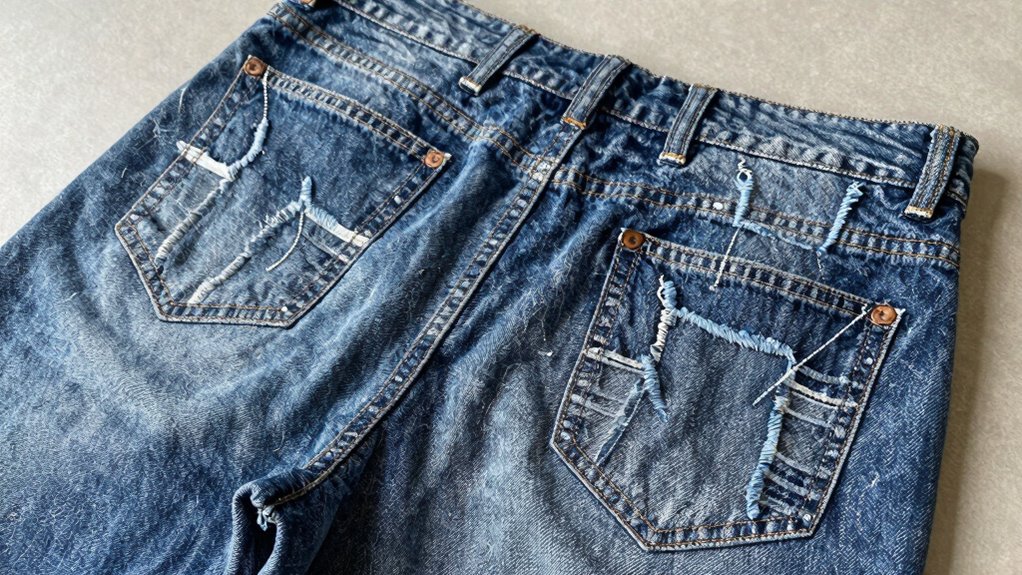
If you have old jeans sitting unused in your closet, you can breathe new life into them by transforming them into functional organizer pockets. This project is a perfect example of upcycling techniques that give your worn-out jeans a fresh purpose while reducing waste. To start, choose jeans with sturdy fabric, as this will help guarantee your pockets hold their shape over time. The key is to focus on fabric reinforcement; you want your pockets to be durable, especially if you plan to store heavier items. Reinforcing the fabric with interfacing or additional layers of denim can prevent tearing and stretching, making your organizer long-lasting.
Begin by cutting out the pocket shapes from the jeans, making sure to leave extra fabric around the edges for seam allowances. When cutting, pay attention to the natural seams of the jeans—they can be incorporated into your design for added strength and aesthetic appeal. Once cut, use upcycling techniques like zigzag or straight stitching along the edges to prevent fraying. To enhance durability, consider applying fabric reinforcement, such as fusible interfacing, to the back of the pockets before sewing them onto your organizer base. This step adds stiffness and prevents the fabric from sagging or becoming misshapen over time.
Cut pockets with seam allowances, incorporate natural seams, and reinforce with interfacing for durability and style.
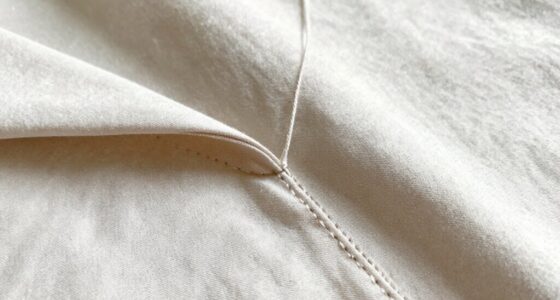
Next, think about how to attach your pockets securely. Sew around the edges using a strong stitch, ensuring that the seams are reinforced at stress points. Double-stitching at the top opening of each pocket will help prevent tearing when items are inserted or removed frequently. If you want extra stability, you can add a line of stitching across the bottom of the pocket or along the sides, especially if you plan to store heavier objects. As you sew, keep the fabric taut to maintain a clean, structured appearance, which is essential for an organized look.
Once all pockets are attached, consider adding dividers or extra reinforcement inside the pockets by sewing strips of denim or interfacing. This step creates compartments that keep items separated and prevent bulging. Additionally, understanding fabric reinforcement techniques can further improve the durability of your organizer. Finally, attach the finished pockets to a sturdy backing, such as a piece of canvas or an old wooden board, to create a structured organizer. The result is a practical, eco-friendly storage solution that repurposes old jeans into a stylish, durable organizer. With careful attention to upcycling techniques and fabric reinforcement, your project not only saves money but also contributes to sustainability by giving old jeans a new purpose.
As an affiliate, we earn on qualifying purchases.
Frequently Asked Questions
What Tools Are Needed for This Project?
You’ll need basic sewing tools like scissors, a sewing machine, and pins. For fabric reinforcement, consider adding fusible interfacing or strong interfacing material to keep the pockets sturdy. Use sewing techniques such as topstitching and zigzag stitches to reinforce seams and prevent fraying. A ruler or measuring tape will help you cut accurately. These tools and techniques guarantee your pockets are durable and well-constructed, transforming your old jeans into organized storage.
Can I Use Other Types of Denim Besides Old Jeans?
Think of fabric options as different flavors of ice cream; you don’t have to stick with just one. Yes, you can use denim alternatives like canvas, Cordura, or sturdy cotton for your organizer pockets. Each offers unique textures and durability, making your project more personalized. Just guarantee your fabric options are strong enough to hold your essentials and can be sewn easily, turning your vision into a functional, stylish organizer.
How Durable Are the Finished Organizer Pockets?
The finished organizer pockets are quite durable if you perform proper durability testing and reinforce the material. You should double-stitch the seams and add extra reinforcement at stress points to guarantee longevity. Using high-quality denim and sturdy thread also helps. When you follow these steps, your pockets can withstand daily wear and tear, making them a reliable storage solution for a long time.
Are There Eco-Friendly Options for the Materials?
Yes, you can choose eco-friendly options for materials. Recycled fabrics like old denim or other textiles help reduce waste and give new life to materials. Additionally, using sustainable dyes minimizes environmental impact and keeps your project eco-conscious. By selecting these options, you create organizer pockets that are not only durable but also environmentally friendly, aligning with your sustainable lifestyle while repurposing your old jeans effectively.
How Can I Customize the Pockets’ Sizes and Shapes?
You can easily achieve your desired look by pocket resizing and shape customization. Start by measuring your items to determine the right pocket size, then carefully cut or sew the fabric to fit. Use fabric glue or a sewing machine for a clean finish. Experiment with different shapes—rectangular, rounded, or angled—to match your style. Personalizing pocket dimensions and shapes makes your organizer uniquely yours, blending practicality with creativity.
Conclusion
Now that you’ve turned those worn-out jeans into sturdy organizer pockets, you’ve crafted a treasure chest for your essentials. Think of your project as planting a seed—you started with old fabric and nurtured it into a functional, stylish garden of storage. Every time you reach for your tools or accessories, you’ll be reminded of your creativity and resourcefulness. With this simple transformation, your space becomes a canvas where repurposing blossoms into something truly useful.
Halloween Picks
halloween
As an affiliate, we earn on qualifying purchases.