To make stripes and florals look intentional instead of accidental, start by analyzing your fabric’s pattern direction and grainline before cutting. Map out key motifs and match pattern repeats at seams for seamless flow. Use pinning and strategic placement to align stripes or florals precisely, creating visual balance. Avoid over-symmetry and add subtle variation for interest. Want to master these techniques and give your projects a polished, professional look? Keep exploring to learn more.
Key Takeaways
- Plan motif placement during pattern layout to ensure visual balance and intentional flow across the fabric.
- Match stripes and floral motifs at seams for seamless continuity and professional finish.
- Use pinning and pattern marking techniques to align key design elements precisely before sewing.
- Vary pattern sizes and placements to create dynamic, engaging designs that avoid monotony.
- Conduct final pattern checks to confirm motifs are deliberately positioned, enhancing aesthetic harmony.
As an affiliate, we earn on qualifying purchases.
How to Analyze Fabric Pattern and Direction Before Sewing
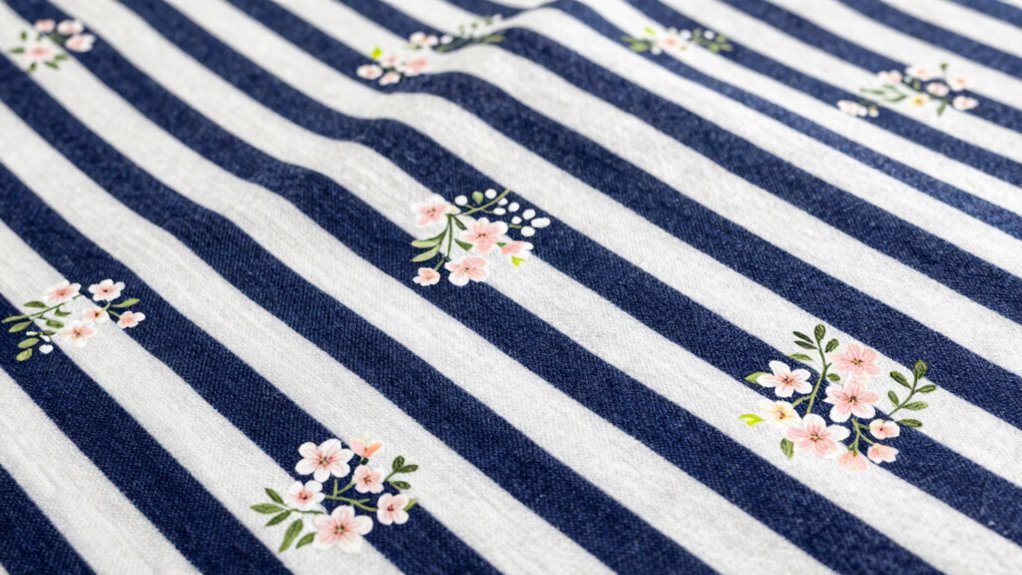
Before sewing, it’s vital to carefully analyze your fabric’s pattern and direction to guarantee a polished finish. Understanding the fabric flow helps you determine how the pattern should align to look intentional. Check the pattern orientation by laying out your fabric and observing the direction of stripes or florals. This step ensures that seams, cuts, and design elements follow a cohesive flow, preventing mismatched lines or awkward breaks. Pay attention to the way the pattern moves across the fabric—some fabrics have a natural drape or direction that influences how you cut and sew. Taking time to analyze these details early on saves you from mistakes and results in a professional-looking finished piece. Proper pattern placement makes your design appear seamless and thoughtfully crafted. Recognizing the fabric’s grainline is essential for maintaining the fabric’s stability and drape throughout your project. Additionally, understanding the fabric’s bias can help you achieve more fluid and flattering garment lines. Being aware of fabric stretch can also be beneficial when working with stretch materials to ensure comfort and proper fit. Moreover, evaluating the fabric’s nap or texture helps ensure that the finished garment maintains a consistent appearance, especially with fabrics like velvet or suede.
Why Proper Print Placement Can Elevate Your Fabric Design
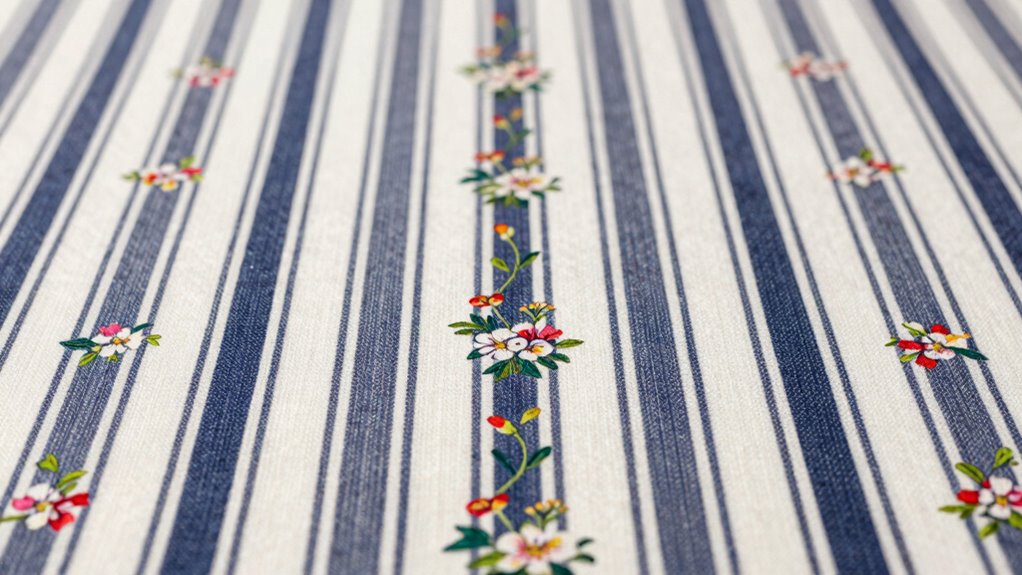
Proper print placement creates visual balance and harmony, making your fabric look polished and intentional. When you align patterns strategically, your design stands out and feels cohesive. This attention to detail can truly elevate your fabric’s overall appeal and impact.
Visual Balance and Harmony
Effective print placement creates a sense of visual balance and harmony that can transform a fabric design from ordinary to striking. When you position patterns thoughtfully, you enhance fabric harmony, ensuring no element overwhelms or gets lost. Proper placement guides the viewer’s eye smoothly across the design, establishing a pleasing visual rhythm that feels intentional. This balance prevents clutter and chaos, making your fabric more cohesive and polished. By paying attention to scale, alignment, and spacing, you create a unified look that feels harmonious. When the print flows naturally across the surface, it elevates the entire design, making even simple patterns appear deliberate and sophisticated. Thoughtful visual rhythm and pattern flow are key to elevating your fabric’s overall appeal. Incorporating design principles ensures your prints are both attractive and effective, especially when considering fabric harmony as a foundational element of design. When print placement aligns with aesthetic balance, the overall visual impact becomes even more compelling, supported by the use of AI tools to analyze and optimize pattern positioning for maximum harmony.
Strategic Pattern Alignment
Have you ever noticed how a well-aligned pattern can dramatically transform a fabric’s overall look? Strategic pattern alignment ensures that elements like stripes or florals match seamlessly across seams, creating a polished appearance. Proper fabric matching involves aligning pattern symmetry so that motifs flow naturally from piece to piece, avoiding awkward breaks or mismatched lines. This attention to detail elevates your design, making it look intentional and professionally crafted. When you focus on pattern symmetry, you guarantee consistency and visual harmony, which enhances the fabric’s appeal. Carefully planned print placement not only improves aesthetics but also conveys a sense of craftsmanship. Pattern matching is a fundamental technique that ensures your fabric looks cohesive and professionally finished. By paying close attention to how patterns align, you turn an ordinary fabric into a striking, cohesive design.
Enhancing Fabric Appeal
When you carefully consider print placement, you can substantially boost the visual impact of your fabric design. Proper placement enhances the fabric texture, making patterns look more intentional and refined. It also plays an essential role in creating striking color contrast, drawing attention to key areas and adding depth. By aligning prints thoughtfully, you avoid accidental overlaps or mismatched sections that can diminish appeal. Instead, you highlight the fabric’s best features, making floral or stripe patterns pop naturally. Strategic placement ensures that the design flows smoothly across the fabric, giving it a polished, professional look. When you master print placement, your fabric ends up more vibrant, cohesive, and visually engaging, elevating the overall appeal and making your design stand out.
What Are the Best Techniques for Perfect Stripe and Floral Alignment?
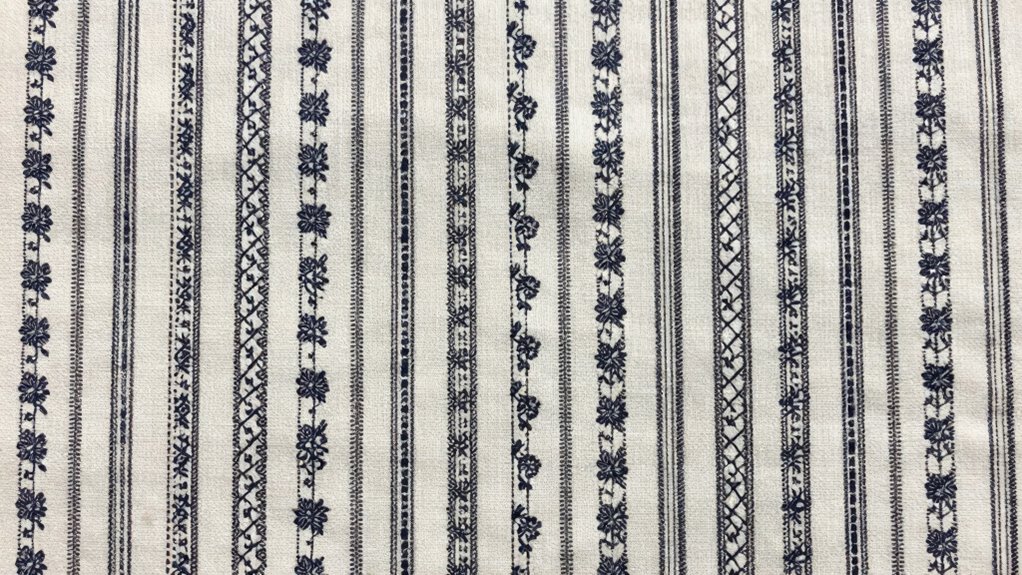
Achieving perfect stripe and floral alignment requires careful planning and precise execution. To ensure consistency, focus on color coordination to keep hues harmonious across patterns. Use pattern contrast strategically; pairing contrasting stripes and florals highlights intentional design rather than misalignment. Before sewing, align fabric sections by pinning or taping carefully, matching key points like seams or motifs. A clear pattern layout plan helps prevent surprises. Here’s a quick guide:
| Step | Technique |
|---|---|
| Pattern Planning | Map out motifs and stripes |
| Fabric Preparation | Iron and align edges |
| Pinning | Use sharp pins for precision |
| Pattern Matching | Match motifs at seam lines |
| Final Check | Make sure alignment before sewing |
This approach guarantees stripes and florals look deliberate, elevating your finished piece.
How to Balance Pattern Size and Placement for a Polished Look
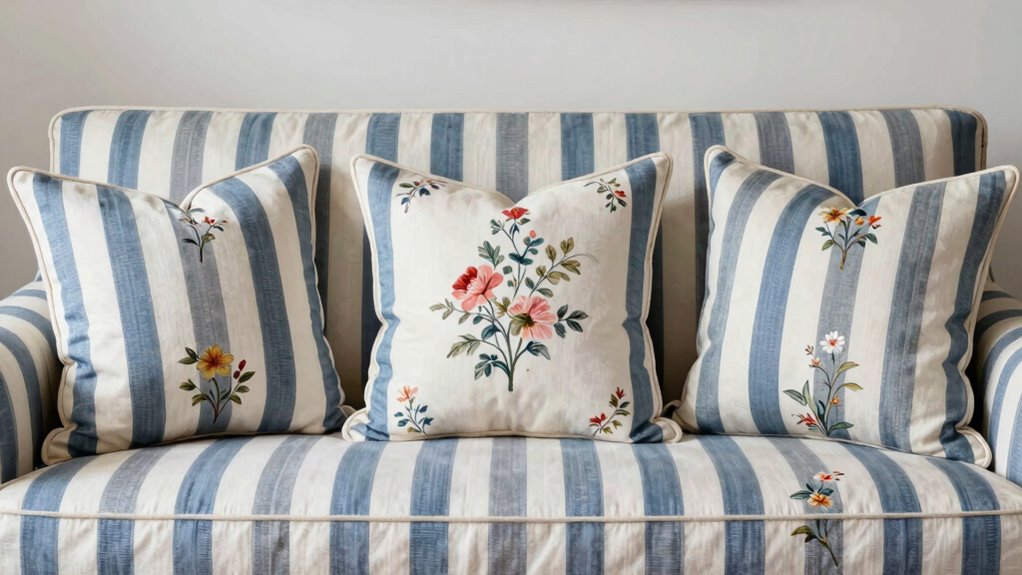
Balancing pattern size and placement is key to creating a cohesive, polished look in your sewn projects. Pay attention to pattern scale, ensuring large prints don’t overwhelm smaller areas, and vice versa. Mixing different pattern sizes creates visual interest while maintaining harmony. To achieve a smooth visual flow, place larger patterns where they won’t dominate, and use smaller prints to fill gaps or add subtle details. Symmetry and strategic placement help guide the eye naturally across your fabric, avoiding a chaotic or accidental appearance. Consistent spacing and alignment also contribute to a professional finish. When you balance pattern size with thoughtful placement, your project appears intentional, well-designed, and visually appealing. This approach transforms a simple fabric into a cohesive, striking final piece.
Common Print Placement Mistakes and How to Fix Them
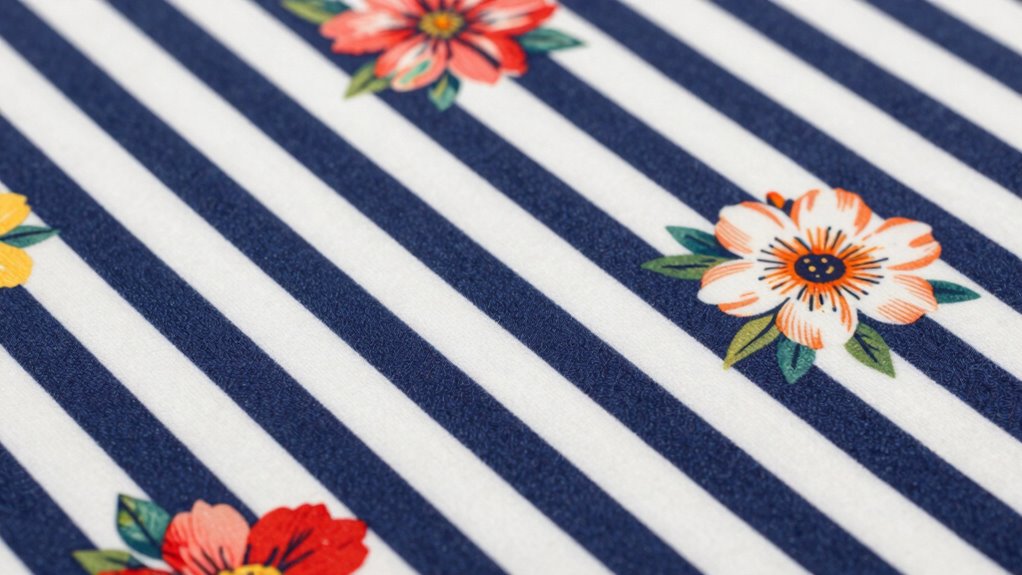
Misaligned pattern placement can make your design look uneven and unprofessional. Overly symmetrical designs sometimes feel predictable and lack visual interest. Learning how to recognize and fix these mistakes will help you create more balanced and engaging prints. Incorporating versatile design elements can also help you achieve a more dynamic and intentional look. Paying attention to print alignment techniques ensures your patterns enhance the overall aesthetic rather than detract from it. Additionally, understanding piercing care and hygiene can inspire thoughtful design choices that reflect personal style and attention to detail. Recognizing the importance of contrast ratio can also influence how you balance colors and patterns to create visually appealing compositions. Exploring ventilation considerations can further improve the comfort and safety of your workspace.
Misaligned Pattern Placement
When pattern pieces don’t align properly on your fabric, it can lead to inconsistent prints and a less professional look. To avoid this, verify fabric consistency by carefully checking the print’s repeat and pattern contrast before cutting. Misaligned pattern placement can make your project appear chaotic or haphazard. Use pattern matching techniques, like pinning and pattern marking, to keep prints aligned across seams. Pay attention to how motifs or stripes flow from one piece to another, especially at seams or edges. Consistent fabric handling during cutting and sewing helps maintain the integrity of the pattern. When you focus on fabric consistency and pattern contrast, your finished piece looks intentional and polished, elevating your overall design and making the print work for you rather than against you. Ensuring print alignment throughout your project enhances the professional appearance and visual harmony of your finished garment or item.
Overly Symmetrical Designs
Overly symmetrical designs can be a common mistake in print placement that makes your finished project look stiff or overly predictable. When symmetry balance is overused, it can flatten the design, reducing visual interest. To fix this, avoid placing patterns in perfect mirror images or repetitive arrangements that create a robotic feel. Instead, introduce subtle variations to break the pattern repetition and add movement. Consider asymmetrical placements or offset designs that maintain balance without symmetry. This approach aligns with principles of visual balance and prevents monotony. Additionally, incorporating elements with dynamic asymmetry can enhance the overall aesthetic. Recognizing design principles helps in creating more engaging compositions. Exploring creative flexibility in layout choices allows for more expressive and intentional designs. Remember, a little irregularity can make your print feel intentional and artistic. By thoughtfully disrupting symmetry, you’ll craft more natural, visually appealing designs that draw attention for all the right reasons. Incorporating visual interest techniques can elevate your print work from ordinary to captivating.
Inspiring Fabric Pattern Examples to Spark Your Creativity
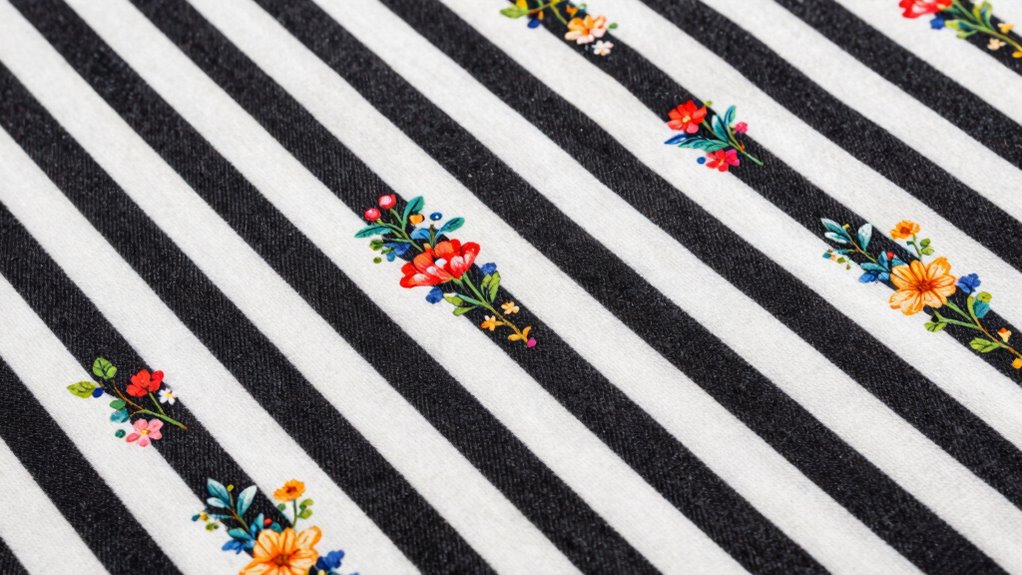
Exploring inspiring fabric patterns can ignite your creativity and open new possibilities for your projects. Don’t fall into fabric pattern myths that limit your vision—many believe only certain designs work well, but textile art thrives on experimentation. Look at bold florals, abstract stripes, and intricate geometric motifs; these examples can challenge your ideas about pattern placement. Notice how designers intentionally position motifs to create flow and balance, transforming simple prints into visual stories. By studying diverse fabric patterns, you’ll learn how strategic placement elevates even the most common designs. Use these examples as inspiration to craft patterns that feel deliberate and artful. Remember, the key is to see pattern as an element of textile art—an opportunity for expression, not just decoration. Additionally, understanding visual balance can help you create cohesive and captivating fabric designs, turning your projects into truly intentional works of art. Paying attention to fabric pattern placement can make all the difference in achieving a polished and professional look. Embracing the rich cultural significance behind various patterns can further deepen your appreciation and enhance your creative approach.
Frequently Asked Questions
How Can I Choose the Right Print Placement for Different Garment Types?
To select the right print placement, consider the fabric scale and garment silhouette. For fitted pieces, place smaller prints to avoid overwhelming the shape, while larger prints work well on flowing silhouettes. Confirm the print aligns with key areas, like the waist or bust, to enhance your figure. Test different placements on your fabric to see how patterns flow with the garment’s shape, making sure your print looks intentional.
What Tools or Templates Help With Precise Pattern Alignment?
To achieve precise pattern alignment, use pattern alignment tools like transparent template guides or pattern markers. These templates help you line up stripes and florals accurately across different garment sections. You can also create custom template guides from pattern paper for specific designs. Always double-check the alignment before sewing, and use pins or fabric clips to hold everything in place. This guarantees your prints look intentional and professionally finished.
How Do Fabric Stretch and Drape Affect Print Placement Decisions?
Think of fabric as a living canvas that shifts and flows. When you consider fabric stretch and drape, you realize that print placement isn’t static—it moves with the fabric’s personality. Stretchy fabrics can distort designs if not planned carefully, so you must account for draping considerations. This guarantees your prints align seamlessly, turning fabric’s natural behavior into an asset rather than a design challenge.
Can Print Placement Techniques Be Applied to Digital or Printed Fabrics?
Yes, you can definitely apply print placement techniques to digital printing and fabric simulation. Digital printing allows you to precisely control design placement, making stripes and florals look intentional. Use fabric simulation tools to visualize how prints will drape and stretch, ensuring your designs align perfectly. This approach helps you create cohesive, professional-looking fabrics where every print element is intentionally placed, enhancing the overall aesthetic and appeal.
How Do I Adjust Print Placement for Asymmetrical or Irregular Shapes?
Ever tried making asymmetrical shapes look deliberate? You can do it by practicing symmetry balancing and shape adaptation. Adjust your print placement by aligning key elements to the irregular contours, ensuring they complement rather than clash. Use software to map the design precisely, or do it manually with careful planning. Remember, irregular shapes thrive on thoughtful placement—make your print look intentional, even if it’s a wild, unpredictable masterpiece.
Conclusion
Mastering print placement isn’t just about looks — it’s about creating intentional, polished designs that stand out. Believe it or not, studies show that well-aligned patterns can boost your garment’s perceived quality and appeal. By analyzing fabric direction, balancing scale, and avoiding common mistakes, you can confidently turn any fabric into a masterpiece. So, trust your eye, follow these tips, and watch your sewing projects transform from ordinary to extraordinary.