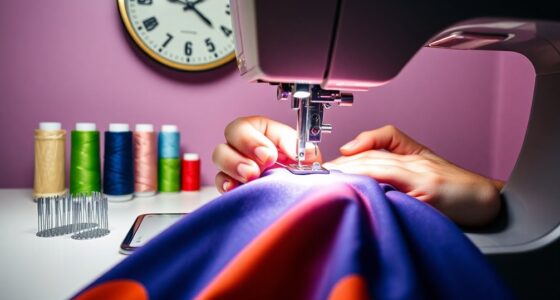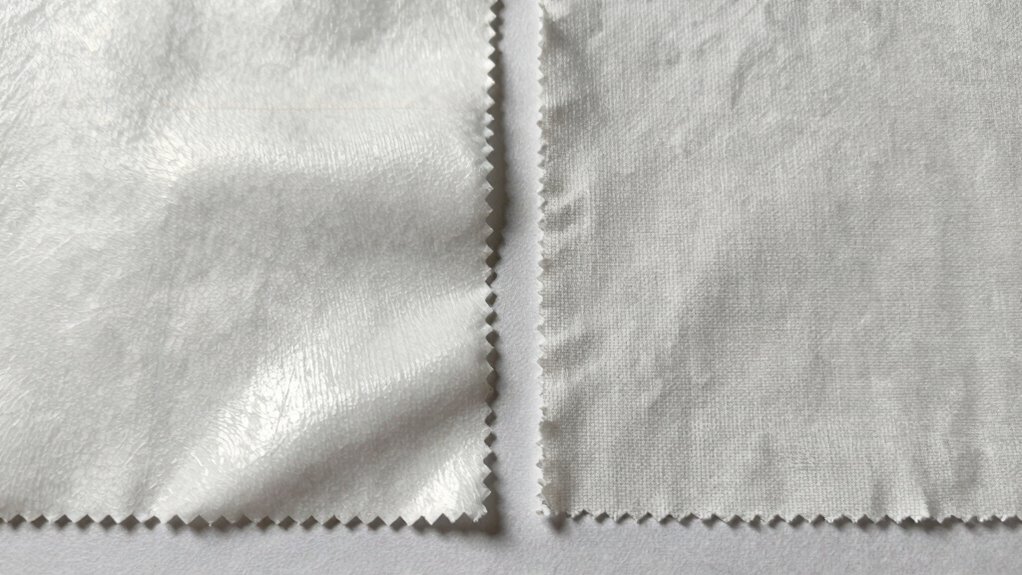
To choose between fusible and sew-in interfacing without guessing, consider your fabric’s texture and stability. Fusible is quick and works best with stable, smooth fabrics like cotton, while sew-in offers more control for delicate or textured textiles like silk or linen. Think about the project’s final look—need stiffness or softness? Your choice depends on these factors. Keep exploring to find tips that help you make the perfect decision for your project.

Get business pricing on tools and workshop supplies
- Business-only prices and quantity discounts
- Tax-exempt purchasing
- Multiple users, one account, clear invoices
Key Takeaways
- Assess fabric texture and stability to determine if a smooth, stable fabric benefits from fusible or a textured fabric needs sew-in.
- Consider project purpose: structured items like collars suit fusible, while soft garments benefit from sew-in for flexibility.
- Evaluate application ease: choose fusible for quick, clean finishes, and sew-in for more control on delicate or textured fabrics.
- Match interfacing type to desired final finish: stiffer for structure, softer for natural drape and movement.
- Understand your sewing skills and project timeline to select the method that balances convenience and precision.
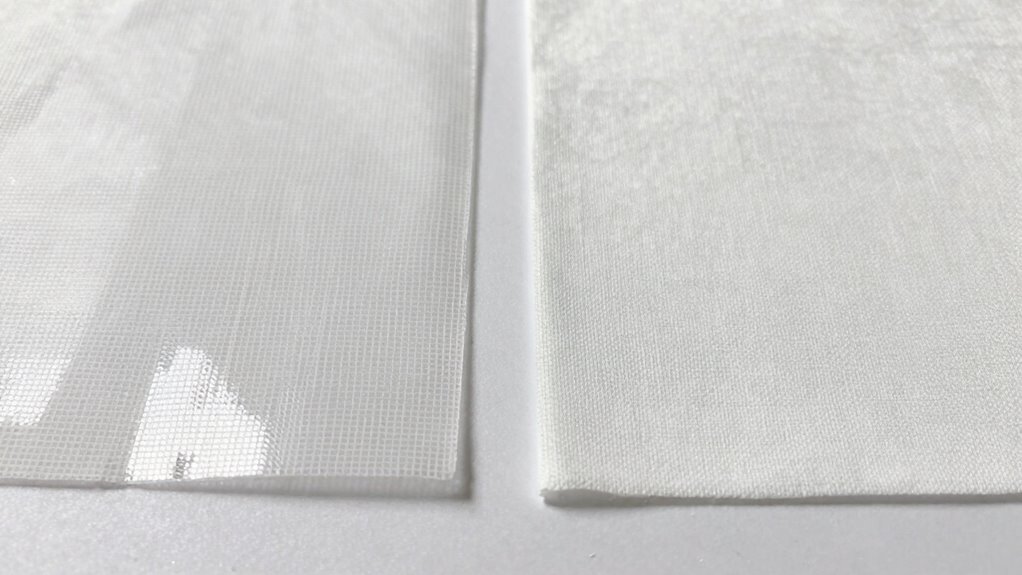
When selecting interfacing for your sewing project, understanding the differences between fusible and sew-in options is essential. These choices influence how your fabric will feel and behave once finished, so it’s important to match the right type to your project’s needs. Fusible interfacing adheres to your fabric with heat and adhesive, creating a smooth, integrated surface, while sew-in options require you to hand or machine sew the pieces into place. Your decision depends on factors like fabric texture, sewing techniques, and the final look you want to achieve.
Fabric texture plays a crucial role in this choice. Fusible interfacing tends to work best with stable, smooth fabrics like cotton or woven textiles that can withstand the heat application without puckering. If your fabric has a delicate or textured surface—such as linen, silk, or heavily textured fabrics—sew-in interfacing might be a better option. Sew-in provides a more flexible and natural feel, especially with fabrics that can’t handle the heat of fusible adhesives, allowing the fabric’s texture to shine through without distortion. Additionally, understanding fabric stability can help determine the best interfacing choice for your project. Considering fabric stability can prevent issues like puckering or warping after application.
Fabrics like linen and silk often benefit from sew-in interfacing for a natural, undistorted finish.
Sewing techniques also influence whether you choose fusible or sew-in. Fusible interfacing is quick and convenient, ideal for projects where speed is a factor, like mass-produced garments or projects with tight deadlines. However, it requires careful pressing and precise alignment to avoid bubbles or wrinkles. Sew-in interfacing demands more time and patience but offers greater control, especially on complex pieces or when working with fabrics that have uneven textures or delicate finishes. You’ll need to sew along the edges or in specific patterns, which can add structure without compromising the fabric’s natural drape. Understanding the application methods of interfacing can help you select the most appropriate option for your project. Additionally, knowing the different types of fusible and sew-in interfacing can further refine your choice based on the specific needs of your project.
Another aspect to consider is the degree of flexibility and drape you want. Fusible interfacing often creates a stiffer, more structured finish, making it suitable for collars, waistbands, or bags where rigidity helps maintain shape. Conversely, sew-in interfacing generally results in a softer, more flexible finish, perfect for clothing that needs to move naturally with the body. If you’re working on a project that requires a lot of movement or a softer feel, sew-in is usually the better choice.
Ultimately, your project’s purpose and fabric type should guide your decision. Fusible interfacing offers convenience and a clean finish for stable fabrics, while sew-in provides versatility and a natural feel for textured or delicate textiles. Understanding how fabric texture and sewing techniques impact the final result—including fabric stability—can help you confidently choose the right interfacing without guessing, ensuring your project turns out just as you envision. Being aware of key interfacing options can further assist in making informed decisions and achieving professional-looking results.
fusible interfacing for cotton fabrics
As an affiliate, we earn on qualifying purchases.
As an affiliate, we earn on qualifying purchases.
Frequently Asked Questions
Can I Use Fusible Interfacing for All Fabric Types?
You can’t use fusible interfacing for all fabric types because its compatibility depends on the fabric and desired durability. Fusible interfacing offers good durability but might not adhere well to delicate or textured fabrics, risking poor bonding or damage. For fabrics like silk or velvet, sew-in interfacing is better, guaranteeing fabric compatibility and maintaining the integrity of the material. Always test first to ensure the right choice for your project.
How Do I Remove Fusible Interfacing if I Make a Mistake?
To remove fusible interfacing, you need to carefully peel it off while it’s warm, as heat helps loosen the adhesive. If it’s stubborn, try gently steaming the area or using a seam ripper to lift edges without damaging your fabric. For fixing interfacing mistakes, avoid pulling harshly; instead, gently lift and reapply or replace the interfacing. Patience is key to effective interfacing removal and fixing interfacing errors.
Is Sew-In Interfacing Suitable for Reversible Projects?
Yes, sew-in interfacing is suitable for reversible projects because it offers a more flexible, natural feel that works well with reversible fabrics. It provides a perfect pairing for garments or accessories you want to flip inside out, ensuring both sides look polished. Sew-in interfacing also allows you to maintain the fabric’s drape and texture, making it ideal for projects where reversibility and a seamless finish are priorities.
How Does Interfacing Affect the Drape of Fabric?
Interfacing directly impacts the fabric’s drape by increasing stiffness or maintaining flexibility, depending on your choice. Fusible interfacing adds stiffness, making the fabric less flowy and more structured, ideal for tailored garments. Sew-in interfacing offers better drape modification options, allowing you to control fabric stiffness more subtly. Selecting the right interfacing helps you achieve your desired silhouette, whether you want a crisp finish or a soft, flowing look.
Can I Combine Fusible and Sew-In Interfacing?
Yes, you can combine fusible and sew-in interfacings, though it’s a bit like mixing oil and water—you need to take into account adhesive strength and compatibility concerns. The fusible adds quick structure, while sew-in offers durability. Just ensure they’re compatible; otherwise, your fabric might rebel or lose its shape. Test on scraps first, or risk ending up with a fabric Frankenstein that’s neither flexible nor stable.
Conclusion
Ultimately, selecting the right interfacing is like choosing the perfect finishing touch—sometimes, trusting your instincts and experience guides you better than a manual. While fusible offers quick convenience, sew-in provides a gentle, more adaptable support. Remember, a little trial and error can be your best teacher, helping you avoid the subtle pitfalls of guesswork. With patience and practice, you’ll find the approach that best complements your project’s needs, making your craft truly stand out.
Halloween Picks
halloween
As an affiliate, we earn on qualifying purchases.