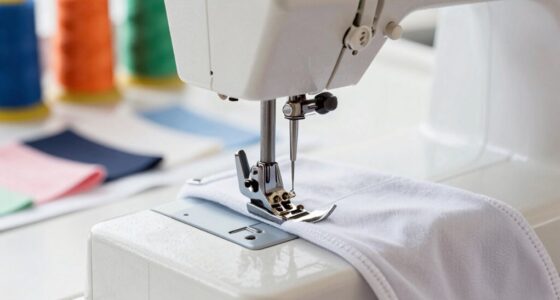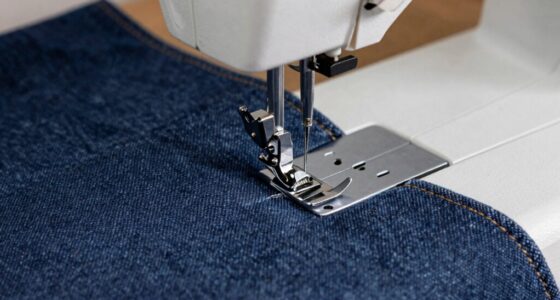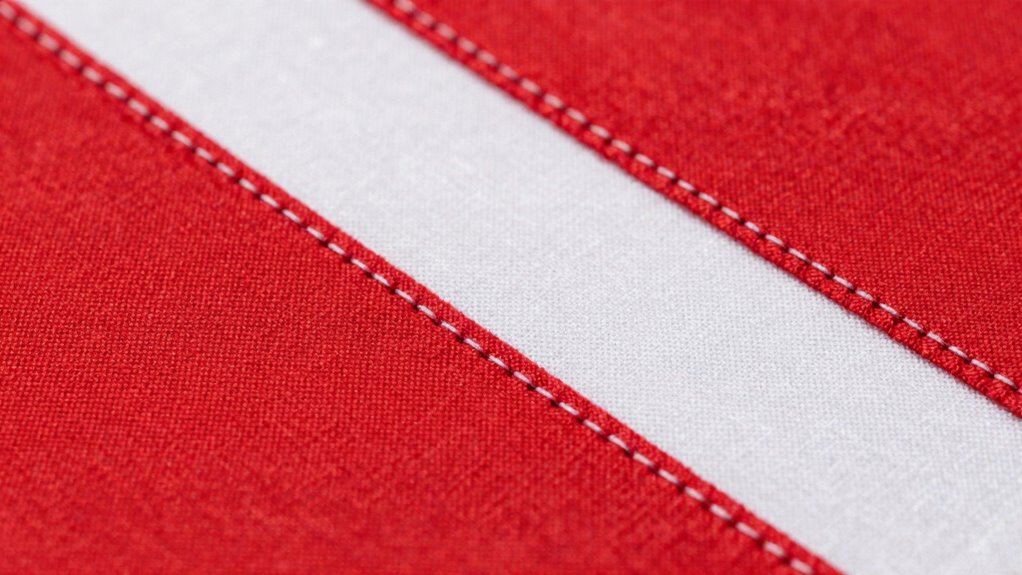
To judge serger stitch quality before you commit, look for even, consistent stitches with tight, secure seams. Check that the stitches don’t puck or fray and that the thread tension is uniform across the seam. Make sure the stitches hold the fabric firmly without gaps or skipped stitches. A well-maintained machine produces strong, neat seams. If you want to master these tips and guarantee top-quality stitches every time, keep exploring the details next.

Get tools and workshop supplies delivered free — and shop member deals
- Fast, free delivery on millions of items
- Access to Prime Big Deal Days deals on October 6–7
- Prime Video, Amazon Music and more included
Key Takeaways
- Inspect stitches for evenness, tightness, and consistency without loose loops or gaps.
- Test seam strength by gently pulling to ensure durability and secure stitching.
- Check for minimal fraying and that seam edges resist unraveling.
- Listen for smooth, noise-free operation indicating proper machine maintenance.
- Confirm absence of skipped stitches and uniform stitch spacing across the seam.

When evaluating the quality of a serger stitch, understanding what to look for can make a significant difference in your sewing projects. A good stitch isn’t just about how neat it appears; it’s about its durability and how well it handles the fabric and thread. One of the first things to check is the fabric tension. Proper tension ensures that the stitches are evenly formed and secure without puckering or loose loops. If the tension is too tight, the fabric might bunch up or pucker, making your project look uneven. Conversely, if it’s too loose, the stitches could unravel or leave gaps, compromising the strength of the seam. Adjusting tension settings might be necessary to get the perfect balance for different fabrics, especially when switching between light and heavy materials.
Proper fabric tension is key to secure, even stitches and a professional finish in your sewing projects.
Thread consistency is another key factor in judging stitch quality. When you look at the stitches, they should be uniform in size and tension throughout the seam. Inconsistent thread tension can lead to skipped stitches, uneven loops, or thread breakage, all of which weaken the seam and affect the overall look. Carefully inspect the stitches along the seam line—if some are noticeably tighter or looser than others, it indicates an issue with thread consistency. This can often be caused by uneven thread spools, improper threading, or tension imbalance. Ensuring your threads are of good quality and properly threaded through all tension disks helps maintain consistency, resulting in a professional finish. Proper threading techniques are essential to achieve this, as improper threading can cause uneven stitches and tension issues. Additionally, using high-quality thread can help prevent thread breakage during sewing.
Beyond tension and thread uniformity, you should also observe the stitch formation itself. A high-quality serger produces stitches that are tight, even, and secure, with no loose or hanging threads. The stitches should be evenly spaced without gaps or overlaps. Pay attention to the seam’s edge—if it frays easily or looks weak, it’s a sign that the stitch quality isn’t up to par. Additionally, test the seam by gently pulling the fabric; a strong stitch will hold firm without shifting or unraveling. Regular maintenance and proper threading are essential to keep your serger in top condition, as poor maintenance can lead to inconsistent stitches and machine malfunctions. Keeping the machine well-lubricated and clean can also help prevent machine malfunctions, which often result from neglecting proper machine maintenance.
Lastly, consider the serger’s overall operation. If it runs smoothly, with minimal noise and no skipped stitches, you’re more likely to be getting a machine that produces consistent, high-quality stitches. Proper tension adjustment and routine cleaning are vital for optimal performance. When you combine a keen eye for fabric tension, thread consistency, and stitch formation, you’ll be better equipped to judge a serger’s stitch quality before making a commitment, ensuring your sewing projects turn out neat, durable, and professional-looking.
As an affiliate, we earn on qualifying purchases.
Frequently Asked Questions
Can Stitch Quality Vary Between Different Brands of Sergers?
Yes, stitch quality can vary between brands of sergers. When doing a brand comparison, you’ll notice differences in how well each machine produces even, tight stitches. Thread compatibility also plays a role—some brands handle certain threads better, improving stitch consistency. To guarantee good stitch quality, test different brands with your preferred thread types, and pay attention to tension balance and seam durability during your evaluation.
How Often Should I Clean My Serger for Optimal Stitch Quality?
You should clean your serger every 20 to 30 hours of use for ideal stitch quality. Regular cleaning helps maintain proper thread tension and prevents lint buildup, which can affect needle alignment. After completing a project, remove loose threads and lint from the feed dogs and tension discs, and check the needle alignment. Keeping your serger clean guarantees consistent stitches and prolongs its lifespan.
Does Thread Type Affect the Durability of Serger Stitches?
Think of your serger stitches as a fortress—thread type truly influences its strength and longevity. Using strong, high-quality thread with appropriate fiber type guarantees durable stitches that withstand wear and tear. Thinner or weaker threads, like delicate silk, can compromise stitch durability, especially on heavy fabrics. So, choose thread with good fiber strength and match it to your fabric’s demands for stitches that last and perform well over time.
Can Adjusting Tension Improve Stitch Quality on My Serger?
Yes, adjusting tension can definitely improve stitch quality on your serger. When you tweak thread tension, you help achieve better stitch consistency, making your seams look more professional and durable. Start by adjusting tension gradually, test on scrap fabric, and observe the results. Proper tension balances the threads, preventing loose stitches or puckering, ensuring your serger stitches are even, secure, and of high quality before you finish your project.
What Are Common Signs of a Malfunctioning Serger?
If your serger shows signs of malfunction, check for thread tension issues, which can cause uneven stitches or skipped stitches. Also, inspect needle alignment; misaligned needles lead to skipped or broken stitches. You might notice fabric puckering, loose threads, or inconsistent stitch patterns. Regularly maintaining proper thread tension and ensuring correct needle alignment helps prevent these problems, keeping your serger running smoothly and producing professional-looking seams.
Conclusion
Now that you know what to look for, your eye becomes a compass guiding you through the sewing seas. With each stitch, you’re steering the waters of quality, avoiding the rocky reefs of flaws. Trust your instincts—they’re the lighthouse illuminating the path to perfect seams. Keep practicing, and soon you’ll be sailing smoothly, confident in your ability to judge a serger’s stitch like a seasoned sailor charting a course through calm and storm alike.
Halloween Picks
halloween
As an affiliate, we earn on qualifying purchases.