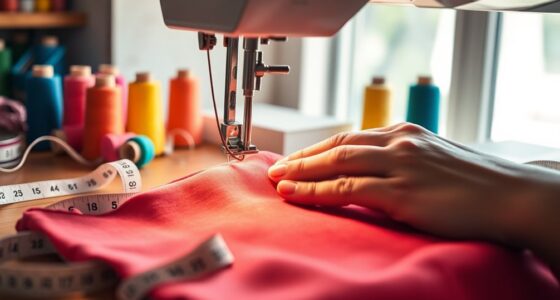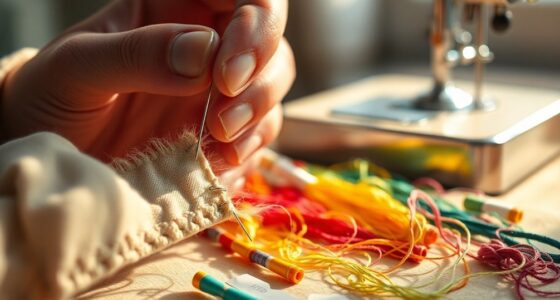

To make reusable cleaning cloths from old flannel, start by choosing soft, durable fabric that can withstand frequent washing. Cut the fabric into manageable sizes, like 12×12 inches, and finish the edges with zigzag stitching or serging to prevent fraying. Proper care involves washing in warm water without fabric softeners, then air drying for best softness and durability. If you keep going, you’ll discover tips for cutting, sewing, and caring for your eco-friendly cloths.

Get business pricing on tools and workshop supplies
- Business-only prices and quantity discounts
- Tax-exempt purchasing
- Multiple users, one account, clear invoices
Key Takeaways
- Select durable, soft flannel fabric with tight weave for longevity and effective cleaning.
- Cut fabric into manageable sizes, like 12×12 inches, with sharp scissors and aligned patterns.
- Finish edges with zigzag sewing or serging to prevent fraying and increase durability.
- Wash separately in warm water, avoid fabric softeners, and air dry for best maintenance and softness.
- Store finished cloths in labeled containers or hanging baskets for easy access and organization.
reusable flannel cleaning cloths
As an affiliate, we earn on qualifying purchases.
As an affiliate, we earn on qualifying purchases.
Why Switch to Reusable Flannel Cloths Instead of Paper Towels

Switching to reusable flannel cloths from paper towels is a simple way to reduce waste and save money. By choosing eco-friendly cleaning options, you help lessen the amount of waste heading to landfills. Flannel cloths are durable, absorbent, and reusable, making them a smarter alternative to disposable paper towels. Not only do they cut down on ongoing costs, but they also minimize the environmental impact of single-use products. Reusable cloths can be washed and used repeatedly, which means fewer resources are consumed in production and disposal. Additionally, using sustainable materials aligns with eco-conscious habits, promoting a cleaner planet. Making this switch is a small change with a big impact, supporting sustainable living while keeping your home clean. Understanding food and the science behind cleaning can help you make even smarter choices for your home and the environment. Moreover, choosing reusable cleaning supplies can further enhance your eco-friendly efforts. By adopting these practices, you contribute to reducing single-use waste, which is a significant step toward environmental conservation. Using electric-powered cleaning tools can also improve efficiency and reduce the need for chemical cleaners, further benefiting the environment.
How to Choose the Best Old Flannel for Reusable Cleaning Cloths

When selecting old flannel for reusable cleaning cloths, focus on its durability and softness to guarantee it lasts while gentle on surfaces. Consider the fabric patterns and sizes that suit your cleaning needs and storage space. Choosing the right flannel can make your cloths more effective and comfortable to use. Additionally, understanding pool terminology can help you identify high-quality fabrics that are less likely to fray or pill over time. To ensure your cloths are long-lasting, look for fabrics with fabric strength that resist wear and tear through repeated use and washing. Recognizing fabric durability ensures you select materials capable of withstanding frequent laundering and household use, extending the lifespan of your cloths. Familiarity with festival logistics can also guide you in selecting fabrics that can withstand frequent laundering in everyday household conditions, as well as understanding material care techniques to prolong their lifespan.
Durability and Softness
Choosing the right old flannel for reusable cleaning cloths depends heavily on its durability and softness. You want fabric that withstands frequent washings without fraying or losing comfort. Softness ensures gentle cleaning, especially on delicate surfaces. When selecting older flannel, consider how fabric dyeing might affect color fastness and whether decorative trims are intact, as these can influence durability. Well-maintained flannel with minimal pilling is ideal. Additionally, assessing the fabric weave can help determine how well it will hold up over time. Recognizing the fabric construction can also provide insight into the material’s overall resilience and suitability for repeated use. For added longevity, choosing flannel with a tighter knit or weave can help prevent fraying during multiple washes. Moreover, inspecting the fabric finish can reveal how well the material will maintain its softness and durability after many cycles.
Fabric Patterns and Sizes
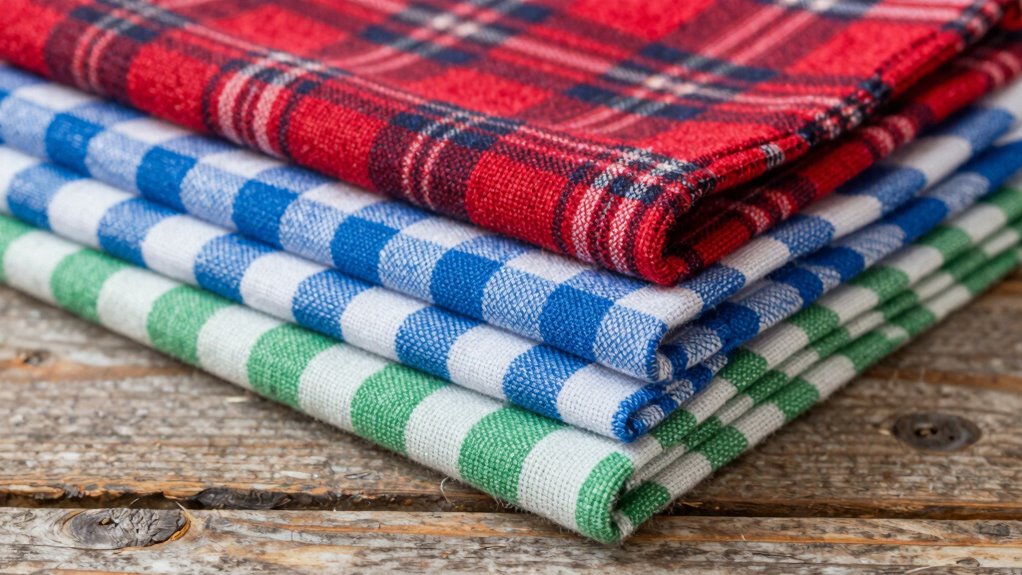
Selecting the right fabric patterns and sizes is essential to making effective reusable cleaning cloths from old flannel. Opt for fabric textures that are soft yet tightly woven to guarantee durability and absorbency. Small or medium-sized patterns work best; large prints can be be distracting and may not align well when cutting. Consider color coordination—stick to solid colors or subtle patterns to maintain a uniform look that’s easy to match with your cleaning areas. Uniform fabric texture helps prevent lint and enhances cleaning performance. When choosing fabric sizes, opt for squares around 12×12 inches or larger, making them versatile for different tasks. Additionally, selecting fabrics with consistent weave ensures the cloths will hold up over multiple washes and maintain their appearance. Paying attention to fabric durability and proper sizing will result in cloths that are both functional and visually appealing. Incorporating fabrics with favorable properties for cleaning can further improve their effectiveness and lifespan. Using fabrics with good absorbency will maximize their cleaning efficiency and reduce the need for multiple cloths, especially when made from fabrics with fast-drying qualities that help prevent mold and odors.
How to Cut and Sew Your Reusable Flannel Cloths
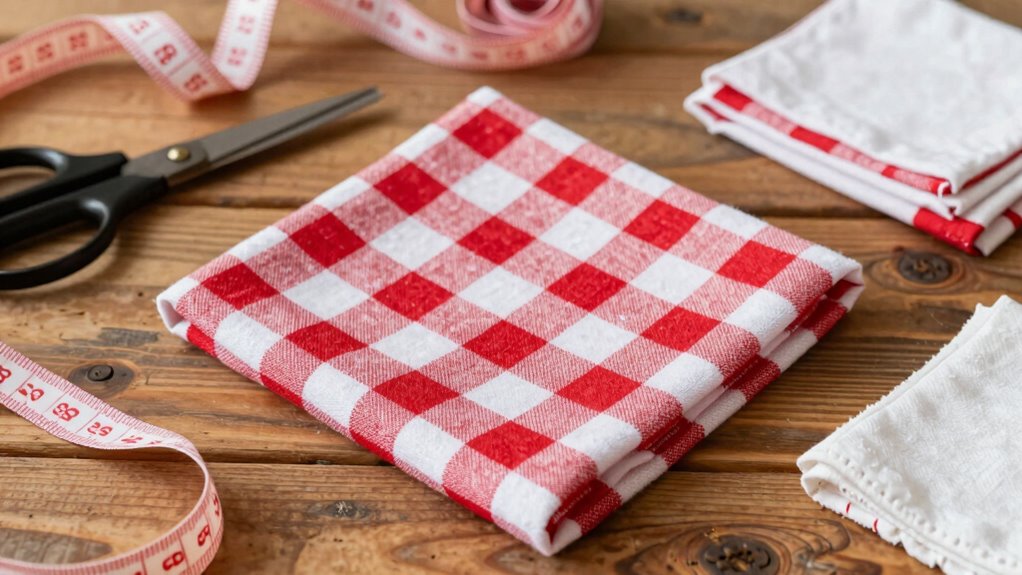
Start by selecting the right flannel fabric and measuring your pieces carefully to guarantee they fit your cleaning needs. Use sharp scissors to cut your cloth precisely along your measurements, avoiding uneven edges. To ensure your cloth lasts through many washes, sew your pieces together with neat seams, using techniques that keep your cloth durable and easy to wash. Incorporating sustainable habits into your routine can make your cleaning practices more eco-friendly and fulfilling. Additionally, choosing fabrics that are easy to care for and washable can extend the life of your reusable cloths. Opting for easy-care fabrics can help maintain the quality and longevity of your cloths after multiple washes. Knowing how to care for your fabrics can also help you maximize their lifespan and reduce waste over time, aligning your cleaning routine with environmentally friendly practices.
Selecting Flannel Fabric
To guarantee your reusable flannel cloths are durable and effective, pick a soft, medium-weight flannel fabric that’s free from holes or frays. Look for fabric with a tight weave, ensuring it withstands repeated washing. If you plan to dye the fabric, choose a dyeable flannel that holds color well. Consider pattern matching if you want a uniform look—aligning the print or plaid before cutting saves time and enhances appearance. Check for signs of pilling or thinning, which can weaken your cloths. Additionally, select a fabric that’s comfortable to handle and easy to sew. Remember, quality fabric makes a difference in the longevity and appearance of your reusable cloths, so take your time selecting the best flannel for your project. Fabric quality is crucial for ensuring your cloths maintain their durability over time.
Cutting Cloth Precisely
Before you begin cutting, carefully measure and mark your fabric to guarantee all pieces will fit together perfectly. Pay attention to fabric patterns to ensure they align well, especially if you’re using patterned flannel. Use sharp scissors or a rotary cutter for clean cuts. To keep your cuts precise, follow a straight edge or ruler. Here’s a helpful guide:
| Step | Tip |
|---|---|
| 1 | Use fabric patterns to match edges |
| 2 | Keep scissors steady for straight lines |
| 3 | Cut slowly to avoid uneven edges |
| 4 | Mark measurements clearly before cutting |
Sewing Seam Techniques
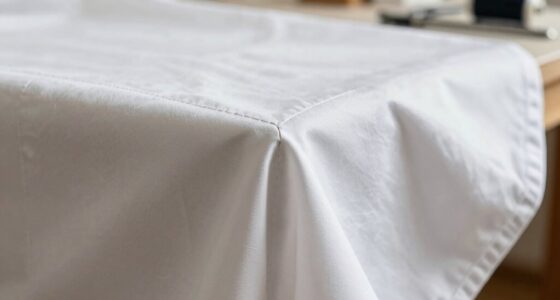
Once you’ve cut your flannel pieces accurately, sewing them together with neat seams guarantees your reusable cloths are durable and functional. To achieve this, focus on seam finishing techniques like zigzag or serging to prevent fraying. Use consistent seam allowances to ensure even edges. Topstitch along the seam for added strength and a clean look, which also helps secure the seam allowances. Keep your stitches even and close to the edge for a professional finish.
- Choose the right seam finishing method for durability
- Maintain consistent seam allowances
- Use topstitching techniques for reinforcement
- Press seams flat for a polished appearance
- Secure raw edges to prevent fraying
How to Care for and Wash Your Reusable Cloths

Proper care and washing are essential to keep your reusable flannel cloths effective and long-lasting. To maintain their vibrant appearance, avoid fabric dyeing issues by washing cloths separately or with similar colors. For stain removal, act quickly—soak stained areas in cold water or use a gentle stain remover before washing. Wash your cloths in warm water with a mild detergent to remove dirt and bacteria effectively. Skip fabric softeners, as they can reduce absorbency. To keep them fresh, dry your cloths thoroughly—air drying is best to prevent mildew. Regular washing prevents odors and keeps your cloths looking new. With proper care, your reusable flannel cloths will remain durable and effective for many uses.
Creative Uses and Storage Ideas for Your Reusable Cleaning Cloths
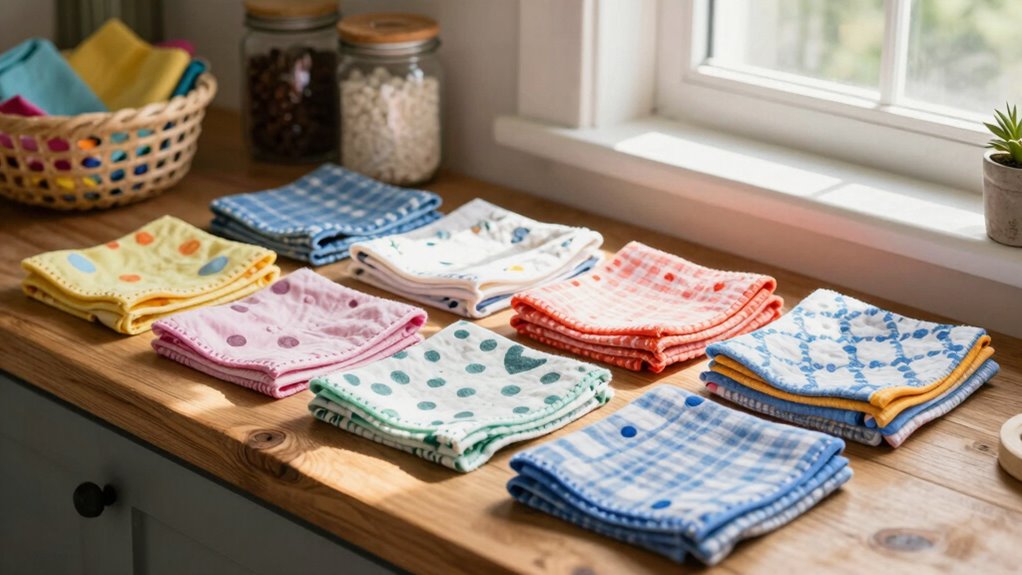
Reusable cleaning cloths aren’t just practical; they also offer numerous creative ways to extend their usefulness and keep them organized. You can repurpose cloths for different cleaning tasks or create designated zones for storage. Use hanging baskets or mesh bags in your laundry room for easy access and quick drying. Label different cloths for specific tasks like kitchen, bathroom, or glass cleaning with waterproof tags. Consider folding and stacking them in clear containers to make cleaning hacks easier and more efficient. You can also keep a small cloth stash in your cleaning caddy or under the sink for quick grab-and-go solutions. These storage solutions help maintain order and make your eco-friendly cleaning routine seamless. Staying organized ensures your reusable cloths are always ready when you need them.
Environmental and Cost Benefits of Reusable Cloths

Switching to reusable cleaning cloths not only streamlines your cleaning routine but also delivers significant environmental and financial advantages. By choosing cloths over paper towels, you reduce waste and minimize the need for disposable products, supporting sustainable living. Reusable cloths cut down on landfill contributions and lower the demand for manufacturing, which helps conserve resources and reduce pollution. Additionally, they save you money in the long run since you won’t need to constantly purchase paper towels. Incorporating eco friendly habits like using cloths promotes a greener lifestyle and makes a tangible difference for the environment. Over time, the savings add up, making reusable cloths an affordable, eco-conscious choice that aligns with your commitment to sustainability.
Frequently Asked Questions
Can I Use Flannel Cloths for All Types of Cleaning Tasks?
Yes, you can use flannel cloths for most cleaning tasks because of their fabric softness and gentle texture. They’re excellent for wiping surfaces, cleaning glass, and dusting without scratching. Just make certain the dye used is safe, especially if you’re cleaning food prep areas. Flannel’s absorbency makes it versatile, but avoid using heavily dyed or treated fabrics on delicate surfaces to prevent potential transfer or damage.
How Long Do Reusable Flannel Cloths Typically Last?
Oh, your trusty flannel cloths will probably last ages—if you’re lucky. With good fabric durability and proper washing frequency, they can serve you for months or even years. But neglect them with rough scrubbing or constant washing, and they’ll fade faster than your patience during laundry day. So, treat them gently, wash thoughtfully, and your reusable cloths will keep cleaning up your messes for a long, long time.
Are There Any Safety Concerns With Washing Reusable Cloths?
Yes, there are safety concerns with washing reusable cloths. You should rinse them thoroughly to remove chemical residues from cleaning products and prevent cross contamination. Wash cloths regularly in hot water to kill germs and bacteria effectively. Avoid mixing them with other laundry that could transfer contaminants. Proper drying is also important to prevent mold growth. Taking these steps helps keep your reusable cloths safe and hygienic for future use.
What Are Eco-Friendly Alternatives to Traditional Detergents?
Imagine a cleaner planet with every wash you do—switch to eco-friendly detergents. You’ll love using products with biodegradable ingredients and plant-based surfactants that break down naturally, reducing pollution. These alternatives are gentle on your skin and tough on dirt, all while protecting the environment. By choosing such detergents, you actively contribute to sustainability, making your cleaning routine greener and healthier for everyone.
How Do I Prevent Mold and Odors in My Cloth Storage?
To prevent mold and odors in your cloth storage, make sure you thoroughly dry your cloths before storing them. Store them in a well-ventilated area, and consider using silica gel packs or baking soda to absorb excess moisture. Regularly wash and air out your cloths to keep mold prevention and odor control effective. This way, your reusable cloths stay fresh and ready for eco-friendly cleaning.
Conclusion
Switching to reusable flannel cloths is like saving the planet one wipe at a time—your paper towels won’t stand a chance! Not only will you drastically cut down on waste, but you’ll also become a cleaning superhero, saving money and the environment with every wipe. Say goodbye to endless paper towel mountains and hello to eco-friendly, super-absorbent cloths that’ll transform your cleaning game forever. Trust me, your future self will thank you for making this small change!
Halloween Picks
halloween
As an affiliate, we earn on qualifying purchases.