
Pattern grading adjusts your clothing pattern systematically across sizes to guarantee a proper fit. However, how sizes change depends on your body proportions, fabric properties, and design details. Simply adding inches isn’t enough because each pattern point needs proportional adjustments. Understanding these nuances helps you get a better fit. If you want to learn how pattern grading really works and why your clothes fit differently than expected, keep exploring these key concepts.

Get tools and workshop supplies delivered free — and shop member deals
- Fast, free delivery on millions of items
- Access to Prime Big Deal Days deals on October 6–7
- Prime Video, Amazon Music and more included
Key Takeaways
- Pattern grading systematically adjusts measurements at key points like bust, waist, and hips to create different sizes while maintaining proportions.
- Proper grading techniques ensure pattern symmetry and shape, preserving the garment’s style across all sizes.
- Fabric properties, such as stretch and drape, influence how patterns are graded and how sizes change in real garments.
- Variations in body proportions and fit preferences mean size charts often don’t reflect individual differences, affecting fit accuracy.
- Different grading methods (manual, slash and spread, software) adapt size changes to fabric behavior and design features for better fit.
As an affiliate, we earn on qualifying purchases.
What Is Pattern Grading and Why It’s Important
Have you ever wondered how clothing fits so well across different sizes? Pattern grading is the process that makes this possible. It involves adjusting a base pattern to create multiple sizes, ensuring each fits properly. Understanding fabric composition helps because some fabrics stretch or shrink, affecting how you grade patterns. Sewing techniques also play a role; knowing how different stitches and seam allowances behave guides accurate adjustments. Pattern grading maintains proportions and symmetry, so garments look consistent no matter the size. Proper grading techniques also consider fabric behavior to account for stretching or shrinking during wear and washing. Additionally, pattern manipulation techniques can be employed to refine fit and style variations within the grading process. Without it, each size would need completely separate patterns, wasting time and resources. By mastering pattern grading, you ensure your clothing fits comfortably and looks professional, regardless of the wearer’s size. It’s essential for efficient production and high-quality finished garments. Pattern grading helps maintain consistent proportions and fit across sizes. Moreover, understanding fabric types aids in selecting appropriate adjustments for different materials, ensuring durability and comfort. Recognizing cost efficiency benefits is also key, as proper grading reduces waste and streamlines manufacturing processes.
How Pattern Sizes Change When You Grade Patterns

When you grade patterns, you adjust sizes using specific techniques to guarantee proper fit. Key measurement changes must be carefully applied to maintain the original pattern’s proportions. Understanding how to modify these measurements is essential for consistent and accurate pattern grading. Incorporating proper Luggage & Bags techniques can help ensure your finished garments are as functional and well-organized as your travel gear.
Pattern Size Grading Techniques
Pattern size grading techniques involve systematically adjusting pattern dimensions to create different sizes while maintaining the garment’s fit and proportions. You do this by applying specific grading rules that increase or decrease measurements at key points, such as the bust, waist, and hips. When grading, consider fabric drape, as some fabrics respond differently to size changes, affecting how the garment hangs. Using proper sewing techniques during construction ensures the graded pattern aligns correctly and fits well across sizes. You might also incorporate grading increments tailored to your fabric’s characteristics, ensuring the design remains balanced. Additionally, understanding how pattern grading impacts the final garment can help you troubleshoot fit issues and refine your design process. Recognizing the importance of fabric response to size adjustments ensures that your grading results maintain the intended style and fit across different textiles. These techniques help preserve the garment’s overall silhouette and proportions, making your patterns adaptable across sizes without compromising style or fit. Incorporating knowledge of piercing care and hygiene can also be beneficial when designing patterns or garments that include body jewelry, ensuring comfort and safety for the wearer. Moreover, understanding the evolution of pattern sizes over time can guide you in creating modern and versatile designs that meet current sizing standards. Being aware of the contrast ratio in fabric choices can further help in selecting materials that complement your grading technique and final design aesthetic.
Key Measurement Adjustments
Key measurement adjustments are crucial to guarantee that pattern sizes change accurately during grading. When you modify measurements, maintaining pattern symmetry ensures the new size stays balanced on both sides. These adjustments involve increasing or decreasing measurements at critical areas like bust, waist, and hips, while keeping the overall pattern harmonious. Proper grading software simplifies this process by automatically applying precise adjustments to key points, preserving proportions. Additionally, understanding how measurement grading affects the overall silhouette helps in achieving a professional and comfortable fit. Recognizing the importance of fit consistency ensures that each size variation maintains the design’s original proportions and style. It’s essential to understand how each measurement impacts the shape and fit of your pattern. Pattern integrity is maintained through careful adjustments, ensuring the final garment fits as intended. Consistent application of grading principles and techniques is vital for achieving size accuracy across all pattern variations. By making accurate key adjustments, you ensure your graded pattern retains its intended proportions and fit, leading to successful size transitions and consistent results across different sizes.
Maintaining Pattern Proportions
As you grade patterns, understanding how sizes change while maintaining proportions is essential to guarantee a consistent and balanced fit. To keep pattern symmetry intact, you need to consider fabric properties like stretch and drape, which affect how the pattern behaves during grading. When resizing, proportional adjustments ensure the pattern’s shape remains true. Use the table below to visualize how different areas change:
| Pattern Area | Size Adjustment | Fabric Property Impact |
|---|---|---|
| Waist to Hip | Increase/decrease | Fabric stretch influences fit |
| Armhole | Proportional | Drape affects ease |
| Length | Scale uniformly | Fabric stability matters |
Common Pattern Grading Methods Simplified

Understanding the most common pattern grading methods can make the process much easier for you. These techniques help you adjust sizes while maintaining the fabric’s drape and seam allowances. Here’s a quick overview:
- Grade by Increment: Increase or decrease pattern dimensions uniformly, often by a set number of inches, ensuring consistent fit.
- Manual Grading: Adjust each size manually, perfect for fabrics with specific drape qualities, but requires precision.
- Slash and Spread: Cut sections and spread them apart or overlap for larger or smaller sizes, maintaining seam allowances.
- Computer-Aided Grading: Use software to automate and precisely modify patterns, ideal for complex designs and fabric behaviors. Incorporating Free Floating techniques can also enhance your pattern adjustments by allowing more flexible modifications without altering the original design. Additionally, understanding pattern grading is essential for achieving accurate size changes while preserving the garment’s fit and style. Mastering these methods often involves recognizing how passive voice can inadvertently appear in pattern instructions, so aiming for clear, active phrasing is beneficial.
Why Adding Inches Doesn’t Always Guarantee a Perfect Fit

Adding inches might seem like a simple fix, but fabric stretch and recovery can change how a garment fits. Pattern design variability also affects how well the extra inches translate to comfort and shape. Understanding these factors helps you avoid surprises and achieve a better fit every time. Additionally, paying attention to auditory processing techniques can improve your ability to listen carefully to fitting cues and adjustments during tailoring sessions. Developing listening skills can enhance your precision and communication with clients or during self-fitting processes, especially when considering smart home automation features that can assist with measuring and adjustments. Recognizing how material properties influence fit can further refine your tailoring outcomes, and being aware of fit consistency can help maintain quality across multiple garments.
Fabric Stretch and Recovery
Have you ever noticed that fabric with stretch can still feel tight or loose even after you add inches to a pattern? That’s because fabric elasticity and seam recovery vary widely. Here’s what influences fit:
- The type of stretch (knit vs. woven with spandex)
- How much the fabric can stretch before becoming unstable
- The fabric’s ability to recover after stretching (seam recovery)
- The overall elasticity of the fibers used
Even if you add inches, poor seam recovery means the fabric won’t bounce back to its original shape. This can lead to garments that feel tight or saggy, regardless of size adjustments. Understanding fabric recovery helps you create a better, more durable fit. Seam recovery can be affected by the type of fibers and the construction of the fabric, which is why testing stretch and recovery is essential before finalizing your pattern. Additionally, fiber elasticity plays a crucial role in how well fabric maintains its shape over time.
Pattern Design Variability
Ever notice that changing pattern measurements doesn’t always result in a perfect fit? That’s because pattern design variability influences how fabric manipulation and sewing techniques affect your garment. Adding inches might seem straightforward, but different designs respond uniquely. Some patterns require strategic darts, princess seams, or gathers to shape the body effectively. Ignoring these nuances can lead to awkward fit, despite size adjustments.
| Pattern Design Feature | Impact on Fit |
|---|---|
| Darts | Contour and shape |
| Seams and Gathers | Fabric distribution |
| Ease and Shaping | Comfort and movement |
Understanding how design elements interact with your fabric helps you adapt grading techniques. Fitting isn’t just about size; it’s about mastering pattern design variability through proper fabric manipulation and sewing techniques.
Understanding Your Body Measurements Versus Standard Size Charts
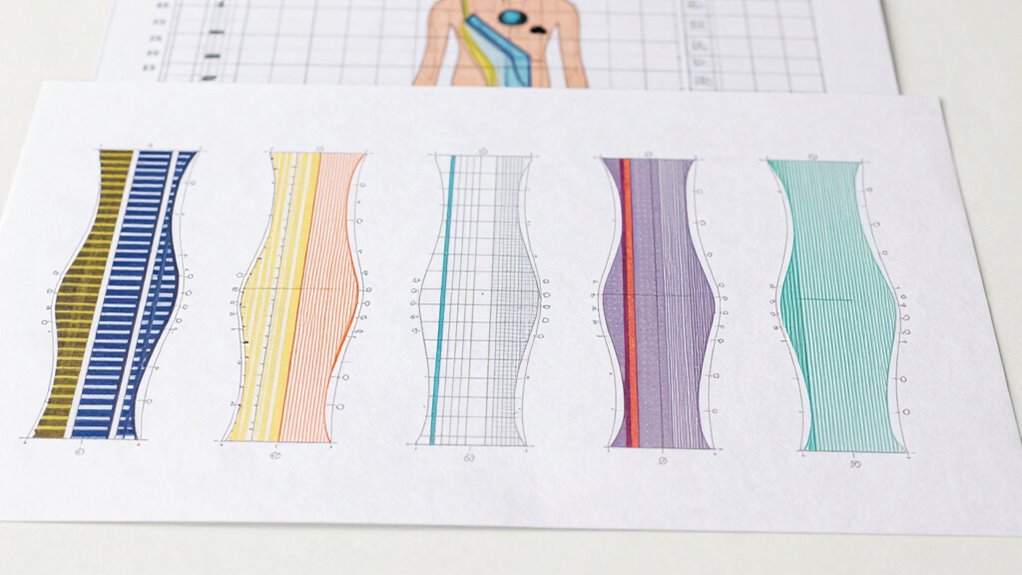
Do standard size charts really reflect your unique body shape? Likely not, because body measurement differences vary widely from person to person. Size chart limitations mean they can’t account for individual proportions or fit preferences. Here’s what you should consider:
- Your measurements may not match the numerical size perfectly.
- Different brands interpret sizing differently.
- Body shape variations affect how clothes fit, regardless of size.
- Relying solely on size charts can lead to ill-fitting garments.
Understanding these factors helps you see that size charts are just guides, not exact molds. Your body is unique, and fabricating patterns based solely on standard sizes often overlooks those differences. To get the best fit, compare your measurements directly with pattern specifications, not just the numbers on a chart.
How Grading Rules Vary for Different Garments
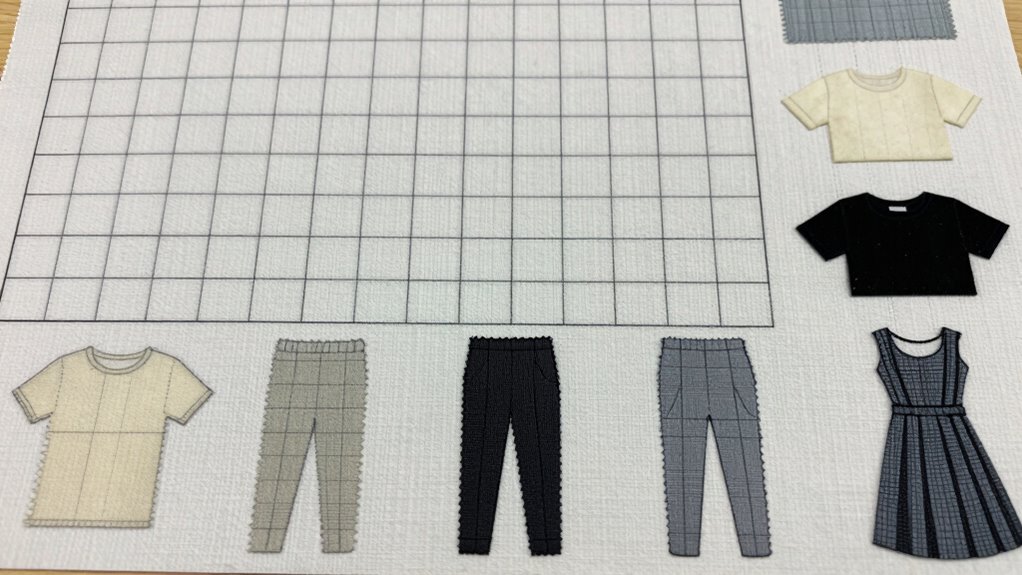
Different garment types require different grading approaches because their construction and fit considerations vary. For example, fabrics with a soft drape, like silk, need minimal grading adjustments to maintain flow, while stiffer fabrics, such as denim, require more significant changes for proper fit. Color matching also influences grading; garments with prints or color-blocking need precise adjustments to keep design continuity across sizes. Consider the following:
| Garment Type | Fabric Drape | Grading Focus |
|---|---|---|
| Blouses | Soft, flowing fabrics | Maintain drape and design |
| Pants | Stiff fabrics | Fit around hips and waist |
| Dresses | Varies, often lightweight | Balance fit and fabric flow |
Adjust grading rules based on fabric qualities and design details to ensure proper fit and aesthetic.
How Ease and Fit Preferences Affect Pattern Grading
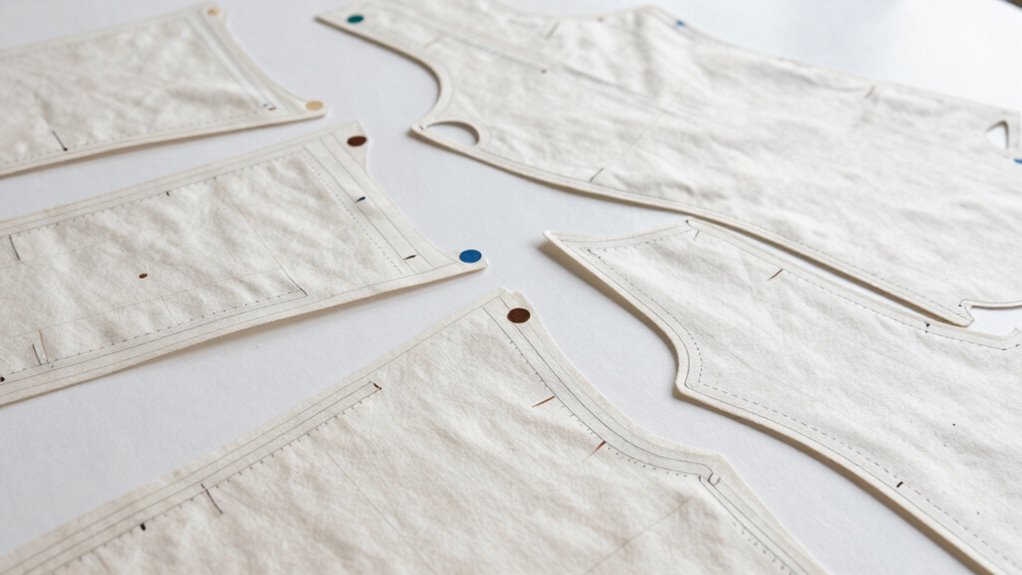
Ease and fit preferences directly influence how you grade a pattern, as they determine the amount of extra space or snugness desired in the finished garment. Your ease customization options include:
- Choosing between fitted, semi-fitted, or loose fits based on personal style.
- Adjusting ease amounts for comfort or movement.
- Considering body shape and how fit preferences vary accordingly.
- Balancing aesthetic appeal with functional needs, like layering or activity.
These factors impact the grading process because they dictate how much extra room is added or removed across sizes. By understanding your fit preferences, you can tailor ease to create garments that feel just right, whether you prefer a close fit or more ease for comfort. Your choices shape the final garment’s look and feel.
Tips for Adjusting Patterns to Fit Your Measurements
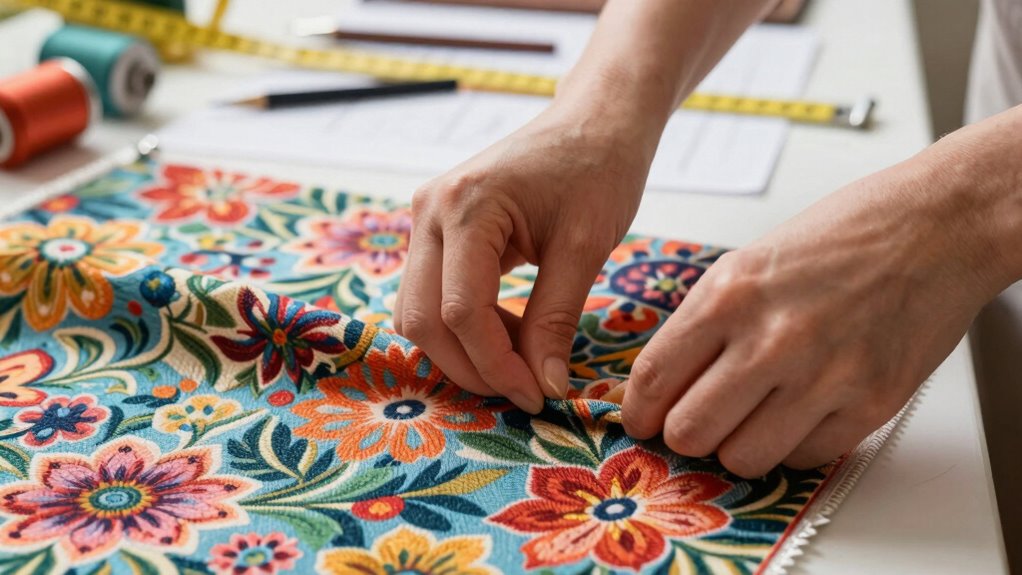
Adjusting patterns to match your measurements guarantees a better fit and more comfortable garment. Start by evaluating your fabric’s drape, as it influences how the fabric conforms to your body. When making adjustments, consider seam allowances—they provide extra fabric for sewing and can be altered to fine-tune fit. For example, if a side seam feels tight, let out the seam allowance slightly; if it’s too loose, take in the seam. Use a ruler or pattern notcher to maintain accuracy. Always mark your measurements clearly on the pattern, and make small, incremental changes rather than large ones. This careful approach helps ensure your finished garment aligns with your body’s unique shape, resulting in a polished, comfortable fit that feels just right.
Why Pattern Grading Is Both an Art and a Science

Pattern grading combines both creativity and precision, making it a nuanced skill that requires more than just following formulas. It involves understanding fabric properties, sewing techniques, and how each size change impacts the overall fit. To master this blend, consider these key aspects:
Pattern grading blends creativity with precision, requiring understanding of fabrics, techniques, and fit.
- Adjusting for fabric stretch or stability to maintain drape and comfort.
- Applying grading rules while considering fabric weight and fiber content.
- Using sewing techniques that accommodate size differences without compromising structure.
- Recognizing when artistic judgment is needed to preserve style lines or design details.
Frequently Asked Questions
How Do Fabric Types Influence Pattern Grading Adjustments?
Fabric types greatly impact pattern grading adjustments because stretch fabrics require less grading change, as they expand easily. Non-stretch textiles, like woven fabrics, need more precise adjustments to fit well. Additionally, fabric drape influences how a garment hangs, so you might need to modify pattern lines to accommodate the fabric’s flow. Understanding these factors helps you create better-fitting, comfortable garments tailored to each fabric’s unique properties.
Can Pattern Grading Techniques Be Automated or Require Manual Skill?
Think of pattern grading like painting—some prefer automated tools, others manual brushstrokes. You can automate grading with software, making adjustments quickly and consistently, but manual skills let you fine-tune for perfect fit. While grading software streamlines the process, it still benefits from your expertise for complex shapes. So, your choice depends on the detail needed—tech for speed, skill for precision.
What Are the Common Mistakes to Avoid in Pattern Grading?
To avoid grading pitfalls, you should double-check your measurements and guarantee consistent scaling across all pattern pieces. Don’t rely solely on numerical size increases; consider how fabric properties and fit ease affect sizing. Be cautious of sizing errors caused by uneven grading or misaligned grading points. Always make a sample test to catch mistakes early, and avoid rushing through the process—precision is key to accurate, well-fitting patterns.
How Does Body Shape Impact Grading Decisions Beyond Standard Sizes?
Your body shape variations are the secret sauce in grading decisions, making each pattern uniquely tailored. Ignoring these differences can turn a perfect fit into a fashion disaster. You should consider your silhouette—whether you’re curvier, straighter, or more angular—and adapt grading considerations accordingly. This personalized approach guarantees your garments flatter your natural form, transforming standard sizing into a masterpiece that celebrates your individuality rather than conforming to cookie-cutter sizes.
Are There Specific Grading Methods for Maternity or Plus-Size Garments?
Yes, there are specific grading methods for maternity and plus-size garments. You should use adaptive grading techniques that prioritize size inclusivity, ensuring comfort and fit across diverse body types. Adaptive grading adjusts proportions thoughtfully, accommodating changes like pregnancy or larger dimensions. By applying these methods, you create garments that fit well and celebrate body diversity, making your designs more inclusive and accessible for all customers.
Conclusion
Think of pattern grading as tending a delicate garden. Each measurement is a seed, and your adjustments are the nurturing hands guiding growth. When you understand how sizes change and how to tweak them, you cultivate a perfect fit—like a blooming flower that fits just right. With patience and care, your sewing journey blossoms into beautiful, customized creations that truly mirror your unique shape. Keep tending your garden, and watch your skills flourish.
Fall yard work Picks
leaf blowers
As an affiliate, we earn on qualifying purchases.